
Tetramorium latinode
- Sci. Name
- Tetramorium latinode
- Tribe
- Crematogastrini
- Subfamily
- Myrmicinae
- Author
- Collingwood & Agosti, 1996
- Distribution
- Found in 1 countries
Introduction
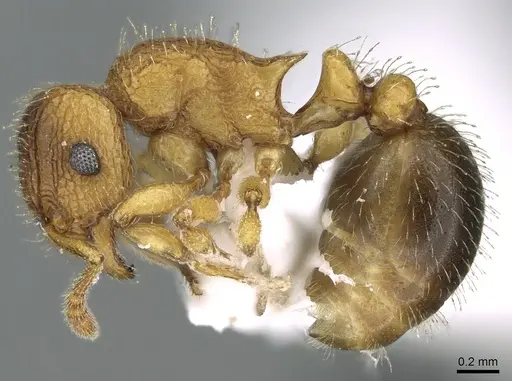
Tetramorium latinode is a small, yellowish ant species native to the Arabian Peninsula, first described from Yemen and later found in Saudi Arabia and the UAE . Workers measure 2.62-4.12 mm and have a distinctive yellow body with a brownish yellow gaster, which sets them apart from many darker Tetramorium species . Their head is longer than broad with large eyes, and they have strong propodeal spines . This species belongs to the *Tetramorium squaminode* group and is closely related to *Tetramorium akermani* from South Africa, though *T. latinode* is notably smaller and lighter colored . The only known nest was found under a stone on hard‑packed soil in the Amadan Forest, a mountainous area in southwestern Saudi Arabia with dense vegetation including juniper and wild olive trees .
Quick Summary
- Difficulty: Medium
- Origin & Habitat: Native to the Arabian Peninsula, found in Yemen, southwestern Saudi Arabia (Al Bahah Province), and the UAE. Inhabits the Amadan Forest in the Al Sarawat Mountains at about 1881 m elevation, where vegetation includes wild olive trees, Acacia, juniper, and other plants [1][2]. The nest was under a stone on hard‑packed soil in an elevated valley area that avoids flooding [1].
- Colony Type: Single‑queen colonies (monogyne). The only nest ever found contained tens of workers and a single alate gyne, suggesting a monogyne colony structure [1]. Colony size appears modest, tens of workers, which is smaller than many other Tetramorium species.
- Size & Growth:
- Queen: 3.62 mm [1]
- Worker: 2.62-4.12 mm [1]
- Colony: Tens of workers, the only documented nest contained 'tens of workers' [1]
- Growth: Moderate, inferred from typical Tetramorium development patterns
- Development: 6-10 weeks, estimated based on typical Tetramorium genus patterns at optimal temperature (Direct development data unavailable, estimates based on related species in the genus)
- Antkeeping:
- Temperature: 24-28 °C, this matches their native warm subtropical habitat [1]. Room temperature or slightly above is suitable. A heating cable on one side of the nest can help maintain optimal conditions during cooler months. Avoid prolonged temperatures below 20 °C.
- Humidity: Moderate humidity. Their natural habitat has well‑drained soil and nests under stones, so avoid waterlogged conditions. Provide a moisture gradient so workers can choose their preferred zone [1].
- Diapause: Likely not required. The species inhabits a warm climate with mild winters. No specific diapause data exists. A slight cooling period during winter (if attempted) should be short and is probably unnecessary.
- Nesting: In nature they nest under stones on hard‑packed soil [1]. For captivity, a Y‑tong (AAC) nest or plaster nest with compact chambers works well. A naturalistic setup with flat stones on a soil substrate also mimics their natural conditions. Good ventilation and a moisture gradient are important.
- Behavior: Workers are active foragers and likely scavenge for small insects and honeydew. They are not particularly aggressive but will defend their nest. As a member of the tribe Crematogastrini, *T. latinode* probably uses a smear defense mechanism: they wipe venom onto enemies with a modified flattened stinger rather than piercing. Their small size (under 4 mm) means escape prevention is critical, use fine mesh and tight‑fitting lids. The large eyes relative to head size may indicate some visual hunting or navigation ability [2].
- Common Issues: escape prevention is critical due to their small size, they can squeeze through tiny gaps, limited availability, this species is rarely available in the hobby as it is known from only a few locations, wild‑caught colonies may be difficult to establish because little is known about their specific needs, humidity control is important, they prefer drier conditions than many myrmicines, so avoid overwatering the nest, very little is known about this species in captivity, most care advice is inferred from habitat data and related species, colony growth may be limited, they appear to remain small with only tens of workers
Origin and Natural Habitat
Tetramorium latinode comes from the Arabian Peninsula, specifically the Al Sarawat Mountains region that stretches from southwestern Saudi Arabia into Yemen [2]. The species was first described from Yemen and later found in Saudi Arabia's Al Bahah Province, with a recent record from the UAE [3][4]. Their known habitat is the Amadan Forest, a mountainous area at about 1881 m elevation with dense vegetation including wild olive trees, Acacia, juniper, and other plants [1]. The only nest was under a stone on hard‑packed soil, situated in an elevated part of a valley that avoids flooding [1]. This suggests they prefer well‑drained soils in rocky, mountainous terrain with moderate vegetation cover.
Appearance and Identification
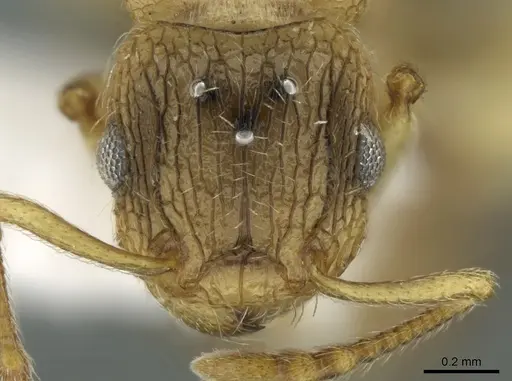
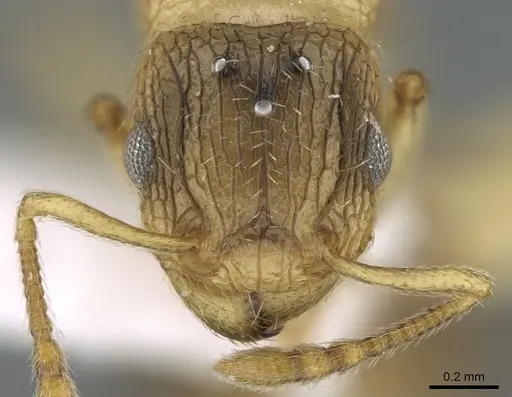
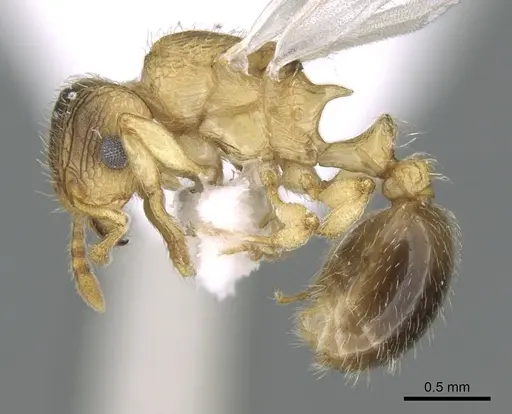
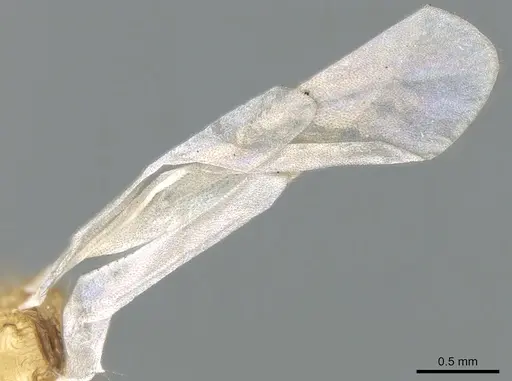
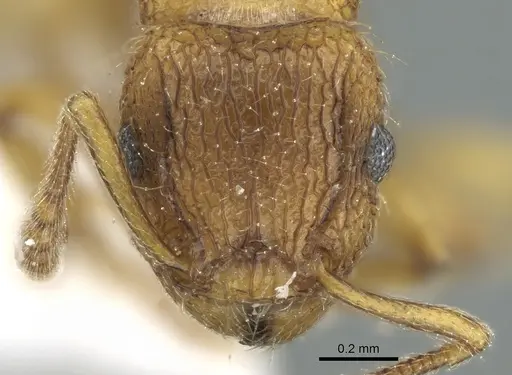
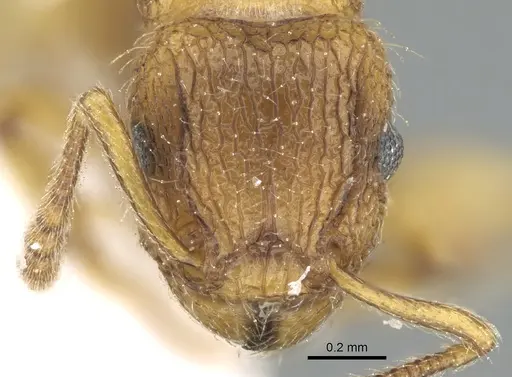
Workers are small, measuring 2.62-4.12 mm in total length, with a yellow body and brownish yellow gaster, a color pattern that helps distinguish them from related species [1]. Their head is longer than broad with convex sides, and they have large eyes composed of ten ommatidia in the longest row [2]. The mandibles have faint longitudinal striations, and the propodeal spines are elongate and strong [2]. The petiole is scale‑like (squamiform), much higher than long in profile, with an acute pointed node [2]. Queens are larger at 3.62 mm, alate (winged), with a yellowish body and brown gaster [1]. They have larger eyes with 14 ommatidia and long, acute propodeal spines [2]. This species belongs to the T. squaminode group and is closely related to T. akermani from South Africa, but T. latinode is smaller and lighter colored [1].
Temperature and Care
Keep these ants at 24-28 °C, which matches their native warm subtropical habitat in the Arabian Peninsula [1]. Room temperature is often suitable, but a heating cable on one side of the nest can help maintain optimal conditions during cooler months. Although they come from an elevated mountainous region, they are adapted to warm conditions, avoid prolonged temperatures below 20 °C. Their natural nesting site (under a stone on hard‑packed soil) suggests they prefer drier conditions with good drainage. Provide a moisture gradient so workers can choose their preferred humidity zone.
Feeding and Diet
No specific dietary data is available for Tetramorium latinode. By analogy with related Tetramorium species, they likely scavenge small insects and collect honeydew. Offer a varied diet including small live prey such as fruit flies, pinhead crickets, or mealworms, and provide sugar water or honey water regularly. Feed small prey items 2-3 times per week and keep a constant sugar source available. Due to their small size, ensure prey items are appropriately sized, avoid large insects they cannot subdue. [1]
Nesting Preferences
In nature, T. latinode nests under stones on hard‑packed soil, often close to large trees like juniper [1]. For captive care, a Y‑tong (AAC) nest or plaster nest with compact chambers works well. They prefer tight‑fitting chambers rather than large open spaces. A naturalistic setup with a soil substrate and flat stones placed on top mimics their natural conditions. Since they come from a well‑drained mountainous habitat, ensure good ventilation and avoid excessive moisture. Provide a moisture gradient with both dry and slightly moist areas.
Colony Development
Colony size appears modest, the only documented wild nest contained 'tens of workers' along with a single alate gyne [1]. Colonies likely do not grow much larger than this. Development from egg to worker probably takes 6-10 weeks at optimal temperature, based on typical Tetramorium genus patterns. The founding method is unconfirmed, but as with many myrmicines, the queen likely raises her first brood on stored reserves. First workers (nanitics) are smaller than mature workers. Growth rate is moderate, expect several months to a year for a colony to reach 20-50 workers.
Frequently Asked Questions
How long does it take for Tetramorium latinode to get first workers?
Expect first workers (nanitics) to emerge about 6-10 weeks after the queen lays eggs, based on typical Tetramorium development patterns. This timeline assumes optimal temperature around 24-28 °C. No direct data exists for this species.
Can I keep Tetramorium latinode in a test tube?
Yes, test tubes work well for founding colonies. Use a standard test tube setup with a water reservoir, but ensure good ventilation since this species prefers drier conditions than many ants. Once the colony reaches about 20-30 workers, consider moving to a Y‑tong or plaster nest.
Do Tetramorium latinode ants sting?
As members of Myrmicinae, they have a functional stinger. However, their subfamily uses a smear defense, they wipe venom with a flattened stinger rather than piercing. Given their very small size (under 4 mm), any sting would be mild and barely noticeable to humans.
Are Tetramorium latinode good for beginners?
This species is rated medium difficulty. They are not commonly available, and very little is known about their captive care. Their specific habitat requirements (dry, warm conditions) require attention. They are also smaller and more delicate than many beginner species.
How big do Tetramorium latinode colonies get?
Based on available field data, colonies probably reach only tens of workers. The only documented nest contained 'tens of workers', so they do not form large colonies like other Tetramorium species.
Do Tetramorium latinode need hibernation?
Probably not. They come from the warm Arabian Peninsula where temperatures rarely drop significantly. No specific diapause data exists, and a winter rest period is likely unnecessary. Keep them at room temperature year‑round.
What temperature is best for Tetramorium latinode?
Keep them at 24-28 °C. This warm subtropical species thrives at typical room temperature or slightly above. Avoid temperatures below 20 °C for extended periods.
Why are my Tetramorium latinode dying?
Common causes include: too much moisture (they prefer drier conditions), temperatures too low, or escape‑related losses due to their small size. Ensure excellent escape prevention with fine mesh barriers. Also check that prey items are appropriately sized and that the nest is not waterlogged.
Can I keep multiple Tetramorium latinode queens together?
Not recommended. Field data shows a single queen per colony, and combining unrelated queens of this species has never been documented. It is safest to keep one queen per colony.
When should I move Tetramorium latinode to a formicarium?
Move them when the test tube becomes crowded, typically when the colony reaches about 20-30 workers. They prefer compact chambers, so avoid overly large formicarium spaces.
Report an Issue
The current care sheet is based fully on literature. See inconsistencies, or something that's incorrect? Please , it will be resolved after review from an admin. Contributing to the blogs tab also helps providing information, to make us be able to further improve the caresheets. Thank you for your support!
References

This caresheet is licensed under CC BY-SA 4.0 .
Community Blogs
CASENT0906431
View on AntWeb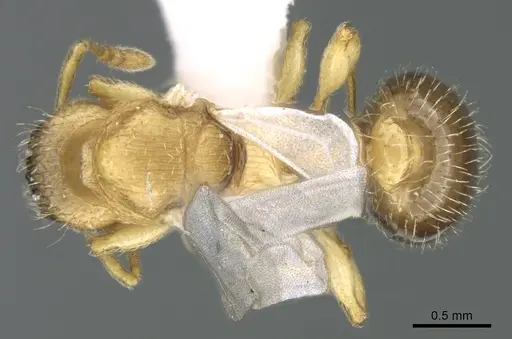
CASENT0906432
View on AntWeb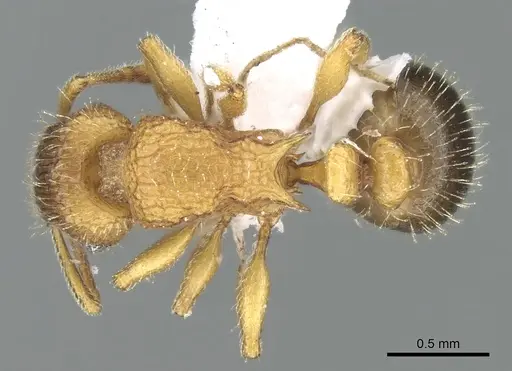
Literature
Loading distribution map...Loading products...