
Tetramorium laparum
- Sci. Name
- Tetramorium laparum
- Tribe
- Crematogastrini
- Subfamily
- Myrmicinae
- Author
- Bolton, 1977
- Distribution
- Found in 3 countries
Introduction
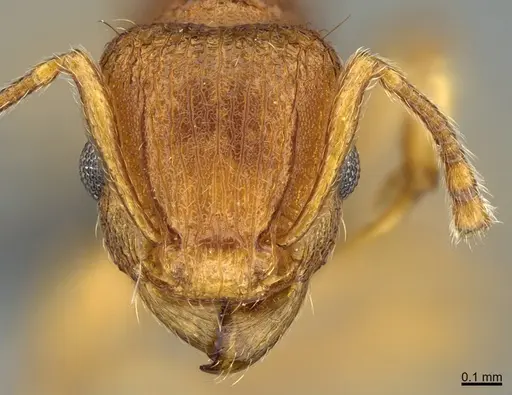
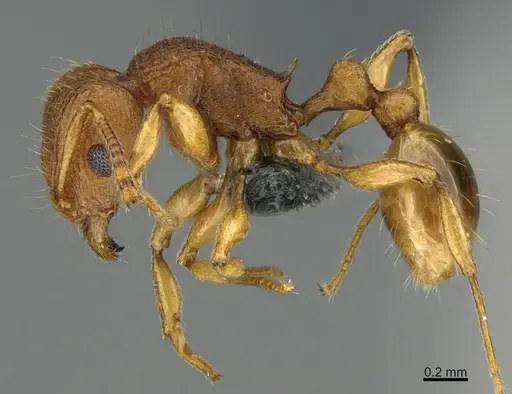
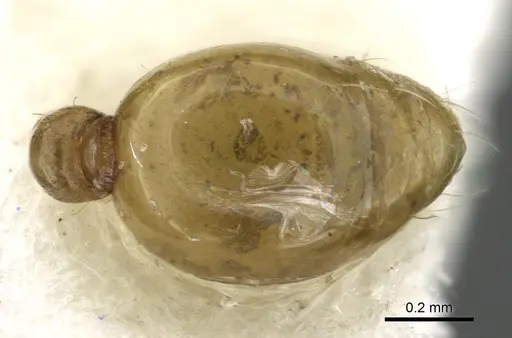
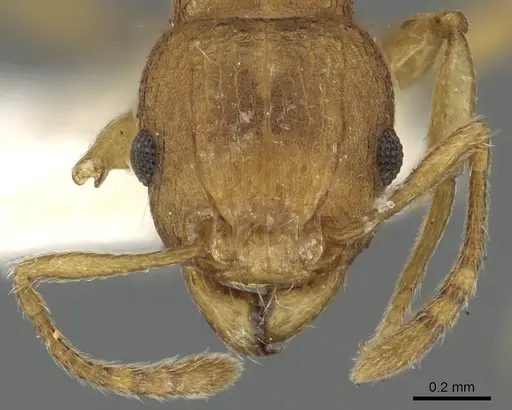
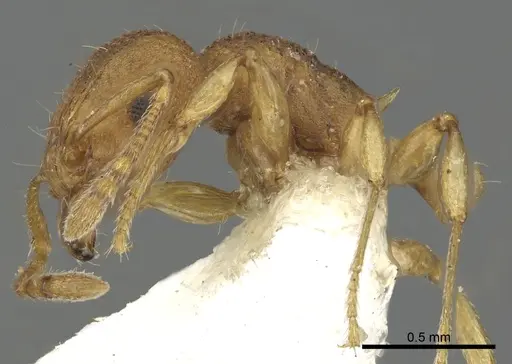
Tetramorium laparum is a small yellowish-brown ant measuring roughly 3mm in total length . It belongs to the Tetramorium tonganum species group and can be identified by its distinctive sculpture – a fine, dense, blanketing reticulate-punctulation that gives the head a matt, granular appearance. The species has relatively long antennae, short but elevated petiolar spines, and numerous erect hairs on the dorsal surfaces of the head and body . This ant is native to Southeast Asia, with confirmed populations in Borneo, Indonesia, Malaysia, the Philippines, and southern China (Yunnan) . What makes Tetramorium laparum unusual is its arboreal lifestyle – research shows it almost exclusively inhabits tree canopies rather than the forest floor. Studies in Bornean dipterocarp forests found this species only on tree trunks during daytime, with zero occurrences in ground collections . It appears to be a canopy specialist that forages in the upper reaches of trees, which explains why it's rarely collected and why we know so little about its biology .
Quick Summary
- Difficulty: Medium
- Origin & Habitat: Southeast Asia – found in Borneo, Indonesia, Malaysia, the Philippines, and southern China (Yunnan). It inhabits tropical and subtropical forests, with a strong preference for primary and secondary forest environments. Notably absent from rubber plantations, indicating it requires intact forest canopy [4].
- Colony Type: Unknown colony structure. No data available on whether colonies are single-queen (monogyne) or multi-queen (polygyne).
- Size & Growth:
- Queen: Unknown – not described in original description
- Worker: 3.0mm total length [1]
- Colony: Unknown – no data available
- Growth: Unknown – no data available
- Development: Estimated 6-8 weeks at optimal temperature based on genus-level data for similar Tetramorium species (Direct development data unavailable – estimate based on related species in the genus)
- Antkeeping:
- Temperature: Likely 24-28°C based on tropical forest habitat
- Humidity: Moderate to high humidity (60-80%). Being arboreal, they likely prefer humid conditions with some ventilation
- Diapause: Unlikely – being a tropical species, they probably do not require a true diapause period. May show reduced activity in cooler months
- Nesting: Based on their arboreal nature, they likely prefer nests in wood or hollow stems. In captivity, a small Y-tong or plaster nest with narrow chambers would be appropriate. Avoid deep soil setups – they seem to prefer elevated, drier nesting sites
- Behavior: A shy, non-aggressive species that avoids conflict. They are arboreal foragers, spending almost all their time in the canopy. Workers are small (3mm) and passive. Their defense mechanism involves a modified spatulate stinger used to smear venom rather than pierce – they can still sting but it's not a typical piercing sting. Small size means escape prevention should be moderate, they can fit through small gaps but are not extreme escape artists. Likely nocturnal or crepuscular foragers based on the single daytime tree trunk record [2].
- Common Issues: lack of ecological data makes captive care uncertain – much is inferred from related species, tropical origin means they may be sensitive to temperature drops below 20°C, arboreal nature means they may not thrive in ground-based naturalistic setups, small size can make them overlooked during feeding – ensure prey is appropriately sized, wild-caught colonies may be difficult to obtain due to their canopy-dwelling habits
Housing and Nest Preferences
Given this species' arboreal canopy-dwelling behavior, your setup should reflect their natural elevated lifestyle. They are not ground-nesting ants, so avoid deep soil formicariums. A small Y-tong (AAC) or plaster nest with appropriately scaled chambers works best – the workers are only 3mm, so chambers should be modest in size. Keep the nest relatively dry with good ventilation, being canopy dwellers, they likely experience less humidity than forest-floor species. Place the nest in a warm area of your enclosure, around 24-28°C. The outworld can be simple – a small foraging area where you offer food. Since they're arboreal, you might consider adding some vertical elements like twigs or artificial plants for them to explore, though this is optional. Escape prevention should be standard – these ants are small but not particularly known for escaping aggressively [2].
Feeding and Diet
In the wild, Tetramorium laparum has been collected only from honey baits, suggesting they have a sweet tooth and likely tend aphids or collect honeydew in the canopy [2]. In captivity, offer a mix of sugar sources (honey water, sugar water, or pure honey) as a constant staple. For protein, small soft-bodied prey is appropriate – fruit flies, small mealworms, or similar-sized insects. Given their tiny worker size (3mm), prey items should be appropriately scaled down. They are likely omnivorous like most Tetramorium, so a varied diet of sugars and protein will support colony growth. Feed protein 2-3 times per week and keep sugar sources available at all times. Remove uneaten prey after 24-48 hours to prevent mold.
Temperature and Seasonal Care
As a tropical species from Southeast Asia, Tetramorium laparum prefers warm, stable temperatures in the range of 24-28°C. This aligns with the warm, humid conditions of their native tropical forests in Borneo, the Philippines, and southern China. Avoid temperatures below 20°C for extended periods – they are not cold-tolerant and may become sluggish or stop growing. A small heating cable or mat on one side of the nest can help maintain optimal temperatures, but ensure there's a gradient so they can move to cooler areas if needed. Since they're from a region with minimal seasonal temperature variation, they likely do not require a true hibernation or diapause period. You may notice reduced activity during cooler months, but this is normal – simply maintain stable warmth year-round [1].
Behavior and Colony Dynamics
Tetramorium laparum is a shy, non-aggressive species that avoids confrontation. The research shows they are almost exclusively arboreal – found only on tree trunks during daytime collections, with zero ground occurrences [2]. This suggests they spend most of their time in the canopy, perhaps nesting in hollow branches or under bark. Workers are small (3mm) and relatively slow-moving compared to some more active Tetramorium species. Their defense uses a modified spatulate stinger to smear venom rather than pierce – they can still sting but it's not typical. Colonies are likely small to moderate in size, though exact maximums are unknown. The species appears to be a canopy specialist adapted to life in the trees rather than on the forest floor – this is reflected in their complete absence from ground-based ant surveys despite being present in the canopy [2][3].
Field Research and Distribution
This species has been documented across the Indomalaya region including Borneo, Indonesia, Malaysia, and the Philippines, with additional records from southern China (Yunnan) [1]. Notably, surveys in Xishuangbanna, China found Tetramorium laparum in both primary and secondary forest (5 regions each), but completely absent from rubber plantations [4]. This makes it a potential indicator species for healthy forest ecosystems. The species was rarely collected in traditional ground surveys – most records come from honey bait collections in the canopy [2]. An abundance study showing 460 individuals across 30 tree samples indicates they can be locally common in suitable canopy habitats [3]. This arboreal specialization explains why we know relatively little about their detailed biology compared to more ground-dwelling ant species.
Frequently Asked Questions
How long does it take for Tetramorium laparum to raise their first workers?
Exact development time is unknown for this species. Based on typical Tetramorium development patterns, expect around 6-8 weeks from egg to first worker at optimal warm temperatures (around 26°C). The first workers (nanitics) will likely be smaller than mature workers. Be patient – this is a slow-growing species with limited documented captive breeding history.
Can I keep Tetramorium laparum in a test tube setup?
Yes, a test tube setup can work for founding colonies and small groups. However, given their arboreal nature, ensure the tube is kept in a warm, relatively dry location. For established colonies, a small Y-tong or plaster nest is more appropriate. The key is keeping them warm (24-28°C) with access to sugar and small protein prey.
Do Tetramorium laparum ants sting?
They have a stinger, but it is modified for smearing venom rather than piercing. They are not aggressive and are completely safe to handle, though a sting may cause mild irritation if provoked. The risk to keepers is very low.
Are Tetramorium laparum good for beginners?
This species is rated as Medium difficulty. While not aggressive and relatively easy to house, the main challenge is their arboreal nature and the lack of specific captive care data. They require warm temperatures and likely have different needs than typical ground-nesting ants. Experienced antkeepers who can provide appropriate conditions will have better success.
What do Tetramorium laparum eat?
They appear to have a sweet tooth – in the wild they are collected from honey baits [2]. In captivity, offer sugar sources (honey water, sugar water) as a constant staple, plus small protein prey like fruit flies or tiny mealworms. Their small 3mm workers need appropriately sized food items.
How big do Tetramorium laparum colonies get?
Colony size is not well documented. Based on their small worker size (3mm) and related Tetramorium species, colonies likely reach a few hundred workers at maximum. Growth rate is undocumented.
Do Tetramorium laparum need hibernation?
No, being a tropical species from Southeast Asia, they do not require a true hibernation period. Maintain warm temperatures (24-28°C) year-round. You may notice reduced activity during cooler weather, but no special overwintering setup is needed [1].
Why is Tetramorium laparum so rarely kept?
This species is rarely kept because it was poorly known scientifically until recently and is difficult to collect – being arboreal, it's not found through typical ground collecting methods. Most records come from canopy studies using honey baits [2][3]. The lack of ecological data also makes captive care uncertain. However, they are now documented enough that interested keepers can attempt to establish colonies.
Can I keep multiple Tetramorium laparum queens together?
Colony structure is unconfirmed for this species. No data exists on whether they are single-queen (monogyne) or multi-queen (polygyne). Until more information is available, it is not recommended to combine unrelated queens. Start with a single founding queen for best results.
What temperature is best for Tetramorium laparum?
Keep them warm at 24-28°C. This tropical species comes from warm Southeast Asian forests and does not tolerate cool temperatures well. Avoid letting temperatures drop below 20°C. A small heating setup on one side of the nest can help maintain optimal warmth [1].
Report an Issue
The current care sheet is based fully on literature. See inconsistencies, or something that's incorrect? Please , it will be resolved after review from an admin. Contributing to the blogs tab also helps providing information, to make us be able to further improve the caresheets. Thank you for your support!
References

This caresheet is licensed under CC BY-SA 4.0 .
Community Blogs
CASENT0285479
View on AntWeb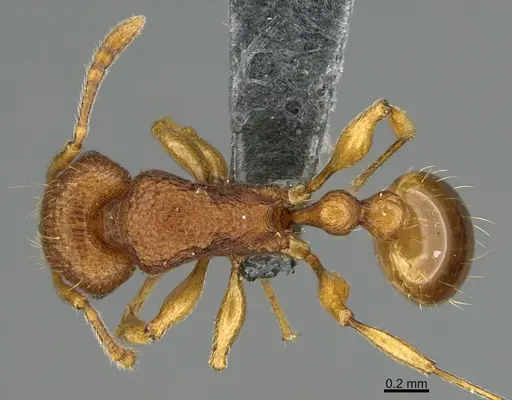
CASENT0901091
View on AntWeb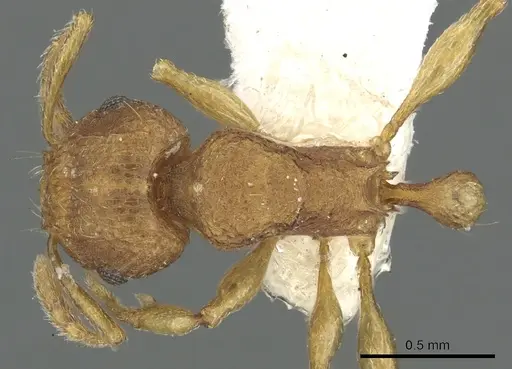
Literature
Loading distribution map...Loading products...