
Tetramorium krishnani
- Sci. Name
- Tetramorium krishnani
- Tribe
- Crematogastrini
- Subfamily
- Myrmicinae
- Author
- Agavekar <i>et al.</i>, 2017
- Distribution
- Found in 1 countries
Introduction
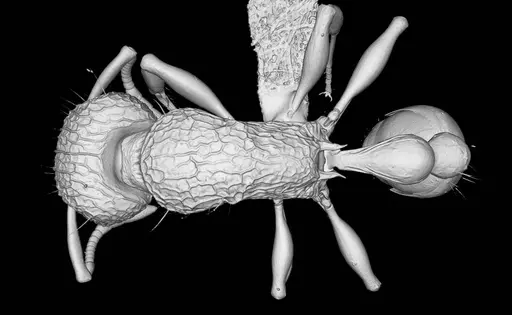
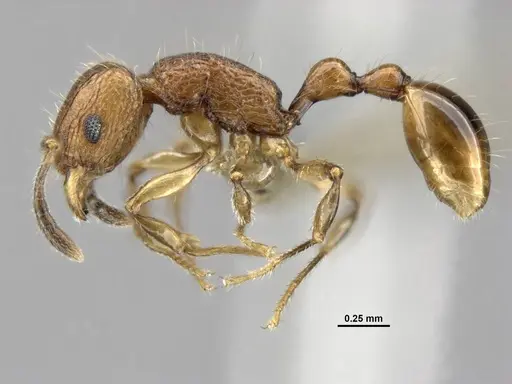
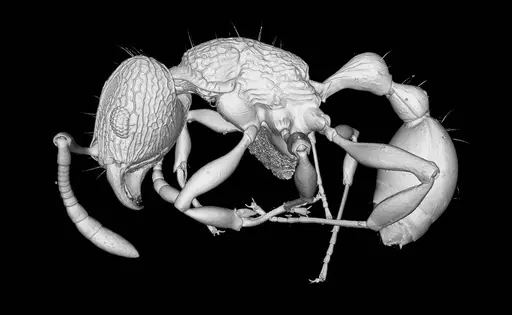
Tetramorium krishnani is a tiny, recently described ant species known only from Havelock Island in the Andaman Islands, India . Workers are slender and orangish-brown with lighter mandibles and legs. The most distinctive feature is the very long, curved petiole (the 'waist' connecting thorax to abdomen) and a propodeum (rear thorax) completely lacking spines or teeth – unusual within its group . This species belongs to the Tetramorium tonganum species group and lives in the leaf-litter of undisturbed wet evergreen forests . Only the worker caste has been described; queens, males, and colony behavior remain unknown .
Quick Summary
- Difficulty: Unknown
- Origin & Habitat: Havelock Island, Andaman Islands, India. Found in tropical semi-evergreen forests at 32–93 m elevation, with a strong preference for undisturbed inland wet evergreen forests [1].
- Colony Type: Colony structure is unconfirmed. Only workers have been described – no queens or colony organization have been observed [1].
- Size & Growth:
- Queen: Undescribed – no queen has been collected or described [1].
- Worker: Worker body length is not reported in the literature. They are tiny leaf‑litter ants (head length ~0.6 mm) [1].
- Colony: Unknown – no colony size data available [1].
- Growth: Unknown
- Development: Unknown – no development data exists for this species [1]. (Since no captive studies have been done, development times are pure speculation.)
- Antkeeping:
- Temperature: Based on their tropical forest origin, keep warm at 24–28 °C. Avoid temperatures below 20 °C. A gentle gradient using a heating cable on one side of the nest may be beneficial.
- Humidity: High humidity is critical – keep the nest substrate consistently moist but not waterlogged, mimicking damp forest floor conditions.
- Diapause: Unlikely – this is a tropical species from near the equator (~12°N), so no seasonal diapause is expected [1].
- Nesting: Use a naturalistic setup with moist soil/sand mix. Y‑tong (AAC) or plaster nests with tight chambers can work given their tiny size. Escape prevention is critical – fine mesh on all openings is essential.
- Behavior: Temperament is unconfirmed. Most Tetramorium species are moderately aggressive when defending the nest, but given the complete lack of observations this is just speculation. Their tiny size makes effective escape prevention extremely important.
- Common Issues: tiny size – workers can squeeze through tiny gaps, fine mesh barriers are essential, no published care information – all husbandry is experimental and requires careful observation, high humidity is critical – dry conditions will likely kill the colony quickly, wild‑caught colonies may contain parasites or diseases since no captive‑bred lines exist
Discovery and Identification
Tetramorium krishnani was described in 2017 by Gaurav Agavekar, Francisco Hita Garcia, and Evan Economo [1]. Its name honors Dr. K. S. Krishnan, professor emeritus at the National Centre for Biological Sciences (NCBS) in India [1]. The species belongs to the Tetramorium tonganum species group and is easily distinguished by its slender body, very long curved petiole, and completely unarmed propodeum – most related species have small spines or teeth [1]. The type specimens were collected by sifting leaf‑litter in wet evergreen forests on Havelock Island [1].
Natural Habitat and Distribution
Tetramorium krishnani is currently known only from Havelock Island in the Andaman Islands archipelago (Bay of Bengal, east of mainland India), though it likely occurs on other nearby islands [1]. Researchers found it in 8 out of 35 leaf‑litter transects, suggesting it is not rare but locally restricted [1]. Nearly all records come from relatively undisturbed inland wet evergreen forests, only a single specimen was found in drier coastal forests, indicating a strong preference for damp, shaded microhabitats [1].
Appearance and Morphology
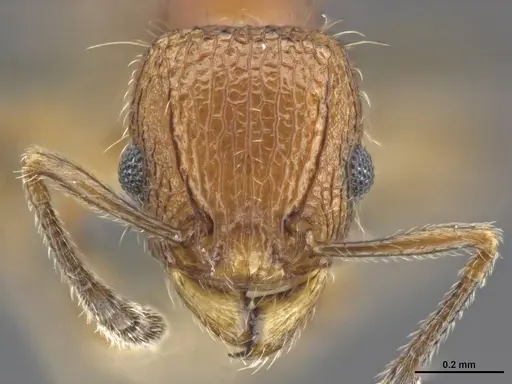
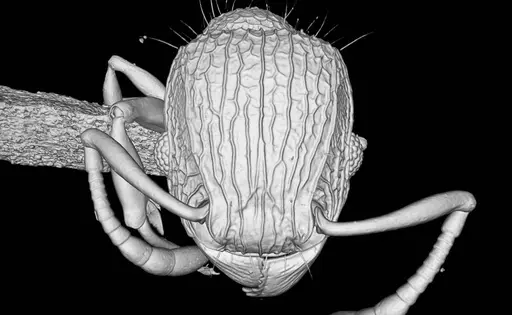
Workers are very small and slender. The head is longer than wide, the eyes are relatively large, and the antennae reach the back of the head [1]. The most striking feature is the petiole: it has an extremely long, curved stalk (peduncle) and a low, elongated node, giving the waist an unusual stretched appearance [1]. The propodeum at the rear of the thorax is completely smooth – no spines or teeth are present [1]. Body color is orangish‑brown, with lighter mandibles and legs. The body surface has distinct ridges (rugae), but the waist segments and first segment of the gaster are smooth and shiny [1].
Care Recommendations
Because Tetramorium krishnani has never been kept in captivity, these recommendations are based entirely on its natural habitat and general Tetramorium biology. Keep them in a warm, humid setup (24–28 °C, with substrate kept damp but not waterlogged). A naturalistic terrarium with moist soil/sand and hiding spots (flat stones, pieces of rotting wood) is appropriate. Their tiny size demands excellent escape prevention – fine mesh on all ventilation and tightly sealed lids. Offer small protein sources (fruit flies, pinhead crickets, or tiny insect pieces) and sugar water or honey. This is an experimental species: be prepared to adjust conditions based on colony behavior and record any observations. [1]
What We Don't Know
Almost nothing is known about the biology of Tetramorium krishnani beyond worker morphology. The 2017 description provides no information on queens, males, colony structure, founding behavior, diet, development time, or any behavioral aspects [1]. This species has never been exported or kept in the ant‑keeping hobby. If you obtain it, careful documentation of your care methods and colony observations would be scientifically valuable. Treat it as a 'wildcard' species requiring active experimentation.
Frequently Asked Questions
How do I keep Tetramorium krishnani ants?
Care is unconfirmed since the species has never been kept. Based on its natural habitat (wet evergreen forests on Havelock Island), provide warm temperatures (24–28 °C), high humidity (keep substrate consistently damp but not waterlogged), and a naturalistic setup with moist soil and hiding spots. This is an experimental species – be prepared to adjust conditions based on colony behavior.
What do Tetramorium krishnani ants eat?
Diet is unconfirmed. Most Tetramorium species accept small insects and sugary liquids. Offer tiny live prey (fruit flies, pinhead crickets) and sugar water or honey. Start with small portions and observe what the colony accepts.
How big do Tetramorium krishnani colonies get?
Unknown – no colony size data has been published. Related small litter‑dwelling Tetramorium species often reach several hundred workers, but this is speculation.
Do Tetramorium krishnani ants sting?
Tetramorium belongs to the ant subfamily Myrmicinae, many species of which possess a functional stinger. Tetramorium species (e.g., the pavement ant) are known to sting, but their sting is usually mild and painless to humans. Given the tiny size of T. krishnani, any sting would be negligible.
Are Tetramorium krishnani good for beginners?
No – this species is not recommended for beginners. It was described only in 2017,has never been kept in captivity, and no reliable care protocols exist. The complete lack of published information means you would be experimenting with every aspect of care. Choose a well‑studied species (e.g., Tetramorium caespitum, Messor barbarus) for your first colony.
How long does it take for Tetramorium krishnani to develop from egg to worker?
Unknown – no development data exists for this species. There is no basis for an estimate.
Where is Tetramorium krishnani found?
Only known from Havelock Island in the Andaman Islands (India), at low elevations (32–93 m) in wet evergreen forests [1].
Can I keep multiple Tetramorium krishnani queens together?
Unknown – colony structure has not been documented. Most Tetramorium are monogyne (single queen), but some are polygynous. Do not attempt to combine unrelated queens until more is known.
Do Tetramorium krishnani need hibernation?
Unlikely – as a tropical species from near the equator, they probably do not require a diapause period. Maintain stable warm temperatures year‑round.
What makes Tetramorium krishnani different from other Tetramorium?
Two features are unique within the Tetramorium tonganum group: the propodeum is completely unarmed (no spines or teeth), and the petiole has an unusually long, curved stalk with a low, elongated node [1]. These make identification straightforward.
Report an Issue
The current care sheet is based fully on literature. See inconsistencies, or something that's incorrect? Please , it will be resolved after review from an admin. Contributing to the blogs tab also helps providing information, to make us be able to further improve the caresheets. Thank you for your support!
References

This caresheet is licensed under CC BY-SA 4.0 .
Community Blogs
NCBS-AV940
View on AntWeb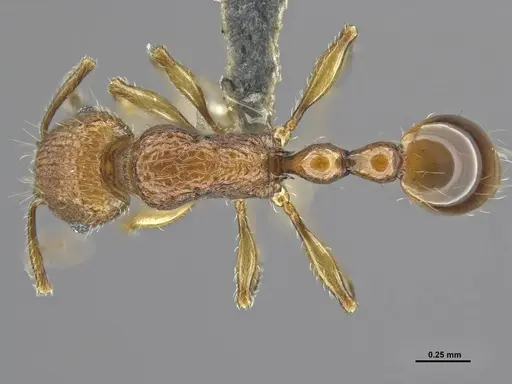
Literature
Loading distribution map...Loading products...