
Tetramorium kestrum
- Sci. Name
- Tetramorium kestrum
- Tribe
- Crematogastrini
- Subfamily
- Myrmicinae
- Author
- Bolton, 1980
- Distribution
- Found in 2 countries
Introduction
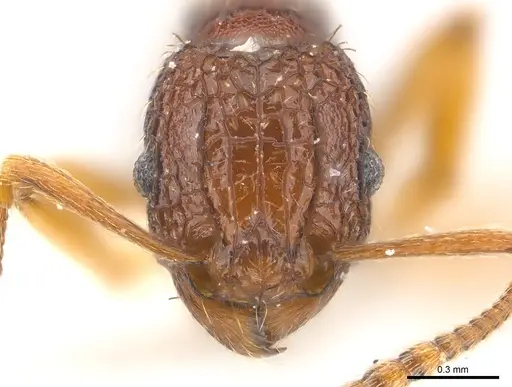
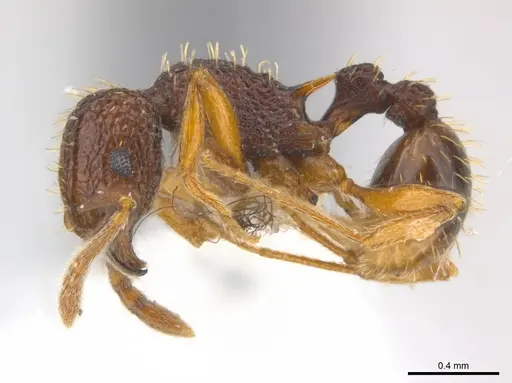
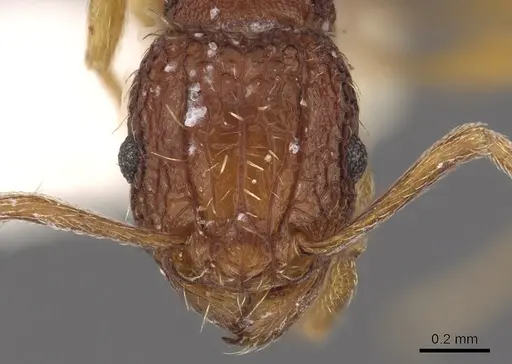
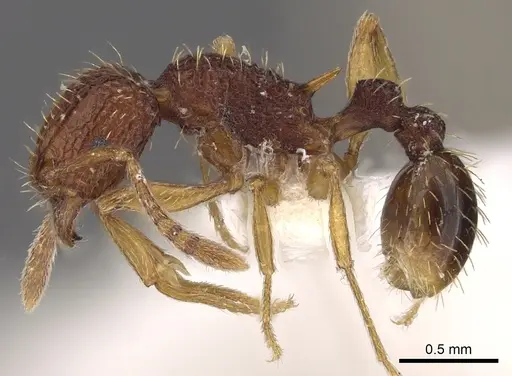
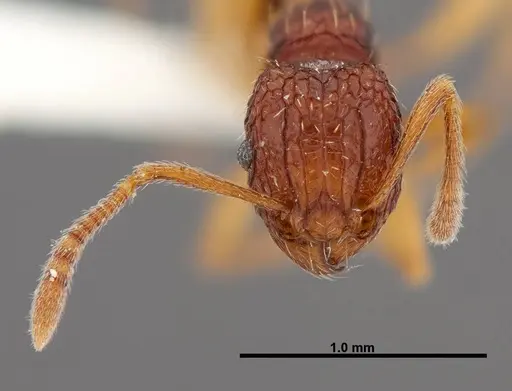
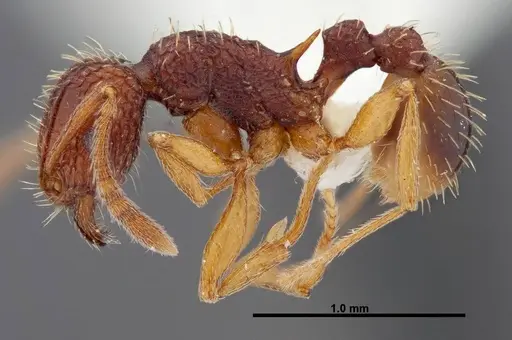
Tetramorium kestrum is a small ground-dwelling ant native to the rainforests of East and Central Africa. Workers measure 3.0-3.1mm and display a bright orange-brown color with yellow legs, making them easy to tell apart from their darker relative Tetramorium ataxium . Their antennal scapes are relatively long (SI 100-106) compared to Tetramorium ataxium (SI 95-99) . They live on the forest floor in tropical regions spanning Uganda, Kenya, Angola, Democratic Republic of Congo, and Sudan . The body has a glossy sheen due to minimal ground sculpture, but the upper parts of the thorax and petiole have a net-like pattern . Strong propodeal spines and a rectangular petiole node are characteristic . These ants belong to the subfamily Myrmicinae and use a modified stinger to smear venom on attackers rather than injecting it.
Quick Summary
- Difficulty: Medium
- Origin & Habitat: Rainforests of East and Central Africa: Uganda, Kenya, Angola, Democratic Republic of Congo, Sudan. Ground-dwelling, preferring the damp, shaded conditions of tropical forest floors [1][2].
- Colony Type: Colony structure is not documented. Based on general Tetramorium patterns, single-queen colonies are typical, but this is unconfirmed.
- Size & Growth:
- Antkeeping:
- Temperature: Keep warm (24-28°C) year-round as a tropical rainforest species. Avoid drops below 22°C. A slight gradient is beneficial.
- Humidity: High humidity is essential. Keep the nest substrate consistently moist but not waterlogged. Aim for conditions that feel damp to the touch, mimicking the forest floor.
- Diapause: No diapause required. Maintain consistent warm conditions year-round.
- Nesting: Ground-nesting. Y-tong (AAC) or plaster nests with moisture work well. Also use deep, moist soil with flat stones. High humidity nests are needed.
- Behavior: Workers are active foragers, not aggressive toward keepers, but will defend the nest. Their small size (3mm) makes escape prevention critical, use fine mesh barriers. They use a smear defense: a flattened stinger wipes venom on enemies rather than piercing.
- Common Issues: escape prevention is critical due to tiny 3mm size, seal all gaps, high humidity can cause mold if ventilation is poor, tropical species stress if temperatures stay below 22°C, wild-caught colonies may carry parasites, quarantine before introduction, founding behavior unconfirmed, if claustral, queen should remain undisturbed
Housing and Nest Setup
You'll want to replicate the humid forest floor conditions. Y-tong (AAC) nests work well because they hold humidity and allow ventilation. Plaster nests with water reservoirs are another good option for controlling moisture. For a naturalistic setup, use a deep soil layer (at least 5cm) kept consistently moist, with flat stones or bark on top for cover. The outworld should be simple, a shallow foraging area reduces travel distance. Use a fluon barrier on the rim, these tiny ants can slip through small gaps [1].
Feeding and Diet
Generalist foragers: in captivity, offer small live prey like fruit flies, pinhead crickets, and mealworms. Provide sugar water, honey, or diluted maple syrup as carbohydrates. Feed small portions 2-3 times per week, remove uneaten prey after 24 hours. For a small colony, a single fruit fly or a drop of sugar water is enough. Always provide fresh water via a tube with cotton plug or moist substrate.
Temperature and Seasonal Care
As a tropical species, Tetramorium kestrum needs warm conditions year-round. Maintain 24-28°C in the nest area, with a cooler spot (about 24°C) so workers can choose. Use a heating cable on one side. Avoid temperatures below 22°C for long periods, it slows brood development. No winter diapause is needed, keep temperatures consistent. If your room temperature falls within this range, no extra heating may be needed, but monitor with a thermometer.
Humidity Management
High humidity is critical. These rainforest floor ants need 70-85% relative humidity in the nest. The substrate should feel moist but not have standing water. In Y-tong nests, keep the water chamber filled, some condensation is normal. In plaster nests, rehydrate when the surface starts to dry. Use a hygrometer to monitor. Too little humidity kills brood and workers, too much leads to mold, balance by ensuring good ventilation.
Colony Establishment and Growth
Founding behavior is unconfirmed for this species. If claustral (common in Tetramorium), the queen will seal herself in a test tube setup with a small water reservoir and raise the first brood without feeding. Do not disturb her during this period, it may last weeks. Once nanitic workers appear, offer tiny food. Colony growth rate is unknown, based on related species, it is likely moderate but patience is needed. Wild-caught queens may carry parasites, quarantine new acquisitions.
Frequently Asked Questions
How long does it take for Tetramorium kestrum to raise first workers?
This has not been studied directly. Based on related tropical Tetramorium species, the egg-to-worker period may be 6-10 weeks at 26-28°C. Cooler temperatures slow development. The queen likely remains sealed until nanitics emerge.
Can I keep multiple Tetramorium kestrum queens together?
Not recommended without confirmation of colony type. Some Tetramorium species are monogyne, and introducing unfamiliar queens usually leads to fighting. House each separately during founding and only attempt merging if you are certain they accept each other.
Do Tetramorium kestrum ants sting?
They belong to Myrmicinae and have a stinger, but their primary defense is smearing venom (using a flattened stinger), not injecting. The sting sensation is mild, brief burning or itching, and not dangerous to humans.
What is the best nest type for Tetramorium kestrum?
Y-tong (AAC) and plaster nests with moisture reservoirs are best for maintaining high humidity. Naturalistic setups with deep, moist soil and flat stones also work. Avoid nest types that cannot hold moisture, like dry acrylic containers.
Why are my Tetramorium kestrum dying?
Common causes: low humidity (below 60%), temperatures below 22°C for extended periods, mold from poor ventilation with high moisture, or parasites from wild-caught colonies. Check your setup: humidity, temperature, ventilation, and whether the colony was field-collected.
Are Tetramorium kestrum good for beginners?
This species is rated medium difficulty because it requires consistently high humidity and stable warm temperatures. If you've kept easier species like Lasius niger or Tetramorium bicarinatum, it may be a good next step. Beginners should be comfortable monitoring conditions.
How big do Tetramorium kestrum colonies get?
Colony size is unknown in the literature. Based on related Tetramorium, colonies may reach several hundred workers, but this is speculation. Growth rate is also unreported.
Do Tetramorium kestrum need hibernation?
No, they do not need hibernation. This tropical species evolved in consistent warm conditions. Keep temperatures 24-28°C all year. Attempting to induce diapause by cooling can harm the colony.
When should I move Tetramorium kestrum to a formicarium?
Move to a larger nest only when the colony has at least 30-50 workers (general guideline for small species). A test tube setup is fine for the founding stage. Moving too early can stress the colony. Watch for signs that they are outgrowing the current nest.
What do Tetramorium kestrum eat?
They accept small live prey (fruit flies, pinhead crickets, mealworms), sugar water, honey, and diluted syrups. Offer protein 2-3 times per week and a constant sugar source. Remove uneaten food after 24 hours. Portions should be tiny, these ants cannot handle large items.
Report an Issue
The current care sheet is based fully on literature. See inconsistencies, or something that's incorrect? Please , it will be resolved after review from an admin. Contributing to the blogs tab also helps providing information, to make us be able to further improve the caresheets. Thank you for your support!
References

This caresheet is licensed under CC BY-SA 4.0 .
Community Blogs
CASENT0217077
View on AntWeb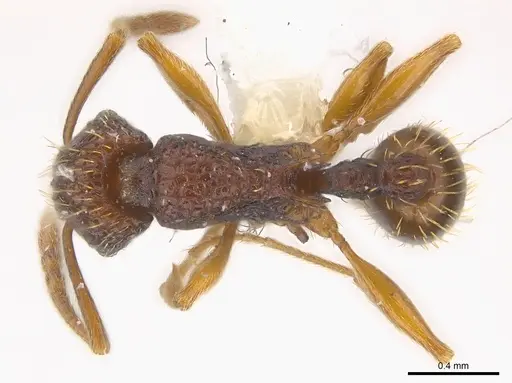
CASENT0365738
View on AntWeb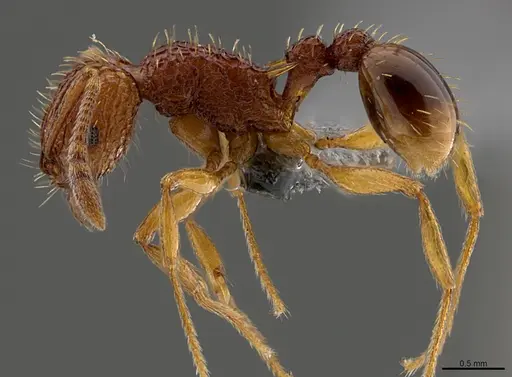
CASENT0901202
View on AntWeb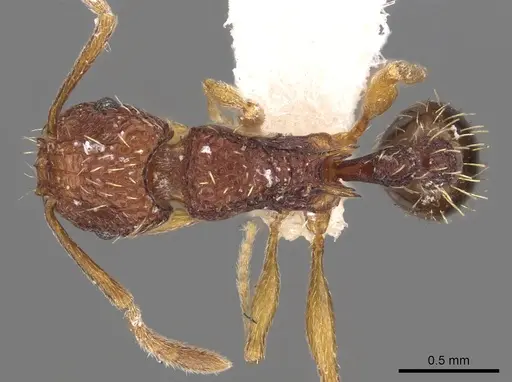
FMNHINS0000047313
View on AntWeb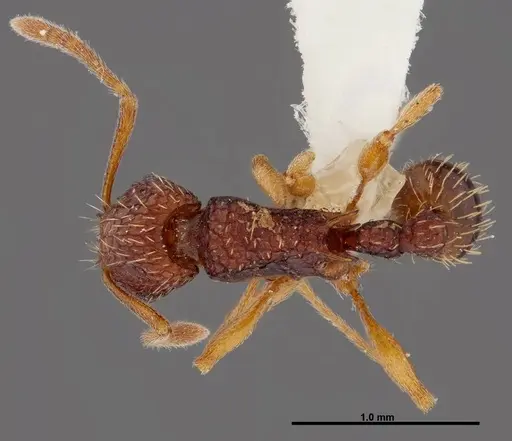
Literature
Loading distribution map...Loading products...