
Tetramorium kali
- Sci. Name
- Tetramorium kali
- Tribe
- Crematogastrini
- Subfamily
- Myrmicinae
- Author
- Hita Garcia & Fisher, 2012
- Distribution
- Found in 1 countries
Introduction
Tetramorium kali is a tiny ant species native to Madagascar, with workers that are very small (head length 0.59-0.73 mm, body length estimated ~2-3 mm) and a uniform yellow to light brown coloration . It belongs to the Tetramorium bonibony group. This species is extremely rare, known from fewer than 15 specimens at three widely separated sites in northern Madagascar: Manongarivo, Montagne d'Ambre, and Marotandrano . It was described in 2012 and lives in montane rainforests at elevations between 400 and 1175 meters . Because it's so rare and almost never kept in captivity, all care recommendations are based on its natural habitat and genus patterns. Like other myrmicine ants, T. kali has a modified stinger used to smear venom onto enemies rather than piercing them.
Quick Summary
- Difficulty: Expert
- Origin & Habitat: Northern Madagascar, three widely separated localities: Manongarivo, Montagne d'Ambre, and Marotandrano. Lives in rainforests and montane rainforests at 400-1175 m elevation [1].
- Colony Type: Unknown. Colony structure has not been documented. Most Tetramorium species have single-queen colonies, but this is unconfirmed for T. kali.
- Size & Growth:
- Queen: Undescribed, queen measurements have not been published [1]
- Worker: Body length estimated ~2-3 mm (head length 0.59-0.73 mm, total length not published) [1]
- Colony: Unknown, only a handful of specimens have ever been collected [1]
- Growth: Unknown
- Development: Unconfirmed, estimated 6-10 weeks based on typical Tetramorium development patterns (Development time has not been directly studied. Estimates are from genus-level data for similar rainforest-dwelling Tetramorium.)
- Antkeeping:
- Temperature: Likely 22-26°C based on its montane rainforest habitat. The elevation range of 400-1175 m suggests it prefers cooler conditions than lowland tropical species. Start in the low-to-mid 20s (°C) and observe colony activity.
- Humidity: High humidity required, think damp rainforest floor. Keep the nest substrate consistently moist but not waterlogged. Montane rainforests are humid environments.
- Diapause: Likely not required, as a tropical Madagascar species, a true diapause is probably unnecessary, though a slight seasonal slowdown may be natural.
- Nesting: No captive nesting data exists. In the wild, specimens were collected from sifted leaf litter and rotting wood [1]. For captivity, a naturalistic setup with moist substrate or a Y-tong nest would be the most appropriate starting point.
- Behavior: Not documented. Based on typical Tetramorium behavior, these are likely generalist foragers that scavenge and hunt small prey. Workers are tiny, so escape prevention must be excellent, they can slip through standard mesh easily. The species uses a smearing sting (subfamily trait), but given the tiny size the effect is expected to be minimal.
- Common Issues: extreme rarity makes obtaining a colony nearly impossible, virtually no captive breeding data exists, keepers would be pioneering all husbandry methods, specific humidity and temperature requirements are unknown and must be inferred, the species may have specialized ecological needs not met in captivity, tiny worker size creates significant escape risk
Availability and Acquisition
Tetramorium kali is one of the rarest ant species in the antkeeping hobby. It was only described in 2012 and is known from fewer than 15 specimens collected in the wild [1]. There are no established captive breeding lines, and wild collection is extremely difficult given the species' limited distribution in northern Madagascar. Unless you have a research connection or permit, obtaining this species is essentially impossible. For most antkeepers, this remains a taxonomic curiosity rather than a realistic keeping target. If you're interested in challenging species, consider more readily available Tetramorium species like T. caespitum or T. bicarinatum, which have established captive populations and documented care requirements.
Natural History and Habitat
This species is endemic to northern Madagascar, where it inhabits rainforests and montane rainforests at elevations between 400 and 1175 meters [1]. The three known localities, Manongarivo, Montagne d'Ambre, and Marotandrano, are widely separated from each other, suggesting patchy distribution. Specimens were collected by sifting leaf litter and rotting wood, indicating it is a litter-dwelling species that forages on the forest floor [1]. The montane rainforest environment has high humidity, moderate temperatures, and dense vegetation. This species appears relatively rare even in its natural habitat, which may indicate specialized ecological needs or limited dispersal ability.
Identification and Morphology
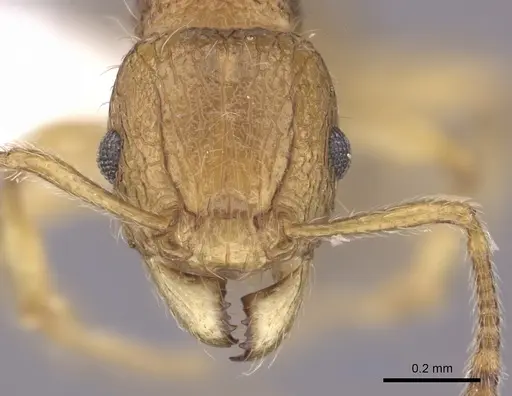
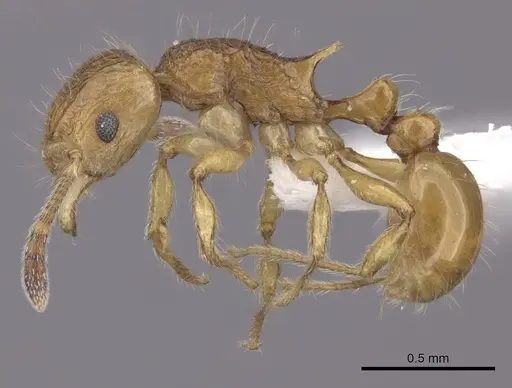
Workers of Tetramorium kali are tiny, with a head length of 0.59-0.73 mm (body length estimated ~2-3 mm) [1]. The body is uniformly yellow to light brown, helping distinguish it from related species [1]. Key identification features include moderately long antennal scapes, lack of a well-developed anterior face on the pronotum, and a distinctive cuneiform petiolar node that is weakly compressed from front to back [1]. It belongs to the Tetramorium bonibony species group. The tiny size and yellow coloration make this species distinctive among Malagasy Tetramorium.
Inferred Care Requirements
Since no captive care data exists for this species, all recommendations must be inferred from its natural habitat and genus-level patterns. Based on its montane rainforest origin, T. kali likely requires high humidity (70-85%) and moderate temperatures in the 22-26°C range. The elevation of 400-1175 m suggests it may prefer conditions cooler than typical lowland tropical ants. In captivity, a naturalistic setup with moist substrate would be most appropriate, mimicking the damp leaf litter environment where wild specimens were found. Feeding would likely follow typical Tetramorium patterns, small live prey like springtails or fruit flies, plus sugar sources like honey water. However, these are educated guesses rather than proven requirements. Any successful captive husbandry of this species would be genuinely pioneering work. [1]
Frequently Asked Questions
Can I keep Tetramorium kali ants as a pet?
Almost certainly not. This is one of the rarest ant species in the world, known from fewer than 15 specimens ever collected. There are no established captive breeding populations, and the species was only described in 2012. Unless you have research connections or permits in Madagascar, obtaining this species is not feasible.
What do Tetramorium kali ants eat?
Unconfirmed. No feeding observations have been documented for this species. Based on typical Tetramorium behavior, they likely scavenge and hunt small invertebrates. In captivity, you would likely need to offer small live prey like springtails, fruit flies, or pinhead crickets, plus sugar sources like honey water. However, this is inferred from genus patterns, not specific to this species.
How big do Tetramorium kali colonies get?
Unknown. The maximum colony size has never been documented. Given the extreme rarity of this species in the wild (fewer than 15 specimens total), colony size data simply doesn't exist. Most Tetramorium species form colonies of a few hundred to a few thousand workers, but this is just an estimate.
Do Tetramorium kali ants sting?
Yes, but the sting is used for smearing venom rather than piercing. As a myrmicine ant (tribe Crematogastrini), T. kali has a modified, flattened spatulate stinger that wipes venom onto enemies. Given the tiny worker size (body length ~2-3 mm), any sting would likely be minor for humans.
What temperature do Tetramorium kali ants need?
Likely 22-26°C based on its montane rainforest habitat at 400-1175 m elevation in Madagascar. This is an estimate, no thermal requirements have been directly studied for this species.
How long does it take for Tetramorium kali to develop from egg to worker?
Unconfirmed. No development data exists for this species. Based on typical Tetramorium development patterns, estimates are 6-10 weeks from egg to first worker at optimal temperature. This is a rough estimate based on genus-level data, not species-specific research.
Are Tetramorium kali good for beginners?
No. This species is not available in the antkeeping hobby and would be an expert-level challenge even if obtainable. The complete lack of captive care data means all husbandry would be experimental. For beginners, established species like Lasius niger, Camponotus floridanus, or more common Tetramorium species are recommended.
Where does Tetramorium kali live in the wild?
Northern Madagascar, specifically in three widely separated localities: Manongarivo, Montagne d'Ambre, and Marotandrano. The species lives in rainforests and montane rainforests at elevations between 400 and 1175 meters, where it forages in leaf litter and rotting wood.
Report an Issue
The current care sheet is based fully on literature. See inconsistencies, or something that's incorrect? Please , it will be resolved after review from an admin. Contributing to the blogs tab also helps providing information, to make us be able to further improve the caresheets. Thank you for your support!
References

This caresheet is licensed under CC BY-SA 4.0 .
Community Blogs
CASENT0198973
View on AntWeb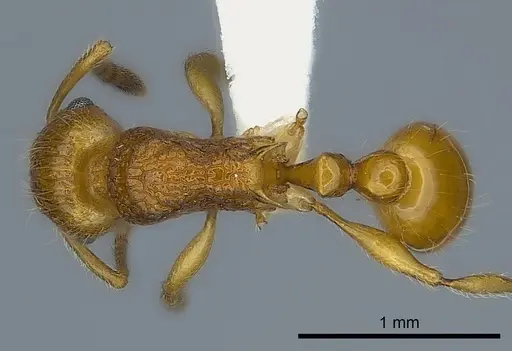
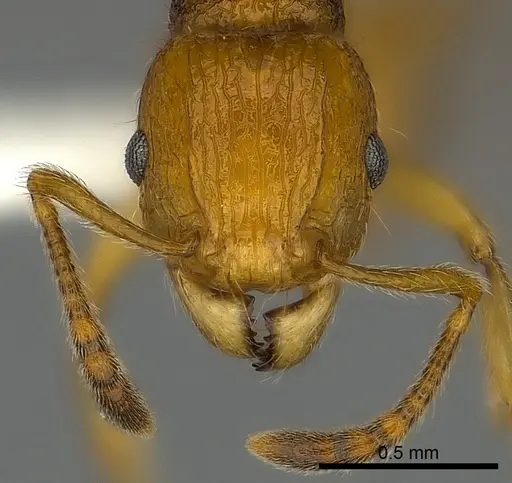
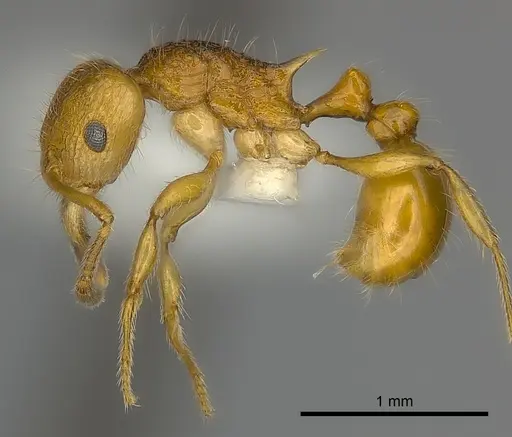
CASENT0235221
View on AntWeb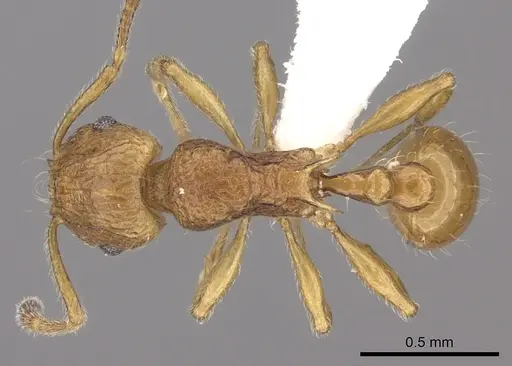
Literature
Loading distribution map...Loading products...