
Tetramorium kakamega
- Sci. Name
- Tetramorium kakamega
- Tribe
- Crematogastrini
- Subfamily
- Myrmicinae
- Author
- Hita Garcia <i>et al.</i>, 2010
- Distribution
- Found in 1 countries
Introduction
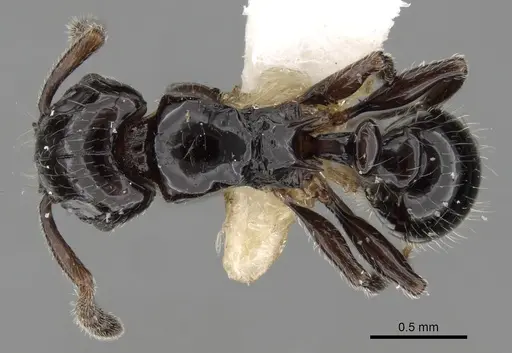
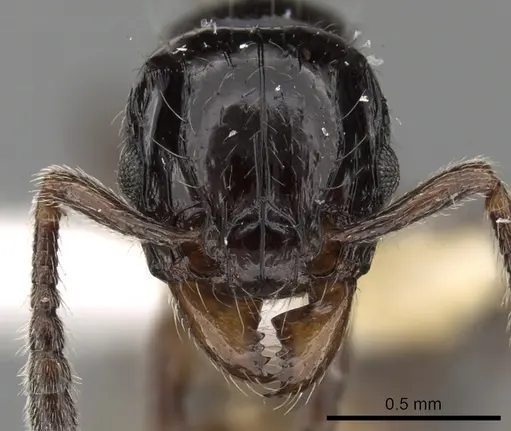
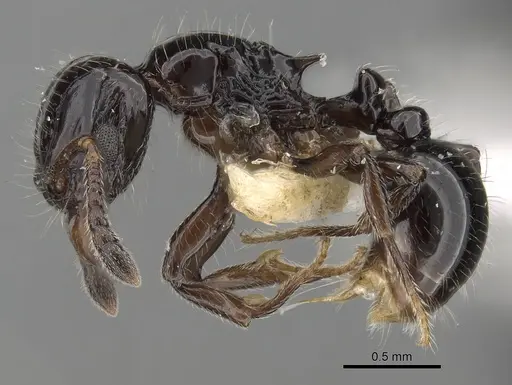
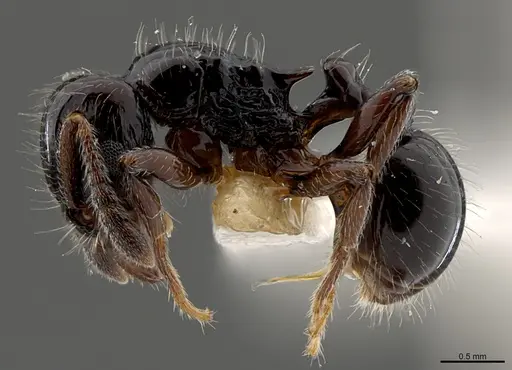
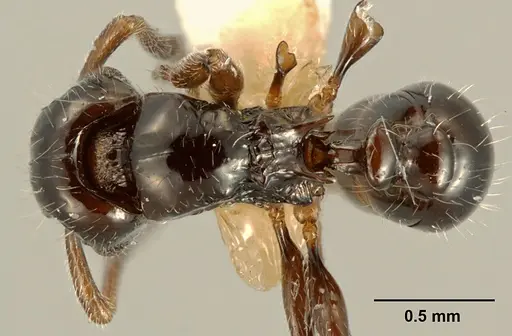
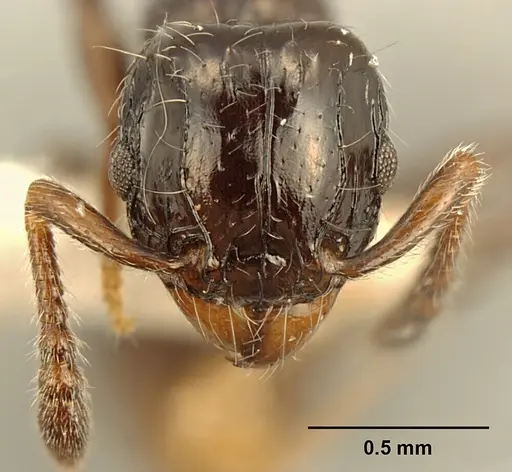
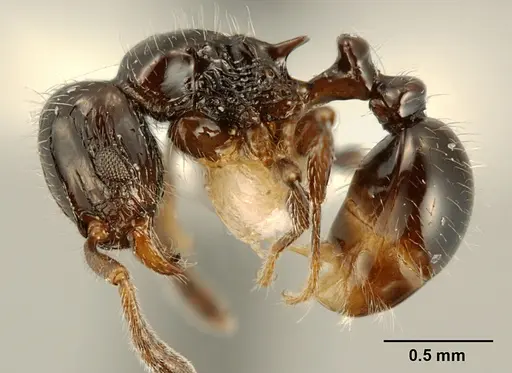
Tetramorium kakamega is a tiny, very dark brown ant from the Kakamega Forest in Western Kenya. Workers are nearly black with lighter brown legs and antennae, and have long, spine-like propodeal spines on their rear . Only known from five worker specimens collected at 1800m in equatorial rainforest, it was originally misidentified as Tetramorium occidentale . This species belongs to the Tetramorium muralti complex within the larger Tetramorium weitzeckeri species group . No queen or colony information has been documented, making this one of the most obscure species in the hobby.
Quick Summary
- Difficulty: Hard
- Origin & Habitat: Kakamega Forest, Western Kenya at 1800m elevation. Collected in equatorial rainforest under the bark of rotten wood [1].
- Colony Type: Unknown, no queen caste has been documented. Only workers are known from the type series [1]. Based on related Tetramorium species, likely monogyne (single queen), but not confirmed.
- Size & Growth:
- Queen: Undescribed, no queen caste has been documented [1]
- Worker: Approximately 2.5-3mm total length (inferred from head and mesosoma measurements) [1]
- Colony: Unknown, only known from 5 worker type specimens. No colony size data exists [1]
- Growth: Unknown, no captive data available
- Development: Unknown, no development data for this species [1] (Development timeline has not been studied. Estimates from related Tetramorium species suggest 6-10 weeks at 22-26°C, but this is unconfirmed.)
- Antkeeping:
- Temperature: Unknown for this species. Based on high-altitude Kenyan rainforest habitat, likely prefers warm conditions (around 22-26°C). Avoid extremes [1].
- Humidity: Unknown. Given rainforest habitat, likely high humidity is required. Keep nest substrate moist but not waterlogged. Provide a water source.
- Diapause: Unknown. Being from equatorial Africa, likely does not require a true diapause, but no data confirms this.
- Nesting: In nature, collected from under bark of rotten wood [1]. A small Y-tong (AAC) nest or a naturalistic setup with rotting wood pieces is recommended. They likely prefer tight, humid chambers.
- Behavior: Workers are small, likely non-aggressive. No sting reported, defense is via venom smearing (typical of the subfamily Myrmicinae, tribe Crematogastrini). Escape risk is high due to tiny size, fine mesh and tight seals needed. Activity level and temperament not directly observed in captivity.
- Common Issues: tiny size makes escape probable without fine mesh barriers and tight seals, extremely limited care data means unexpected requirements may arise, wild-caught specimens may carry unknown parasites or diseases, no queen or founding information available, colony establishment is speculative, slow or failed development possible due to lack of husbandry knowledge
Housing and Nest Setup
Since the colony was found under bark of rotten wood [1], you should aim for a small, tight nest. A Y-tong (AAC) nest with narrow chambers or a test tube setup works well. Avoid tall, open formicaria, these ants feel secure in compact spaces. If using a naturalistic setup, include pieces of rotting wood or cork bark. Always use fluon or petroleum jelly on all openings, their tiny size means they'll get through any gap [1]. A small outworld for feeding is fine.
Feeding and Diet
No specific dietary data exists for this species. Based on typical Tetramorium, they are likely omnivorous. Offer small protein sources like fruit flies, pinhead crickets, or tiny mealworms. Sugar water (1:4 honey to water) or honeydew should be available. Feed small amounts every 2-3 days and remove uneaten prey after 24 hours. Their small size means tiny prey items are substantial.
Temperature and Humidity
No specific temperature or humidity data exists for this species. The type locality is a high-altitude equatorial rainforest (1800m) [1], so likely warm and humid but not extreme. Start with 22-26°C and high humidity. Keep nest substrate moist but not waterlogged. Use a water tube for drinking and humidity. Good ventilation prevents mold. Adjust based on observations.
Colony Development
No queen or colony development has been documented. Only five worker type specimens exist [1]. Typical Tetramorium species are claustral (queens seal themselves in) and monogyne, but this is unconfirmed for T. kakamega. If you manage to found a colony, expect 6-10 weeks from egg to first worker based on related species, but actual timing may differ. Growth rate and maximum colony size are completely unknown.
Temperament and Handling
Workers have not been observed in captivity. Based on the subfamily Myrmicinae and tribe Crematogastrini, they likely use venom smearing rather than stinging as defense. They are probably harmless to keepers. Their tiny size makes them easy to accidentally crush, so handle containers carefully. No aggression toward keepers or other colonies is documented.
Frequently Asked Questions
How long does it take for Tetramorium kakamega to produce first workers?
This is unknown. No captive colonies have been kept. Based on related Tetramorium species, estimate 6-10 weeks at 22-26°C, but actual timing may be different [1].
Can I keep Tetramorium kakamega in a test tube setup?
Probably. A small test tube with a cotton barrier and water reservoir should work for founding, assuming typical Tetramorium founding behavior is followed. However, no founding has been observed for this species.
Do Tetramorium kakamega ants sting?
They likely use venom smearing rather than stinging, typical of the subfamily Myrmicinae tribe Crematogastrini. They are not known to sting and are harmless to keepers.
What do Tetramorium kakamega eat?
Unknown specifically. Based on related Tetramorium species, they are likely omnivorous. Offer small protein sources and sugar water.
Are Tetramorium kakamega good for beginners?
No. This species is not recommended for beginners due to extremely limited care information, unknown colony dynamics, and high escape risk due to tiny size. Only experienced keepers should attempt keeping this species.
How big do Tetramorium kakamega colonies get?
Completely unknown. Only five worker type specimens exist. No colony size data is available [1].
Do Tetramorium kakamega need hibernation?
Unknown. Being from equatorial Kenya, they likely do not require a true diapause, but there is no data to confirm this.
Why are my Tetramorium kakamega escaping?
Their tiny size allows them to squeeze through minimal gaps. Apply fluon or petroleum jelly to all edges and connections. Use fine mesh on ventilation openings and ensure cotton barriers are very tightly packed.
When should I move Tetramorium kakamega to a formicarium?
No data exists. For typical small Tetramorium, wait until the colony has at least 20-30 workers before moving. Use a small, tight nest with appropriately scaled chambers.
Can I keep multiple Tetramorium kakamega queens together?
No data exists. Based on typical Tetramorium, single-queen colonies are likely. Combining queens without evidence is not recommended.
Report an Issue
The current care sheet is based fully on literature. See inconsistencies, or something that's incorrect? Please , it will be resolved after review from an admin. Contributing to the blogs tab also helps providing information, to make us be able to further improve the caresheets. Thank you for your support!
References

This caresheet is licensed under CC BY-SA 4.0 .
Community Blogs
Literature
Loading distribution map...Loading products...