
Tetramorium kabulistanicum
- Sci. Name
- Tetramorium kabulistanicum
- Tribe
- Crematogastrini
- Subfamily
- Myrmicinae
- Author
- Pisarski, 1967
- Distribution
- Found in 1 countries
Introduction
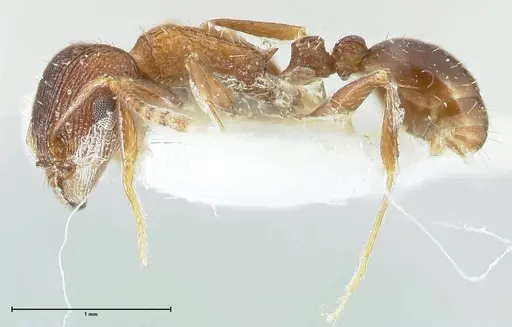
Tetramorium kabulistanicum is a small ant known only from Afghanistan and Turkmenistan in the Palaearctic region . Workers are about 2.8-3.0 mm in total length . This species was first described as a subspecies of Tetramorium striativentre in 1967 and later raised to full species status . It belongs to the striativentre group and is easily recognized by its gaster sculpture: only the front half of the first gastral tergite has dense, lengthwise grooves, while the back half is smooth and shiny . Almost nothing is known about its biology - no ecological or behavioral studies have been published. This makes it one of the least documented ant species available to keepers.
Quick Summary
- Difficulty: Unknown
- Origin & Habitat: Afghanistan and Turkmenistan in the Palaearctic region. Type specimens were collected from Cheikhabad, Afghanistan at 2050 m elevation [1]. The region has a continental climate with cold winters and warm summers, but no specific habitat details are recorded.
- Colony Type: Unknown colony structure. No data exists on whether colonies have one queen (monogyne) or multiple queens (polygyne).
- Size & Growth:
- Queen: Size data unavailable, the scientific literature provides only head measurements, not total body length. Queens are larger than workers but exact length is unknown [1].
- Worker: 2.8-3.0 mm total length [2].
- Colony: Unknown, no colony size data has been documented.
- Growth: Unknown, no development or growth data exists for this species.
- Development: Unknown, no direct measurements exist. Based on typical Tetramorium patterns, expect 6-10 weeks at optimal temperature, but this is an estimate. (No research has examined development time for this species. Estimates are based on genus-level data.)
- Antkeeping:
- Temperature: Unknown, no thermal studies exist. Based on the species' high‑elevation origin (2050 m), a range of 20-26°C is a reasonable starting point. Observe colony activity and adjust accordingly.
- Humidity: Unknown, no humidity data exists. The native region is relatively dry, so provide a drier substrate with a small moist area. A moisture gradient is safer than uniform high humidity.
- Diapause: Unknown, no seasonal data exists. The temperate origin suggests hibernation may be beneficial, but this is unconfirmed. If the colony slows in winter, a cool period at 10-15°C for 2-3 months may help.
- Nesting: Unknown natural nesting behavior. Most Tetramorium species nest in soil or under stones. A standard test tube setup or Y‑tong nest would be appropriate as a starting point.
- Behavior: Behavior is unstudied. Based on typical Tetramorium, workers are likely active foragers that search for food items. The species belongs to the subfamily Myrmicinae (tribe Crematogastrini), which has a modified stinger that smears venom rather than piercing, a defense mechanism often seen in this group. Escape risk is high due to their small size (~3 mm): use fine mesh barriers and tight‑fitting lids. Aggression levels are unknown.
- Common Issues: no biological data exists, all care is estimated from genus patterns., colony structure unknown, cannot confirm if single or multi-queen., founding behavior unconfirmed, likely claustral like other Tetramorium, but not documented., temperature and humidity requirements are estimates only., slow growth is possible, patience required as with many poorly studied species.
Identification and Appearance
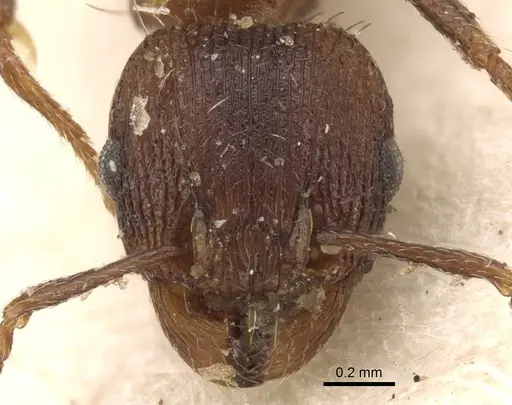
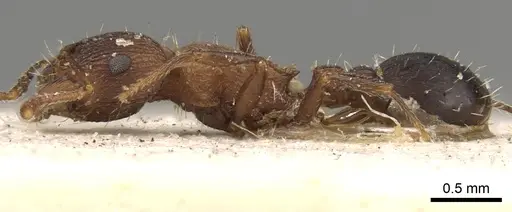
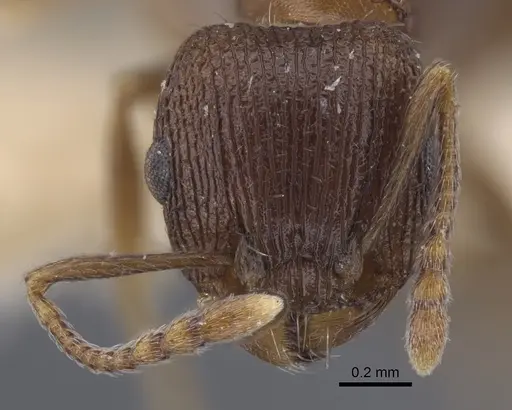
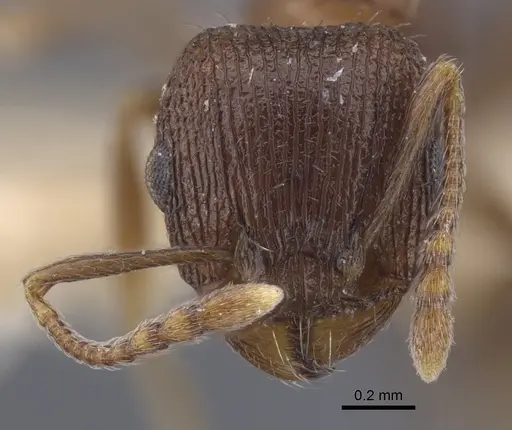
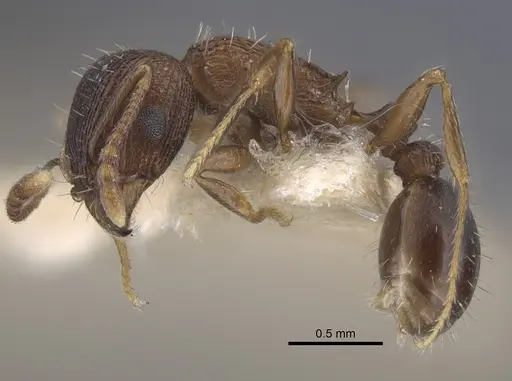
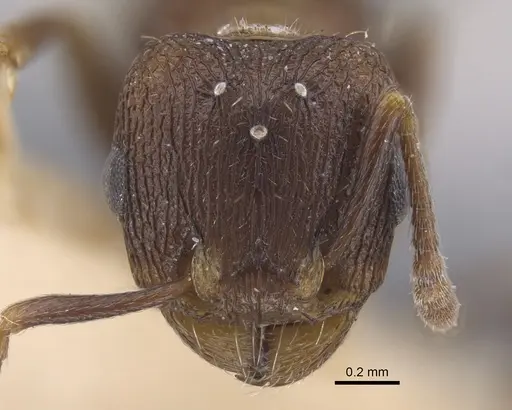
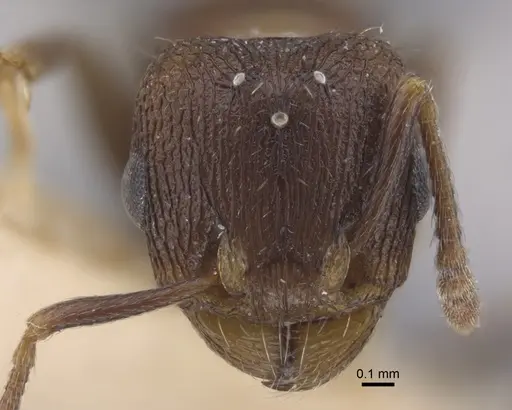
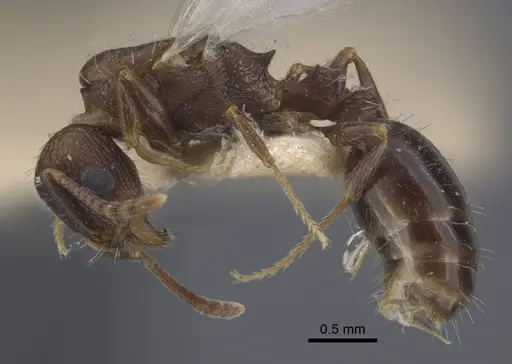
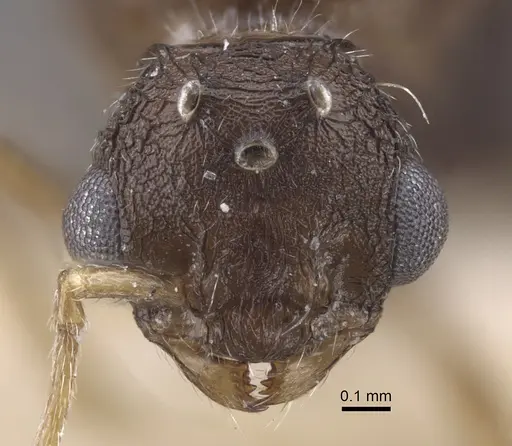
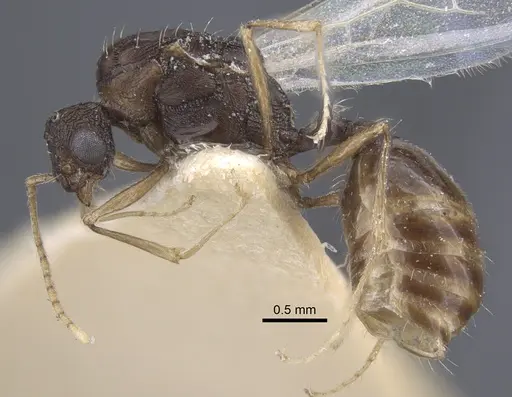
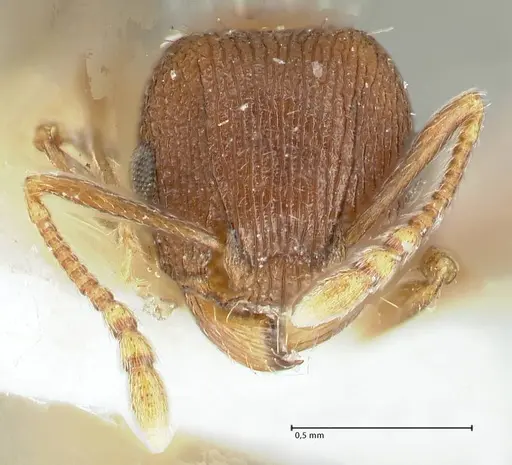
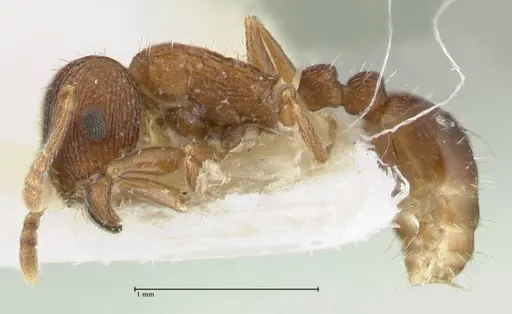
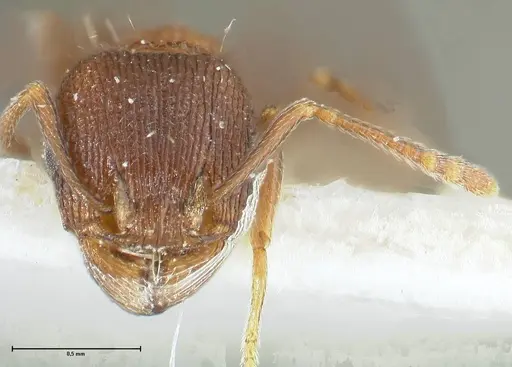
Workers of Tetramorium kabulistanicum are small,2.8-3.0 mm in total length [2]. They are easily distinguished from related species by the sculpturing of the first gastral tergite: only the basal half (front half) has dense, lengthwise grooves (striato-punctation), while the remaining posterior half is smooth and shiny. This contrasts with Tetramorium striativentre, which has grooves covering the entire first gastral tergite [1]. The top of the thorax (mesosoma) and waist have wavy lengthwise ridges (sinuous longitudinal rugae). The head also has coarse ridges, with about 11-15 ridges between the frontal carinae [1]. Queens and males are known from morphology but their total body lengths are not reported in the literature.
Distribution and Origin
This species is known only from Afghanistan and Turkmenistan in the Palaearctic region [1]. The type locality is Cheikhabad, southern Afghanistan, at an elevation of 2050 m [1]. This mountainous area has a continental climate with cold winters and warm summers. No specific habitat information, such as forest type or nesting substrate, has been recorded [1].
Unknown Biology and Care Challenges
The biggest challenge in keeping Tetramorium kabulistanicum is that absolutely no biological data exists for this species. Existing studies cover only morphology and distribution, nothing about colony structure, founding behavior, diet, temperature preferences, humidity needs, nuptial flight timing, or any other aspect of its biology [1]. This means keepers must rely on genus‑level information from better‑studied Tetramorium species and make educated guesses. The species was described in 1967 and raised to full species status in 1992,but no ecological or behavioral studies have been published since [1]. Expect a period of experimentation to determine optimal conditions, document your observations carefully to contribute to our understanding of this species.
Housing and Nesting
Since natural nesting behavior is unknown, start with standard Myrmicinae husbandry. A clean test tube setup works well for founding colonies, if the species is claustral (as most Tetramorium are), the queen will seal herself in and raise the first brood on her own body reserves. For established colonies, Y‑tong (AAC) nests or plaster nests work well for small Myrmicinae. Provide a water tube for humidity access. Given the small size (~3 mm), ensure escape‑proof barriers: fine mesh and tight‑fitting lids are essential. The 2050 m elevation of the type locality suggests they may tolerate cooler conditions than typical room temperature, so watch their activity levels. [1]
Feeding and Diet
Diet is unconfirmed for this species. Like most Tetramorium, they likely accept a variety of foods: small insects (fruit flies, pinhead crickets, mealworm pieces), honey or sugar water, and possibly seeds. Start with standard ant feeds: protein sources 2-3 times weekly and sugar water constantly available. Observe feeding behavior and adjust based on colony acceptance. Given the unknown biology, document what foods your colony accepts and rejects to build husbandry knowledge for this species.
Temperature and Seasonal Care
No specific temperature data exists. The Afghan and Turkmenistan origin suggests a temperate species that may prefer temperatures in the 20-26°C range, similar to many Palaearctic Tetramorium. Start at room temperature (around 22°C) and observe colony behavior, if workers cluster near the warm side of a gradient, slightly increase temperature, if they avoid heat sources, reduce slightly. Hibernation is not documented but may be beneficial given the temperate origin. If the colony shows reduced activity in winter, consider a cool period around 10-15°C for 2-3 months, but this is speculative rather than a confirmed requirement.
Defense Mechanism
Tetramorium kabulistanicum belongs to the subfamily Myrmicinae, tribe Crematogastrini. In this group, the stinger is modified into a flattened, spatulate shape that is used to wipe or smear venom onto enemies, rather than piercing flesh. This defense mechanism is known as 'smearing' and is typical of the tribe. There are no species‑specific studies on T. kabulistanicum's behavior, but it is expected to use this same method.
Frequently Asked Questions
How do I care for Tetramorium kabulistanicum ants?
Care is unknown since no biological data exists for this species. Start with standard Tetramorium care: test tube setup for founding, moderate temperature around 22°C, and basic ant feeds. Document your observations as you learn what works for your colony [1].
What do Tetramorium kabulistanicum ants eat?
Diet is unconfirmed. Offer small protein sources (fruit flies, tiny insects, mealworm pieces) and sugar water. Most Tetramorium are generalist feeders, so your colony will likely accept standard ant foods, but document acceptance to build husbandry knowledge.
How long does it take for Tetramorium kabulistanicum to raise first workers?
Development time is unknown, no research exists on this species. Based on typical Tetramorium, expect 6-10 weeks from egg to first worker at optimal temperature, but this is an estimate.
What temperature do Tetramorium kabulistanicum ants need?
No specific data exists. Based on their Afghan/Turkmenistan origin, try 20-26°C and observe colony behavior. The 2050 m elevation of the type locality suggests some tolerance for cooler conditions [1].
Do Tetramorium kabulistanicum ants need hibernation?
Diapause requirements are unknown. Temperate origin suggests hibernation may be natural, but this is unconfirmed. If your colony slows significantly in winter, a cool period around 10-15°C for 2-3 months may help.
How big do Tetramorium kabulistanicum colonies get?
Maximum colony size is unknown, no colony size data has been documented. Most Tetramorium colonies reach several hundred to a few thousand workers. Expect moderate growth over months to years.
Can I keep multiple Tetramorium kabulistanicum queens together?
Colony structure is unknown. No data exists on whether this species is single-queen (monogyne) or multi-queen (polygyne). Do not combine unrelated foundresses unless you observe them accepting each other.
Are Tetramorium kabulistanicum ants aggressive?
Aggression levels are unstudied. Most Tetramorium are not particularly aggressive but will defend their nest if threatened. Their small size means they pose minimal sting risk, like other Myrmicinae they have a stinger, but smearing venom is less painful than piercing.
Is Tetramorium kabulistanicum a good species for beginners?
Difficulty level is unknown, this is one of the least documented ant species in the hobby. Only experienced keepers willing to experiment should attempt this species, as no established care protocols exist [1].
Where is Tetramorium kabulistanicum found?
This species is known only from Afghanistan and Turkmenistan in the Palaearctic region. Type specimens were collected from Cheikhabad, Afghanistan at 2050 m elevation [1].
How do I identify Tetramorium kabulistanicum?
Workers are small (2.8-3.0 mm) with distinctive abdominal sculpture, only the basal half of the first gastral tergite has dense lengthwise grooves, while the posterior half is smooth and shiny. This distinguishes it from related species like T. striativentre which has grooves covering the entire first gastral tergite [1].
Why is so little known about Tetramorium kabulistanicum?
This species was described in 1967 but has received almost no research attention since. Only morphological studies exist, no ecological or behavioral research has been published. This is one of the least studied ant species available in the antkeeping hobby [1].
Report an Issue
The current care sheet is based fully on literature. See inconsistencies, or something that's incorrect? Please , it will be resolved after review from an admin. Contributing to the blogs tab also helps providing information, to make us be able to further improve the caresheets. Thank you for your support!
References

This caresheet is licensed under CC BY-SA 4.0 .
Community Blogs
CASENT0280929
View on AntWeb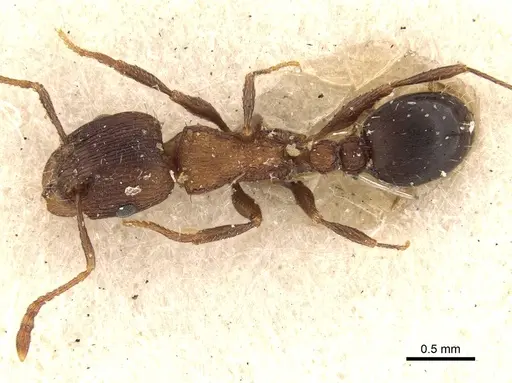
CASENT0917252
View on AntWeb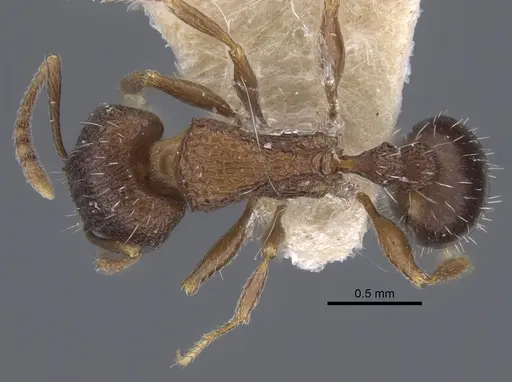
CASENT0917253
View on AntWeb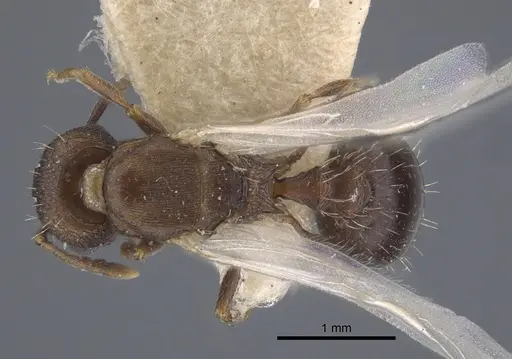
CASENT0917254
View on AntWeb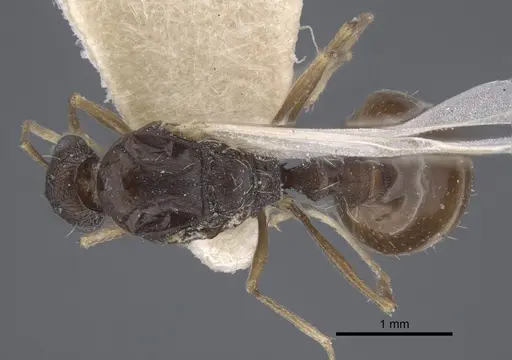
FOCOL1858-1
View on AntWeb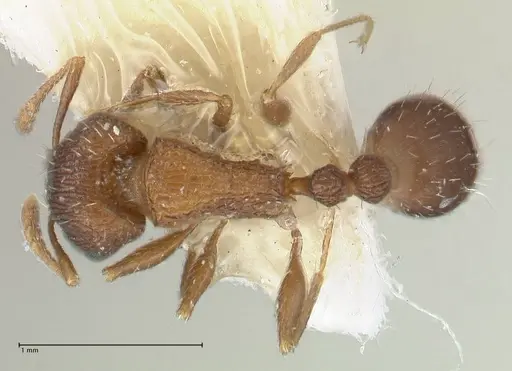
FOCOL1858-2
View on AntWeb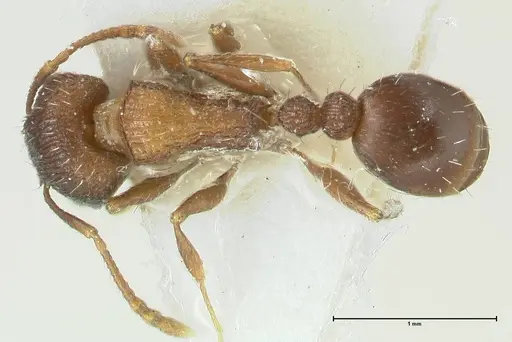
Literature
Loading distribution map...Loading products...