
Tetramorium isoelectrum
- Sci. Name
- Tetramorium isoelectrum
- Tribe
- Crematogastrini
- Subfamily
- Myrmicinae
- Author
- Hita Garcia & Fisher, 2012
- Distribution
- Found in 1 countries
Introduction
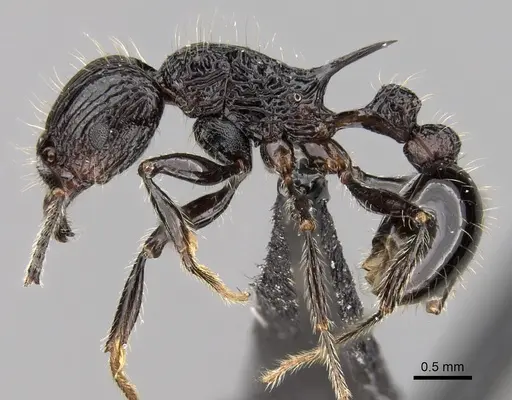
Tetramorium isoelectrum is a very rare ant species known only from three rainforest localities in northeastern Madagascar . Workers are uniformly very dark brown to black and have extremely long propodeal spines, which sets them apart from most related species . The species name 'isoelectrum' means 'equal to electrum', reflecting its close similarity to Tetramorium electrum . Only seven specimens have ever been collected, all from lowland to mid-elevation rainforests (450-880 m) in the Antsiranana region . Because so little is known about its biology, this ant is virtually absent from the hobby and should only be kept by experienced enthusiasts who can adapt care based on observation.
Quick Summary
- Difficulty: Expert
- Origin & Habitat: Northeastern Madagascar (Antsiranana region), found at Betaolana Forest, Befingotra, and Marojejy. All localities are lowland to mid-elevation rainforests along the Bekona River, at 450-880 m elevation [1][2].
- Colony Type: Colony structure is unconfirmed. Based on typical Tetramorium patterns, colonies are likely monogyne (single queen), but this has not been documented.
- Size & Growth:
- Queen: Unknown, the queen has not been described in available literature [1].
- Worker: Size data unavailable, the published description does not provide total body length. Workers are small, typical of the genus Tetramorium [1].
- Colony: Unknown, only seven wild specimens have ever been collected [1].
- Growth: Unconfirmed, estimated moderate based on genus patterns.
- Development: Unconfirmed. Based on typical Myrmicinae development in tropical rainforest conditions, estimate 6-10 weeks from egg to first worker. (Development timeline is estimated, this species has not been studied in captivity.)
- Antkeeping:
- Temperature: Keep at 22-26°C, stable warmth is important. A gentle heat gradient can be provided, but avoid overheating the nest..
- Humidity: High humidity is essential, aim to keep the nest substrate consistently moist but not waterlogged, with good ventilation to prevent mold..
- Diapause: Unconfirmed. As a tropical species from Madagascar, true diapause is unlikely, but they may reduce activity in cooler conditions. No overwintering requirement has been documented [1].
- Nesting: In nature, workers were collected on low vegetation and from ground samples in rainforest [1]. For captivity, a naturalistic setup with moist substrate (terrarium style) or a well‑humidified Y‑tong/plaster nest works well. Provide tight, small chambers because the workers are tiny.
- Behavior: Temperament is unconfirmed, but most Tetramorium species are moderately aggressive when defending their nest. Workers likely use a modified stinger to smear venom onto enemies (typical of the tribe Crematogastrini). Because workers are very small (body length uncertain, but less than 2 mm), escape prevention must be excellent, use fine mesh (≤0.5 mm openings) and seal all gaps. They are probably generalist foragers, searching for small insects and sugary liquids.
- Common Issues: very small size means escapes are possible without fine mesh barriers and tight‑fitting lids., high humidity requirements can lead to mold problems if ventilation is inadequate., completely unstudied in captivity, all care is inferred from genus patterns and habitat., only known from a handful of wild specimens, captive breeding success is uncertain., tropical species may struggle if room temperature drops below 20°C for extended periods.
Natural History and Distribution
Tetramorium isoelectrum is one of the rarest ant species known, described from only seven workers collected at three rainforest sites in northeastern Madagascar: Betaolana Forest, Befingotra, and Marojejy [1]. All collection events occurred in the Antsiranana region at elevations of 450-880 m, within lowland to mid‑elevation rainforest [1]. The type locality is Betaolana Forest along the Bekona River, where specimens were sampled in March 2009 [2]. The species was formally described in 2012 by Hita Garcia and Fisher [1]. The extremely long propodeal spines and uniformly dark brown to black coloration distinguish it from other members of the Tetramorium tortuosum species group [1]. Its natural history remains almost entirely unknown, no queens, males, or nests have ever been found.
Identification and Distinguishing Features
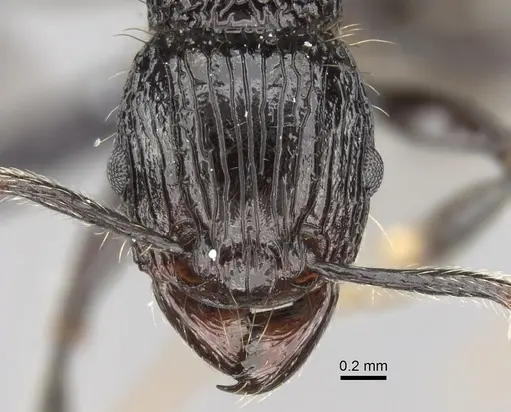
Workers are characterized by their very long propodeal spines (among the longest in the T. tortuosum group) and uniform dark brown to black color [1]. The head is longer than wide, and the mandibles bear distinct longitudinal sculpture, unlike the smooth mandibles of the closely related T. elf [1]. The petiolar node is rectangular and distinctly higher than long, giving a characteristic profile [1]. In dorsal view, the node is slightly longer than wide [1]. The overall shape, combined with small size and dark coloration, makes this species visually distinct among Malagasy Tetramorium.
Housing and Nest Setup
Because this ant lives in humid rainforest, humidity management is critical [1]. Choose a nest that can maintain a moist environment, such as a Y‑tong (AAC) nest, a plaster nest, or a naturalistic terrarium with damp soil substrate. The nest should have chambers scaled to the small workers, tight enough to feel secure but with room to move. Keep the nest at 22-26 °C, you can create a gentle heat gradient with a heating cable on one side, but place the heat source above the nest to avoid drying out the soil. Workers are tiny, so use very fine mesh (≤0.5 mm) on all ventilation holes and ensure tight seals on lids and tubing. A water tube attached to the nest helps maintain high humidity.
Feeding and Diet
Based on typical Tetramorium feeding biology, these ants are likely generalist omnivores that accept both protein and sugar sources. Offer appropriately sized prey such as fruit flies, small crickets, or mealworm pieces. Sugar can be provided as honey water or sugar water, especially once the colony grows. As rainforest foragers, they may also collect honeydew if you provide aphids or scale insects. Feed small amounts every 2-3 days and remove uneaten food within 24 hours to prevent mold. Since this species has never been kept in captivity, start with standard Tetramorium foods and adjust based on what they accept.
Colony Development and Growth
No captive breeding data exists for Tetramorium isoelectrum [1]. As a tropical rainforest species, development is probably continuous and relatively fast, perhaps 6-10 weeks from egg to first worker at optimal temperature (around 24-26 °C). The first nanitic workers will be even smaller than normal. Patience is essential, this species may grow more slowly than common hobby ants. The fact that only seven wild specimens have ever been collected suggests colonies are naturally small [1]. Monitor for signs of stress (workers dying outside the nest, queen not laying) and adjust humidity and temperature accordingly.
Challenges and Considerations
The biggest challenge with Tetramorium isoelectrum is the total lack of captive husbandry data, everything must be inferred from related species and the limited natural history information [1]. This makes the species unsuitable for beginners and best left to experienced antkeepers who can adapt based on colony behavior. The extremely limited known wild population (only seven specimens) raises conservation concerns, do not collect from the wild and only acquire specimens from legitimate captive breeding efforts. The small worker size demands upgraded escape prevention, inspect all barriers regularly and use multiple precautions. If you manage to establish a colony, share your observations with the antkeeping community.
Frequently Asked Questions
How long does it take for Tetramorium isoelectrum to produce first workers?
The exact development timeline is unconfirmed. Based on typical Myrmicinae development in tropical conditions, expect approximately 6-10 weeks from egg to first worker at optimal temperature (around 24-26 °C). This is an estimate since no captive breeding data exists for this species.
What do Tetramorium isoelectrum ants eat?
While not directly studied, they likely accept standard ant foods: small insects (fruit flies, pinhead crickets, mealworm pieces) for protein, and sugar sources (honey water, sugar water). As rainforest foragers, they may also collect honeydew. Start with prey items small enough for the tiny workers.
Are Tetramorium isoelectrum ants good for beginners?
No. This species is not recommended for beginners. There is zero captive husbandry data, all care is inferred, and the species is extremely rare (only seven specimens ever found in the wild) [1]. It should only be kept by experienced enthusiasts.
What temperature and humidity do Tetramorium isoelectrum ants need?
Keep them warm (22-26 °C) and humid (nest substrate consistently moist, with good ventilation). This matches their natural rainforest habitat in northeastern Madagascar at 450-880 m elevation [1]. Use a water tube for humidity and consider a gentle heat gradient.
How big do Tetramorium isoelectrum colonies get?
Colony size is unknown, only seven wild specimens have ever been collected [1]. Based on typical Tetramorium species, colonies might reach several hundred workers, but this is purely an estimate.
Do Tetramorium isoelectrum ants sting?
Tetramorium belongs to the subfamily Myrmicinae, which includes many species with functional stingers. Workers of T. isoelectrum likely possess a modified stinger used to smear venom onto enemies (tribe Crematogastrini). The sting would be mild given the small size of the ants.
Can I keep multiple Tetramorium isoelectrum queens together?
Colony structure is unconfirmed for this species. Based on typical Tetramorium patterns, they likely form single‑queen colonies. Combining unrelated queens is not recommended without evidence that they accept colony fusion.
What makes Tetramorium isoelectrum different from other Tetramorium?
This species has extremely long propodeal spines (among the longest in the T. tortuosum group) and uniform very dark brown to black coloration. It is closely related to T. electrum and T. elf, with the name 'isoelectrum' meaning 'equal to electrum' reflecting this similarity [1][2].
Where is Tetramorium isoelectrum naturally found?
Only in northeastern Madagascar, specifically at Betaolana Forest, Befingotra, and Marojejy. All localities are rainforests in the Antsiranana region at elevations of 450-880 m. The type locality is Betaolana Forest along the Bekona River [1].
Is Tetramorium isoelectrum available in the antkeeping hobby?
Extremely rare. This species was only described in 2012 and only seven specimens have ever been collected in the wild [1]. It is virtually unavailable in the hobby and should only be kept by dedicated enthusiasts committed to establishing captive colonies from legitimate sources.
Report an Issue
The current care sheet is based fully on literature. See inconsistencies, or something that's incorrect? Please , it will be resolved after review from an admin. Contributing to the blogs tab also helps providing information, to make us be able to further improve the caresheets. Thank you for your support!
References

This caresheet is licensed under CC BY-SA 4.0 .
Community Blogs
CASENT0152199
View on AntWeb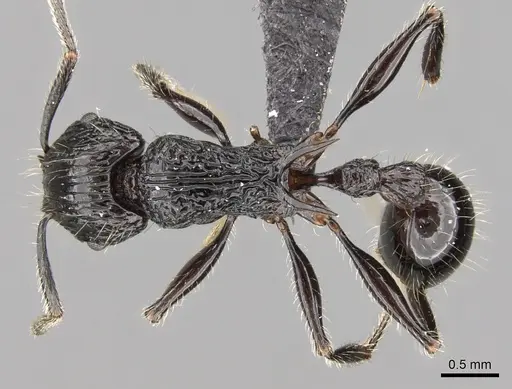
Literature
Loading distribution map...Loading products...