
Tetramorium inquilinum
- Sci. Name
- Tetramorium inquilinum
- Tribe
- Crematogastrini
- Subfamily
- Myrmicinae
- Author
- Ward <i>et al.</i>, 2015
- Distribution
- Found in 2 countries
Introduction
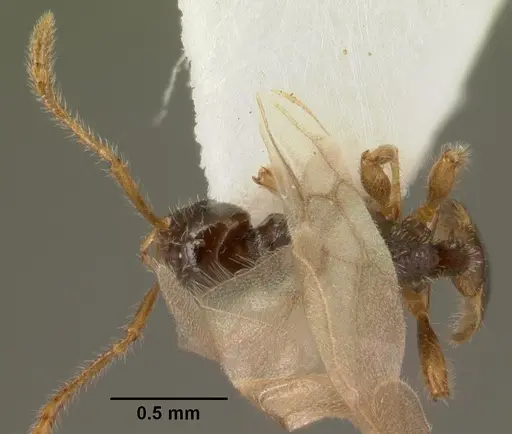
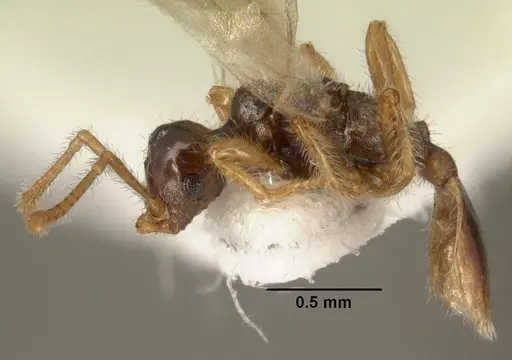
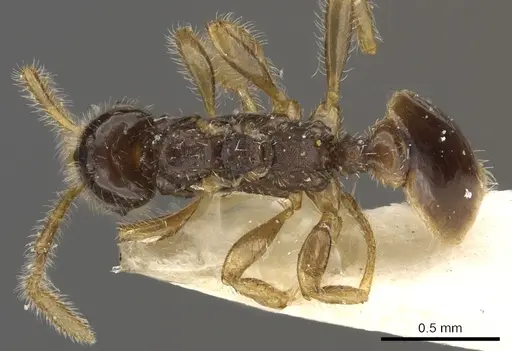
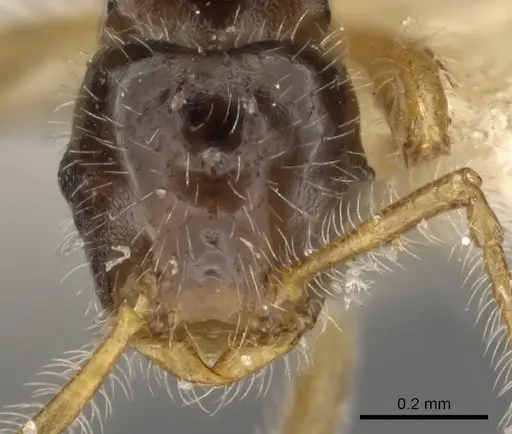
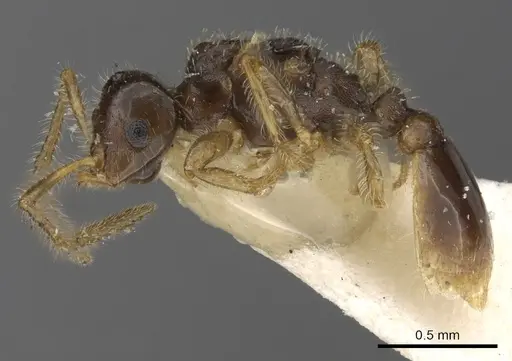
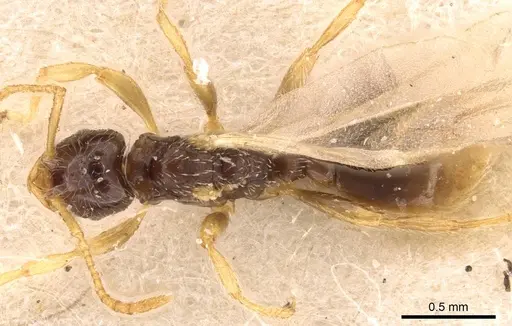
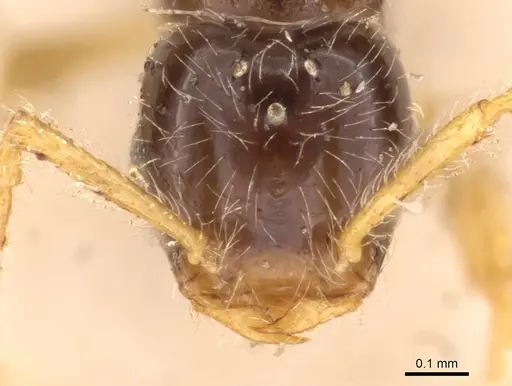
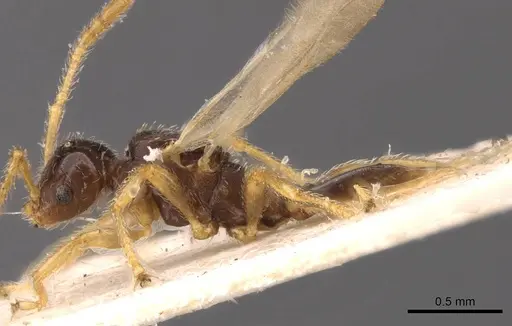
Tetramorium inquilinum is one of the most extreme social parasites known in the ant world. Originally described as Teleutomyrmex schneideri, this tiny species has no worker caste and exists entirely within the nests of its host species, Tetramorium caespitum and Tetramorium impurum . Queens measure only about 2.5mm total length - remarkably small for a Tetramorium . Their most distinctive feature is their ectoparasitic lifestyle: they spend much of their time riding on the backs of host queens, clinging with unusually large tarsal claws . The species name 'inquilinum' means 'lodger' or 'tenant' - a perfect description of this ant's lifestyle as a permanent houseguest in someone else's colony. Their sting and poison apparatus are reduced, and they are completely passive .
Quick Summary
- Difficulty: Expert
- Origin & Habitat: European Alps, found in the Swiss Alps, French Alps, French Pyrenees, and Cantabrian Mountains in Spain at altitudes ranging from 1,660m to 2,300m [1][4]. They inhabit Juniper-Arctostaphylos woodland with thick leaf litter and scattered rocks, ideal habitat for their host species [2].
- Colony Type: Permanent social parasite with no worker caste. Lives exclusively in host colonies of Tetramorium caespitum or T. impurum. Multiple physogastric (reproductively active) queens can coexist in a single parasitized nest, typically riding on the host queen's back [2].
- Size & Growth:
- Queen: ~2.5mm total length [2]
- Worker: No workers exist, this is a workerless species [1]
- Colony: A parasitized host colony contains up to several thousand host workers, with one to several T. inquilinum queens per nest [2]
- Growth: Unknown, cannot be kept in captivity
- Development: Not applicable, this species produces only new queens and males, no workers [2] (T. inquilinum queens lay eggs that develop into new queens and males. The host workers also continue producing workers and sexuals from the host queen's eggs [2])
- Antkeeping:
- Temperature: Not applicable for captive keeping, this species cannot be maintained without its host colony
- Humidity: Not applicable, dependent on host colony conditions
- Diapause: Likely follows host colony patterns, but captive keeping has not been achieved
- Nesting: Lives exclusively within host nests, cannot be kept independently
- Behavior: Extremely passive and inactive. Queens ride on host queens and are fed through regurgitation by host workers. They contribute nothing to colony economy and are essentially completely dependent [2]. The sting and poison apparatus are reduced, so they cannot sting [2]. Males are degenerate 'pupoid' forms with thin, greyish cuticle. The species mates within the host nest [2]. Queens are highly attractive to host workers, who lick them frequently [2].
- Common Issues: This species cannot be kept in captivity, it is an obligate social parasite requiring a living host colony to survive, Extremely rare and localized, not available through any antkeeping trade, Listed as Vulnerable (VU) on the IUCN Red List, legally protected in many European countries where it occurs, collecting queens or disturbing colonies may be illegal, Attempting to keep this species would require keeping its host species (Tetramorium caespitum/impurum) and successfully introducing the parasite, never documented in captivity, No established protocols exist for maintaining this species in artificial conditions, The species has reduced sting and poison apparatus, but this is irrelevant as they cannot survive outside a host colony
Why This Species Cannot Be Kept
Tetramorium inquilinum is one of the most specialized social parasites known and cannot be maintained in captivity under any known conditions. This is not a matter of difficulty, it is fundamentally impossible with current knowledge. The species has no worker caste and is entirely dependent on host workers for survival. Queens cannot forage, cannot seal themselves in to found colonies, and cannot survive without being tended by host workers [2]. To keep this species, you would need to: (1) locate and collect a wild colony of Tetramorium caespitum or T. impurum, (2) successfully introduce T. inquilinum queens into that colony, and (3) maintain both species together indefinitely. This has never been documented in captivity and would require conditions that are essentially impossible to achieve. Additionally, the species is extremely rare and localized in the wild, listed as Vulnerable on the IUCN Red List, and collecting queens is likely illegal in protected areas where it occurs [1][2].
The Ectoparasitic Lifestyle
T. inquilinum represents the extreme end of social parasitism. Unlike typical ant parasites that live inside the nest, these queens spend much of their time riding externally on the host queen's body, a behavior called ectoparasitism [3]. Their morphology is highly specialized for this lifestyle: they have unusually large tarsal claws and arolia (tiny pads between claws) that allow them to grip the smooth chitinous surface of their host [2]. The ventral surface of their abdomen is strongly concave, letting them press their bodies close to the host. When given a choice, they position themselves on the top of the host queen's thorax or abdomen. If no host queen is available, they will grasp workers, pupae, or even dead ants [2]. After mating inside the host nest, fertilized queens either stay and begin laying in the same nest or fly out to search for new Tetramorium colonies to infest. The hitchhiking behavior is primarily observed on the host queen within the nest [2].
Morphological Adaptations
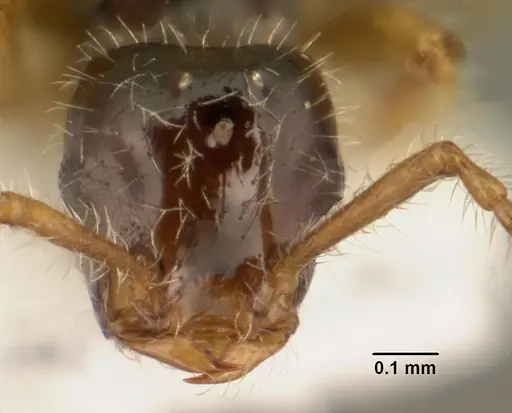
The body of T. inquilinum shows extensive degeneration correlated with its loss of social functions. The queens have reduced labial and postpharyngeal glands, completely absent maxillary and metapleural glands, and degenerate mandibles that cannot secure food independently [2]. The sting and poison apparatus are reduced, consistent with their completely passive lifestyle, they rely on host workers for defense [2]. Their integument is thin and less pigmented, giving them a shining brown appearance that contrasts with the opaque blackish-brown of their hosts. The abdominal segments are widely overlapping and can stretch remarkably, when queens become physogastric (reproductively active), their abdomens swell dramatically with fat body and enlarged ovarioles [2]. The brain is reduced in size with visible degeneration in associative centers. Males are equally degenerate, they have a 'pupoid' form with thin, greyish cuticle, thick petiole and postpetiole, and a soft abdomen deflected downward at the tip [2].
Host Species and Distribution
T. inquilinum parasitizes species within the Tetramorium caespitum species-group, specifically Tetramorium caespitum and Tetramorium impurum [1]. The species is phylogenetically closer to its host than to any other ant, suggesting it may have evolved directly from a free-living offshoot of the host species [2]. Its distribution is limited to high-altitude regions of the European Alps: the Swiss Alps (type locality at Saas-Fee near Zermatt), French Alps (near Briançon), French Pyrenees, and the Cantabrian Mountains in Spain [1][4]. Populations occur at elevations between 1,660m and 2,300m [1]. The ant fauna in these areas includes Formica fusca, F. lugubris, Tetramorium caespitum, Leptothorax acervorum, and other typically boreal European species, an assemblage remarkably prone to social parasitism [2].
Frequently Asked Questions
Can I keep Tetramorium inquilinum as a pet ant?
No. This species cannot be kept in captivity. It is an obligate social parasite that requires a living host colony (Tetramorium caespitum or T. impurum) to survive. It has no workers and cannot forage or care for itself. The species has never been maintained in artificial conditions and there are no established protocols for doing so. Additionally, it is extremely rare in the wild, listed as Vulnerable on the IUCN Red List, and likely protected in many areas where it occurs [1][2].
Why does Tetramorium inquilinum have no workers?
This species represents an extreme case of social parasitism where the worker caste has been completely lost through evolution. Queens cannot perform any colony labor, they cannot forage, cannot care for brood, and cannot even feed themselves. They are entirely dependent on host workers for food (through regurgitation), grooming, and care of their young [2]. The host workers continue functioning normally, producing workers from the host queen's eggs while the parasite queens produce only new queens and males [2].
How do T. inquilinum queens reproduce?
Parasite queens lay eggs directly within the host nest. Each physogastric queen can lay approximately one egg every thirty seconds, an extraordinary rate [2]. Their eggs develop into new T. inquilinum queens and males, not workers. The host queen continues laying eggs that develop into host workers and sexuals. A single parasitized nest typically contains a mix of T. inquilinum brood (queens and males) alongside host worker brood [2]. Mating occurs within the host nest [2].
Do T. inquilinum ants sting?
No. The sting and poison apparatus are reduced in this species [2]. Additionally, as a completely dependent parasite that never leaves the host nest, it has no need for defensive stinging. The species is entirely passive and inactive, spending most of its time riding on the host queen or being tended by host workers.
What makes Tetramorium inquilinum so special?
This species is often called the 'ultimate ant' (Teleutomyrmex means 'final ant' in Greek) because it represents the most extreme form of social parasitism known in ants [2]. It has lost not just workers but virtually all independent survival capabilities. Queens cannot feed themselves, cannot found colonies, cannot defend themselves, they are completely helpless without their host. Their bodies are degenerated in nearly every way: reduced glands, degenerate mandibles, reduced brain, reduced sting apparatus. Yet they persist as a species because they are so exquisitely adapted to their parasitic lifestyle that they don't need any of these structures [2].
Where can I find Tetramorium inquilinum in the wild?
This species is found only in high-altitude regions of the European Alps: the Swiss Alps (around Saas-Fee near Zermatt), French Alps (near Briançon), French Pyrenees, and Cantabrian Mountains in Spain [1][4]. It occurs at elevations between 1,660m and 2,300m in Juniper-Arctostaphylos woodland with thick leaf litter [2]. However, the species is extremely rare, localized, and protected by law in many countries. We strongly recommend against attempting to find it, enjoy this fascinating species through scientific literature instead.
Is Tetramorium inquilinum endangered?
The species is listed as VU (Vulnerable) on the IUCN Red List [2]. Its populations are small and isolated, occurring only in specific high-altitude locations in the Alps [2]. The combination of extreme specialization, limited distribution, and rarity makes it vulnerable to habitat disturbance and climate change.
Can I keep the host species instead?
You could potentially keep Tetramorium caespitum or Tetramorium impurum as pets, these are common, widespread species that are suitable for intermediate antkeepers. However, even if you kept the host species, introducing T. inquilinum would be essentially impossible. The parasite queens need to be accepted by an established host colony, and research shows host colonies often reject foreign parasite queens (Stumper found colonies from Luxembourg rejected parasites from Switzerland) [2]. There is no known method to successfully introduce this parasite to a captive host colony.
Report an Issue
The current care sheet is based fully on literature. See inconsistencies, or something that's incorrect? Please , it will be resolved after review from an admin. Contributing to the blogs tab also helps providing information, to make us be able to further improve the caresheets. Thank you for your support!
References

This caresheet is licensed under CC BY-SA 4.0 .
Community Blogs
Literature
Loading distribution map...Loading products...