
Tetramorium humbloti
- Sci. Name
- Tetramorium humbloti
- Tribe
- Crematogastrini
- Subfamily
- Myrmicinae
- Author
- Forel, 1891
- Distribution
- Found in 9 countries
Introduction
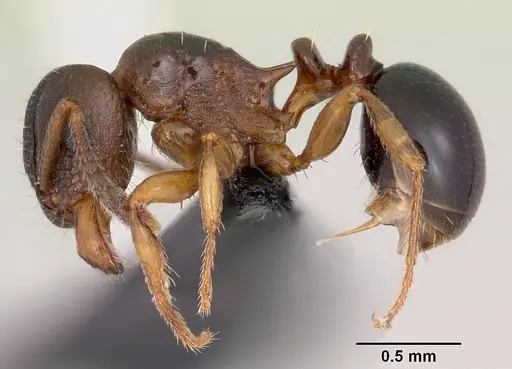
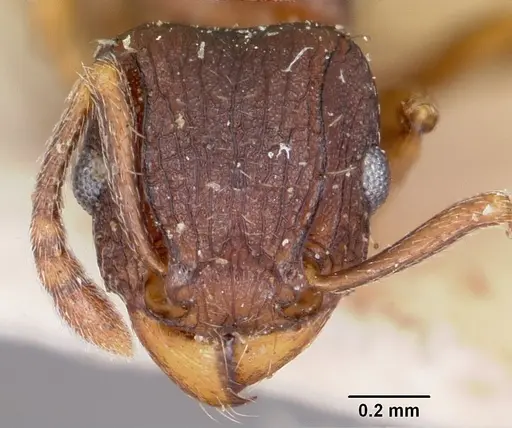
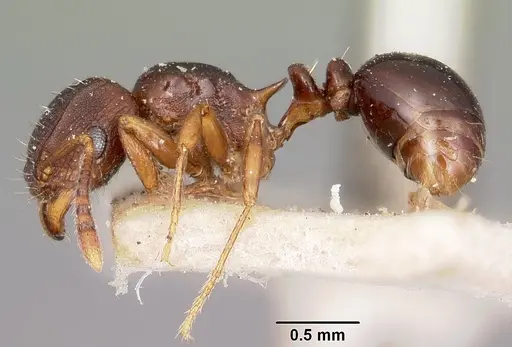
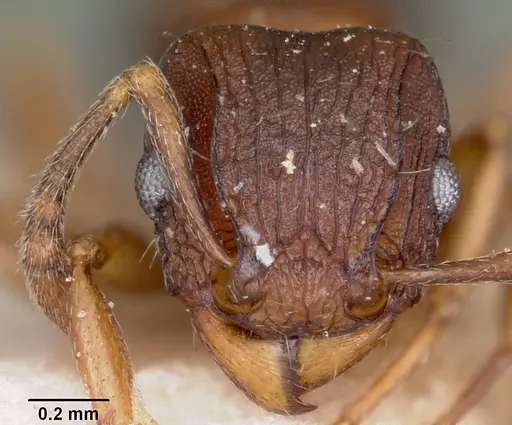
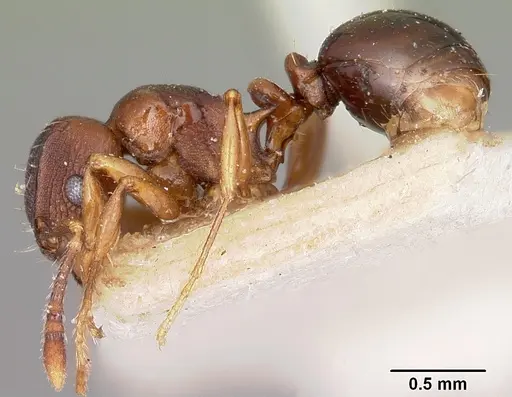
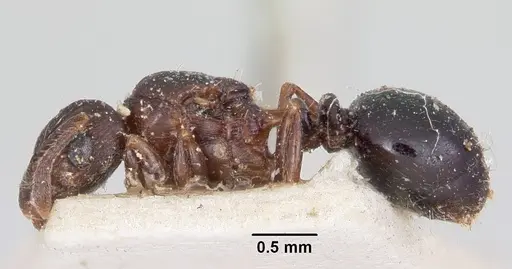
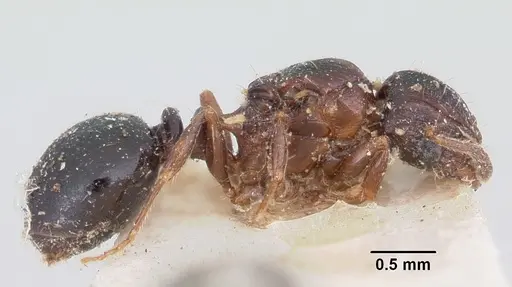
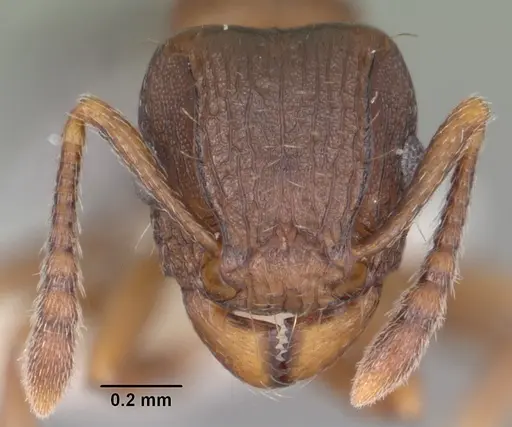
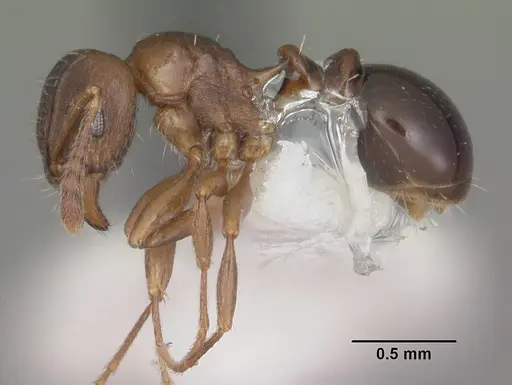
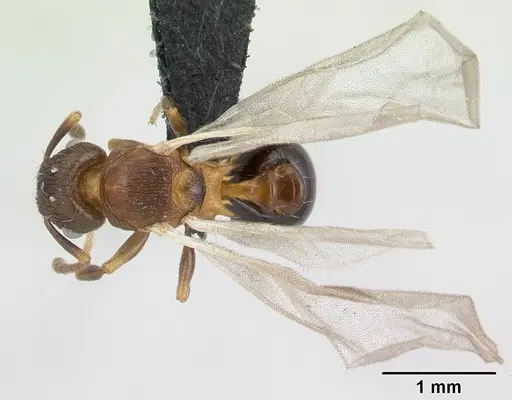
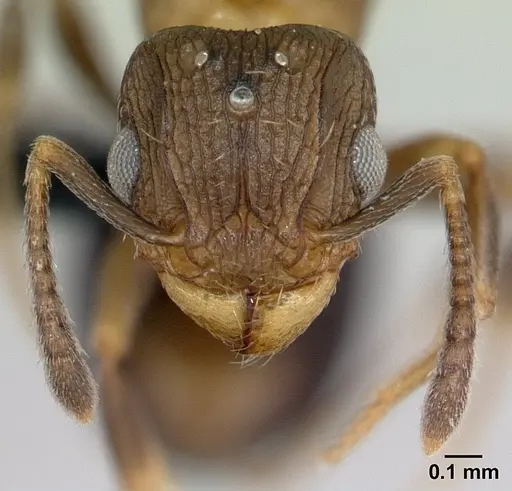
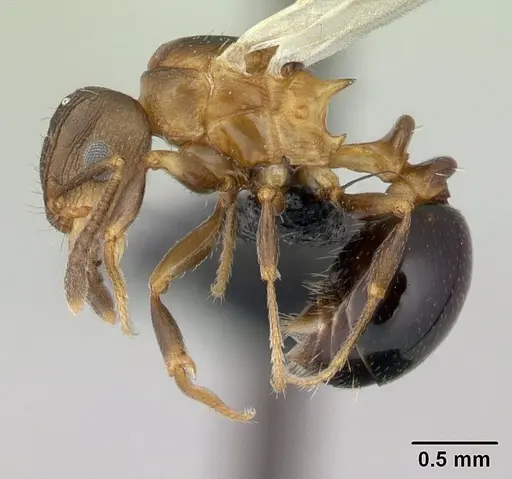
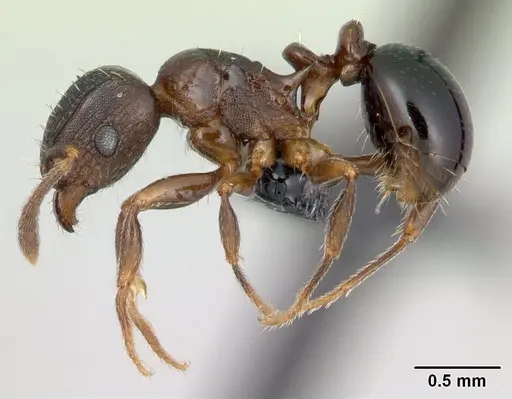
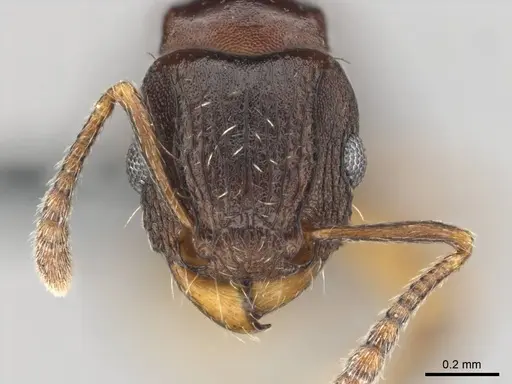
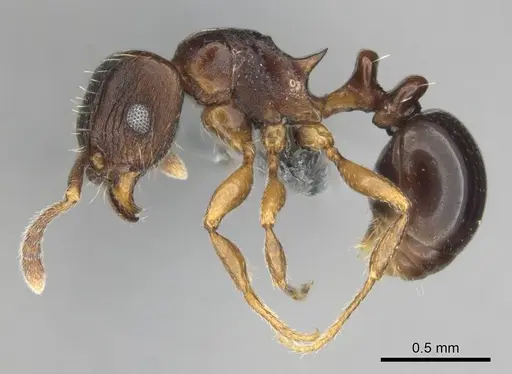
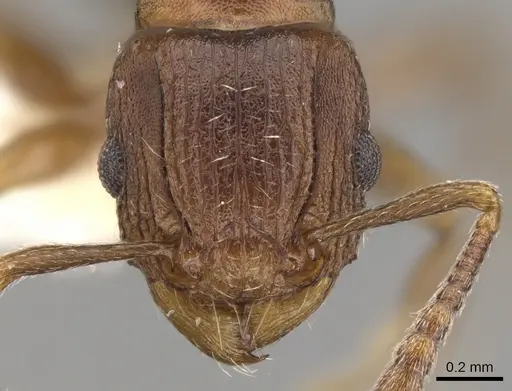
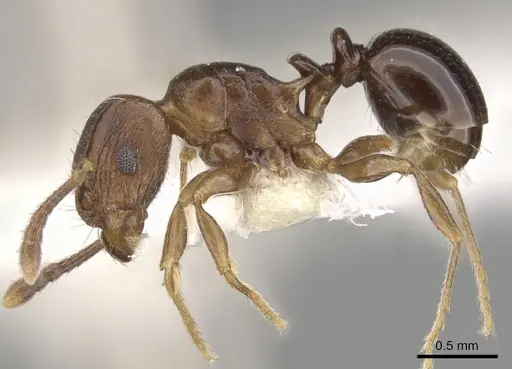
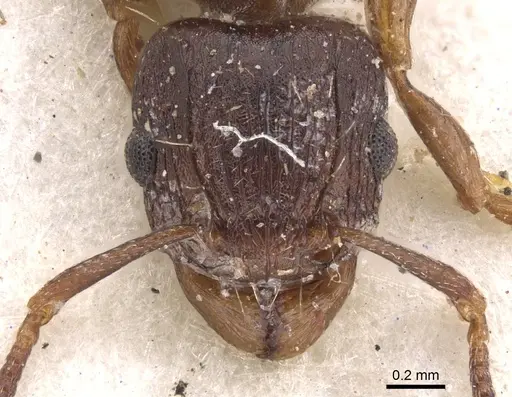
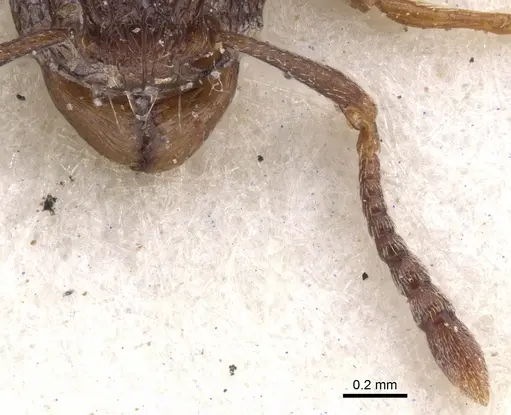
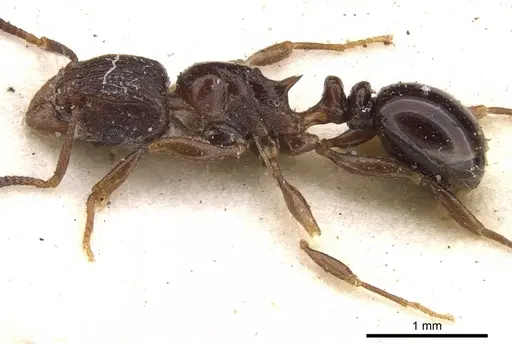
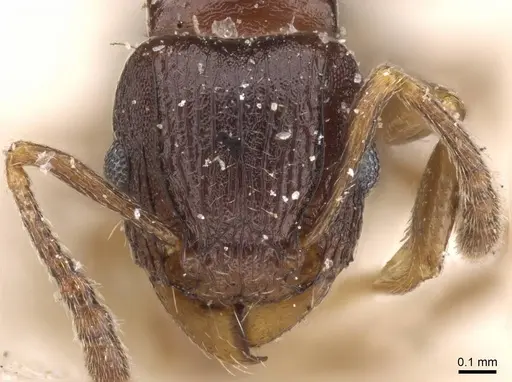
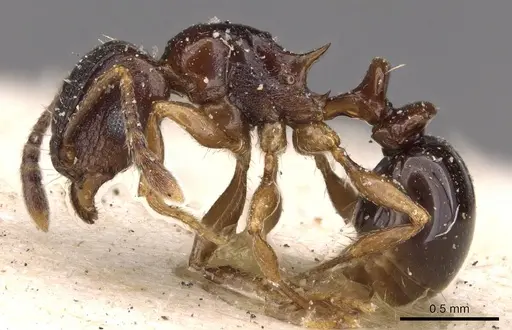
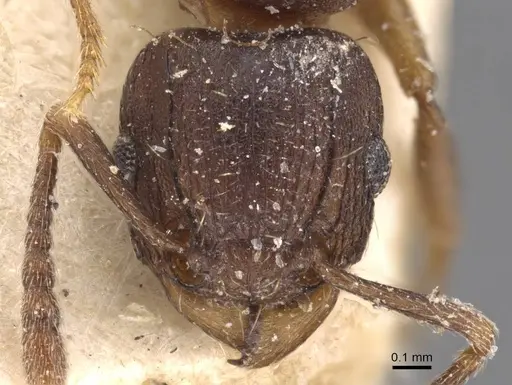
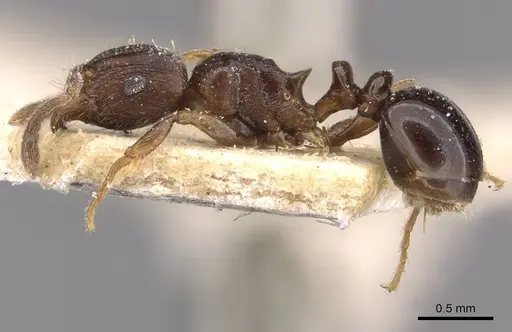
Tetramorium humbloti is a small, robust ant species with workers measuring 3.4-4.1mm in total length . Workers are dark brown to light reddish-brown, often with a darker gaster . The species is easy to identify by its strongly squamiform (scale-like) petiole and postpetiole, which are highly compressed from front to back, and by the complete lack of standing hairs on the first gastral tergite . The mesosoma, especially the pronotum, is smooth and shiny with little to no sculpturing . This species belongs to the Tetramorium weitzeckeri species group and is unusual because it's the only member of its group found in the Malagasy region - it was introduced there from mainland Africa .
Quick Summary
- Difficulty: Easy
- Origin & Habitat: Native to the African continent from South Africa to Tanzania, and introduced to the Malagasy region including Comoros, Mauritius, Mayotte, Nosy Be, and Madagascar [2][3]. In Africa, it prefers open savannah and woodlands. In Madagascar it's remarkably flexible, turning up in rainforests, dry forests, coastal dunes, scrubs, disturbed forests, and even coffee plantations [4].
- Colony Type: Unknown, colony structure has not been described in the literature.
- Size & Growth:
- Antkeeping:
- Temperature: Keep at 22-26°C, these are warm-climate ants from tropical and subtropical regions [4]. A gradient with a warmer spot up to 26°C and a cooler area around 22°C is ideal.
- Humidity: Moderate to high humidity. They adapt to a wide range of conditions, from dry forests to rainforests [4]. Keep the nest substrate moderately moist but not waterlogged, with some drier areas available.
- Diapause: Unknown, given their tropical/subtropical origin, true hibernation is unlikely, but no studies confirm this. Keep warm year-round.
- Nesting: Standard formicarium setups work well. They accept test tubes for founding, and later Y-tong (AAC) or plaster nests. The species' natural habitat flexibility suggests they are not picky about nest type [4].
- Behavior: Tetramorium humbloti belongs to the Crematogastrini tribe, which uses a unique defense: a modified, flattened stinger that wipes or smears venom onto enemies rather than piercing. Workers are active, fast-moving foragers. They are not particularly aggressive but will defend the nest. They are good climbers, so make sure your setup is escape-proof.
- Common Issues: limited information, much of the biology is unknown, so be prepared to experiment, may be introduced in non-native regions, never release workers or queens into the wild, requires warm conditions year-round, avoid prolonged temperatures below 20°C, no specific disease data, use standard quarantine for wild-caught colonies
Housing and Nest Setup
Start a new colony in a test tube setup, it's the simplest and most reliable method. Once the colony outgrows the tube, move them to a formicarium. Y-tong (AAC) or plaster nests work well. Thanks to their natural habitat flexibility, they seem to adapt to a range of nest types [4]. Provide a moisture gradient: one part of the nest slightly moist, another drier. Avoid acrylic nests, which don't hold humidity well.
Feeding and Diet
Like most Tetramorium, T. humbloti is likely omnivorous with a preference for protein. Offer small insects (fruit flies, small crickets, mealworms) and sugar water or honey water. Since specific dietary data are lacking, watch what the colony takes and adjust. Remove uneaten prey after 24 hours to prevent mold.
Temperature and Seasonal Care
Maintain a steady 22-26°C. Use a heating cable on one side to create a gradient. Don't let temperatures drop below 20°C for long periods. Because their native range is tropical and subtropical, they likely do not need a cold winter rest. Keep them warm year-round [4][3].
Behavior and Defense
Workers are active, fast-moving foragers. They belong to the Crematogastrini tribe, so their stinger is flattened and used to smear venom onto attackers, not to inject it. They are not aggressive toward the keeper but will defend their nest if disturbed. Their long propodeal spines may also help in defense.
Colony Development
Almost nothing is known about colony founding and growth in this species. There are no published data on queen founding behavior, development time, or mature colony size. Expect to learn by observation.
Identification Tips
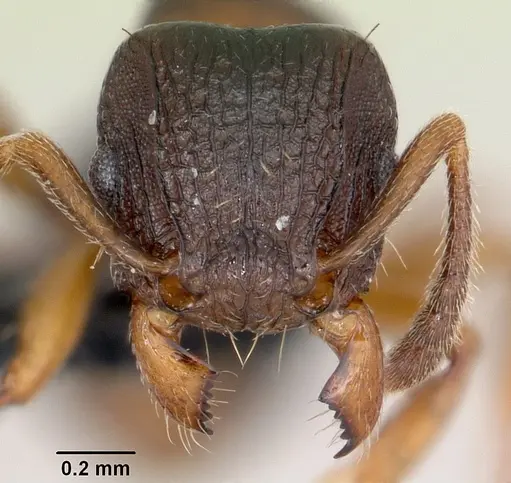
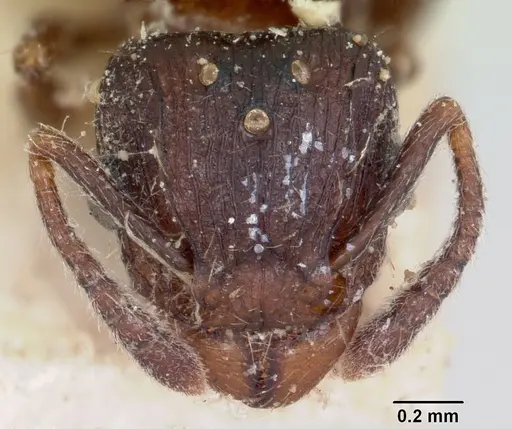
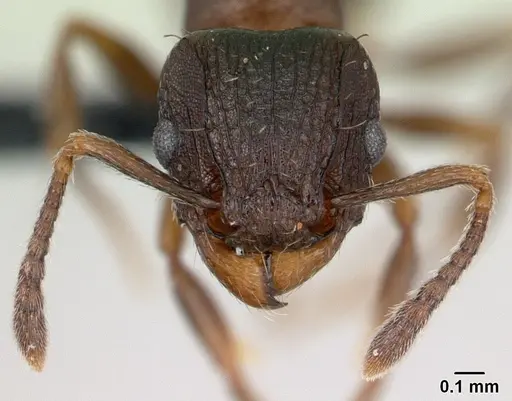
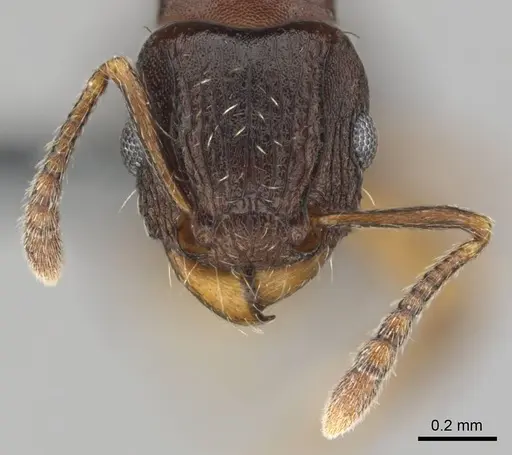
Tetramorium humbloti is identified by these features: long, acute propodeal spines (PSLI 29-39), the mesosoma, especially the pronotum, is unsculptured, smooth and shiny, the first gastral tergite has no standing hairs [2][3]. The petiole and postpetiole are strongly squamiform (scale-like) and in dorsal view about 3‑4 times wider than long [2]. Color varies from light reddish‑brown to dark brown, often with a darker gaster [2].
Frequently Asked Questions
Are Tetramorium humbloti ants good for beginners?
Caring for them seems straightforward because of their adaptability, but there's very little published information. You'd be figuring things out as you go. If you want a well-studied species, consider common Tetramorium caespitum or Lasius niger instead.
What temperature do Tetramorium humbloti ants need?
Keep them at 22-26°C year-round. They come from warm climates and likely don't need a winter cooling period [4].
Do Tetramorium humbloti ants sting?
Yes, they have a stinger, but it's modified for smearing venom rather than piercing. Their sting is not considered medically significant to humans, at most a mild irritation.
What do Tetramorium humbloti ants eat?
No specific diet has been published. Offer small insects (fruit flies, small crickets) and sugar water. Watch what they accept and adjust accordingly.
How big do Tetramorium humbloti colonies get?
Unknown, colony size has not been documented in the literature.
Do Tetramorium humbloti ants need hibernation?
Probably not, they come from tropical and subtropical areas. Keep them warm all year without a cold period [4].
Can I keep multiple Tetramorium humbloti queens together?
No information is available on colony queen numbers. Without evidence, it's safest to assume each colony should have only one queen. Do not mix unrelated queens.
What makes Tetramorium humbloti different from other Tetramorium?
It's the only member of the T. weitzeckeri group found in the Malagasy region (introduced). Key features: smooth, shiny mesosoma, especially the pronotum, and absolutely no standing hairs on the first gastral tergite [4][2][3].
When should I move my Tetramorium humbloti colony to a formicarium?
Start them in a test tube. When the colony fills the tube and you see consistent brood production, move them to a Y-tong or plaster nest. There's no fixed worker number, just watch the space.
Is Tetramorium humbloti an invasive species?
It's native to mainland Africa but has been introduced to Madagascar and several Indian Ocean islands [4]. To be safe, never release any ants outdoors if you live outside its native range.
Report an Issue
The current care sheet is based fully on literature. See inconsistencies, or something that's incorrect? Please , it will be resolved after review from an admin. Contributing to the blogs tab also helps providing information, to make us be able to further improve the caresheets. Thank you for your support!
References

This caresheet is licensed under CC BY-SA 4.0 .
Community Blogs
CASENT0059691
View on AntWeb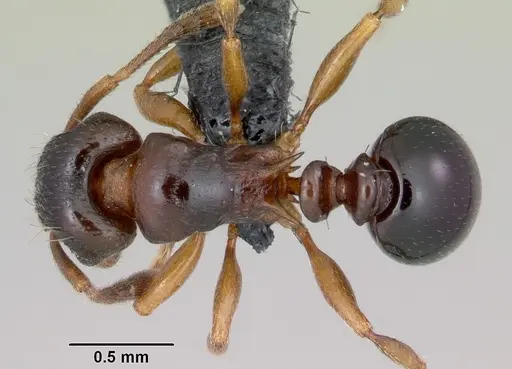
CASENT0101295
View on AntWeb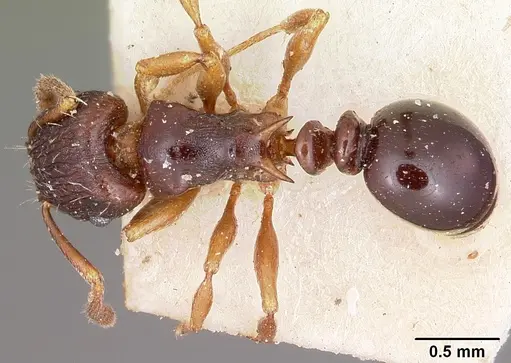
CASENT0101296
View on AntWeb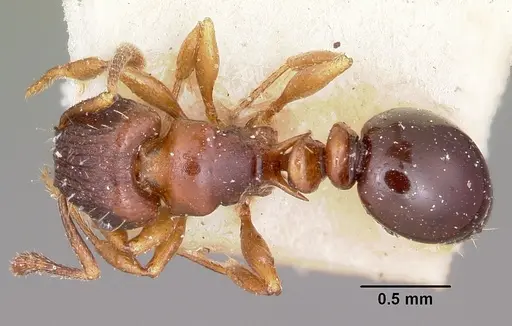
CASENT0101737
View on AntWeb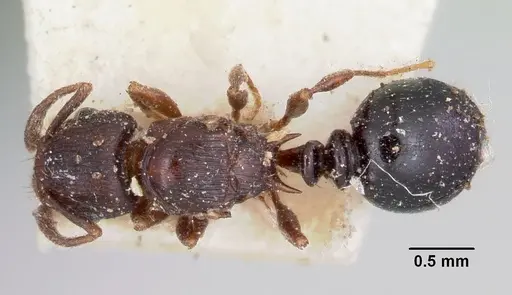
CASENT0102391
View on AntWeb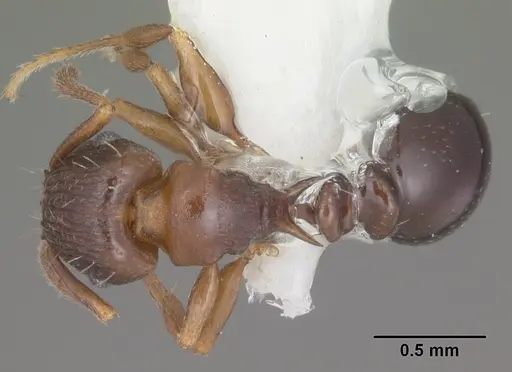
CASENT0132784
View on AntWeb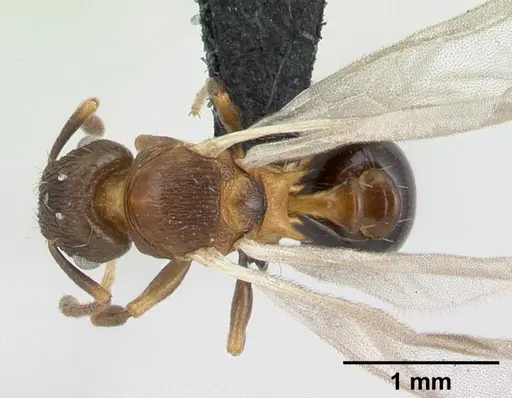
CASENT0134851
View on AntWeb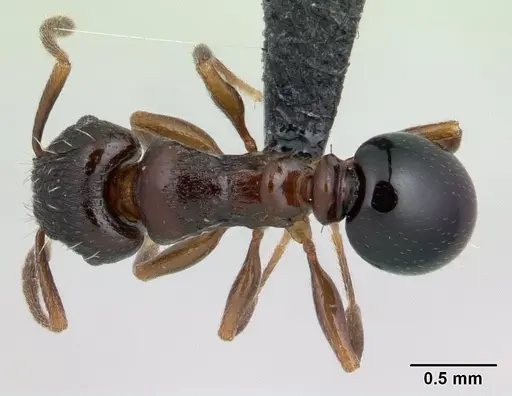
CASENT0250260
View on AntWeb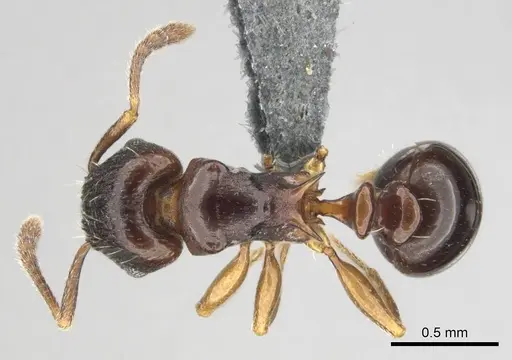
CASENT0900677
View on AntWeb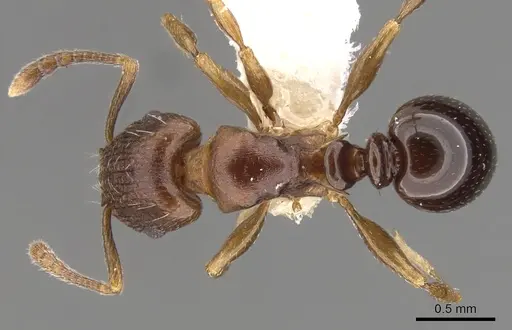
CASENT0901157
View on AntWeb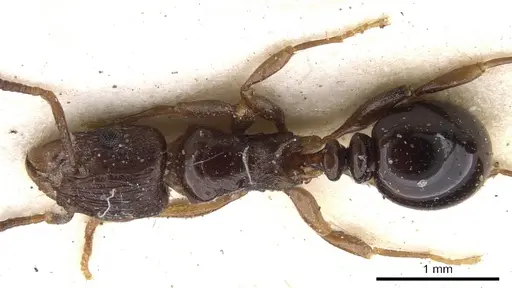
CASENT0909182
View on AntWeb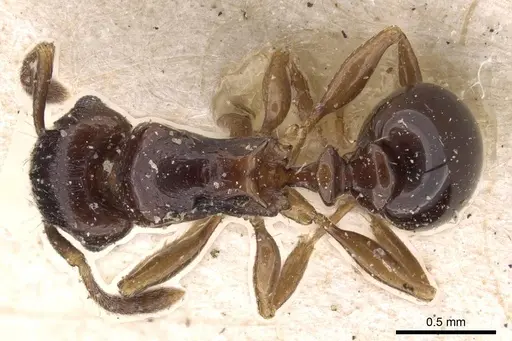
CASENT0909183
View on AntWeb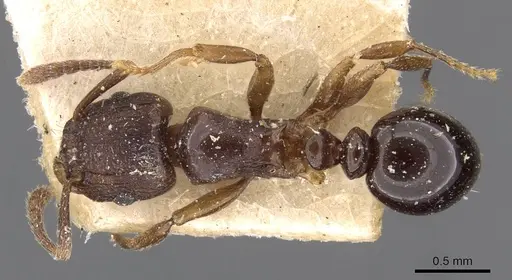
Literature
Loading distribution map...Loading products...