
Tetramorium guineense
- Sci. Name
- Tetramorium guineense
- Tribe
- Crematogastrini
- Subfamily
- Myrmicinae
- Author
- Bernard, 1953
- Distribution
- Found in 12 countries
Introduction
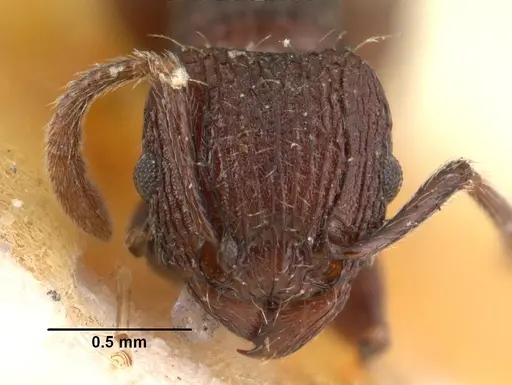
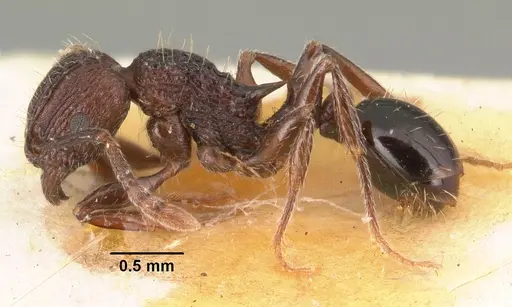
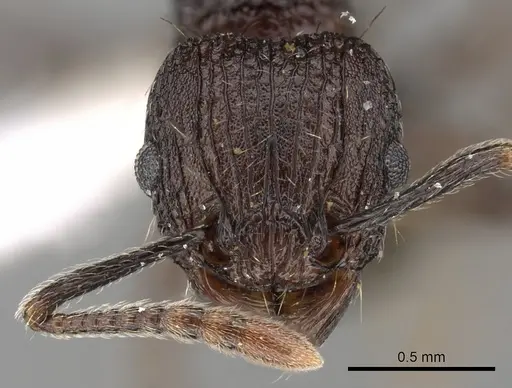
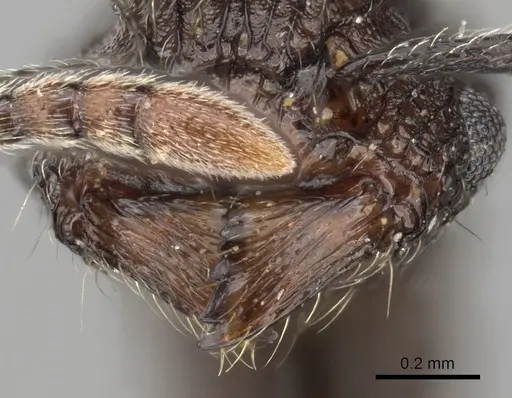
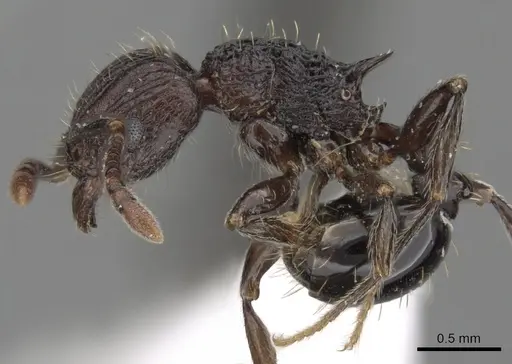
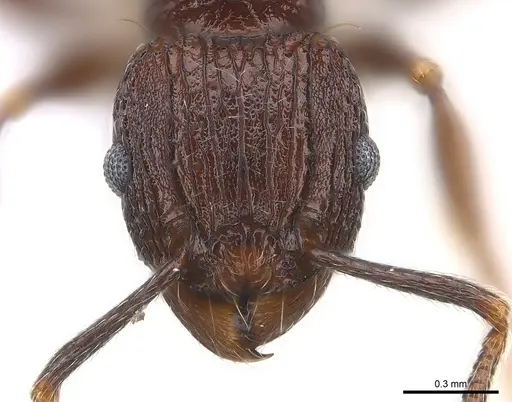
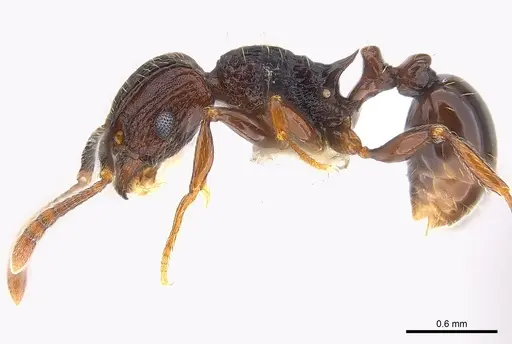
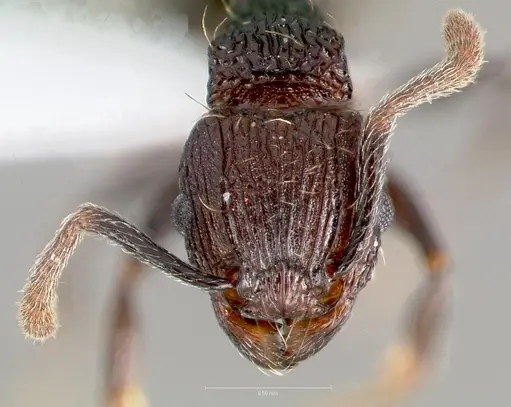
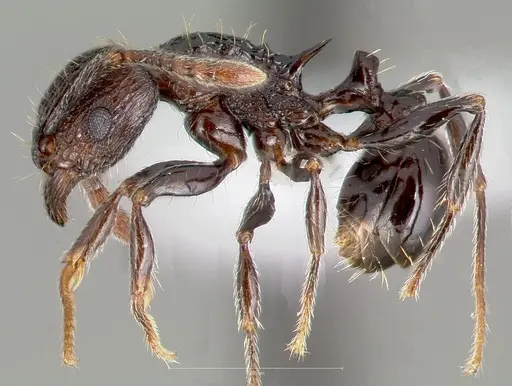
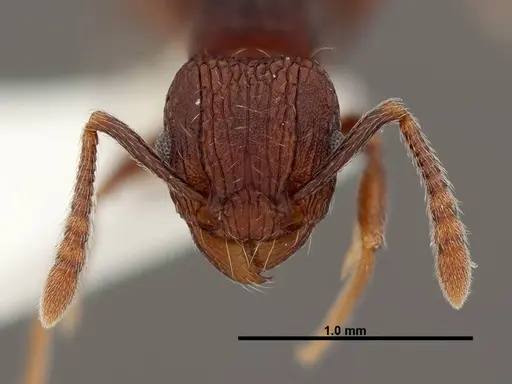
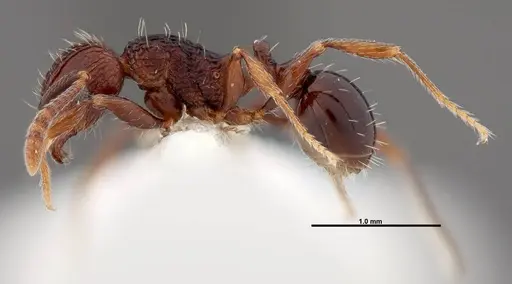
Tetramorium guineense is a small ant, with workers measuring 2.9-3.7 mm . They are dark glossy brown to reddish-brown, often with a darker gaster. The head has a strong, dense reticulate-punctate sculpture and standing hairs on the first gastral tergite make identification easy . This species is a member of the Tetramorium weitzeckeri group and is very common and abundant in the rainforests of West and Central Africa . Despite many historical records from tropical regions worldwide, recent taxonomic work shows that Tetramorium guineense is actually a valid species known only from Africa . Most global records are now considered misidentifications of the widely introduced Tetramorium bicarinatum. In their native habitat, these ants nest in rotten stumps or dead logs with bark, and workers hunt small arthropods in the leaf litter . They also tend hemipterans (coccids and aphids) for honeydew, following fixed foraging paths on tree trunks or heating pipes .
Quick Summary
- Difficulty: Medium
- Origin & Habitat: Restricted to West and Central African rainforests: Guinea, Ghana, Ivory Coast, Nigeria, Cameroon, Gabon, Central African Republic, Democratic Republic of Congo, Liberia, Senegal, Somalia, and Zaire [3][2]. Inhabits rainforest leaf-litter layer and nests in rotten stumps or dead logs with adherent bark [1].
- Colony Type: Typically single-queen, but colonies with two queens have been found in introduced greenhouse populations [4], so facultatively polygynous.
- Size & Growth:
- Queen: Size data unavailable (queen caste remains undescribed in literature) [5]
- Worker: 2.9-3.7 mm [1]
- Colony: No specific data available, similar species reach a few hundred workers
- Growth: Moderate
- Development: 6-8 weeks (estimated based on typical Tetramorium development at warm temperatures) (Development time depends on temperature, warmer conditions within the safe range speed it up)
- Antkeeping:
- Temperature: Keep at 24-28 °C, a typical tropical range for this rainforest species [1]. Use a heating cable on one side for a gradient.
- Humidity: Keep the nest substrate consistently damp but not waterlogged. These rainforest ants need high humidity, mist occasionally or use a water reservoir.
- Diapause: No, this tropical species does not need hibernation. Keep temperatures stable year-round.
- Nesting: They naturally nest in rotting wood, dead logs, and under bark [1]. In captivity they do well in Y-tong (AAC), plaster, or naturalistic setups with rotten wood pieces. Test tubes with a water reservoir and dark cover also work.
- Behavior: Predaceous, actively hunts small insects and arthropods in the leaf litter [1]. Also tends coccids and aphids for honeydew [4]. Workers follow fixed foraging paths and are moderately aggressive when defending the nest. Their small size (under 4 mm) requires fine mesh barriers to prevent escape. They move quickly when disturbed.
- Common Issues: small size makes escape easy without very fine mesh barriers, predaceous diet means they prefer live prey, though they may accept dead food moved with forceps, colonies can become stressed if temperatures drop below 22 °C for extended periods, high humidity requirements can promote mold if ventilation is poor, balance moisture with airflow, wild-caught colonies may carry parasites that can kill the colony
Housing and Nest Setup
Tetramorium guineense does well in various nest types. Y-tong (AAC) or plaster nests provide the dark, humid conditions they need. Naturalistic setups with pieces of rotten wood mimic their natural nesting preference (rotten stumps and dead logs with bark) [1]. Test tubes work for founding and small colonies, use a water reservoir and cover with a dark sleeve.
The outworld should have escape-proof barriers, these ants are small (under 4 mm) and can squeeze through tiny gaps. Use fluon on the rim and fine mesh over ventilation holes. They follow fixed foraging paths, so connecting tubes with a simple layout works well [4].
Feeding and Diet
These ants are predaceous and hunt small insects and arthropods [1]. In captivity, offer live prey such as fruit flies, small crickets, mealworms, or other small insects 2-3 times per week. They also accept dead protein items if moved with forceps. They have been observed feeding on ripe fruit (papaya) and are attracted to flowers [6][7]. Additionally, they tend hemipterans for honeydew [4], so you can offer sugar water or diluted honey once or twice a week. Remove uneaten prey within 24 hours.
Temperature and Seasonal Care
As a tropical species, Tetramorium guineense needs warm temperatures. Keep the nest at 24-28 °C. Temperatures below 22 °C can slow activity, and sustained cold can be fatal. Use a small heating cable on one side to create a gradient, workers will choose their comfort zone. Because this species comes from rainforests without winter, it does not require any diapause. Maintain stable warmth year-round [1].
Humidity Management
These rainforest ants need high humidity. The nest substrate should feel consistently damp but not waterlogged. Standing water can drown brood. In test tube setups, a water reservoir with a cotton plug works. In Y-tong or plaster nests, you can mist directly or use built-in reservoirs. Good ventilation is important to prevent mold, small mesh-covered holes help balance humidity and airflow [2][1].
Colony Founding and Early Development
Founding behavior is not documented for this species. Keepers should provide a small dark chamber with moist substrate (e.g., a test tube with water) and leave the queen completely undisturbed until the first workers appear. After that, start offering small live prey near the nest entrance. The development time from egg to first worker is estimated at 6-8 weeks at 24-28 °C.
Behavior and Temperament
Workers are active, predaceous, and hunt individually in the leaf litter. They also tend hemipterans for honeydew and walk in fixed columns on established paths [4][1]. When the nest is disturbed, workers rush out aggressively to defend it. Their main chemical alarm signal in the mandibular gland is 3-octanone (87% of the volatile secretion) [8]. Trail pheromones are species-specific compared to Tetramorium caespitum [9]. They have a modified stinger that smears venom onto enemies rather than piercing skin (typical of the tribe Crematogastrini), so they do not sting in the usual sense.
Frequently Asked Questions
Can I keep Tetramorium guineense in a test tube?
Yes, test tubes are fine for founding and small colonies. Use a water reservoir at one end, a cotton plug, and a second tube as a dry foraging area. Cover both with a dark sleeve. As the colony grows, move to a Y-tong or plaster nest for better humidity control. [1]
How long does it take for Tetramorium guineense to produce first workers?
From egg to first worker, expect about 6-8 weeks at 24-28 °C. This is an estimate based on similar Tetramorium species.
Do Tetramorium guineense ants sting?
No, they have a modified flattened stinger used to smear venom onto enemies rather than piercing skin. This is typical of the tribe Crematogastrini. They cannot deliver a typical sting. If threatened, they may bite and apply the venom topically, but it is mild for humans.
What do Tetramorium guineense eat?
They are predaceous, hunting small insects and arthropods [1]. They also tend hemipterans for honeydew [4] and have been observed eating ripe fruit such as papaya [6]. In captivity, offer live prey like fruit flies and small crickets 2-3 times per week, plus sugar water or honey once or twice a week.
Are Tetramorium guineense good for beginners?
They are a moderate difficulty species. They need warm temperatures, high humidity, and a predaceous diet, but they are hardy and adapt well to captivity. Their small size requires careful escape prevention. The main challenge is that wild-caught queens may carry parasites.
How big do Tetramorium guineense colonies get?
No specific data is available for this species. Similar Tetramorium species typically reach a few hundred workers at maturity.
Do Tetramorium guineense need hibernation?
No, they are a tropical species and do not require diapause. Keep temperatures stable at 24-28 °C year-round [1].
Why are my Tetramorium guineense dying?
Common causes: temperatures below 22 °C, low humidity, poor ventilation leading to mold, lack of protein, or parasites from wild-caught colonies. Check these factors systematically. Also ensure escape-proof barriers are intact.
When should I move my colony to a formicarium?
Move to a larger nest when the test tube becomes crowded, typically when the colony reaches 50-100 workers. Signs include workers clustering on the cotton barrier or frequent escape attempts. Transition gradually by placing the old nest near the new one.
Can I keep multiple Tetramorium guineense queens together?
Possibly, as colonies with two queens have been found in introduced greenhouse populations [4]. However, it may depend on the individual colony. Keepers can try pairing queens from the same population, but be prepared to separate them if fighting occurs.
Report an Issue
The current care sheet is based fully on literature. See inconsistencies, or something that's incorrect? Please , it will be resolved after review from an admin. Contributing to the blogs tab also helps providing information, to make us be able to further improve the caresheets. Thank you for your support!
References

This caresheet is licensed under CC BY-SA 4.0 .
Community Blogs
CASENT0101479
View on AntWeb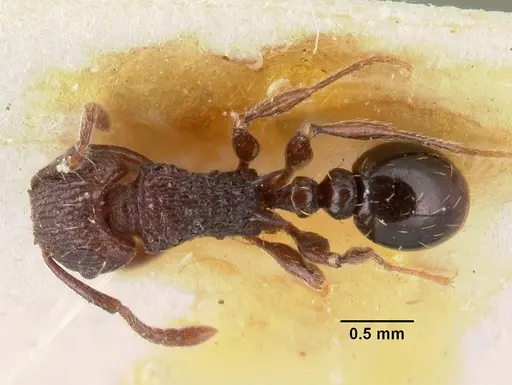
CASENT0175470
View on AntWeb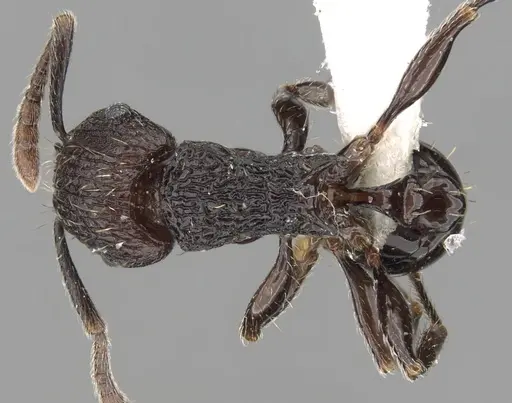
CASENT0217061
View on AntWeb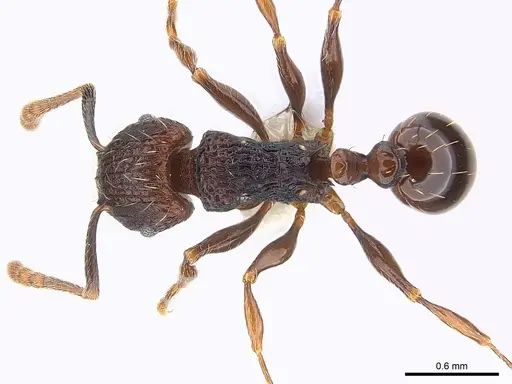
CASENT0405831
View on AntWeb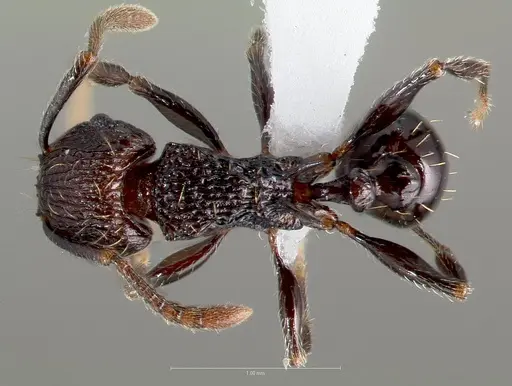
FMNHINS0000047319
View on AntWeb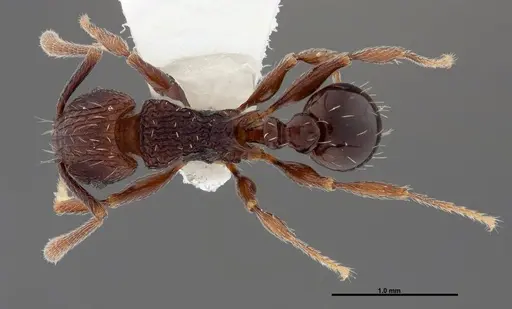
Literature
Loading distribution map...Loading products...