
Tetramorium grandinode
- Sci. Name
- Tetramorium grandinode
- Tribe
- Crematogastrini
- Subfamily
- Myrmicinae
- Author
- Santschi, 1913
- Distribution
- Found in 2 countries
Introduction
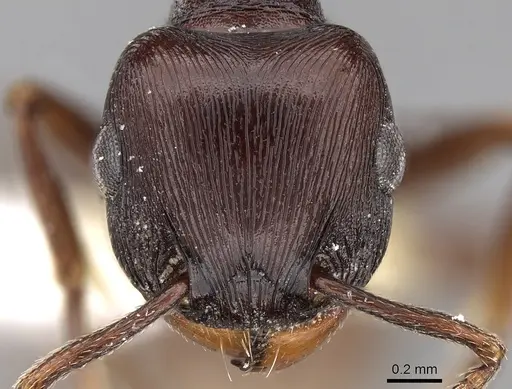
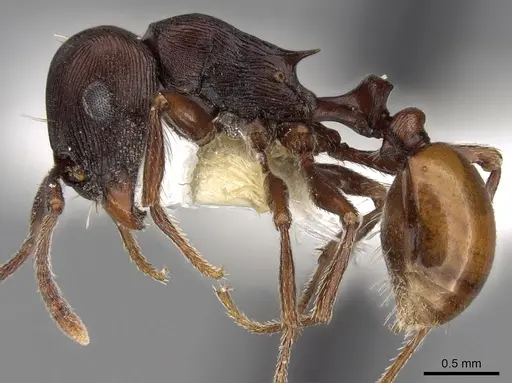
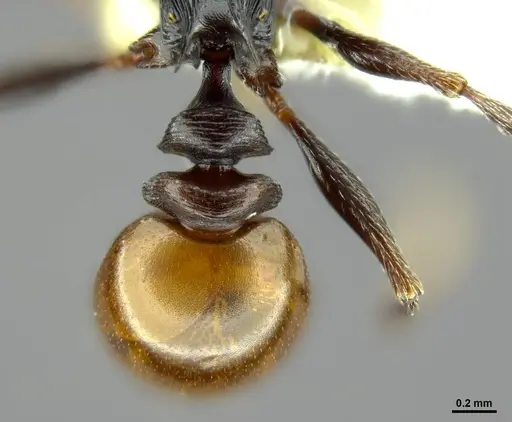
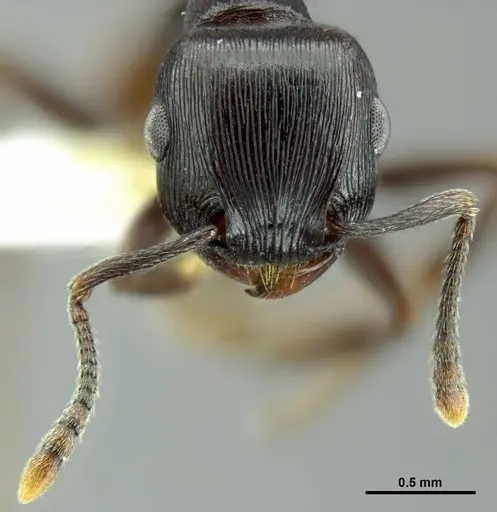
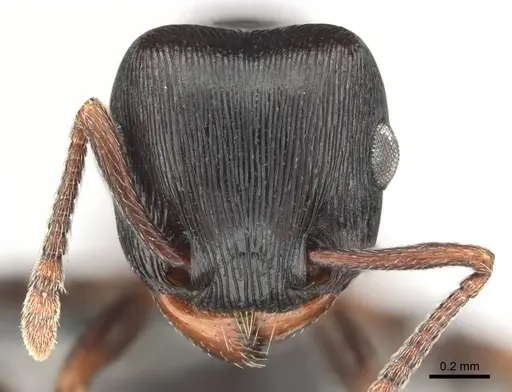
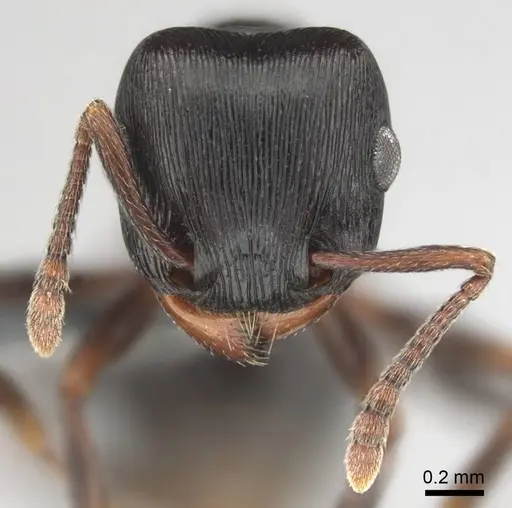
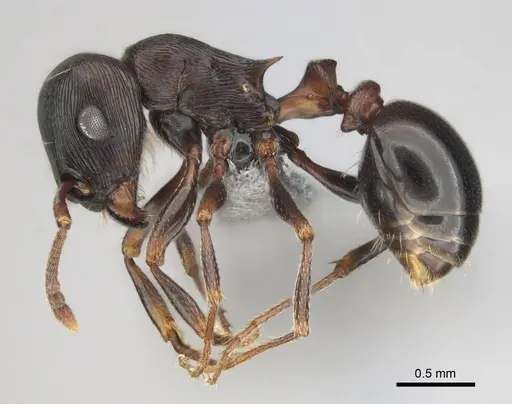
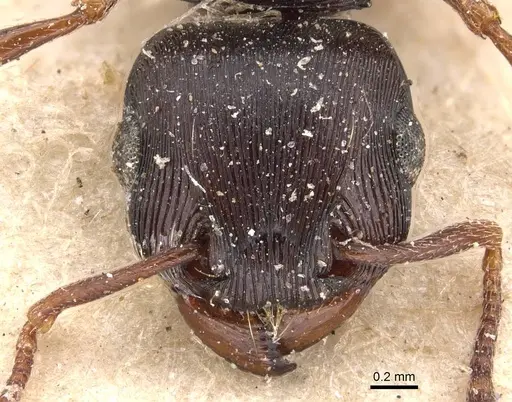
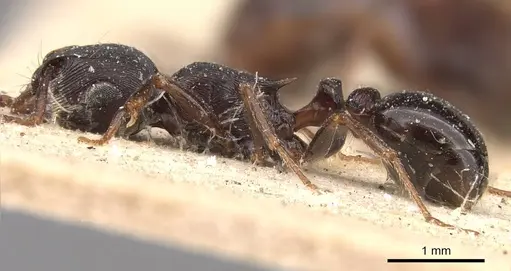
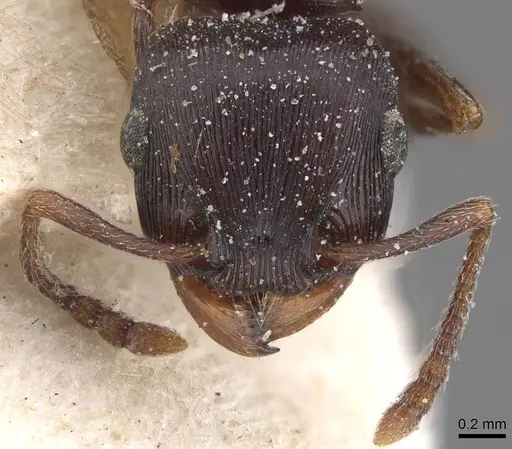
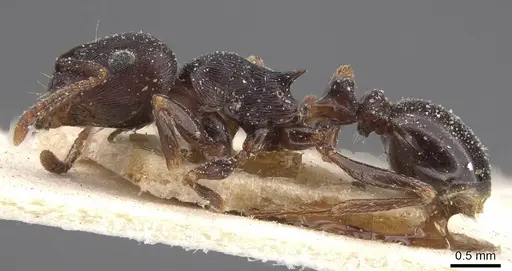
Tetramorium grandinode is a seed-harvesting ant from the arid regions of southern Africa. Workers are 5.0-5.3 mm and are deep reddish brown to blackish brown, with fine longitudinal lines on the upper body that give a glossy look in between . Their most striking feature is the extremely broad petiole and postpetiole - the narrow segments between the thorax and abdomen appear swollen when viewed from above, making them easy to tell apart from all other ants in the Tetramorium solidum group . This species lives in harsh desert and semi-desert habitats like the Namib Desert and Karoo shrublands, where it forages for seeds and stores them as food to survive long dry spells .
Quick Summary
- Difficulty: Hard
- Origin & Habitat: Native to Kalahari Xeric Savanna, Nama Karoo, Succulent Karoo, Namibian Savanna Woodlands, and the Namib Desert in South Africa and Namibia [1]. They nest deep in soil on flood plains and are found in open riverine fringe vegetation with sparse cover [1][2][3].
- Colony Type: Unknown, no published data on queen number. The Tetramorium solidum group may be monogyne, but this has not been confirmed for T. grandinode.
- Size & Growth:
- Queen: Size data unavailable, no queen measurements found in available research.
- Worker: 5.0-5.3 mm (total length) [1][3]
- Colony: Unknown, no colony size data. Related solidum‑group species may reach several hundred workers, but this is an estimate.
- Growth: Moderate, estimated from related seed‑harvester species.
- Development: Estimated 6-10 weeks at 24-26°C, based on related Tetramorium species [1]. (No species‑specific data. Times will depend on temperature and food availability.)
- Antkeeping:
- Temperature: Likely 22-26°C, they come from warm arid regions. A heating cable on one side of the nest can provide a gradient [1].
- Humidity: Low to moderate, these are desert ants. Keep the nest substrate dry to slightly moist, never wet. Allow areas to dry out between waterings [1].
- Diapause: Unknown, no data from available research. Based on their arid subtropical habitat, a winter rest may not be required, but keepers can try a mild cooling period (15-18°C) for 1-2 months if colony slows down.
- Nesting: Naturally in deep soil on flood plains [1][3]. Use a sandy soil mixture, Y‑tong, or plaster nest. Provide dark, compact chambers. Avoid high humidity.
- Behavior: Seed harvesters that also take sugar and protein. Workers are active foragers and use chemical trails to recruit nestmates. They are not particularly aggressive but will defend the nest. Their small size (5 mm) means they can escape through tiny gaps, use fine mesh and tight seals. Defensively, they have a modified spatulate stinger used to smear venom onto enemies, rather than piercing.
- Common Issues: escape prevention is critical due to their 5 mm size, they can squeeze through very small gaps, overwatering is deadly, these desert ants suffer in damp nests, keep substrate on the dry side, seed storage can cause mold if ventilation is poor, remove uneaten seeds regularly, founding details are unknown, patience required as queens may seal themselves in, but this is not confirmed, limited availability in the hobby, hard to find and likely expensive
Housing and Nest Setup
Replicate their natural deep‑soil nests. A sandy soil mix that holds tunnels works best, make sure it's compactable so they can dig chambers. Y‑tong or plaster nests also work, but provide a dark, dry environment. Since they are seed harvesters, include a dry seed‑storage area in the outworld. Give them a water tube, but keep the nest mostly dry. Use a shallow outworld because they don't need much vertical space [1][3].
Feeding and Diet
As seed harvesters, offer small seeds like grass seeds and millet. They also take sugar water or honey for energy, and small insects (fruit flies, cricket pieces, mealworms) for protein. In the wild they were attracted to tuna, sugar, and cookie baits, showing they are omnivorous [1][3]. Provide seeds continuously, and offer protein 2-3 times per week. Remove moldy seeds to keep the nest clean.
Temperature and Seasonal Care
Keep the colony between 22-26°C, with a warmer side (26°C) and a cooler side (22°C) created by a heating cable. Their natural habitat is warm and arid year‑round, so winter cooling is not proven necessary. If you want to try a resting period, reduce temperature to 15-18°C for 1-2 months after the colony has grown, but there is no research supporting this [1].
Colony Founding
There is no published data on how queens found colonies. Based on related Tetramorium, they may be claustral (queen seals herself in and raises first brood without foraging), but this is speculation. Expect a slow start, the queen may take weeks to months to produce the first workers. Do not disturb a potential sealed chamber. Once nanitics appear, they will begin foraging for seeds and protein [1].
Behavior and Foraging
Workers are active foragers that use chemical trails to recruit others to food. They defend the nest by smearing venom with a flattened spatulate stinger, rather than stinging (trait of Myrmicinae tribe Crematogastrini). They are not aggressive toward humans but will protect their food stores. Their 5 mm size means they can slip through very small openings, seal all connections carefully [1][2][3].
Frequently Asked Questions
How long does it take for Tetramorium grandinode to raise first workers?
No species‑specific data. Based on related Tetramorium, expect 6-10 weeks at 24-26°C. The queen may seal herself in (if claustral) and the first workers appear after she has used her energy reserves [1].
What do Tetramorium grandinode ants eat?
Seeds make up the bulk of their diet, offer small grass seeds, millet, or commercial seed mixes. They also eat sugar water, honey, and small insects. In the wild they were attracted to tuna, sugar, and cookie baits, showing they are omnivorous [1][3].
Do Tetramorium grandinode ants need hibernation?
Probably not, they come from a warm arid region with mild winters. There is no research on diapause. Some keepers may try a mild cooling (15-18°C) if the colony slows down, but it is not proven necessary [1].
Are Tetramorium grandinode good for beginners?
This species is hard, it has very specific dry habitat needs, unknown founding behavior, and is rarely available. Beginners should choose a better‑studied, more forgiving species first.
How big do Tetramorium grandinode colonies get?
Colony size is not recorded in the literature. Related solidum‑group ants can reach several hundred workers, but this is an estimate [1][3].
Can I keep multiple Tetramorium grandinode queens together?
Unknown, there is no published data on whether they found together or fight. Do not attempt unless you are prepared for possible queen death.
What makes Tetramorium grandinode easy to identify?
The petiole and postpetiole (the narrow segments between thorax and abdomen) are extremely broad when viewed from above. The postpetiole width index (DPpI) is 184-322,much wider than any related species. This shape is unique in the solidum group [1][2].
Do Tetramorium grandinode ants sting?
They belong to the Myrmicinae subfamily and have a modified stinger used for smearing venom rather than piercing. The venom can cause mild irritation but is not medically significant for healthy humans.
What humidity level do Tetramorium grandinode need?
Low to moderate, keep the nest substrate dry to slightly moist, never waterlogged. These are desert ants that will die in constantly damp conditions [1].
When should I move Tetramorium grandinode to a formicarium?
Keep them in a test tube or small founding setup for at least the first 6-12 months, or until you see 30-50 workers regularly foraging. Then move to a soil‑based nest that allows seed storage [1].
Report an Issue
The current care sheet is based fully on literature. See inconsistencies, or something that's incorrect? Please , it will be resolved after review from an admin. Contributing to the blogs tab also helps providing information, to make us be able to further improve the caresheets. Thank you for your support!
References

This caresheet is licensed under CC BY-SA 4.0 .
Community Blogs
CASENT0280904
View on AntWeb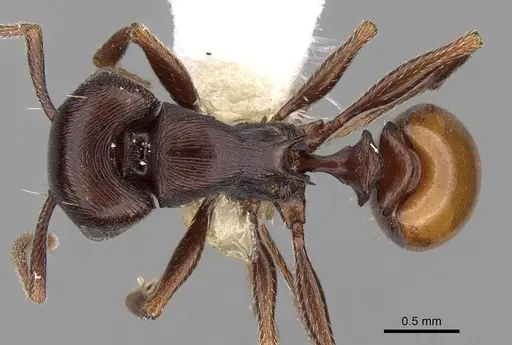
CASENT0764655
View on AntWeb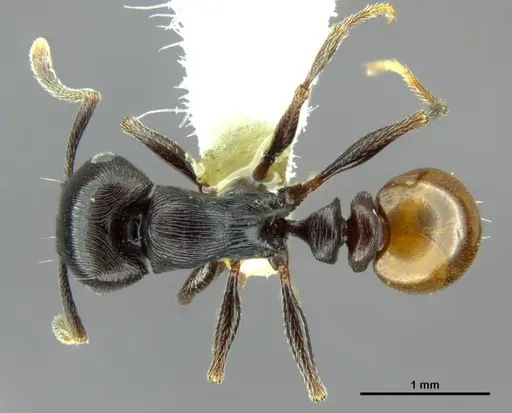
CASENT0813930
View on AntWeb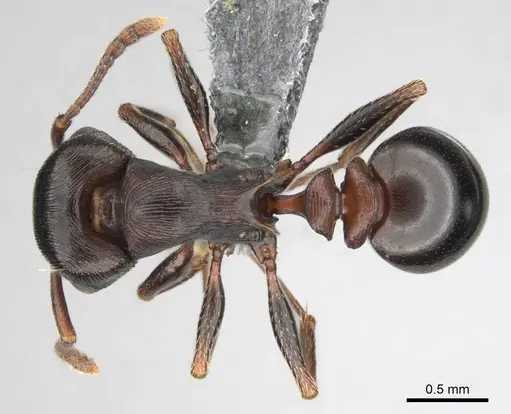
CASENT0818846
View on AntWeb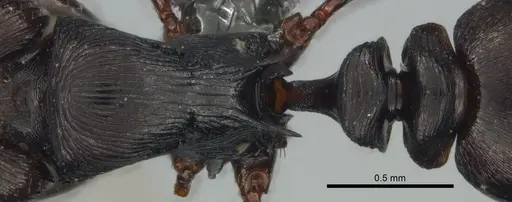
CASENT0909135
View on AntWeb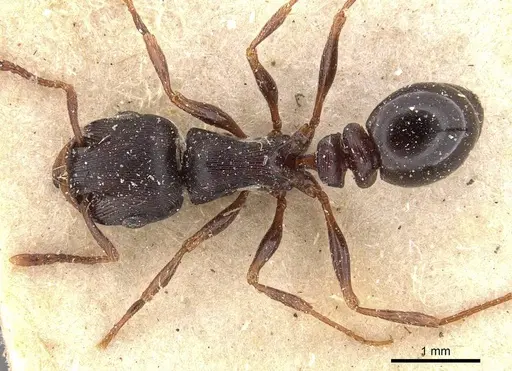
CASENT0915017
View on AntWeb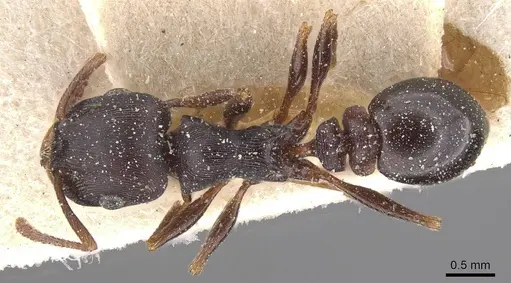
Literature
Loading distribution map...Loading products...