
Tetramorium gollum
- Sci. Name
- Tetramorium gollum
- Tribe
- Crematogastrini
- Subfamily
- Myrmicinae
- Author
- Hita Garcia & Fisher, 2014
- Distribution
- Found in 1 countries
Introduction
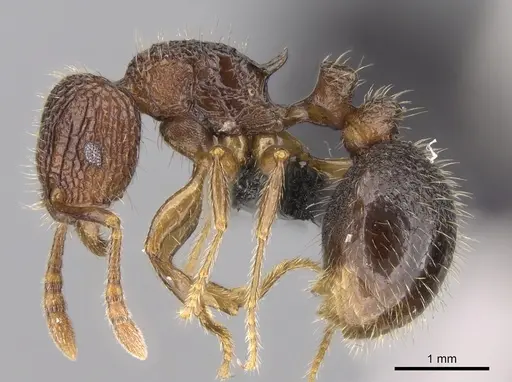
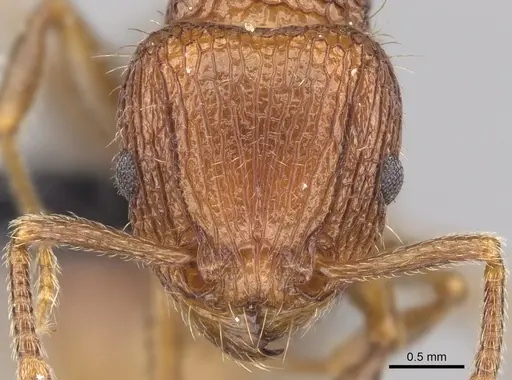
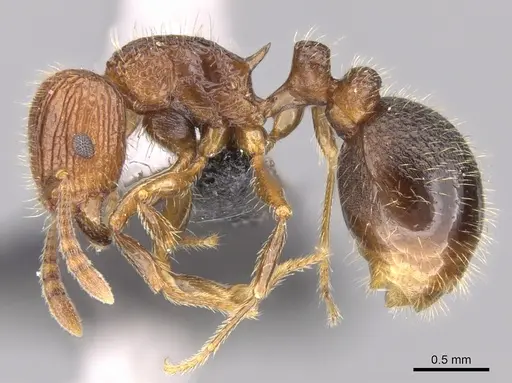
Tetramorium gollum is a tiny ant species endemic to Madagascar, named after the fictional character Gollum from J.R.R. Tolkien's novels due to its distinctive appearance. Workers have a uniquely swollen gaster (abdomen) and strongly developed sculpture on the basal half of the first gastral tergite, giving them a textured look unlike most other Malagasy ants . Precise total body length measurements are not available - only head and mesosoma partial measurements have been recorded in scientific literature . This species belongs to the Tetramorium plesiarum species group and is known only from a single location: the Forêt d'Analalava, a tropical dry forest in southern Madagascar at 700m elevation . With only three specimens ever collected (all from a single pitfall trap), Tetramorium gollum is one of the rarest and most poorly understood ants in the hobby. The entire biology of this species remains unstudied .
Quick Summary
- Difficulty: Unknown, likely Expert due to extreme rarity and unknown biology
- Origin & Habitat: Forêt d'Analalava, Madagascar (22.59167°S,45.12833°E), tropical dry forest at 700m elevation [1]
- Colony Type: Unknown, no colony data exists. Based on genus patterns, likely single-queen colonies [2]
- Size & Growth:
- Queen: Undescribed, no queens have been collected or described [1]
- Worker: Size data unavailable, only head and mesosoma partial measurements exist, not total body length [1]
- Colony: Unknown, only three workers have ever been collected [1]
- Growth: Unknown
- Development: Unconfirmed, estimated 4-8 weeks based on typical Tetramorium patterns in tropical conditions [2] (Development timeline has not been studied. Tropical Tetramorium species typically develop faster than temperate species.)
- Antkeeping:
- Temperature: Likely 22-28°C based on Madagascar tropical dry forest origin. Provide a temperature gradient allowing ants to self-regulate [2]
- Humidity: Moderate, tropical dry forest suggests they prefer drier conditions than rainforest species. Keep substrate lightly moist with dry areas available [2]
- Diapause: Unlikely, tropical species from Madagascar do not typically require hibernation [2]
- Nesting: Likely prefers naturalistic setups with soil or small test tubes. Based on genus patterns, they probably nest in soil or under stones in captivity [2]
- Behavior: Behavior is unstudied. Based on genus patterns, they are likely generalist foragers that search for small prey and honeydew on the ground. Their tiny size means escape prevention is critical, they can squeeze through standard mesh barriers. Temperament is unknown but most Tetramorium are not aggressive toward keepers. Belonging to the Myrmicinae subfamily, this species likely employs a 'smear' defense mechanism, using a flattened stinger to wipe venom onto enemies rather than piercing [2].
- Common Issues: extreme rarity makes obtaining this species nearly impossible, complete lack of biological data means all care is speculative, tiny size requires excellent escape prevention with fine mesh, no established husbandry protocols exist in the antkeeping hobby, wild-caught colonies may have parasites given only 3 specimens ever found
Species Discovery and Naming
Tetramorium gollum was described in 2014 by ant taxonomists Francisco Hita Garcia and Brian Fisher. The species was named after Gollum, the tragic character from J.R.R. Tolkien's 'The Hobbit' and 'The Lord of the Rings', due to its unusual appearance, particularly the swollen, distorted-looking gaster that gives a hunched silhouette [1]. The species is only known from three worker specimens, all collected from a single pitfall trap at the type locality in February 2003. This makes Tetramorium gollum one of the rarest ant species in the world [1].
Identification and Distinguishing Features
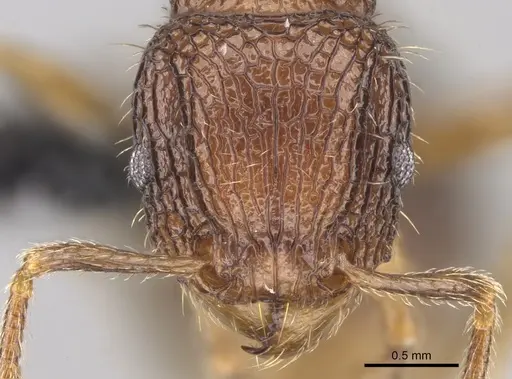
Tetramorium gollum is very distinctive within the Malagasy Tetramorium fauna. Its most striking feature is the extremely swollen gaster with strongly developed sculpture covering the basal half of the first gastral tergite, this texture is easily visible under magnification and distinguishes it from all other species in the Tetramorium plesiarum group [1]. The postpetiole is notably higher and broader than its closest relative Tetramorium bressleri, and the petiolar node is high and rectangular, distinctly higher than long [1]. Workers have relatively small eyes and short antennal scapes that do not reach the posterior head margin. The body coloration is light to dark brown with the gaster notably darker than the rest of the body [1].
Natural Habitat
This species is known only from Forêt d'Analalava, a tropical dry forest located at approximately 700m elevation in southern Madagascar. The region experiences a hot, dry climate with seasonal rainfall patterns typical of southern Madagascar's spiny forest and dry forest ecosystems [1]. All three known specimens were collected in pitfall traps in February 2003,suggesting workers are ground-foraging. The lack of additional specimens over decades of ant surveys in Madagascar indicates this species is either extremely rare, locally distributed, or has very limited foraging activity [1][2].
Care Recommendations
Since no biological data exists for this species, all care recommendations are speculative and based on typical Tetramorium behavior and the species' likely habitat preferences. Housing: Use small test tubes or naturalistic setups with fine mesh barriers, their tiny size means they can escape through standard mesh. Temperature: Maintain 22-28°C, which aligns with Madagascar's tropical conditions. Humidity: Provide moderate humidity with a gradient, the dry forest origin suggests they prefer drier conditions than rainforest species. Feeding: Based on genus patterns, offer small live prey (fruit flies, pinhead crickets) and sugar sources (honey water, sugar water). Diapause: Not required for tropical species [2].
WARNING: This species is virtually unavailable in the antkeeping hobby. Any specimens offered for sale are likely wild-caught with unknown collection dates and potentially parasites. The complete lack of captive breeding means this species is not recommended for any keeper regardless of experience level.
Conservation and Availability
Tetramorium gollum is one of the rarest ant species kept by hobbyists, if it is kept at all. The species has only been collected three times in history, all from the same location in Madagascar. There are no established captive breeding programs, and any specimens that appear in the antkeeping hobby would almost certainly be wild-caught. This raises significant ethical concerns about removing individuals from an already critically limited population. Additionally, Madagascar has strict laws regarding the export of native species, making legal acquisition difficult or impossible. For these reasons, Tetramorium gollum remains a species that most antkeepers will only read about rather than keep [1][2].
Frequently Asked Questions
Can I keep Tetramorium gollum as a pet ant?
No. This species is virtually unavailable in the antkeeping hobby. Only three specimens have ever been collected in scientific history, and no captive breeding protocols exist. Any specimens offered for sale are likely illegally collected and may carry parasites. Additionally, Madagascar has strict export laws making legal acquisition nearly impossible.
How big do Tetramorium gollum colonies get?
Unknown. Only three workers have ever been collected, so colony size in the wild is completely unstudied. Based on related Tetramorium species, colonies might reach several hundred workers, but this is purely speculative.
What do Tetramorium gollum ants eat?
Unconfirmed. Based on typical Tetramorium genus behavior, they are likely generalist foragers that eat small insects, nectar, and honeydew. In captivity, you could offer small live prey like fruit flies, pinhead crickets, and sugar sources like honey water, but this species is not available to keep.
Do Tetramorium gollum ants sting?
Unknown, but likely they use a 'smear' defense mechanism typical of Myrmicinae ants. They have a flattened stinger used to wipe venom onto enemies rather than piercing, so a sting is unlikely to be felt by humans. However, stinging ability of this specific species has not been studied [2].
What temperature do Tetramorium gollum ants need?
Likely 22-28°C based on their origin in Madagascar's tropical dry forest. This is an estimate based on habitat, no thermal studies exist for this species. Never attempt to keep rare, unstudied species without proper research.
Do Tetramorium gollum ants need hibernation?
No. As a tropical species from Madagascar, they do not require hibernation or diapause. Keep them at stable tropical temperatures year-round.
How long does it take for Tetramorium gollum to develop from egg to worker?
Unconfirmed. No developmental data exists for this species. Based on typical Tetramorium patterns in tropical conditions, development likely takes 4-8 weeks, but this is a rough estimate.
Are Tetramorium gollum ants good for beginners?
No. This species is not recommended for any keeper. It is extremely rare, completely unstudied in captivity, and likely impossible to obtain legally. Beginners should start with well-established species like Lasius niger, Messor barbarus, or Camponotus species with documented care requirements.
Where does Tetramorium gollum live in the wild?
Only in Forêt d'Analalava, a tropical dry forest in southern Madagascar at 700m elevation. This is the only known location for this species anywhere in the world [1].
Why is it called Tetramorium gollum?
It was named after Gollum, the fictional character from J.R.R. Tolkien's 'The Hobbit' and 'The Lord of the Rings'. The name was chosen because of the ant's unusual appearance, particularly its extremely swollen, distorted-looking gaster that resembles the hunched posture of the character [1].
Report an Issue
The current care sheet is based fully on literature. See inconsistencies, or something that's incorrect? Please , it will be resolved after review from an admin. Contributing to the blogs tab also helps providing information, to make us be able to further improve the caresheets. Thank you for your support!
References

This caresheet is licensed under CC BY-SA 4.0 .
Community Blogs
CASENT0074849
View on AntWeb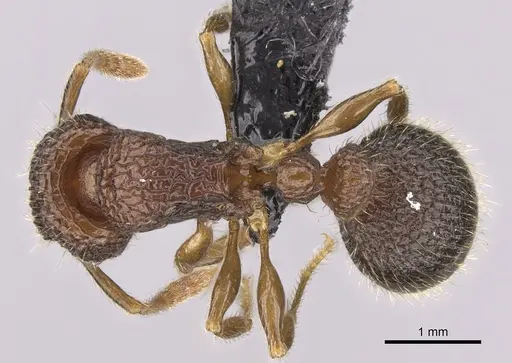
CASENT0074974
View on AntWeb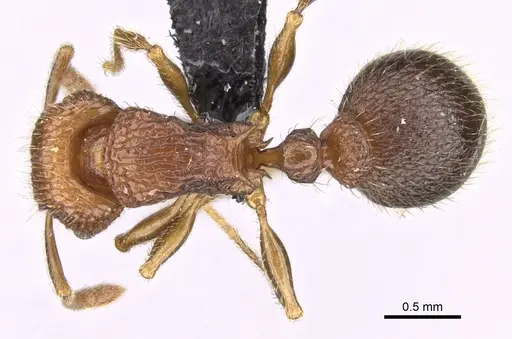
Literature
Loading distribution map...Loading products...