
Tetramorium gladstonei
- Sci. Name
- Tetramorium gladstonei
- Tribe
- Crematogastrini
- Subfamily
- Myrmicinae
- Author
- Forel, 1913
- Distribution
- Found in 3 countries
Introduction
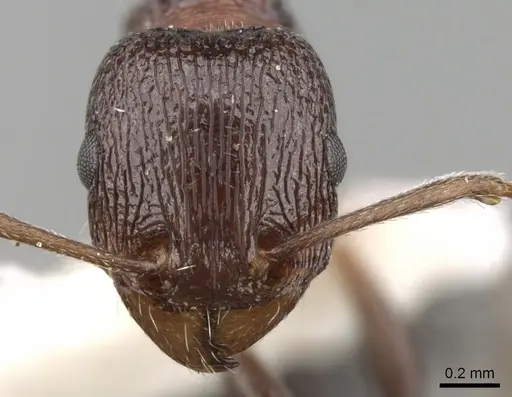
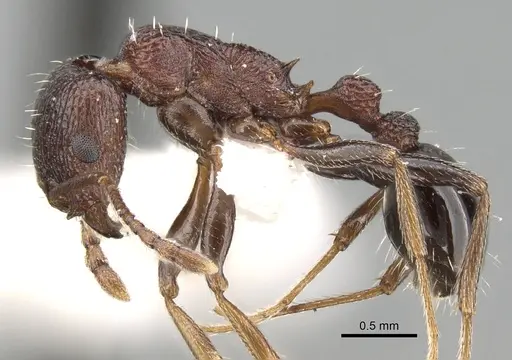
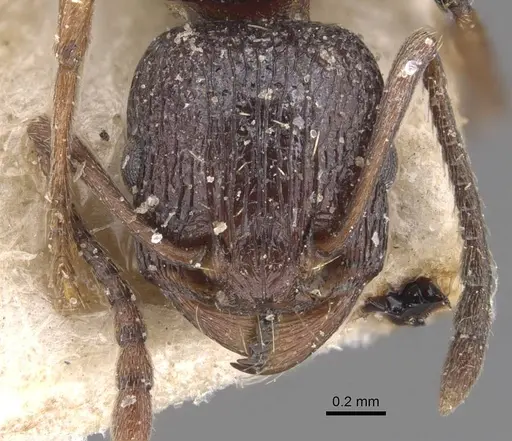
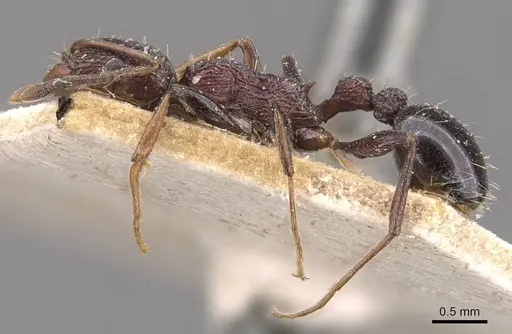
Tetramorium gladstonei is a small ant species native to the Afrotropical region, found across Zimbabwe, Mozambique, South Africa, and Benin . Workers measure 3.8-4.5 total length and have a distinctive appearance with dark red coloration and a blackish, glossy gaster. This species is part of the sericeiventre-complex, characterized by strong rugose sculpture on the head and body, with reduced pilosity, notably lacking hairs on the scapes, tibiae, and propodeal dorsum . These ants inhabit open to semi-open savanna habitats including Mopane savanna, Acacia nigrescens savanna, and Guibourtia conjugata open woodland. They are ground-foragers, with specimens collected via pitfall traps confirming their terrestrial foraging behavior . This species shows sensitivity to fire regimes in its ecosystem, serving as an indicator species for unburned control plots in savanna studies .
Quick Summary
- Difficulty: Medium
- Origin & Habitat: Afrotropical region: Zimbabwe, Mozambique, South Africa, and Benin. Inhabits open savanna habitats including Mopane savanna, Acacia nigrescens savanna, and Guibourtia conjugata open woodland [1].
- Colony Type: Colony structure is unconfirmed for this species. Based on typical Tetramorium patterns, likely monogyne (single queen).
- Size & Growth:
- Queen: Size data unavailable.
- Worker: 3.8-4.5 mm [1]
- Colony: Unconfirmed, estimated up to several hundred workers based on typical Tetramorium genus patterns.
- Growth: Moderate
- Development: Estimated 6-10 weeks at optimal temperature (inferred from subfamily Myrmicinae patterns) (Development time is estimated because no specific studies are available for this species.)
- Antkeeping:
- Temperature: Keep at 22-26°C. As an African savanna species, they prefer warm conditions. Provide a gentle temperature gradient so the colony can choose its preferred zone.
- Humidity: Moderate humidity. Keep the nest substrate lightly moist but allow some drying between waterings. Avoid constant wet conditions, savanna ants prefer drier microclimates.
- Diapause: Unknown. Based on the tropical/subtropical distribution, they likely do not require true hibernation, but may have reduced activity during cooler or drier periods. Monitor colony behavior and reduce feeding if activity drops.
- Nesting: Natural nesting likely occurs in soil or under stones in savanna habitats. In captivity, use a Y-tong (AAC) nest, plaster nest, soil nest, or 3D-printed nest. Provide a moisture gradient so the colony can self-regulate.
- Behavior: Ground-foraging ants with a calm temperament. Defense mechanism is typical of the tribe Crematogastrini: they have a modified, flattened stinger used to wipe venom onto enemies (smear defense). Their small size (under 5 mm) means they can escape through tiny gaps, use fine mesh barriers and tight-fitting lids. They are not aggressive toward keepers but may sting if handled roughly.
- Common Issues: small size makes escape likely without very fine mesh barriers and tight lids, humidity control is critical, too wet can kill the colony (savanna adapted), wild-caught colonies may carry internal parasites or pathogens, little specific care data exists, much husbandry must be inferred from related species, colony growth may be slow without optimal temperature and feeding
Housing and Nest Setup
Tetramorium gladstonei can be housed in standard setups. A test tube setup works well for founding colonies. For established colonies, use a Y-tong (AAC) nest, plaster nest, soil nest, or 3D-printed nest, never acrylic because it offers poor humidity control. Since they are ground-foraging savanna ants, provide a substrate area (e.g., sand-soil mix) in the outworld where they can search for food. Ensure the nest has a moisture gradient: one side slightly moist, the other drier. This allows the colony to move brood to the optimal humidity. Use a small water tube or a moisture reservoir connected to the nest. Escape prevention is critical: use fine mesh on ventilation holes and apply fluon or PTFE barriers to the outworld walls. [1]
Feeding and Diet
Like most Tetramorium species, these ants are omnivorous and will accept a variety of foods. Offer protein sources such as small insects (fruit flies, small crickets, mealworms) and sugar sources like honey water or sugar water. In the wild, they forage on the ground and likely scavenge as well as hunt small prey. Feed established colonies 2-3 times per week, removing uneaten food promptly to prevent mold. Fresh water should always be available. [1]
Temperature and Seasonal Care
As an African savanna species from Zimbabwe, Mozambique, South Africa, and Benin, Tetramorium gladstonei prefers warm conditions. Maintain nest temperatures between 22-26°C. A heating cable on one side of the nest can create a gentle thermal gradient. Avoid temperatures below 18°C for extended periods. The diapause requirements are unknown, based on their tropical/subtropical distribution, they likely do not need true hibernation but may show reduced activity during cooler or drier months. If you notice decreased foraging, reduce feeding correspondingly. Do not force diapause unless you have specific evidence that the colony requires it. [1]
Behavior and Colony Dynamics
Workers of Tetramorium gladstonei are active ground-foragers, as confirmed by pitfall trap collections [1]. They are part of the savanna ecosystem and serve as an indicator species in ecological studies, showing sensitivity to fire regimes [2]. Colonies likely grow gradually, with the queen producing workers continuously. Workers measure 3.8-4.5 mm. Their small size means they can be outcompeted by larger ant species if kept in multi-species setups. Defense uses a modified spatulate stinger for smearing venom, typical of the tribe Crematogastrini. They are not aggressive toward keepers but will sting if handled.
Frequently Asked Questions
How long does it take for Tetramorium gladstonei to produce first workers?
The exact timeline is unconfirmed for this species. Based on typical Myrmicinae development, expect first workers (nanitics) within 6-10 weeks after the queen lays her first eggs at optimal temperature (around 24-26°C). Growth is influenced by temperature and feeding frequency.
Can I keep Tetramorium gladstonei in a test tube setup?
Yes, test tubes work well for founding colonies. Ensure the water reservoir is properly sized and cover the tube to keep it dark. Once the colony reaches 20-30 workers, consider moving to a larger nest like a Y-tong (AAC) or plaster setup. Avoid acrylic nests.
Do Tetramorium gladstonei ants sting?
Yes, they have a functional stinger. As members of the tribe Crematogastrini, they use a flattened stinger to smear venom onto attackers rather than piercing deep. The sting is mild compared to some larger ants, but individual reactions vary.
What temperature range is best for Tetramorium gladstonei?
Keep nest temperatures between 22-26°C. They are adapted to warm African savanna conditions and prefer temperatures in the mid-20s Celsius. A heating cable on one side of the nest can provide a gradient.
Are Tetramorium gladstonei good for beginners?
This species is rated as medium difficulty. Their small size requires careful escape-proofing, and specific care data is lacking. Intermediate keepers will have an easier time adjusting conditions based on observation. Beginners should be prepared for some trial and error.
How big do Tetramorium gladstonei colonies get?
Colony size is unconfirmed. Based on typical Tetramorium patterns, colonies likely reach up to several hundred workers. Growth is moderate and depends on temperature and feeding.
Do Tetramorium gladstonei need hibernation?
Diapause requirements are unknown. Based on their African distribution, they likely do not require true hibernation but may have reduced activity during cooler or drier periods. Monitor your colony and reduce feeding if activity decreases.
What do Tetramorium gladstonei eat?
They are omnivorous. Offer small insects (fruit flies, small crickets, mealworms) for protein and sugar sources like honey water or sugar water. They forage on the ground and will scavenge as well as hunt.
Can I keep multiple Tetramorium gladstonei queens together?
Colony structure is unconfirmed, but most Tetramorium species are monogyne (single queen). Combining unrelated queens is not documented for this species and is not recommended. Avoid attempting pleometrosis unless you have evidence it works for this species.
Why are my Tetramorium gladstonei escaping?
Their small size (3.8-4.5 mm) means they can squeeze through tiny gaps. Use fine mesh barriers (0.5 mm or smaller), ensure lids fit tightly, and apply fluon or PTFE barriers to the outworld walls. Check all ventilation holes and joints regularly.
Report an Issue
The current care sheet is based fully on literature. See inconsistencies, or something that's incorrect? Please , it will be resolved after review from an admin. Contributing to the blogs tab also helps providing information, to make us be able to further improve the caresheets. Thank you for your support!
References

This caresheet is licensed under CC BY-SA 4.0 .
Community Blogs
CASENT0280924
View on AntWeb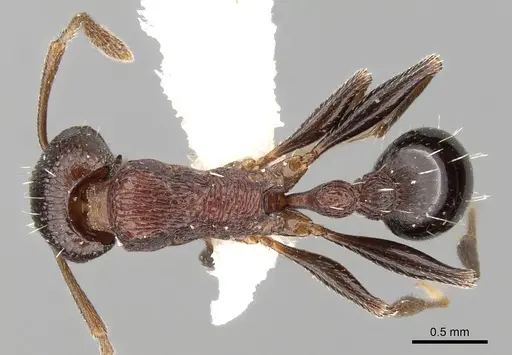
CASENT0909133
View on AntWeb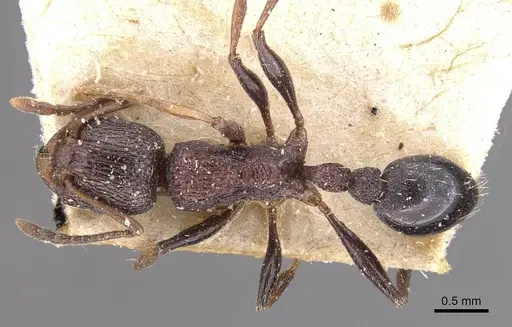
Literature
Loading distribution map...Loading products...