
Tetramorium gladius
- Sci. Name
- Tetramorium gladius
- Tribe
- Crematogastrini
- Subfamily
- Myrmicinae
- Author
- Hita Garcia & Fisher, 2014
- Distribution
- Found in 1 countries
Introduction
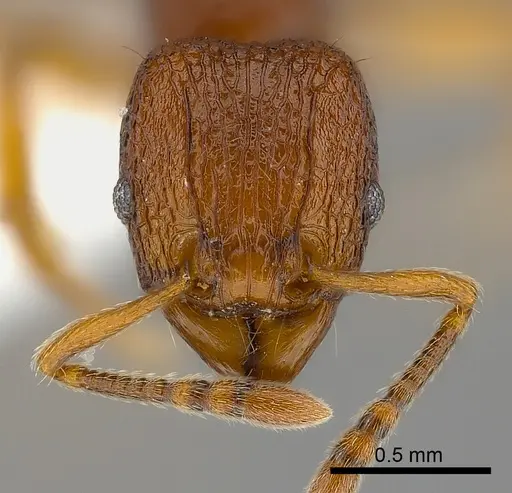
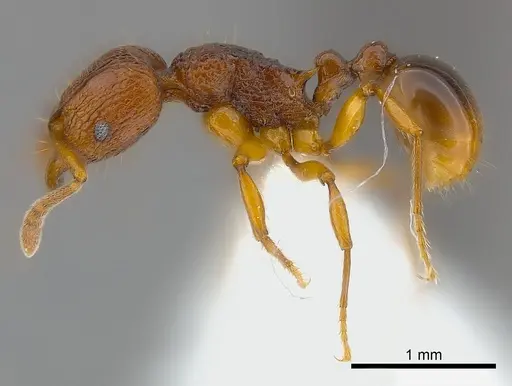
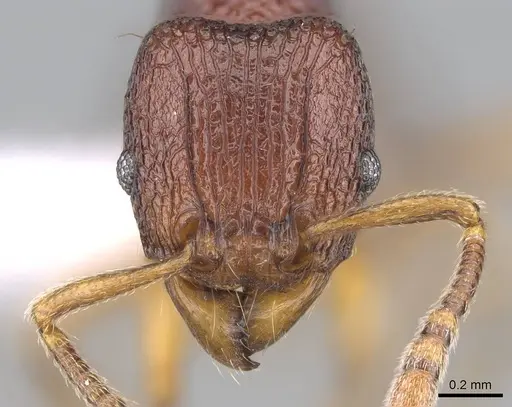
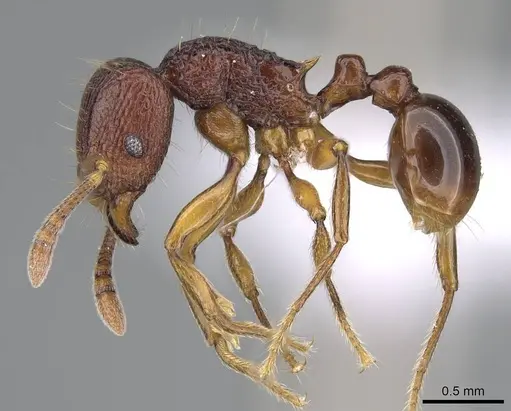
Tetramorium gladius is a small ant species endemic to Madagascar, belonging to the Tetramorium schaufussii species group. Workers are about 3-4mm long, with a distinctive reddish-orange-brown body and noticeably lighter brownish-yellow legs and antennae . Their most notable feature is their relatively small eyes, which set them apart from related species in the cognatum complex . The name 'gladius' comes from the Latin word for sword, referring to the distinctive sword-like shape of their propodeal spines . These ants live in the leaf litter layer of Madagascar's rainforests and montane rainforests, making them a litter-dwelling species . This species has a patchy distribution across central, central-eastern, and northern Madagascar, found at elevations between 425 and 1490 meters . While moderately common in suitable habitat, Tetramorium gladius is a relatively newly described species (2014), and many aspects of its biology in the wild remain unstudied. Their small size and leaf-litter lifestyle suggests they likely function as generalist foragers, but specific colony behavior and development has not been documented.
Quick Summary
- Difficulty: Medium
- Origin & Habitat: Endemic to Madagascar, found in rainforests and montane rainforests at elevations of 425-1490m [1]. Localities include Ambohitantely, Andranomay, Ambatovaky, Ambanizana, Anjanaharibe-Sud, and Binara.
- Colony Type: Colony structure is unconfirmed, based on typical Tetramorium patterns, they are likely single-queen (monogyne), but this has not been specifically documented for this species.
- Size & Growth:
- Queen: Unconfirmed, no queen measurements are available for this species
- Worker: Approximately 3-4mm (estimated from related Tetramorium species) [1]
- Colony: Estimated at several hundred workers based on typical Tetramorium colony sizes
- Growth: Moderate
- Development: 6-10 weeks estimated based on typical Tetramorium development (Development time is estimated from related species in the genus, no specific data exists for Tetramorium gladius)
- Antkeeping:
- Temperature: Keep at 22-26°C, these are tropical rainforest ants from Madagascar that prefer warm, stable conditions
- Humidity: Maintain consistently moist nest substrate, these rainforest leaf-litter ants are adapted to humid conditions and will suffer in dry environments. The nest material should feel damp but not waterlogged
- Diapause: No, as a tropical species from Madagascar, they do not require hibernation or winter dormancy
- Nesting: Y-tong (AAC) nests or plaster nests work well. These leaf-litter ants prefer tight chambers and high humidity. Provide a moist substrate and avoid dry nesting environments. Test tube setups are suitable for founding colonies.
- Behavior: Based on typical Tetramorium and subfamily patterns, these ants are generally non-aggressive but will defend the nest if threatened. They forage actively through the litter layer. Escape risk is moderate due to their small size, use fine mesh and tight-fitting lids to prevent escapes. They possess a modified stinger used for smearing venom, typical of the Crematogastrini tribe.
- Common Issues: high humidity maintenance is critical, dry conditions will stress and kill colonies, small size means they can escape through standard barrier gaps, use fine mesh and tight-fitting lids, slow colony growth can lead to beginner discouragement, patience is required, wild-caught colonies may carry parasites that can decimate the colony in captivity, test tube setups must be monitored for flooding, small ants are vulnerable to water pooling
Origin and Natural Habitat
Tetramorium gladius is endemic to Madagascar, found exclusively in the island's rainforests and montane rainforests. Their distribution spans central to northern regions, with documented populations from Ambohitantely and Andranomay in the south, through Ambatovaky, Ambanizana, and Anjanaharibe-Sud in the central-east, up to Binara in the north [1]. They inhabit elevations between 425 and 1490 meters, living primarily in the leaf litter layer rather than in soil or on vegetation [1].
This species was formally described in 2014 by Hita Garcia and Fisher, making it a relatively newly recognized ant species [1]. The type specimens were collected from montane rainforest at 1300m elevation near Andranomay. The species name 'gladius' (Latin for sword) refers to the distinctive sword-like shape of their propodeal spines . The relatively small eyes (OI 19-20) are the key diagnostic feature that separates Tetramorium gladius from other members of the cognatum species complex, which typically have larger eyes (OI 24-31) [1].
Appearance and Identification
Workers of Tetramorium gladius are small ants measuring approximately 3-4mm in total body length. They have a distinctive uniform reddish to orange-brown coloration, with their appendages being noticeably lighter, yellowish to light brown [1].
The most diagnostic feature is their relatively small eyes, which distinguishes them from all other species in the cognatum species complex [1]. Their propodeal spines are moderately long to long, described as elongate-triangular to spinose, and usually acute, these are the 'gladius' (sword) features that inspired the species name [1]. The propodeal lobes are notably shorter than the spines. Their petiolar node is nodiform to high rounded nodiform, and the postpetiole appears more voluminous than the petiolar node when viewed from above [1].
Little morphological variation exists in this species, though specimens from Ambatovaky tend to have slightly longer propodeal spines compared to other populations [1].
Temperature and Humidity Requirements
As a tropical rainforest species from Madagascar, Tetramorium gladius requires warm and humid conditions to thrive. Keep the nest area at 22-26°C, which mimics their natural environment in Madagascar's rainforests. Temperature should remain stable, avoid sudden fluctuations that could stress the colony.
High humidity is essential for this leaf-litter species. Maintain substrate moisture at levels similar to damp forest floor conditions, the substrate should feel consistently moist but never waterlogged. A heating cable on one side of the nest can help create a gentle temperature gradient while maintaining humidity, but ensure the water reservoir doesn't dry out too quickly.
Since they come from a tropical environment with no winter dormancy, these ants do not require hibernation. They remain active year-round when kept at appropriate temperatures.
Feeding and Diet
Based on typical Tetramorium behavior and their leaf-litter lifestyle, Tetramorium gladius is likely a generalist forager that accepts a variety of foods. In captivity, they should be offered a balanced diet of protein sources and carbohydrates.
For protein, provide small insects such as fruit flies, small mealworms, or other appropriately-sized arthropods. Since they are small ants, prey items should be appropriately sized, avoid offering anything larger than the ants themselves. Sugar sources are also important: offer diluted honey, sugar water, or commercial ant nectar periodically.
Feed protein sources 2-3 times per week, and ensure sugar water or honey is available at all times. Remove uneaten prey after 24-48 hours to prevent mold growth. Observe your colony's acceptance of different foods, some colonies may show preferences.
Nesting and Colony Setup
In the wild, Tetramorium gladius lives in the leaf litter layer of Madagascar's rainforests, typically nesting in soil or under debris on the forest floor [1]. For captive care, Y-tong (AAC) nests or plaster nests work well for this species. The key requirements are tight chambers scaled to their small size and consistently humid conditions.
Avoid dry nesting environments, these ants are adapted to the moist rainforest floor and will struggle in dry setups. If using a test tube setup for founding colonies, ensure the water reservoir is appropriately sized and monitor for condensation. The nest material should retain moisture well without becoming waterlogged.
For the outworld (foraging area), a standard setup works fine, but ensure escape prevention is adequate, while not particularly known as escape artists, their small size means they can slip through gaps that larger ants cannot. Use tight-fitting lids and consider barrier methods if needed.
Colony Development and Growth
Specific development data for Tetramorium gladius is not documented in scientific literature. Based on typical Tetramorium genus patterns, expect approximately 6-10 weeks from egg to first worker (nanitic) at optimal temperatures.
Colony growth is likely moderate rather than fast. Starting colonies will begin with just the queen and her first brood. The founding queen (if claustral, as typical for Tetramorium) will seal herself in a chamber and survive on stored fat reserves while raising her first workers. Once the first nanitic workers emerge, the colony can begin foraging for additional food to support further growth.
Maximum colony size is estimated at several hundred workers based on typical Tetramorium colony sizes, though this species has not been specifically studied in this regard. Patience is essential, small litter-dwelling ants often grow more slowly than larger, more conspicuous species.
Frequently Asked Questions
How long does it take for Tetramorium gladius to produce first workers?
The exact timeline is unconfirmed for this species, but based on typical Tetramorium development patterns, expect approximately 6-10 weeks from egg to first worker at optimal temperatures (22-26°C). The founding queen will remain sealed in her chamber until her first workers emerge.
What temperature do Tetramorium gladius ants need?
Keep them at 22-26°C. These are tropical rainforest ants from Madagascar that prefer warm, stable conditions. Avoid temperatures below 20°C or above 30°C. A heating cable on one side of the nest can create a gentle gradient.
Do Tetramorium gladius ants need hibernation?
No, they do not require hibernation. As a tropical species from Madagascar, they are active year-round and do not enter winter dormancy. Maintain warm temperatures throughout the year.
What do Tetramorium gladius ants eat?
They are generalist foragers. Offer small insects (fruit flies, small mealworms) as protein 2-3 times per week, and provide constant access to sugar sources like diluted honey or sugar water. Remove uneaten prey after 24-48 hours.
How big do Tetramorium gladius colonies get?
Colony size is estimated at several hundred workers based on typical Tetramorium patterns, though this specific species has not been studied in detail. Growth is moderate, expect several months to reach significant numbers.
Are Tetramorium gladius good for beginners?
This species is rated as Medium difficulty. While not the most challenging ant to keep, their high humidity requirements and small size make them better suited for keepers who have already established successful setups. Their slow growth also requires patience.
Can I keep multiple Tetramorium gladius queens together?
Colony structure is unconfirmed for this species. Based on typical Tetramorium patterns, they are likely single-queen (monogyne), but this has not been specifically documented for Tetramorium gladius. It is not recommended to combine unrelated queens as aggression is likely.
What type of nest is best for Tetramorium gladius?
Y-tong (AAC) nests or plaster nests work well. The key requirements are tight chambers scaled to their small size and consistently humid conditions. Avoid dry nesting environments. Test tube setups can work for founding colonies.
Do Tetramorium gladius ants sting?
Tetramorium gladius belongs to the Myrmicinae subfamily and Crematogastrini tribe, which use a modified stinger to smear venom instead of piercing. While not documented specifically for this species, they likely have this ability if threatened, though their small size means any venom application would be mild.
Why are my Tetramorium gladius dying?
The most common issues are: dry conditions (humidity too low kills these rainforest ants), escape through small gaps due to their tiny size, stress from temperature fluctuations, or parasites from wild-caught colonies. Ensure high humidity, proper escape prevention, and stable temperatures.
Report an Issue
The current care sheet is based fully on literature. See inconsistencies, or something that's incorrect? Please , it will be resolved after review from an admin. Contributing to the blogs tab also helps providing information, to make us be able to further improve the caresheets. Thank you for your support!
References

This caresheet is licensed under CC BY-SA 4.0 .
Community Blogs
CASENT0406964
View on AntWeb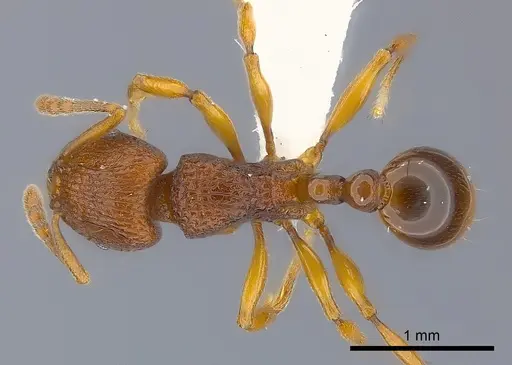
CASENT0406982
View on AntWeb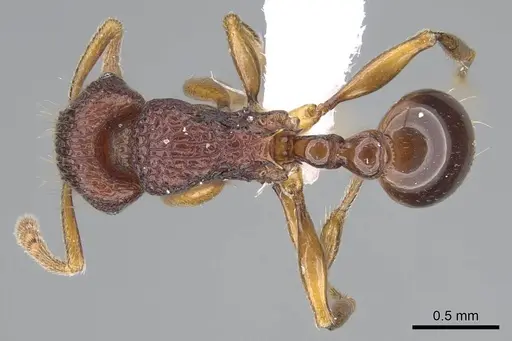
Literature
Loading distribution map...Loading products...