
Tetramorium freya
- Sci. Name
- Tetramorium freya
- Tribe
- Crematogastrini
- Subfamily
- Myrmicinae
- Author
- Hita Garcia & Fisher, 2014
- Distribution
- Found in 1 countries
Introduction
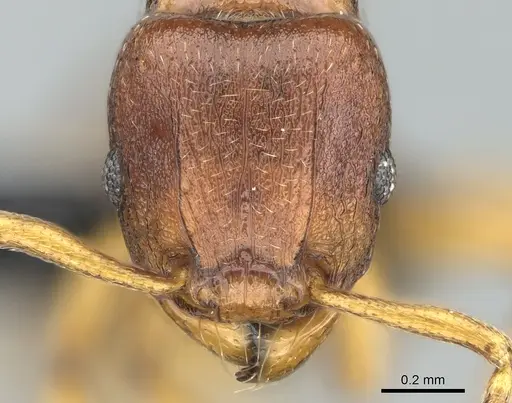
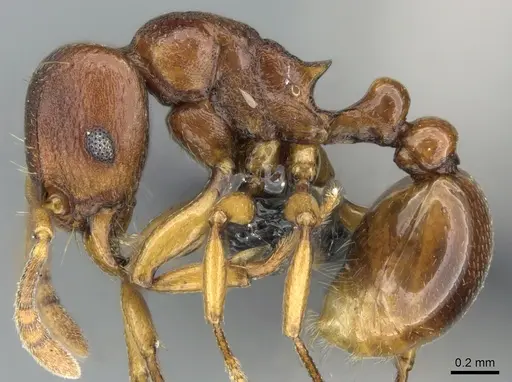
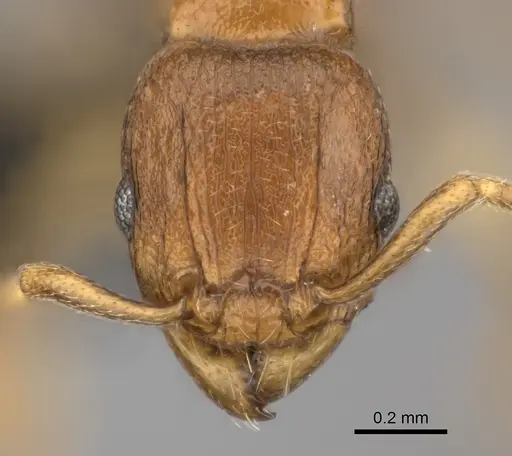
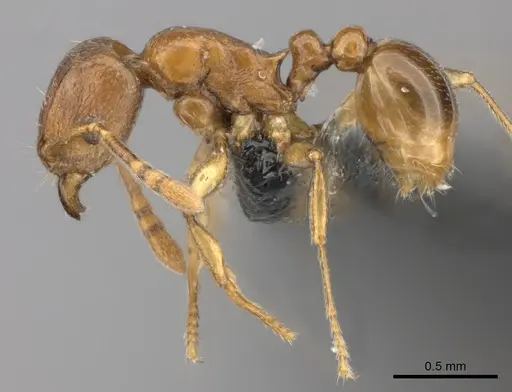
Tetramorium freya is a tiny ant species native to northern Madagascar and Nosy Be island. Workers are very small, but their exact total body length is unknown. They have a distinctive appearance with a high, rounded petiolar node and completely lack long standing hairs on the mesosoma - a key identifying feature that sets them apart from related species. Their body is uniformly brown with yellowish to light brown appendages. This species belongs to the T. schaufussii species group and the T. cognatum species complex . What makes T. freya particularly interesting is its apparent lifestyle. Researchers have mostly collected specimens from Malaise traps set in vegetation rather than leaf litter, suggesting these ants nest and forage in above-ground vegetation instead of on the forest floor . This is unusual for many Tetramorium species. The species is exceptionally rare in the wild - only five specimens have ever been documented .
Quick Summary
- Difficulty: Unknown, likely Expert
- Origin & Habitat: Northern Madagascar (northernmost tip) and Nosy Be island. Found in rainforests, dry forests, and coastal dunes at elevations from 10 to 1000 meters [1][2].
- Colony Type: Colony structure is unconfirmed. Based on typical Tetramorium patterns, likely single-queen (monogyne) colonies, though this has not been directly documented.
- Size & Growth:
- Queen: Unconfirmed, no documented queen measurements exist for this species.
- Worker: Size data unavailable. Only 5 worker specimens are known, and total length was not recorded [1].
- Colony: Unconfirmed. No colony size data exists.
- Growth: Unknown.
- Development: Unconfirmed. Based on typical Tetramorium development at tropical temperatures, estimate 4-8 weeks from egg to first worker. (This is an estimate based on related species, no direct development data exists for T. freya.)
- Antkeeping:
- Temperature: Based on Madagascar lowland to mid-elevation habitats (10-1000m), aim for warm conditions around 22-28°C. The species has been found in both rainforest and dry forest, suggesting some flexibility. Provide a temperature gradient so ants can self-regulate [1].
- Humidity: Likely requires higher humidity given the vegetation-foraging lifestyle. Keep nest substrate consistently moist but not waterlogged, think damp forest conditions. The species occurs in rainforest and coastal dune habitats, indicating preference for moderate to high humidity [1].
- Diapause: Unconfirmed. Madagascar species typically do not enter true diapause but may show reduced activity during cooler months. Monitor colony for seasonal slowdowns.
- Nesting: Based on vegetation-foraging behavior, likely nests in small cavities in wood, under bark, or in plant material. In captivity, a small test tube setup or Y-tong nest with narrow chambers would suit their tiny size. Avoid large, open spaces [1].
- Behavior: Temperament is unconfirmed, but most Tetramorium species are moderately aggressive when defending their nest. They are small but active foragers. Escape prevention is critical, their tiny size (though exact dimensions unknown) means they can squeeze through standard test tube barriers. Use fine mesh and ensure all connections are sealed. T. freya uses a modified stinger to smear venom onto enemies rather than piercing (typical of the Crematogastrini tribe). Based on collection method (Malaise traps in vegetation), they are likely active foragers that search for food in above-ground areas [1].
- Common Issues: escape prevention is critical due to their very small size, standard barriers may not contain them., extremely rare species with no captive husbandry history, expect a learning curve., wild-caught colonies may have parasites or disease due to limited specimen availability., vegetation-dwelling lifestyle may require different humidity management than ground-nesting Tetramorium.
Housing and Nest Setup
Given their tiny size and apparent vegetation-dwelling lifestyle, T. freya requires careful housing setup. Use a small test tube setup with a tight-fitting cotton plug, or a Y-tong (AAC) nest with narrow chambers scaled to their size. The key concern is escape prevention, these ants are small enough to squeeze through standard barriers. Apply Fluon to all connections and use fine mesh (at least 0.5mm or smaller) on any ventilation. Provide a small outworld for foraging. Since they appear to nest in vegetation rather than leaf litter, consider adding small pieces of moss or plant material to the setup to mimic their natural environment. Keep the nest area humid while allowing the outworld to dry slightly [1].
Feeding and Diet
Based on typical Tetramorium diet patterns and their small size, T. freya likely feeds on small insects, honeydew, and nectar. In captivity, offer small live prey such as fruit flies, springtails, or tiny crickets. They will likely accept sugar water or honey as an energy source. Feed small amounts every 2-3 days, removing uneaten prey to prevent mold. Since they forage in vegetation, they may prefer prey found on plants rather than ground-dwelling insects. Observe your colony's preferences and adjust accordingly. Avoid large prey items that may overwhelm these tiny workers.
Temperature and Seasonal Care
T. freya comes from Madagascar's northern regions at elevations from 10-1000m, suggesting adaptation to warm, humid conditions. Maintain temperatures between 22-28°C, with a slight gradient if possible. A heating cable on one side of the nest can create this gradient, place it on top of the nest to avoid evaporating moisture too quickly. The species has been found in both rainforest and dry forest, indicating some temperature flexibility. Monitor colony activity, if workers cluster near the heat source, increase temperature slightly, if they avoid it, reduce heat. Seasonal changes in Madagascar are less extreme than temperate regions, so dramatic diapause may not be necessary, but you may observe reduced activity during cooler periods [1].
Handling and Observation
Observing T. freya requires patience and the right equipment. Their tiny size means they are easily lost or crushed during transfers. When moving colonies, use soft brushes and avoid suction collectors. Under a magnifying glass or macro lens, you can appreciate their distinctive morphology, the high rounded petiolar node and complete lack of standing hairs on the mesosoma are their key identifying features. Given their rarity in the wild, any captive colony represents a significant opportunity for observation and study [1].
Acquisition and Ethical Considerations
T. freya is an exceptionally rare species with only five known specimens in museum collections. Acquiring a colony would likely require careful sourcing from specialized dealers or researchers. Before obtaining any colony, ensure you have appropriate housing ready and understand the species' needs. Given their rarity and the lack of captive husbandry history, consider whether keeping this species is appropriate for your experience level. If you do obtain a colony, document your observations carefully, any information about their captive behavior would contribute significantly to our knowledge of this poorly understood species [1].
Frequently Asked Questions
How long does it take for Tetramorium freya to develop from egg to worker?
The exact development time is unconfirmed for this species. Based on typical Tetramorium development at tropical temperatures (24-28°C), estimate approximately 4-8 weeks from egg to first worker. This is an educated guess based on related species, no direct observations exist for T. freya.
What do Tetramorium freya ants eat?
Based on typical Tetramorium diet, they likely accept small live prey (fruit flies, springtails), sugar water, and honey. They are small active foragers that probably hunt tiny insects and collect honeydew in nature. Offer small prey items and sugar sources, adjusting based on what your colony accepts.
Can I keep Tetramorium freya in a test tube setup?
Yes, a test tube setup should work well for this species. Use a small test tube with a tight-fitting cotton plug. Critical: escape prevention must be excellent due to their tiny size. Consider adding a thin film of Fluon to the cotton or using a fine mesh cover. Provide a small outworld for foraging.
What temperature do Tetramorium freya ants need?
Based on their Madagascar habitat (10-1000m elevation), aim for 22-28°C. The species has been found in both rainforest and dry forest, suggesting some flexibility. Provide a temperature gradient if possible so the colony can self-regulate. Avoid temperatures below 18°C or above 32°C [1].
Do Tetramorium freya ants sting?
Tetramorium belongs to the Myrmicinae subfamily and the Crematogastrini tribe, which includes species with a modified, flattened spatulate stinger used to smear venom onto enemies rather than piercing flesh. Given their tiny size, any venom application would be barely noticeable to humans. They are not typically aggressive.
How big do Tetramorium freya colonies get?
Colony size is unconfirmed for this species. No data exists on colony sizes, and given its extreme rarity (only 5 known specimens), colonies may be small, but this is speculation.
Are Tetramorium freya ants good for beginners?
No. This species is not recommended for beginners. It is extremely rare with no captive husbandry history, requires excellent escape prevention due to its tiny size, and its specific care requirements are not well understood. Start with more common, better-documented species like Tetramorium caespitum or other established pet ants [1].
Do Tetramorium freya ants need hibernation?
Diapause requirements are unconfirmed. Madagascar experiences mild seasonal variation compared to temperate regions, so true hibernation is likely not necessary. You may observe reduced activity during cooler months, but a dramatic diapause period is probably not required. Monitor your colony and adjust temperatures accordingly [1].
Why are my Tetramorium freya ants escaping?
Their tiny size makes escape likely without proper barriers. Standard test tube setups often have gaps these ants can squeeze through. Apply Fluon to all connections, use fine mesh (0.5mm or smaller), and check all seals regularly. Consider using a dedicated formicarium with escape-proof connections designed for small species.
Where is Tetramorium freya found in the wild?
T. freya is known only from the northern tip of Madagascar and Nosy Be island. It has been collected in rainforests, dry forests, and coastal dunes at elevations from 10 to 1000 meters. Most specimens have been caught in Malaise traps set in vegetation, suggesting they live and forage in plants rather than on the ground [1].
Report an Issue
The current care sheet is based fully on literature. See inconsistencies, or something that's incorrect? Please , it will be resolved after review from an admin. Contributing to the blogs tab also helps providing information, to make us be able to further improve the caresheets. Thank you for your support!
References

This caresheet is licensed under CC BY-SA 4.0 .
Community Blogs
CASENT0085551
View on AntWeb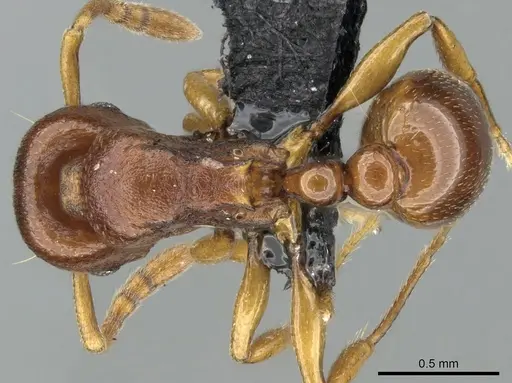
CASENT0466944
View on AntWeb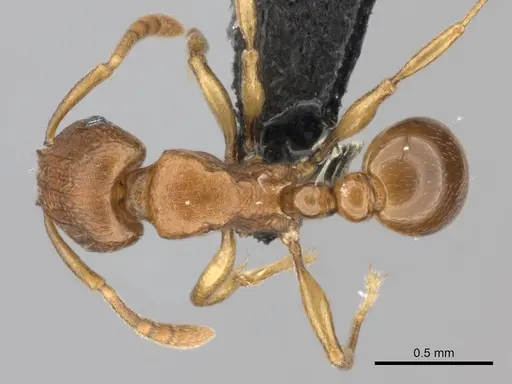
Literature
Loading distribution map...Loading products...