
Tetramorium exasperatum
- Sci. Name
- Tetramorium exasperatum
- Tribe
- Crematogastrini
- Subfamily
- Myrmicinae
- Author
- Emery, 1891
- Distribution
- Found in 3 countries
Introduction
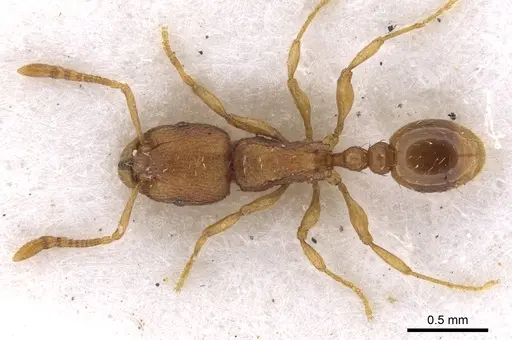
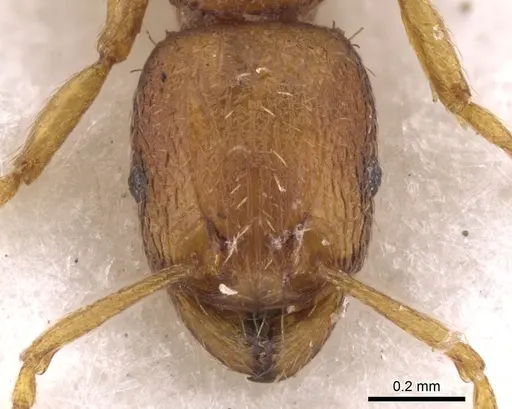
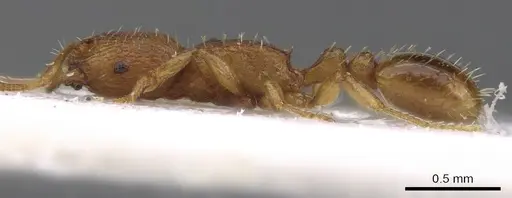
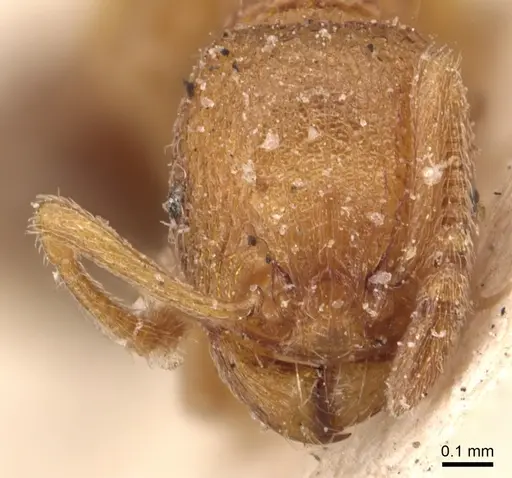
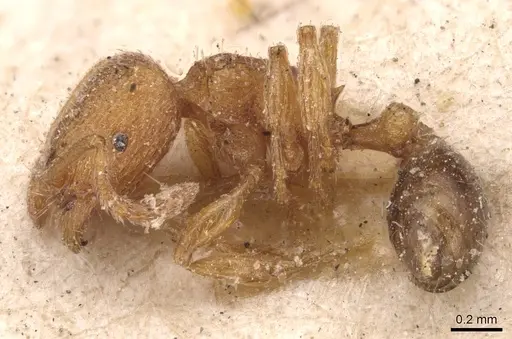
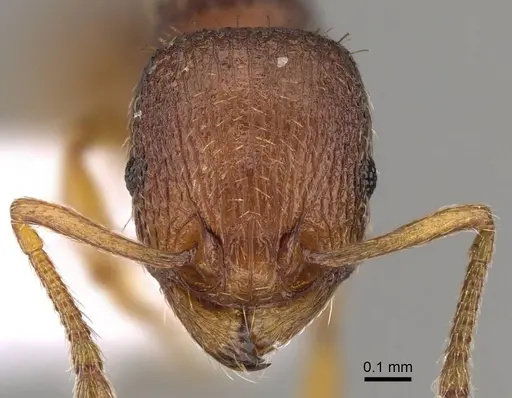
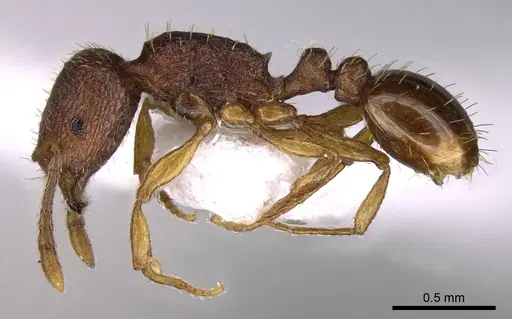
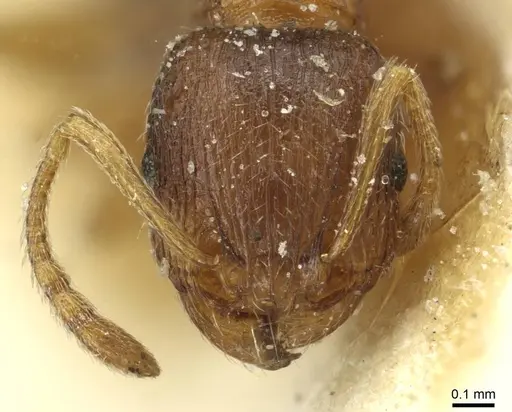
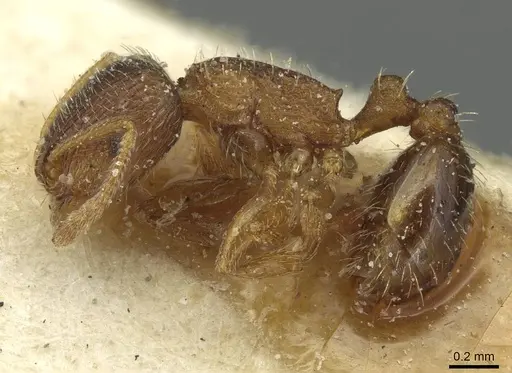
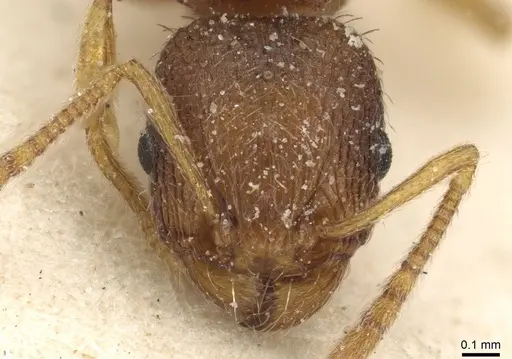
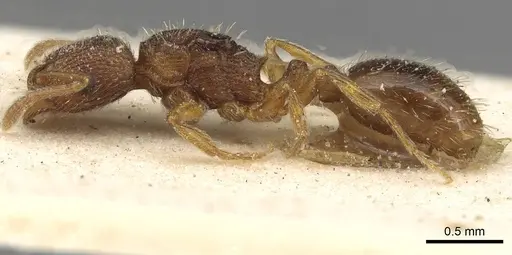
Tetramorium exasperatum is a small, reddish-brown ant native to the Mediterranean, found in Gibraltar, Morocco, Spain, and Tunisia . Workers are 2.25-2.50 mm long with a strongly rugose (wrinkled) head and thorax, a smooth and shiny abdomen, and very small eyes . Queens are larger (3.25-3.45 mm), darker brown, and have a lighter gaster . This species belongs to the simillimum-group and was first described from Tunisia; several former subspecies (Tetramorium zahrae, Tetramorium parvioculum, Tetramorium acutiseta) are now considered synonyms . What makes Tetramorium exasperatum interesting is its secretive, timid nature - these ants are rarely seen above ground and will hide or play dead when disturbed . They form small colonies of up to 200 workers with 1-5 queens, nesting under stones and in leaf litter in natural Mediterranean habitats like cork oak forests and rocky maquis .
Quick Summary
- Difficulty: Easy
- Origin & Habitat: Mediterranean region, Gibraltar, Morocco, Spain, and Tunisia. Found in cork oak forests, clearings, forest borders, pastures, steppe, and rocky maquis from sea level up to 2600 m elevation [1][3].
- Colony Type: Facultatively polygynous, colonies can contain 1-5 queens. Colony size is small, up to 200 workers [2][3].
- Size & Growth:
- Antkeeping:
- Temperature: Keep at standard room temperature (20-25 °C). Being a Mediterranean species, they don't need high heat, but avoid prolonged temperatures below 15 °C outside of hibernation.
- Humidity: Moderate humidity. In nature they nest under stones and in leaf litter in humid forest valleys [3]. Keep the nest substrate slightly moist but not waterlogged. Provide a drier area in the outworld.
- Diapause: Yes, likely requires a mild winter rest period (4-8 weeks at 10-15 °C) based on Mediterranean origin. No specific data, but it is reasonable to offer a cool resting period. Reduce feeding during this time.
- Nesting: Y‑tong (AAC) nests work well for these small ants. They also do well in naturalistic setups with moist soil and flat stones to mimic their natural nesting conditions. Avoid very dry environments.
- Behavior: Timid and secretive. Workers rarely venture above the soil surface and will hide or play dead when the nest is disturbed [2]. They are not aggressive and do not readily sting. Like other Myrmicinae, they have a modified stinger used to smear venom onto enemies rather than piercing flesh, but they rarely use it. Because of their small size (under 3 mm), escape prevention is important, use fine mesh barriers and tight‑fitting lids. They coexist peacefully with many native Mediterranean ants in their range [3].
- Common Issues: small size means escapes are likely without fine mesh barriers and tight lids., secretive nature may make keepers worry about colony health, this is normal., colonies stay small (under 200 workers), do not expect rapid growth or large populations., founding success is unknown, wild‑caught queens may be difficult to establish., overly dry conditions stress the colony, keep the nest substrate consistently moist.
Nest Preferences
In the wild, Tetramorium exasperatum nests under stones and within leaf litter in humid forest habitats [2][3]. They prefer spots with moderate moisture, the damp soil you'd find under a rock in a cork oak forest. For captivity, Y‑tong (AAC) nests work well because they maintain humidity while allowing you to observe the colony. You can also use a naturalistic setup with a layer of moist soil and flat stones on top to mimic their natural nesting conditions. The key is avoiding overly dry environments, these ants come from Mediterranean forests where humidity stays moderate. A small water reservoir connected to the nest helps maintain consistent moisture [1][3].
Feeding and Diet
Like most Tetramorium species, Tetramorium exasperatum is an omnivore that accepts both protein and sugar sources. In captivity, offer sugar water or honey as a constant energy source. For protein, small insects like fruit flies, pinhead crickets, or mealworms work well. Given their small worker size (2.25-2.50 mm), prey items should be appropriately sized, tiny insects are better accepted than large ones. They are not aggressive foragers, so place food near active areas of the nest. Feed protein 2-3 times per week, and keep sugar water available at all times. Remove uneaten prey after 24-48 hours to prevent mold.
Temperature and Care
Keep Tetramorium exasperatum at standard room temperature, ideally between 20-25 °C. This species comes from the Mediterranean region (Gibraltar, Morocco, Spain, Tunisia) where temperatures are mild year‑round [1]. They do not need additional heating unless your room falls below 18 °C. A heating cable on one side of the nest can create a gentle gradient if needed but is not strictly required. During winter, they benefit from a mild diapause, reduce temperature to 10-15 °C for 4-8 weeks. This mimics their natural seasonal cycle in the Mediterranean. During diapause, reduce feeding but keep a small amount of sugar water available. Do not feed protein during hibernation [1].
Behavior and Temperament
This is one of the more timid ant species you can keep. Workers are rarely seen above ground in the wild and will immediately hide or play dead when their nest is disturbed [2]. This shy behavior carries over to captivity, do not be alarmed if you don't see much activity. They are not aggressive and pose no threat to keepers. Their small size (workers under 3 mm) means they can squeeze through small gaps, so use fine mesh for escape prevention. Despite their timid nature, they are hardy and adapt well to captivity once established. Like other Myrmicinae, they have a modified stinger used to smear venom onto enemies, but they rarely use it. They coexist peacefully with other ant species in their native range, including Temnothorax, Crematogaster, and Lasius species [3].
Colony Development
Colonies start with a single queen (or sometimes multiple queens). Founding behavior has not been directly observed in this species, but based on general Tetramorium biology, queens likely seal themselves in a chamber and raise the first brood using stored reserves. The first workers (nanitics) will be smaller than normal workers and typically appear within 6-8 weeks under warm conditions. After the first workers emerge, the colony grows gradually. Maximum colony size is small compared to many ants, expect around 100-200 workers at maturity [2]. Colonies may have multiple queens (1-5 [3]), which can increase initial growth rate, but the overall colony size remains modest. Growth is moderate rather than fast, patience is needed as colonies take time to reach their maximum size [2][3].
Frequently Asked Questions
Can I keep Tetramorium exasperatum in a test tube?
Yes, test tubes work well for founding colonies. Use a small test tube with a water reservoir and cotton plug. Keep it in a dark, quiet location during founding. Once the colony reaches about 15-20 workers, you can consider moving them to a small formicarium or Y‑tong nest. Their small colony size means they can stay in test tube setups longer than many species.
How long until Tetramorium exasperatum has first workers?
The exact timing is unstudied, but based on related Tetramorium species, expect first workers (nanitics) to emerge around 6-8 weeks after the queen lays her first eggs, assuming temperatures of 20-24 °C. The first workers will be smaller than normal workers but grow larger in subsequent broods. Be patient, founding colonies can be slow.
Do Tetramorium exasperatum ants sting?
Yes, like all Myrmicinae ants, they have a functional stinger. However, they are very timid and unlikely to use it. When disturbed, they prefer to hide or play dead rather than defend aggressively [2]. Even if they did sting, it would be very mild, comparable to a minor pinprick at most.
Are Tetramorium exasperatum good for beginners?
Yes, they are a good beginner species. They are hardy, adaptable, and tolerate a range of conditions. Their small colony size makes them manageable, and they are not aggressive. The main challenges are their secretive nature (you won't see much activity) and their small size requiring good escape prevention. They are more forgiving of beginner mistakes than many species.
How big do Tetramorium exasperatum colonies get?
Colonies typically reach 100-200 workers at maturity [2]. This is relatively small compared to many common ant species. They are not a species for keepers who want large, impressive colonies. However, their small size makes them ideal for keeping in limited space, and they are long‑lived once established.
Do Tetramorium exasperatum need hibernation?
Yes, they benefit from a mild winter rest period based on their Mediterranean origin. Reduce temperatures to 10-15 °C for 4-8 weeks during winter months. No specific data exist, but this mimics their natural seasonal cycle. During hibernation, reduce feeding significantly but keep a small amount of sugar water available. Do not feed protein during this period. After hibernation, gradually warm them back up and resume normal feeding.
Why are my Tetramorium exasperatum always hiding?
This is completely normal behavior for this species. Tetramorium exasperatum is naturally secretive, workers rarely venture above ground in the wild and will hide or play dead when disturbed [2]. They are not sick or unhappy, they are just shy. You may see more activity at night or when the colony is well‑established. Avoid disturbing the nest frequently as this stresses them.
Can I keep multiple Tetramorium exasperatum queens together?
Yes, this species is facultatively polygynous, colonies can have 1-5 queens [3]. However, if you are introducing an unrelated queen to an established colony, do so gradually and monitor for aggression. In the wild, multiple queens are common in some colonies (one was found with 5 queens in Spain) [3]. For founding, a single queen is simpler and works well.
What do Tetramorium exasperatum eat?
They are omnivores. Offer sugar water or honey as a constant energy source. For protein, provide small insects like fruit flies, small mealworms, or tiny crickets. Feed protein 2-3 times per week. Remove uneaten prey after 24-48 hours. They are not aggressive foragers, so place food where workers can easily find it.
When should I move Tetramorium exasperatum to a formicarium?
Move them when the test tube becomes crowded or the water reservoir runs low, typically when the colony has about 15-30 workers. A Y‑tong (AAC) nest works well for this species because it maintains humidity and allows observation. They prefer smaller chambers scaled to their tiny size. A naturalistic setup with stones and moist soil is also suitable.
Report an Issue
The current care sheet is based fully on literature. See inconsistencies, or something that's incorrect? Please , it will be resolved after review from an admin. Contributing to the blogs tab also helps providing information, to make us be able to further improve the caresheets. Thank you for your support!
References

This caresheet is licensed under CC BY-SA 4.0 .
Community Blogs
CASENT0901053
View on AntWeb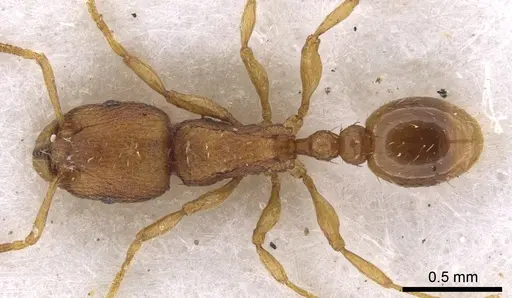
CASENT0904829
View on AntWeb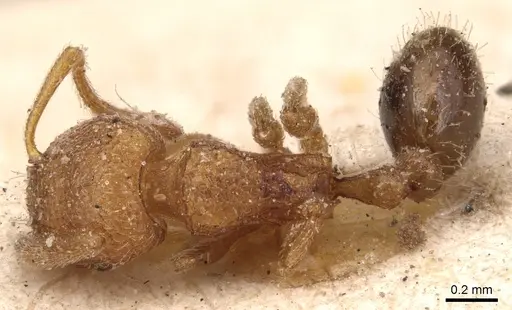
CASENT0914415
View on AntWeb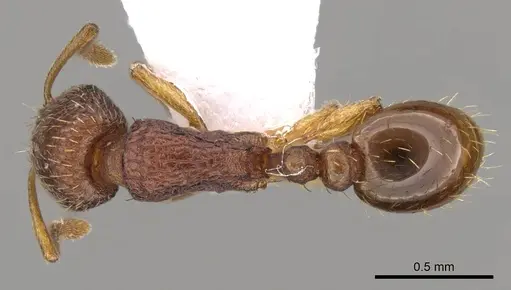
CASENT0915008
View on AntWeb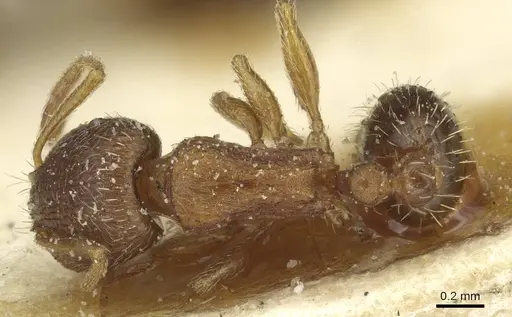
CASENT0915096
View on AntWeb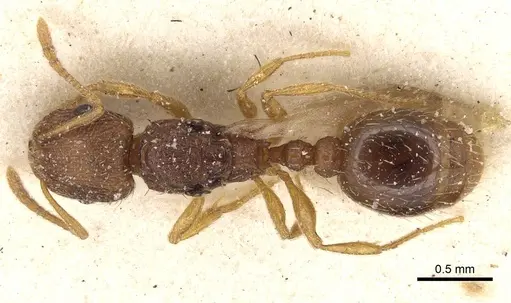
Literature
Loading distribution map...Loading products...