
Tetramorium duncani
- Sci. Name
- Tetramorium duncani
- Tribe
- Crematogastrini
- Subfamily
- Myrmicinae
- Author
- Mbanyana <i>et al.</i>, 2018
- Distribution
- Found in 2 countries
Introduction
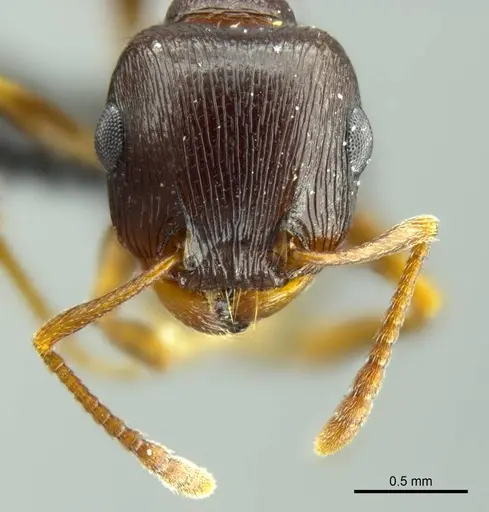
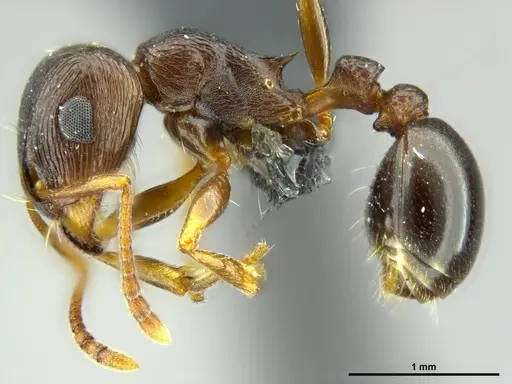
Tetramorium duncani is a small, dark brown to blackish ant from the Tetramorium solidum group, a collection of seed harvester ants native to southern Africa. The species was only described in 2018,so almost nothing is known about its biology in captivity. It can be identified by its long propodeal spines, a sharply-angled petiolar node, and four erect hairs on the head. A notable feature is the strongly developed psammophore on the underside of the head – a brush-like structure that helps desert ants move and carry sand particles . This ant inhabits some of the driest regions of southern Africa, including Namibian Savanna Woodlands and the Kalahari Xeric Savanna. As a seed harvester, it likely collects and stores seeds as a primary food source, similar to other members of the solidum group . The species is known from Namibia and South Africa's Northern Cape region .
Quick Summary
- Difficulty: Medium
- Origin & Habitat: Namibia and South Africa (Northern Cape), Namibian Savanna Woodlands and Kalahari Xeric Savanna [1]
- Colony Type: Unconfirmed
- Size & Growth:
- Queen: Undescribed, no data available.
- Worker: Size data unavailable, no total length measurements reported [1].
- Colony: Unknown
- Growth: Moderate (estimated from genus patterns)
- Development: Estimated 6-10 weeks based on typical Tetramorium development, but not confirmed for this species. (Direct development data unavailable, estimates based on genus-level patterns.)
- Antkeeping:
- Temperature: Warm conditions preferred, aim for 22-26°C, with a slight gradient allowing workers to self-regulate. This species originates from hot savanna regions and likely tolerates higher temperatures than typical temperate ants [1]
- Humidity: Low to moderate, keep substrate relatively dry, mimicking arid Kalahari conditions. Allow parts of the nest to dry completely between waterings. Avoid constant saturation [1]
- Diapause: Unknown, the species originates from subtropical savanna with mild winters, so diapause may not be required. Further research needed [1]
- Nesting: Y-tong (AAC) or plaster nests work well for their small size. Provide a thin layer of sandy substrate they can manipulate. Avoid overly humid environments that promote mold growth.
- Behavior: Peaceful and non-aggressive seed harvesters. Workers are small but active foragers, primarily collecting seeds and likely small arthropods. Their primary defense mechanism is venom smearing – they have a modified stinger that wipes venom onto enemies rather than piercing. They are not known to sting and pose no danger to keepers. Their small size means escape prevention requires attention – use fine mesh barriers and ensure all connections are tightly sealed. Workers have a psammophore for moving through sandy substrate [1].
Housing and Nest Setup
Because Tetramorium duncani is a small desert-adapted species, the nest environment should prioritize dry conditions and good ventilation. Y-tong (AAC) nests work well, the porous material helps regulate humidity and provides the slightly arid conditions they prefer. Alternatively, a plaster nest with a thin layer of sandy substrate allows workers to use their psammophore (the sand-carrying structure on their head) naturally [1]. The outworld should be simple and easy to clean, with a small water test tube for drinking. Since workers are very small, use fine mesh on ventilation holes and check all connections for potential escape routes. A thin layer of sand in the outworld mimics their natural Kalahari habitat and gives them foraging substrate [1].
Feeding and Diet
As a seed harvester ant, Tetramorium duncani likely collects and stores seeds as their primary food source, similar to other members of the Tetramorium solidum group [1]. Offer a variety of small seeds, millet, grass seeds, and commercial ant seed mixes work well. They will also accept small protein sources like fruit flies, small mealworms, or cricket pieces. Sugar water or honey water can be offered occasionally, though seed harvesters typically rely less on sugar than predatory species. Feed seeds continuously since they store them, and offer protein 2-3 times per week. Remove any uneaten food after 48 hours to prevent mold. Fresh water should always be available [1].
Temperature and Seasonal Care
This species comes from hot African savanna regions, so warm temperatures support their activity and brood development. Keep the nest area at 22-26°C, with a heating cable on one side of the nest if your room temperature falls below this range. Place heating on top of the nest, not underneath, to avoid excessive evaporation. Because the species originates from subtropical savanna with mild winters, a cool diapause period may not be necessary, monitor colony activity. If you choose to provide a winter rest, reduce temperature gradually over 2-3 weeks to around 10-15°C for 2-3 months, but this is not confirmed [1].
Colony Establishment
Since Tetramorium duncani was only described in 2018,colony founding behavior has not been directly documented. Founding type is unconfirmed. If you obtain a queen, place her in a test tube setup with a small cotton ball providing minimal moisture. Keep the setup dark and undisturbed for several weeks, then check for the first workers (nanitics). These initial workers will be smaller than mature workers. Do not disturb during this critical period, stress causes many founding colonies to fail. Once workers emerge, you can gradually introduce small seeds and minimal protein [1].
Behavior and Temperament
Tetramorium duncani is a peaceful species that poses no threat to keepers. As seed harvesters, they are not aggressive and rarely bite. Workers are active foragers, primarily collecting seeds but also likely scavenging small arthropods. Their small size (body length data unavailable) makes them less conspicuous than larger ant species, but they are persistent foragers. The species shows typical Tetramorium behavior, organized, methodical foraging with good trail communication. Their defense mechanism is venom smearing, not stinging [1]. The most important behavioral consideration is their escape ability, despite being small, they are adept at finding gaps in enclosure seals. Use fluon on container rims and verify all connections are tight [1].
Frequently Asked Questions
How long does it take for Tetramorium duncani to raise first workers?
The exact timeline is unconfirmed for this recently described species, but based on typical Tetramorium development patterns, expect 6-10 weeks from egg to first worker at optimal temperatures (22-26°C). The founding behavior is unconfirmed, if claustral, the queen will seal herself in and raise the first brood alone. Do not disturb during founding [1].
What do Tetramorium duncani ants eat?
They are seed harvesters, so seeds should form the bulk of their diet. Offer small seeds like millet, grass seeds, or commercial ant seed mixes. They also accept small protein sources like fruit flies, small mealworms, or cricket pieces. Sugar water can be offered occasionally but is not required [1].
Are Tetramorium duncani ants dangerous?
No, they are not dangerous. These small seed harvesters are peaceful and their defense mechanism is venom smearing (not stinging). They pose no threat to keepers and are not aggressive toward humans [1].
Do Tetramorium duncani ants need hibernation?
Probably not, the species originates from subtropical savanna with mild winters, so a cool diapause period may not be required. No direct data is available, so monitor colony behavior. If you choose to provide a winter rest, reduce temperature gradually to 10-15°C for 2-3 months, but this is experimental [1].
What size colony does Tetramorium duncani reach?
The maximum colony size is unknown. This is a recently described species (2018) so exact colony sizes in the wild are not documented. Estimated from related species, it might reach several hundred workers, but this is speculative [1].
Can I keep multiple Tetramorium duncani queens together?
Not recommended, colony structure is unconfirmed for this species. Combining unrelated queens has not been documented, and most Tetramorium species are single-queen (monogyne) colonies. House any foundress queens separately to avoid conflict [1].
What temperature is best for Tetramorium duncani?
Keep nest temperatures at 22-26°C. This species originates from hot African savanna regions and tolerates warm conditions well. A slight temperature gradient allows workers to self-regulate. Avoid temperatures below 15°C for extended periods except possibly during winter rest [1].
How do I set up a nest for Tetramorium duncani?
Use a dry nest setup, Y-tong (AAC) or plaster nests work well for this arid-adapted species. Provide a thin layer of sandy substrate they can manipulate. Ensure excellent escape prevention since their small size allows them to squeeze through tiny gaps. Keep humidity low to prevent mold [1].
Why is my Tetramorium duncani colony not growing?
Several factors could slow growth: temperatures below optimal (below 22°C), excessive humidity causing stress or mold, insufficient protein for the queen and brood, or disturbance during founding. Review each parameter and adjust gradually. Remember this species was only described in 2018,so documented care protocols are limited, some experimentation may be necessary [1].
Is Tetramorium duncani good for beginners?
This species presents moderate difficulty. While not aggressive and relatively simple to feed, the lack of documented biology (described in 2018) means care is largely inferred from genus patterns. Beginners should be prepared for some experimentation and slower growth than more commonly kept species. The key challenges are escape prevention and humidity management in an arid-adapted species [1].
Report an Issue
The current care sheet is based fully on literature. See inconsistencies, or something that's incorrect? Please , it will be resolved after review from an admin. Contributing to the blogs tab also helps providing information, to make us be able to further improve the caresheets. Thank you for your support!
References

This caresheet is licensed under CC BY-SA 4.0 .
Community Blogs
SAM-HYM-C027003
View on AntWeb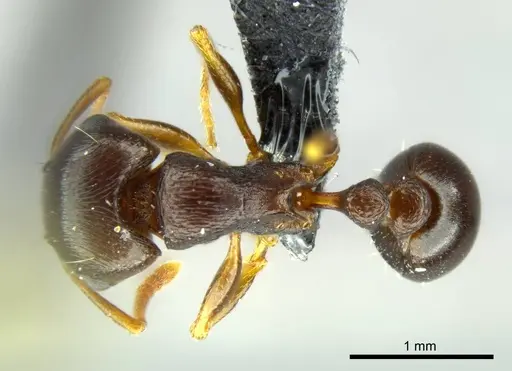
Literature
Loading distribution map...Loading products...