
Tetramorium cynicum
- Sci. Name
- Tetramorium cynicum
- Tribe
- Crematogastrini
- Subfamily
- Myrmicinae
- Author
- Bolton, 1977
- Distribution
- Found in 1 countries
Introduction
Tetramorium cynicum is a small ant species endemic to the Philippines, with workers measuring 4.1-4.8mm in total length and having a yellow-brown color . It was first described by Bolton in 1977 and appears derived from a pacificum-like ancestor but has distinct traits like a strongly notched clypeus and long propodeal spines . The species is only known from forest habitats on Negros Island, specifically Dumaguete, Cuernos Mountains, and Horns of Negros, at elevations around 1500 feet . Almost nothing is known about the biology of this species in the wild or captivity. It belongs to the Tetramorium bicarinatum group and seems restricted to semi-natural or natural habitats . Based on its tropical distribution, you should provide warm, humid conditions, but all care advice is inferred from related species. This ant uses a smearing defense: its flattened stinger wipes venom onto attackers rather than stinging (general subfamily trait, not species-specific literature).
Quick Summary
- Difficulty: Hard
- Origin & Habitat: Philippines, Negros Island, in forest habitats at roughly 450 m elevation. Appears restricted to (semi-)natural places [1][2].
- Colony Type: Unknown, colony structure has not been documented.
- Size & Growth:
- Queen: Not described, size data unavailable.
- Worker: 4.1-4.8 mm total length [1].
- Colony: Unknown, not documented. Inferred from related Tetramorium: potentially up to several hundred workers.
- Growth: Unknown, no data available.
- Development: Unknown, no direct data. A rough guess based on tropical Tetramorium is 6-10 weeks at optimal temperature (24-28°C), but this is speculative. (All timeline data is estimated from related species and may be inaccurate.)
- Antkeeping:
- Temperature: Tropical species, keep at 24-28°C. Inferred from natural habitat. Use a heating cable on one side to create a gradient.
- Humidity: High humidity, inferred from forest habitat. Keep the nest substrate consistently moist but not waterlogged. Provide a water source.
- Diapause: Unlikely, no data. As a tropical species, winter cooling is probably not required.
- Nesting: Natural nesting habits unknown. Likely soil or under stones. In captivity, start with a test tube setup, then move to a Y-tong (AAC), plaster, or soil nest. Keep the nest humid and warm.
- Behavior: Not documented. Based on related Tetramorium species, workers are probably active, ground-foraging omnivores. Escape risk is moderate due to their small size (4-5 mm), use Fluon or PTFE barriers. Defense: uses a spatulate stinger to smear venom (general Myrmicinae tribe Crematogastrini trait).
- Common Issues: no specific biological data, all care is guesswork, results may vary., tropical species sensitive to temperature drops, keep warm year-round., small size increases escape risk, use effective barriers., wild-caught queens may not adapt to captive conditions or may carry parasites., unknown founding and colony structure, do not expect quick growth.
Appearance and Identification
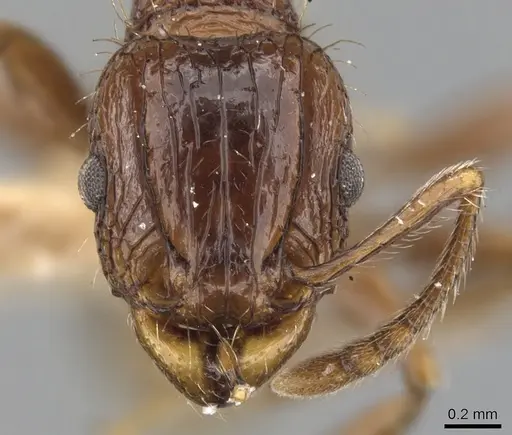
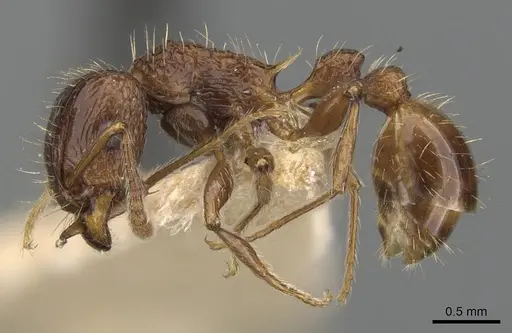
Workers of Tetramorium cynicum measure 4.1-4.8 mm in total length [1]. They are yellow-brown with smooth mandibles (except for scattered pits), a strongly developed median notch on the anterior clypeal margin, and three strong carinae on the median clypeus. The propodeal spines are long, narrow, and slightly upcurved. The head and body have many long, erect hairs. The species is closely related to Tetramorium bicarinatum and Tetramorium pacificum [1].
Distribution and Habitat
This species is endemic to the Philippines, known only from Negros Island [3][4]. Type locality is Dumaguete, and additional records come from Cuernos Mountains and Horns of Negros at around 1500 feet elevation [1]. It was collected in forest habitat and appears restricted to semi-natural or natural places [2]. The tropical climate of the Philippines has high year-round humidity and warmth, try to replicate these conditions.
Climate and Nest Conditions
As a tropical forest species, keep the nest at 24-28°C. Below 20°C for long periods likely causes stress. Use a heating cable on top of the nest (not underneath) to avoid drying. Humidity should be high, keep the substrate moist but not waterlogged, and provide a water source. Diapause is probably not needed. Nesting habits in nature are unknown, but a test tube for founding then a Y-tong, plaster, or soil nest works. Keep chambers sized for ants of 4-5 mm.
Feeding
Specific diet unknown, but you can offer standard ant foods: small insects (fruit flies, tiny crickets, mealworms) for protein, and sugar water or honey for carbohydrates. Feed protein 2-3 times per week and keep sugar available always. Remove uneaten prey after 48 hours to prevent mold.
Colony Development
No data exists on founding or growth. Do not expect claustral founding, it's unconfirmed. Growth rate and colony size are unknown. Patience is essential, expect a long founding period with very small colonies.
Defense and Behavior
This ant belongs to Myrmicinae tribe Crematogastrini, which commonly uses a smearing defense: a modified flat stinger wipes venom onto attackers rather than piercing. No species-specific studies exist, so this is based on taxonomic knowledge. In captivity, they are unlikely to be a problem for careful keepers, but small workers can escape easily.
Frequently Asked Questions
How long does it take for Tetramorium cynicum to produce first workers?
Unknown, no data exists. A rough guess based on related tropical Tetramorium is 6-10 weeks at 24-28°C, but this is speculative.
What do Tetramorium cynicum ants eat?
Not studied. Likely they accept small insects (fruit flies, tiny crickets) and sugar sources. Offer a varied diet and observe.
Do Tetramorium cynicum need hibernation?
Probably not, they are tropical and likely active year-round. No diapause is expected.
Can I keep multiple Tetramorium cynicum queens together?
Unknown, colony structure is not documented. Do not combine queens unless proven polygyne, they may fight.
How big do Tetramorium cynicum colonies get?
Undocumented. Related species can have several hundred workers, but no reliable estimate.
What temperature is best for Tetramorium cynicum?
Keep them warm at 24-28°C. This is inferred from their tropical habitat.
Are Tetramorium cynicum ants good for beginners?
No, too little is known about their care. Only experienced keepers who can handle uncertainty should attempt them.
Do Tetramorium cynicum ants sting?
They have a stinger and can smear venom, but it is mild and not a concern for keepers.
Where is Tetramorium cynicum found in the wild?
Endemic to the Philippines, specifically Negros Island. Records from Dumaguete, Cuernos Mountains, and Horns of Negros in forest at about 450 m elevation [1].
How do I set up a nest for Tetramorium cynicum?
Start with a test tube setup (water reservoir with cotton). For larger colonies, use a Y-tong, plaster, or soil nest. Keep warm (24-28°C) and humid. Ensure escape barriers due to small size.
Report an Issue
The current care sheet is based fully on literature. See inconsistencies, or something that's incorrect? Please , it will be resolved after review from an admin. Contributing to the blogs tab also helps providing information, to make us be able to further improve the caresheets. Thank you for your support!
References

This caresheet is licensed under CC BY-SA 4.0 .
Community Blogs
CASENT0901078
View on AntWeb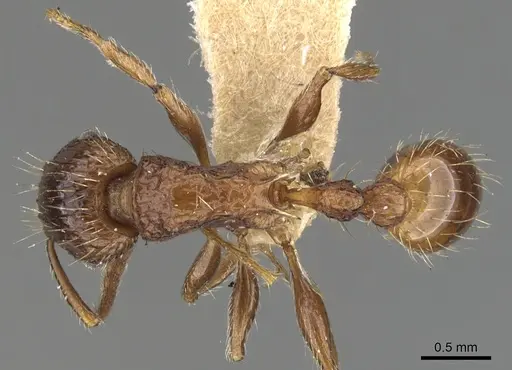
Literature
Loading distribution map...Loading products...