
Tetramorium cuneinode
- Sci. Name
- Tetramorium cuneinode
- Tribe
- Crematogastrini
- Subfamily
- Myrmicinae
- Author
- Bolton, 1977
- Distribution
- Found in 1 countries
Introduction
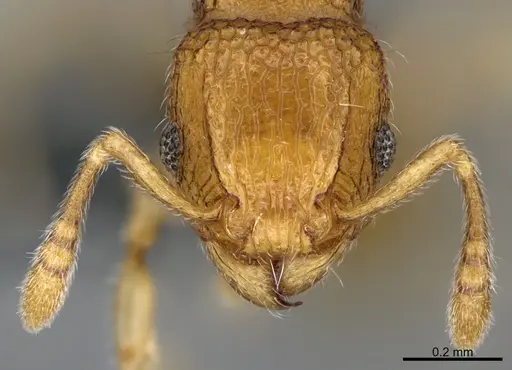
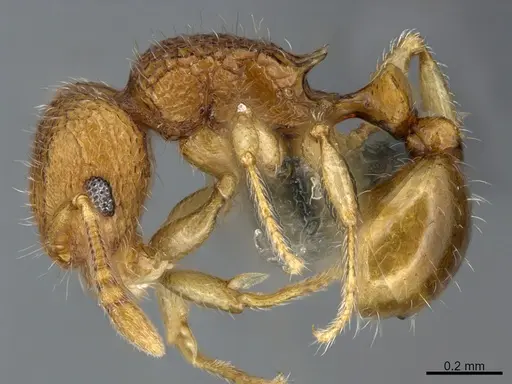
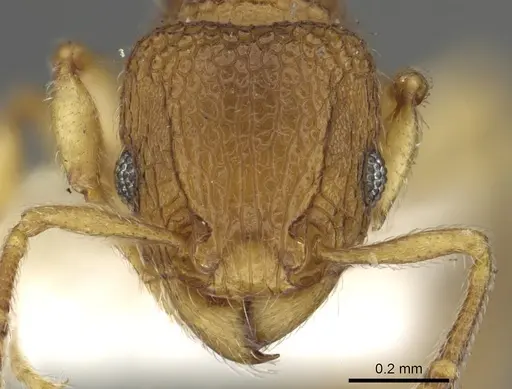
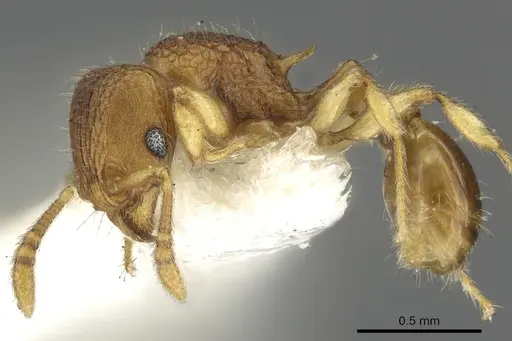
Tetramorium cuneinode is a tiny yellow-brown ant measuring just 2.3–2.6 mm in total length . It belongs to the Tetramorium tonganum species group and is notable for its uniquely shaped petiole – wedge-shaped, broadest at the bottom and narrowing toward the top – which sets it apart from other regional Tetramorium species . The species was described by Bolton in 1977 from Thailand, with close relatives found in Malaya and Java. These ants inhabit evergreen forests in southern China (Yunnan province) and Thailand, where they live as ground-dwelling foragers in secondary forest habitats .
Quick Summary
- Difficulty: Medium
- Origin & Habitat: Native to southern China (Yunnan/Xishuangbanna) and Thailand, living in evergreen secondary forests [2][3]. This is a habitat specialist restricted to secondary forest – they are not found in primary forest or rubber plantations [3].
- Colony Type: Unconfirmed colony structure. Based on typical Tetramorium patterns, they are likely single-queen colonies, but this has not been documented.
- Size & Growth:
- Queen: Unknown – no queen described. Inferred from Tetramorium genus patterns, likely around 5–7 mm.
- Worker: 2.3–2.6 mm [1]
- Colony: Unknown – no colony size data available
- Growth: Moderate – inferred from related Tetramorium species
- Development: Estimated 5–8 weeks at tropical temperatures (24–28 °C) based on genus patterns (Development timeline not specifically studied for this species – estimates based on typical Tetramorium development.)
- Antkeeping:
- Temperature: Keep at 24–28 °C – these are tropical forest ants from southern China and Thailand [2]. A gentle gradient allowing them to move between warmer and cooler areas is ideal.
- Humidity: Moderate to high – they come from evergreen forest habitats with consistent moisture. Keep the nest substrate moist but not waterlogged, with some drier areas available.
- Diapause: Unlikely required – being from tropical/southern regions, they probably do not need a true hibernation. However, a slight cool-down period during winter months may be beneficial.
- Nesting: Ground-nesting species – test tubes, plaster nests, or Y-tong (AAC) nests work well. Provide a moisture source and keep the nest area humid.
- Behavior: These are small, ground-dwelling ants that likely forage in the leaf litter layer. They are not aggressive and pose no threat to keepers. Their tiny size (under 3 mm) means they can squeeze through small gaps – excellent escape prevention is essential. Workers probably scavenge for small insects and tend aphids for honeydew, similar to other Tetramorium species. As members of the Myrmicinae tribe Crematogastrini, they use a smear defense mechanism: applying venom with a flattened spatulate stinger rather than stinging directly.
- Common Issues: tiny size makes escape likely without fine mesh barriers, habitat specialist may have specific humidity requirements not met by standard setups, limited data means care is based on genus assumptions rather than species-specific research, slow colony growth can frustrate beginners expecting fast development, wild-caught colonies may struggle to adapt to captive conditions
Natural History and Distribution
Tetramorium cuneinode is known from southern China (Yunnan province, particularly the Xishuangbanna region) and Thailand [2]. The species was originally described from Thailand by Bolton in 1977. It belongs to the Tetramorium tonganum species group and is closely related to Tetramorium seneb from Malaya and Java [1].
This ant is a habitat specialist – research shows it occupies secondary forest environments but is not found in primary forest or rubber plantations [3]. This suggests they prefer disturbed forest areas with more open canopy and leaf litter, rather than intact primary forest or agricultural lands. They have been collected from evergreen forest habitats in China [1].
The unique wedge-shaped petiole distinguishes this species from other regional Tetramorium. In profile, the petiole node is broadest below and narrows strongly above, resembling some African species in the squaminode-group, though the sting appendage differs (dentiform in cuneinode versus spatulate in African species) [1].
Housing and Nest Setup
As a small ground-dwelling ant, Tetramorium cuneinode does well in standard antkeeping setups. Test tubes with a water reservoir work excellently for founding colonies – the small size means you can use relatively narrow tubes. For established colonies, Y-tong (AAC) nests or plaster nests provide good humidity control.
Because they are habitat specialists from secondary forest, provide moderate to high humidity in the nest area. A moisture source in the outworld helps maintain conditions. These ants are tiny (under 3 mm), so any connections between nest and outworld should have smooth, wide passages to prevent clogging while still being secure against escapes.
The outworld can be simple – a plastic container with fluon barriers on the edges. Since they are small, ensure your escape prevention is excellent. A thin layer of substrate in the outworld allows them to forage naturally.
Feeding and Diet
Like other Tetramorium species, Tetramorium cuneinode likely has a generalist diet – they probably scavenge for small insects, seeds, and tend aphids for honeydew. In captivity, offer small protein sources like fruit flies, pinhead crickets, or small mealworms. Sugar water or honey can be offered occasionally, though many Tetramorium species prefer insect prey.
Feed small amounts a few times per week – remove any uneaten prey after 24–48 hours to prevent mold. Since these ants are so small, even a fruit fly leg is a substantial meal. Adjust portions based on colony size – a founding queen needs only tiny offerings, while a colony of 50+ workers can handle larger prey items.
Temperature and Seasonal Care
Keep Tetramorium cuneinode at tropical temperatures – aim for 24–28 °C in the nest area. Being from southern China (Yunnan) and Thailand, they are accustomed to warm conditions year-round [2]. A heating cable on one side of the nest can create a temperature gradient, allowing ants to regulate their own temperature by moving between warmer and cooler areas.
Regarding winter care, these ants come from regions without harsh winters. A true hibernation (diapause) is likely not required. However, a slight reduction in temperature during winter months (dropping to around 20–22 °C) may simulate natural seasonal patterns and could benefit colony health. Avoid letting temperatures drop below 18 °C for extended periods.
Colony Development
Colony development specifics for Tetramorium cuneinode have not been documented in scientific literature. Based on typical Tetramorium patterns and the small worker size (2.3–2.6 mm), expect relatively moderate growth rates. The first workers (nanitics) should emerge within 5–8 weeks at optimal temperatures (24–28 °C), though this is an estimate based on genus patterns rather than species-specific data.
Founding queens are likely claustral – they seal themselves in a small chamber and survive on stored fat reserves until the first workers emerge. Do not disturb a founding colony during this period. Once workers arrive, the colony typically grows steadily as more brood develops.
Be patient with this species – small Tetramorium colonies often grow more slowly than larger species, and limited data means development timelines are estimates.
Frequently Asked Questions
How long does it take for Tetramorium cuneinode to have first workers?
Based on typical Tetramorium development, expect first workers in approximately 5–8 weeks at optimal temperatures (24–28 °C). This is an estimate since specific development data for this species is not available.
What do Tetramorium cuneinode ants eat?
Like other Tetramorium species, they likely eat small insects, seeds, and honeydew. In captivity, offer small protein sources like fruit flies, tiny crickets, or small mealworms, along with occasional sugar water or honey.
Are Tetramorium cuneinode ants good for beginners?
This species is rated as Medium difficulty. While small Tetramorium are generally hardy, this species has limited data available, and its habitat-specialist nature may require more attention to humidity and setup conditions than more adaptable species.
Do Tetramorium cuneinode ants need hibernation?
Probably not – being from tropical southern China and Thailand, they do not require a true hibernation. A slight temperature reduction in winter (to around 20–22 °C) may be beneficial but is not mandatory.
Can I keep multiple Tetramorium cuneinode queens together?
Colony structure has not been documented for this species. Based on typical Tetramorium patterns, they are likely single-queen colonies. Combining unrelated queens is not recommended without evidence they can found colonies pleometrotically.
How big do Tetramorium cuneinode colonies get?
Colony size data is not available for this species. Based on the very small worker size (2.3–2.6 mm), colonies likely remain moderate in size – probably under a few hundred workers at maturity.
Do Tetramorium cuneinode ants sting?
As Myrmicinae, they have a functional stinger. However, given their tiny size (under 3 mm), any sting would be negligible to humans. They are not considered dangerous to keepers.
What temperature do Tetramorium cuneinode ants need?
Keep them at 24–28 °C – these are tropical ants from southern China and Thailand. A temperature gradient allowing them to move between warmer and cooler areas is ideal.
Why are my Tetramorium cuneinode ants escaping?
Their tiny size (under 3 mm) means they can squeeze through very small gaps. Use excellent escape prevention: tight-fitting lids, fine mesh on any ventilation, and fluon barriers on enclosure edges. Check all connections and seams regularly.
Where is Tetramorium cuneinode found in the wild?
They are found in southern China (Yunnan/Xishuangbanna) and Thailand, specifically in secondary evergreen forests. This is a habitat specialist not found in primary forest or rubber plantations [2][3].
Report an Issue
The current care sheet is based fully on literature. See inconsistencies, or something that's incorrect? Please , it will be resolved after review from an admin. Contributing to the blogs tab also helps providing information, to make us be able to further improve the caresheets. Thank you for your support!
References

This caresheet is licensed under CC BY-SA 4.0 .
Community Blogs
CASENT0276616
View on AntWeb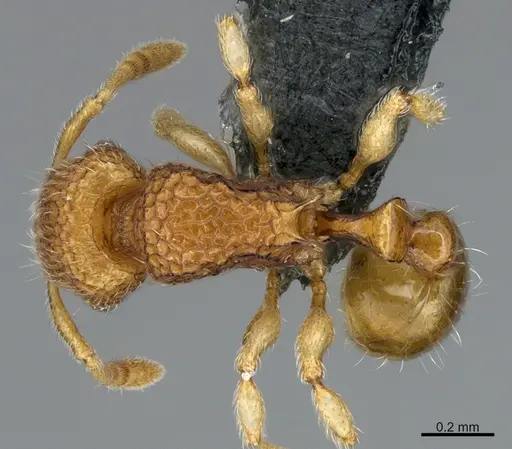
CASENT0901092
View on AntWeb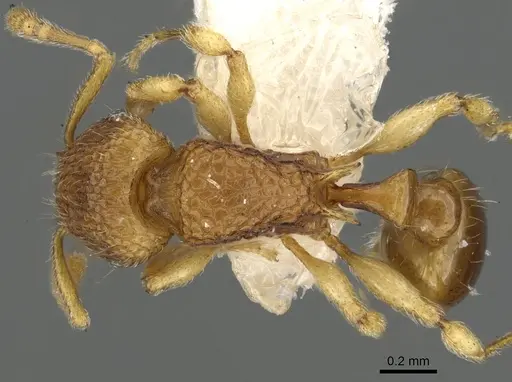
Literature
Loading distribution map...Loading products...