
Tetramorium chloe
- Sci. Name
- Tetramorium chloe
- Tribe
- Crematogastrini
- Subfamily
- Myrmicinae
- Author
- Santschi, 1920
- Distribution
- Found in 3 countries
Introduction
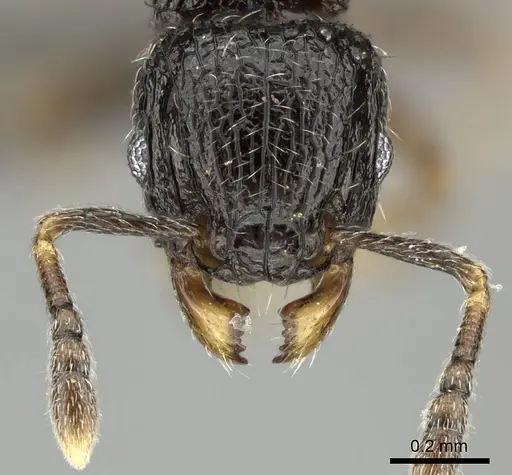
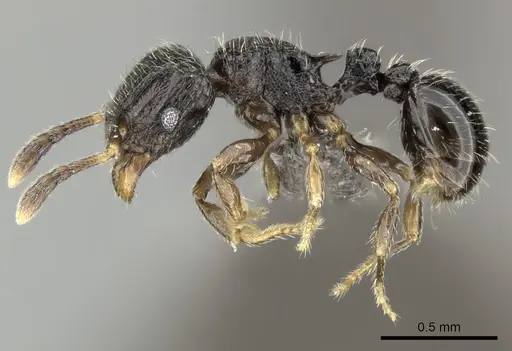
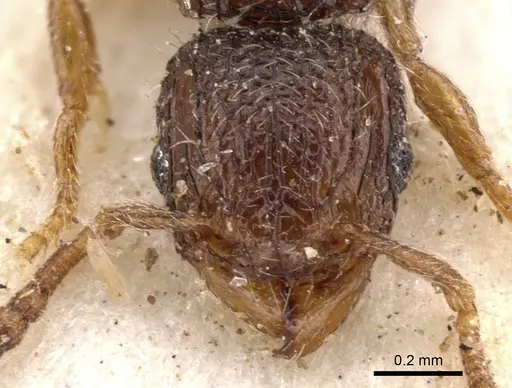
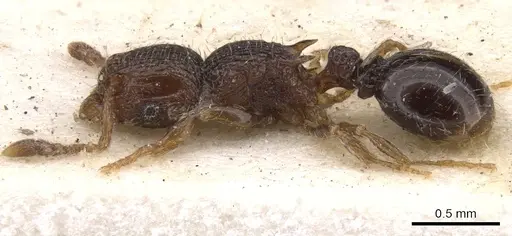
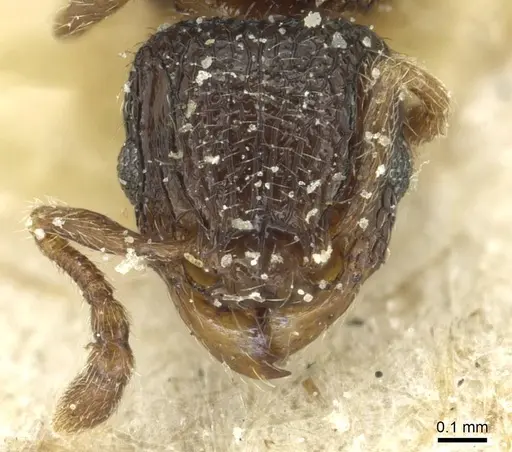
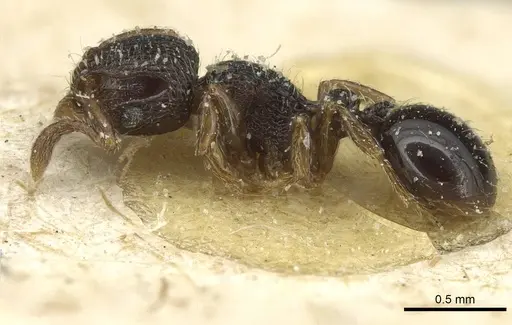
Tetramorium chloe is a tiny African ant from the Myrmicinae subfamily. Workers measure 2.2-2.6mm in total length, making them one of the smaller ants you'll keep . They belong to the Tetramorium angulinode species group and are very close relatives of T. angulinode, but differ in having a much reduced and compressed postpetiole (the segment between the two nodes before the abdomen) . These ants are found across southern Africa in Eswatini, Mozambique, Tanzania, and Zimbabwe, living in various treed habitats like Miombo woodland, closed forest, orchards, and riparian forests . The postpetiole is smooth and unsculptured, giving it a distinct look under a microscope .
Quick Summary
- Difficulty: Easy
- Origin & Habitat: Southern Africa (Eswatini, Mozambique, Tanzania, Zimbabwe) – treed habitats including Miombo woodland, closed forest, orchard, and riparian forest [2]
- Colony Type: Unknown – likely single-queen based on typical Tetramorium patterns
- Size & Growth:
- Queen: Unconfirmed – estimated 4-6mm based on Tetramorium genus
- Worker: 2.2-2.6mm [1]
- Colony: Unknown – several hundred workers estimated from genus patterns
- Growth: Moderate – estimated from genus patterns
- Development: 6-10 weeks – estimate based on related Tetramorium species (Species-specific timing is unconfirmed)
- Antkeeping:
- Temperature: 22-26°C – estimated based on African origin. Avoid drops below 18°C.
- Humidity: Moderate – keep nest substrate moist but not waterlogged. Mimics forest floor conditions.
- Diapause: Unlikely – as an African species from warm climates, true diapause is not expected. Activity may slow in cooler months.
- Nesting: Likely nests in soil or under stones [2]. Use Y-tong, plaster, or soil nests.
- Behavior: Small, active ground foragers. Not aggressive. Escape prevention is critical – tiny size (under 3mm) means they can squeeze through minute gaps. Generalist feeders on nectar and small insects.
- Common Issues: tiny size makes escape likely – use fine mesh and fluon barriers., limited specific care data – rely on genus-level guidance for adjustments., wild-caught colonies may carry parasites – quarantine new colonies., slow founding phase may test patience – expect several weeks before first workers.
Housing and Nest Setup
For founding colonies, start with a standard test tube setup. Fill a test tube with water, plug the end with cotton, and cover the tube with something dark to mimic an underground chamber. Keep the tube upright. For established colonies, use Y-tong (AAC), plaster, or soil nests. Because workers are only 2.2-2.6mm, make sure all connections between nest and outworld are tight – they can get lost in oversized tubing. Keep the nest humid but not waterlogged. A small water source in the outworld gives them drinking water. During founding, place the test tube in a dark box that acts as the outworld.
Temperature and Heating
Tetramorium chloe comes from southern Africa, so aim for 22-26°C in the nest area. Room temperature in most homes works, but if your space runs cool, use a heating cable on the side of the nest – not under it – to avoid drying out the substrate. A temperature gradient lets the ants self-regulate. Watch their behavior: if they cluster near the heat source, increase it, if they avoid it completely, it's too warm. Avoid temperatures below 18°C for extended periods.
Feeding and Diet
Like most Tetramorium species, these ants are generalist feeders. Offer small protein sources twice a week – fruit flies, pinhead crickets, or pieces of mealworm work well. Provide a constant sugar source like sugar water, honey, or ant‑specific sugar gels. Put a drop of sugar water on a small piece of cotton or in a test tube cap. Remove any uneaten prey after 24-48 hours to prevent mold. Fresh water should always be available. During founding, the queen does not need food – she lives off stored fat until the first workers arrive.
Escape Prevention
With workers that small, escape prevention is critical. These ants can squeeze through incredibly tiny gaps – even the space between a lid and container rim. Apply fluon (PTFE liquid) to the inner rim of any container to create a slippery barrier. Cover all ventilation holes with fine mesh no larger than 0.5mm. When connecting formicarium parts, use tubing narrow enough that they can't get lost. Check enclosures daily, especially during founding when the queen may be stressed.
Colony Development
Based on typical claustral Tetramorium behavior, the queen likely seals herself into a chamber during founding, living off her stored body reserves. She lays eggs and tends them without leaving the nest. After about 6-10 weeks (estimated from related species), the first tiny workers (nanitics) emerge. These will start foraging immediately to feed the queen and brood. Colony growth is moderate – expect a few months to reach 50 workers, and longer for larger colonies. The queen can live for several years, and colonies may eventually number a few hundred workers.
Seasonal Care
As an African species from warm climates, Tetramorium chloe does not require a true hibernation period. In cooler temperate zones, you may see less activity during winter if room temperatures drop. This is normal – the colony slows down but does not enter full diapause. Keep up basic care (feed less often, ensure water is always available) and they will perk up again when it warms. If your room gets very cold, use a small heater or heating mat to keep conditions stable. Avoid sudden temperature changes and drafts.
Frequently Asked Questions
How long does it take for Tetramorium chloe to have first workers?
From egg to first worker, expect roughly 6-10 weeks at optimal temperatures (22-26°C). This is an estimate based on related Tetramorium species since species-specific timing is unconfirmed. The first workers (nanitics) will be smaller than mature workers.
Can I keep Tetramorium chloe in a test tube?
Yes, test tubes work great for founding colonies. Use a standard tube with a water reservoir plugged with cotton, provide a dark cover, and keep it at 22-26°C. Once workers emerge, you can transfer them to a small formicarium if you like.
What do Tetramorium chloe ants eat?
They are generalist feeders. Offer small protein sources like fruit flies, tiny crickets, or mealworm pieces twice weekly. Provide a constant sugar source such as sugar water, honey, or ant-specific sugar gels. Remove uneaten prey after 24-48 hours to prevent mold.
Do Tetramorium chloe ants sting?
As Myrmicinae ants, they have a stinger. However, given their tiny size (2.2-2.6mm), any sting would be negligible to humans. They are not aggressive and are unlikely to sting unless handled roughly.
Are Tetramorium chloe good for beginners?
Yes, they are considered easy to keep. Their small size and straightforward care requirements make them suitable for beginners. The main challenges are escape prevention due to their tiny size and the relatively slow founding phase. Patience is key during the first few months.
How big do Tetramorium chloe colonies get?
Colony size is unconfirmed for this species, but based on typical Tetramorium patterns, colonies likely reach several hundred workers. The queen can live for many years, supporting gradual growth over time.
Do Tetramorium chloe need hibernation?
No true hibernation is required. As an African species from warm climates, they do not enter diapause. You may see reduced activity in cooler months, but simply maintain stable temperatures and reduce feeding frequency during this period.
Why are my Tetramorium chloe escaping?
Their tiny size (2.2-2.6mm) makes them excellent escape artists. Apply fluon to container rims, use fine mesh (0.5mm or smaller) on ventilation holes, and check all connections. Even tiny gaps can allow escape.
What temperature do Tetramorium chloe need?
Keep nest areas at 22-26°C. This warm temperature range reflects their African origin. Room temperature works for most homes, but you may need a heating cable in cooler spaces. Place heating on the side of the nest, not underneath.
Can I keep multiple Tetramorium chloe queens together?
Colony structure is unconfirmed for this species. Based on typical Tetramorium patterns, they likely form single-queen colonies. Combining unrelated queens is not recommended as it may result in aggression. If you have multiple founding queens, house them separately.
Report an Issue
The current care sheet is based fully on literature. See inconsistencies, or something that's incorrect? Please , it will be resolved after review from an admin. Contributing to the blogs tab also helps providing information, to make us be able to further improve the caresheets. Thank you for your support!
References

This caresheet is licensed under CC BY-SA 4.0 .
Community Blogs
CASENT0235811
View on AntWeb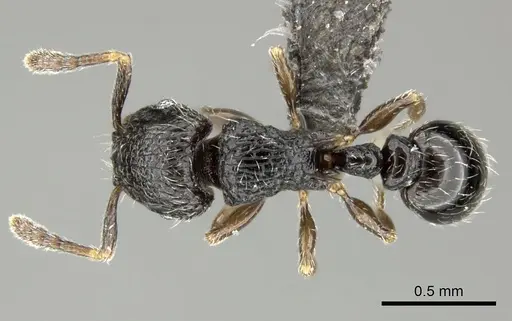
CASENT0784640
View on AntWeb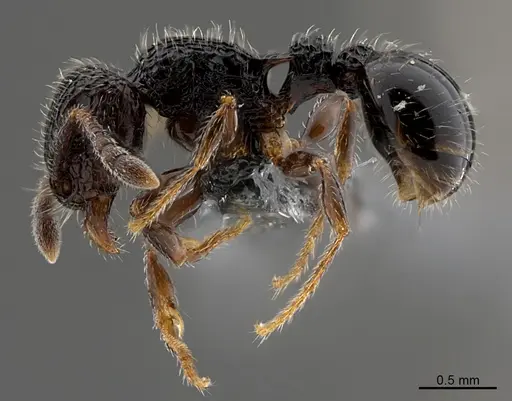
CASENT0901165
View on AntWeb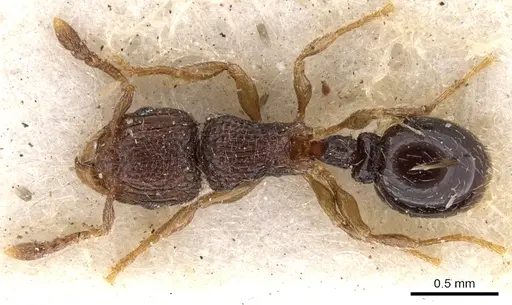
CASENT0913989
View on AntWeb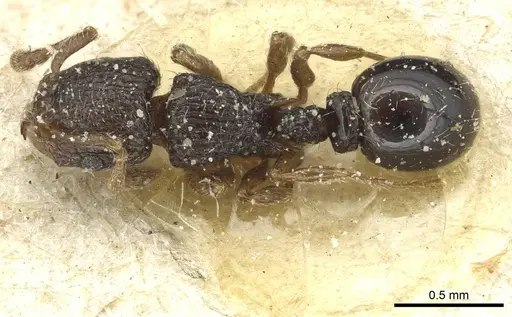
Literature
Loading distribution map...Loading products...