
Tetramorium chepocha
- Sci. Name
- Tetramorium chepocha
- Tribe
- Crematogastrini
- Subfamily
- Myrmicinae
- Author
- Bolton, 1976
- Distribution
- Found in 0 countries
Introduction
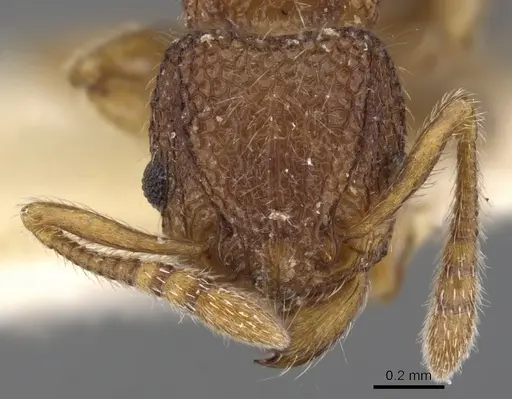
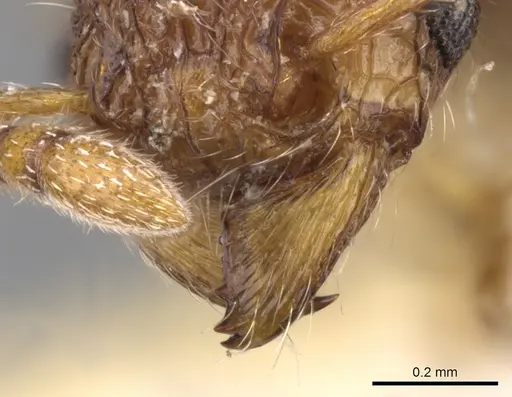
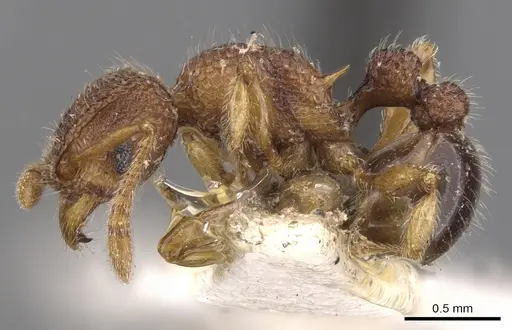
Tetramorium chepocha is a small ground ant species known from Borneo, Indonesia, and Malaysia. Workers were first described by Bolton in 1976 from Borneo, and later moved to the genus Tetramorium in 1985 . No body size measurements have been published; based on genus patterns workers likely fall in the 3–4 mm range. This tropical species lives in lowland dipterocarp forests and forages on the ground during daytime . Very few specimens have ever been collected, making it a rare and poorly documented ant. Captive keeping information is almost entirely absent, and most care advice must be inferred from better-known Tetramorium species.
Quick Summary
- Difficulty: Expert
- Origin & Habitat: Borneo, Indonesia, and Malaysia – lowland tropical dipterocarp forests [2][1]
- Colony Type: Unconfirmed. Based on typical Tetramorium patterns, likely monogyne (single queen) colonies.
- Size & Growth:
- Queen: Not described in literature. Based on genus patterns, estimated 6–8 mm.
- Worker: Size data unavailable. Based on general Tetramorium morphology, probably 3–4 mm.
- Colony: Unknown – no colony size data exists for this species.
- Growth: Unknown – no development data exists.
- Development: No species-specific data. Related tropical Tetramorium may take 4–8 weeks at warm temperatures, but this is unconfirmed. (All development estimates are inferred from other Tetramorium and should be treated as rough guesses.)
- Antkeeping:
- Temperature: No confirmed requirements. As a tropical species from Borneo, likely needs warm conditions – try 24–28°C and observe.
- Humidity: No confirmed requirements. Rainforest origin suggests high humidity – keep substrate moist but not waterlogged, and provide a moisture gradient.
- Diapause: Unlikely. Tropical species from Borneo probably active year-round without hibernation.
- Nesting: Ground-nesting based on collection data [2]. In captivity, a naturalistic setup with moist soil or a Y-tong/plaster nest with tight chambers is recommended.
- Behavior: Workers forage during daytime [2]. Temperament is unknown – reports from related Tetramorium suggest they are not aggressive, but this is unconfirmed. Small size (3–4 mm) means good escape prevention is essential.
- Common Issues: extremely rare in the hobby – almost impossible to obtain legally., no captive breeding or care data exists – keepers must rely on genus-level guesses., high humidity requirements are difficult to maintain evenly in artificial nests., small (3–4 mm) workers can squeeze through tiny gaps, use fine mesh (≤0.5 mm)., defense mechanism is smearing venom (typical of Crematogastrini), but irritation risk is unknown for this species.
Natural History and Distribution
Tetramorium chepocha is endemic to the Indomalaya region, known only from Borneo, Indonesia, and Malaysia [1]. It was originally described from Borneo by Bolton in 1976 as Tetramorium chepocha and later moved to Tetramorium in 1985 [1]. Workers have been collected only in ground samples from Bornean dipterocarp forests during daytime, confirming a strictly ground-dwelling, diurnal lifestyle [2]. No queens or males have been described, and virtually nothing else is known about its natural history.
Housing and Nest Preferences
Without specific natural history data, recommended nesting is based on typical Tetramorium ground-nesting behavior. Use a test tube setup for founding (if a queen ever becomes available). For larger colonies, a Y-tong or plaster nest with small chambers works well. Provide deep substrate or a humid nest section because the species comes from rainforest. Escape prevention is critical: workers are small (~3–4 mm) and can slip through standard mesh. Use fine nylon mesh or fluon barriers.
Feeding and Diet
No diet data exists for this species. Based on general Tetramorium feeding, offer a varied diet: small live prey (fruit flies, pinhead crickets, small mealworms) and sugar sources (honey water, sugar water). Feed protein 2–3 times per week, remove leftovers to prevent mold. They likely also accept sweet liquids like honeydew.
Temperature and Care
No confirmed temperature or humidity data. As a tropical species from lowland Borneo, keep warm (24–28°C) and humid. Use a heating cable on part of the nest to create a gradient. Maintain high humidity by keeping nest substrate moist but not waterlogged, mist the outworld regularly. Do not hibernate – provide warmth year-round.
Behavior and Temperament
Workers are known to forage on the ground during daytime [2]. Their temperament is undocumented. Related Tetramorium species are usually non‑aggressive, but this is unconfirmed for T. chepocha. Like all ants, they may use chemical trails to recruit nestmates. The species belongs to subfamily Myrmicinae, tribe Crematogastrini, which uses a smearing defense: they wipe venom onto enemies with a modified, flattened stinger rather than stinging. However, it is unknown whether T. chepocha actually does this – no observational data exist.
Frequently Asked Questions
Can I keep Tetramorium chepocha in a test tube?
A test tube setup is the standard method for antkeeping and should work for this species, but no captive records exist. Keep it warm and humid.
When should I move Tetramorium chepocha to a formicarium?
Without breeding data, the usual advice for small Tetramorium applies: move them when the colony has 20–30 workers and the test tube is crowded. This is purely speculative.
How long until first workers with Tetramorium chepocha?
No data exists. Related tropical Tetramorium may take 4–8 weeks from egg to worker at 24–28°C, but this is a guess.
How big do Tetramorium chepocha colonies get?
Completely unknown. Some Tetramorium reach several hundred workers, but others stay smaller. No colony has ever been documented.
Do Tetramorium chepocha ants sting?
They belong to tribe Crematogastrini, which typically uses a smearing venom defense rather than a piercing sting. However, whether this species actually smears venom is unknown – no observations exist.
What do Tetramorium chepocha ants eat?
Unknown, but related Tetramorium accept small insects (fruit flies, springtails) and sugary liquids. Offer these and observe.
What temperature do Tetramorium chepocha ants need?
No confirmed data. Being a tropical species,24–28°C is a reasonable range. Provide a gradient so ants can choose.
Are Tetramorium chepocha good for beginners?
Absolutely not. This species is virtually unknown in captivity, with no care data, and is extremely rare. Do not attempt unless you are an experienced keeper willing to experiment – and even then, success is unlikely.
Do Tetramorium chepocha ants need hibernation?
Unlikely. As a tropical species from Borneo, they probably stay active all year without a diapause period.
Why are my Tetramorium chepocha dying?
Because almost nothing is known about their requirements. Common issues for tropical species include low temperature (below 24°C), low humidity, or unsuitable nesting conditions. Without species-specific data, troubleshooting is guesswork.
Report an Issue
The current care sheet is based fully on literature. See inconsistencies, or something that's incorrect? Please , it will be resolved after review from an admin. Contributing to the blogs tab also helps providing information, to make us be able to further improve the caresheets. Thank you for your support!
References

This caresheet is licensed under CC BY-SA 4.0 .
Community Blogs
CASENT0901056
View on AntWeb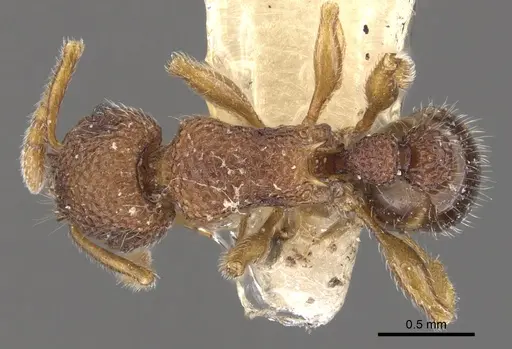
Literature
Loading distribution map...Loading products...