
Tetramorium chefketi
- Sci. Name
- Tetramorium chefketi
- Tribe
- Crematogastrini
- Subfamily
- Myrmicinae
- Author
- Forel, 1911
- Distribution
- Found in 4 countries
Introduction
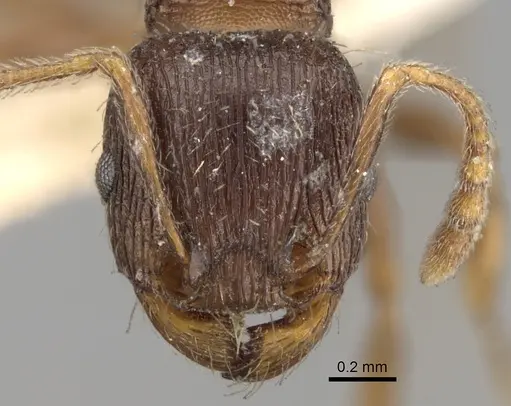
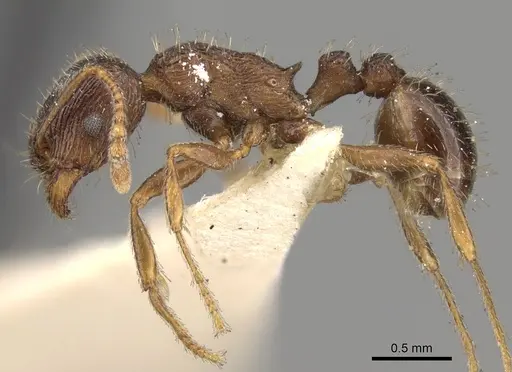
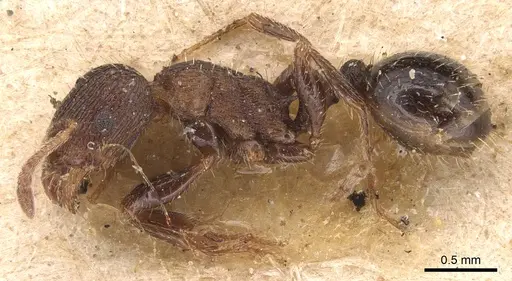
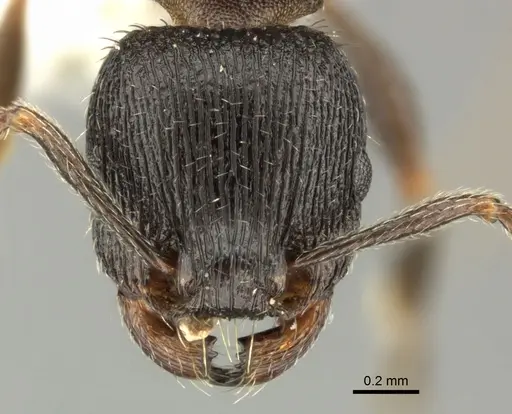
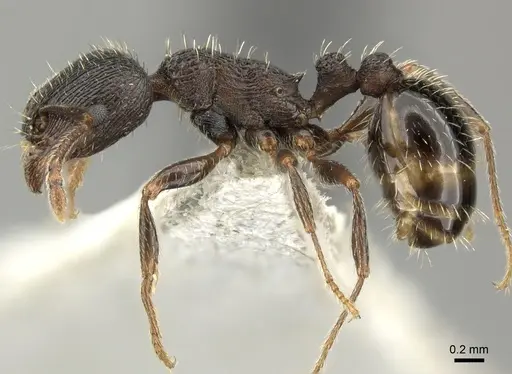
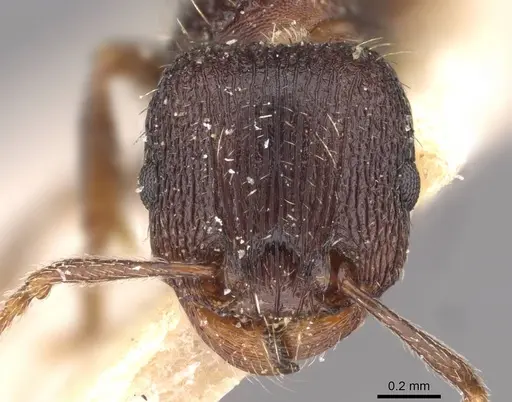
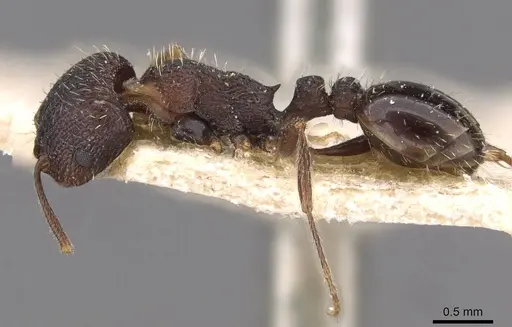
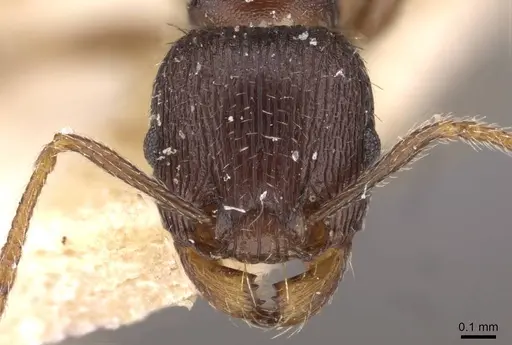
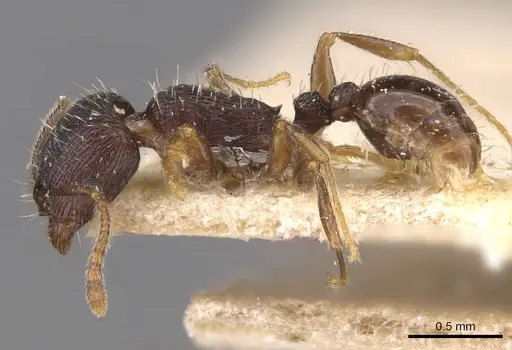
Tetramorium chefketi is a medium-sized ant native to the Palaearctic region, ranging from southeastern Europe through Turkey and Central Asia to China. Workers are dark brown to black with a nearly square head, small eyes, and a distinctive cubic petiolar node. Queens are larger with a wider-than-long head . This species lacks the psammophore (basket of hairs) found in some related species and has a long, smooth antenna scape without a dorsal ridge at the base . In the wild, it inhabits steppe and semi-open habitats, nesting under stones or in soil . It shows two activity peaks in June and November in Saudi Arabia, where it forages on vegetation like Ziziphus nummularia . This species serves as a host for the socially parasitic ants Tetramorium buschingeri and Tetramorium seiferti .
Quick Summary
- Difficulty: Easy
- Origin & Habitat: Palaearctic region spanning southeastern Europe (Greece, Bulgaria, Macedonia, Romania), southern Ukraine, southern Russia, northwestern Caucasus, Turkey, Turkmenistan, northern Kazakhstan, Kyrgyzstan, and northwestern China [1][3]. Found in steppe habitats, mountain pastures, and semi-open areas, often nesting under stones at the border between pasture and fir forest [2]. Also recorded from Iran in Caspian moist littoral and moderate rainfall montane areas [5].
- Colony Type: Not explicitly documented in literature. Based on related Tetramorium species, likely monogyne (single-queen) colonies, but this has not been confirmed for T. chefketi [1].
- Size & Growth:
- Queen: Body length data unavailable in literature, inferred from genus Tetramorium: queens typically 4-5 mm
- Worker: Body length data unavailable in literature, inferred from genus Tetramorium: workers typically 2.5-3.5 mm
- Colony: Not documented in available literature. Colonies of related Tetramorium species can reach thousands of workers.
- Growth: Moderate (inferred from related Tetramorium species)
- Development: No published data for this species. Based on related Tetramorium, estimated 6-8 weeks at room temperature [1]. (Development time may vary with temperature and feeding.)
- Antkeeping:
- Temperature: Maintain at normal room temperature (20-24°C). This species naturally occurs across a wide climatic range from cool steppes to warm Mediterranean areas, so it is tolerant [1][3]. Avoid prolonged extreme heat or cold.
- Humidity: Provide a moderately dry nest substrate with a slight moisture gradient. Its natural habitat is steppe and semi-arid, so avoid waterlogging [1][3].
- Diapause: Recommended for long-term health. As a temperate species, give a winter rest period of 3-4 months at 8-12°C. This matches the seasonal cycle in its native steppe and mountain habitats [6].
- Nesting: In the wild, nests under stones and in soil [2]. In captivity, a plaster or soil nest works well. Test tubes are suitable for founding, but ensure the substrate is not too damp.
- Behavior: Workers are active foragers, collecting honeydew and small insects. They are not particularly aggressive toward keepers but may bite if threatened. Their small size (worker body length ~2.5-3.5 mm) means they can escape through tiny gaps, so fine mesh or fluon is essential. In the wild, researchers observed intraspecific battles where workers from different colonies engage in prolonged but low-damage conflicts [7]. This species is a host for social parasites Tetramorium buschingeri and T. seiferti [4].
- Common Issues: small size and ability to squeeze through tiny gaps make escape prevention critical, colonies may fail if nest substrate is kept too wet, prefers drier conditions, risk of social parasite invasion (Tetramorium buschingeri/seiferti), watch for unusual ants entering the colony [4], founding behavior is unconfirmed, patience needed if waiting for first workers
Housing and Nest Setup
Tetramorium chefketi adapts well to standard formicaria. For a founding colony, a test tube setup with a water reservoir works well, this species thrives in simple setups. Once the colony grows to 30-50 workers, move to a small plaster or soil nest. Keep the nest substrate slightly dry to mimic its natural steppe habitat. Fine mesh or fluon on all openings is essential because workers are small and can escape easily [1][2].
Feeding and Diet
Like most Tetramorium, T. chefketi is omnivorous. In the wild, it forages on vegetation for honeydew and small arthropods [3]. In captivity, offer a constant sugar source (honey or sugar water) and provide protein 2-3 times per week: small crickets, fruit flies, or mealworms. Remove uneaten prey after 24-48 hours to prevent mold. Given its small worker size, offer prey that workers can easily handle.
Temperature and Seasonal Care
This species tolerates a wide temperature range due to its large natural distribution [1]. Room temperature (20-24°C) is ideal for active growth. To maintain long-term health, provide a winter diapause: gradually reduce temperature to 8-12°C for 3-4 months, mimicking its temperate steppe environment [6]. Avoid sudden temperature changes.
Colony Development and Growth
Colony development specifics are not published for this species. Based on related Tetramorium, a founding queen likely lays eggs within a sealed chamber and the first workers emerge after 6-8 weeks at room temperature. Colonies grow at a moderate pace and can reach hundreds of workers within a year under good care. Regular protein feeding and stable warmth accelerate growth [1].
Behavior and Defense
Workers are active foragers on both ground and vegetation. They are not aggressive but will defend the nest by biting. As a member of Crematogastrini, their defense mechanism involves smearing venom using a modified, spatulate stinger rather than piercing. Their small size (inferred body length ~2.5-3.5 mm) requires careful escape prevention. Observations of intraspecific battles suggest territorial behavior [7]. This species is also a known host for the social parasites Tetramorium buschingeri and T. seiferti [4].
Frequently Asked Questions
Can I keep Tetramorium chefketi in a test tube?
Yes, a test tube setup is suitable for founding. Founding behavior is unconfirmed for this species, but test tubes are standard for most Tetramorium. Use a cotton plug to create a water reservoir and ensure ventilation [1].
How long until first workers in Tetramorium chefketi?
No published data for this species. Based on related Tetramorium species, the egg-to-worker period is roughly 6-8 weeks at room temperature. This is an estimate and may vary [1].
Do Tetramorium chefketi ants sting?
As a myrmicine ant, T. chefketi has a stinger. However, its small size means the sting is mild. They rarely sting keepers, but may do so if handled roughly. No specific studies on their sting exist.
Are Tetramorium chefketi good for beginners?
They are generally considered easy to keep due to their tolerance of varied conditions and simple diet. However, escape prevention is crucial due to their small size. The lack of published captive care data means some trial and error may be needed [1][2].
Do Tetramorium chefketi need hibernation?
Yes, as a temperate species, a winter rest period is recommended. Gradually cool the colony to 8-12°C for 3-4 months, mirroring the conditions in its native steppe habitat [6].
What do Tetramorium chefketi eat?
They are omnivorous. Provide a constant sugar source (honey or sugar water) for energy, and offer protein (small crickets, fruit flies, mealworms) 2-3 times per week. Remove uneaten prey to prevent mold [3].
How big do Tetramorium chefketi colonies get?
Colony size is not documented for this species. Related Tetramorium can reach thousands of workers, so it is likely similar. Expect a few hundred workers after 1-2 years of good care [1].
Can I keep multiple Tetramorium chefketi queens together?
This is not recommended. Colony structure is not confirmed, but related Tetramorium are typically monogyne. Keeping multiple queens together may cause fighting [1].
Why are my Tetramorium chefketi dying?
Common causes include: excessive moisture (prefer drier conditions), starvation (lack of protein), or escape (workers are small). Check that the nest substrate is not waterlogged and that you are feeding protein regularly. Keep disturbance to a minimum [3][2].
When to move Tetramorium chefketi to a formicarium?
Move from a test tube to a formicarium when the colony has 30-50 workers or the test tube becomes cramped. They adapt well to a dry soil or plaster nest [1].
What temperature do Tetramorium chefketi need?
Maintain 20-24°C for active growth. They tolerate a range from 15-28°C, reflecting their natural habitat. Avoid prolonged extremes [1][6].
Report an Issue
The current care sheet is based fully on literature. See inconsistencies, or something that's incorrect? Please , it will be resolved after review from an admin. Contributing to the blogs tab also helps providing information, to make us be able to further improve the caresheets. Thank you for your support!
References

This caresheet is licensed under CC BY-SA 4.0 .
Community Blogs
CASENT0280930
View on AntWeb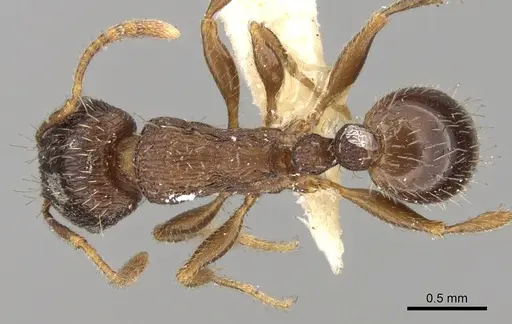
CASENT0281565
View on AntWeb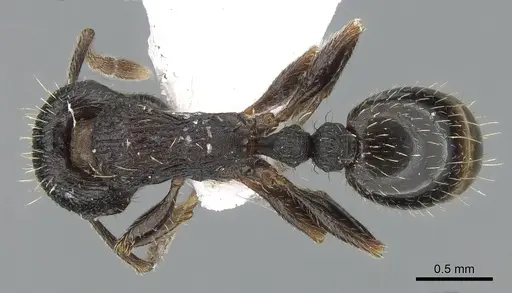
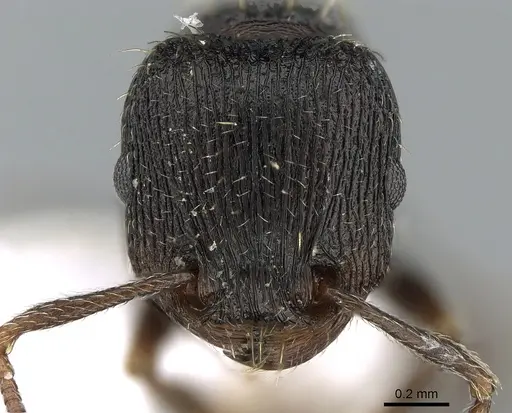
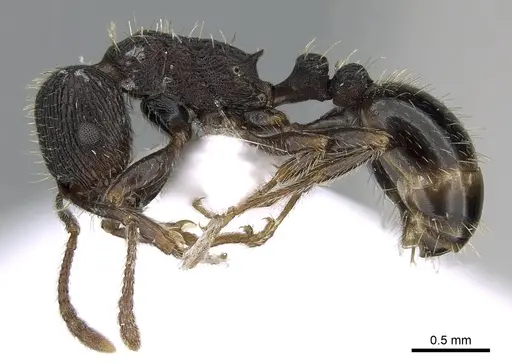
CASENT0904811
View on AntWeb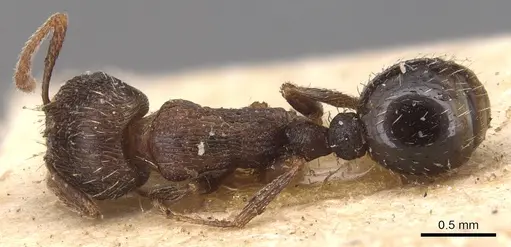
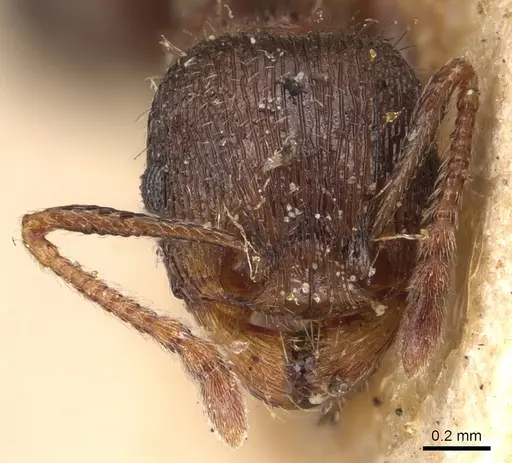
CASENT0906711
View on AntWeb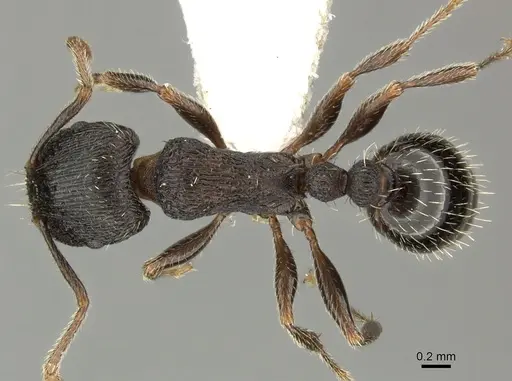
CASENT0909100
View on AntWeb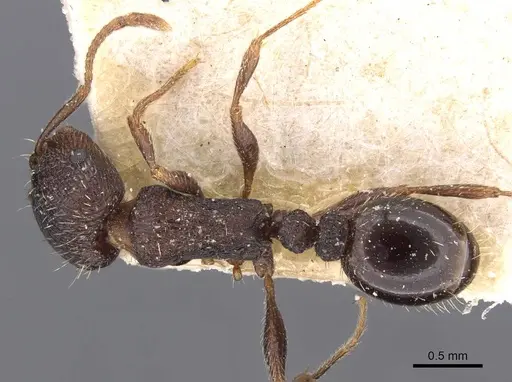
CASENT0909102
View on AntWeb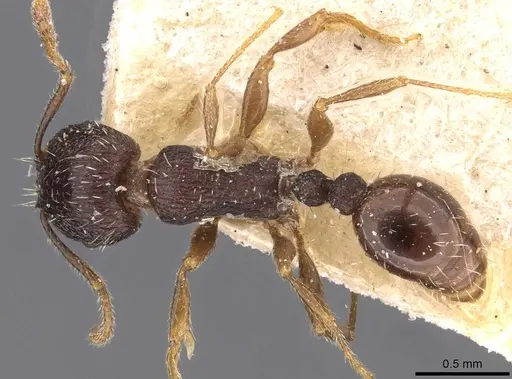
Literature
Loading distribution map...Loading products...