
Tetramorium brevicorne
- Sci. Name
- Tetramorium brevicorne
- Tribe
- Crematogastrini
- Subfamily
- Myrmicinae
- Author
- Bondroit, 1918
- Distribution
- Found in 2 countries
Introduction
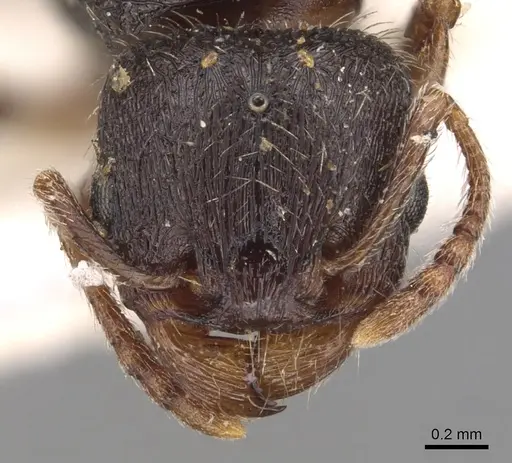
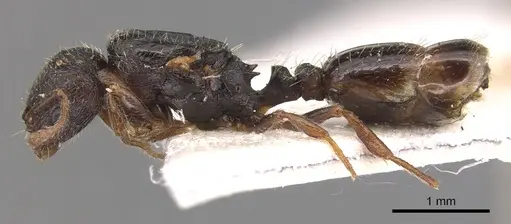
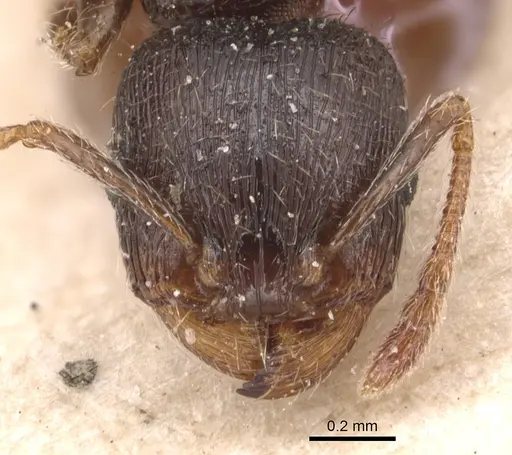
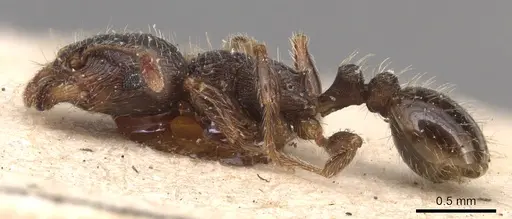
Tetramorium brevicorne is a small, dark ant species endemic to the islands of Sardinia and Corsica in the western Mediterranean . The species was originally described as a variety of the common pavement ant (Tetramorium caespitum) but was raised to full species status in 1964 . Reports from Sicily and Turkey are considered doubtful . This ant inhabits warm, rocky Mediterranean landscapes, typically nesting under stones in sun-exposed areas. Size data is not specifically documented for this species. It belongs to the subfamily Myrmicinae and tribe Crematogastrini, which means it uses a spatulate stinger to smear venom onto enemies rather than piercing them.
Quick Summary
- Difficulty: Medium
- Origin & Habitat: Sardo-Corsican endemic, found only on the islands of Sardinia and Corsica in the western Mediterranean [1]. Unconfirmed reports exist from Sicily and Turkey, but are doubtful [3]. Inhabits warm, rocky Mediterranean terrain, typically nesting under stones in sunny locations.
- Colony Type: Not documented in available research. Based on typical Tetramorium genus patterns, colonies are likely monogyne (single queen), but this is unconfirmed.
- Size & Growth:
- Queen: Size data unavailable, not documented in research
- Worker: Size data unavailable, not documented in research
- Colony: Unknown, not documented in available research
- Growth: Unknown, not documented in available research
- Development: Unknown, specific data unavailable. Based on typical Tetramorium species, estimated 6-8 weeks at warm temperatures, but this is unconfirmed. (No specific research data exists for Tetramorium brevicorne development. All estimates are from related Tetramorium species.)
- Antkeeping:
- Temperature: Not documented for this species. Based on Mediterranean origin and typical Tetramorium care, likely prefer warm conditions around 22-26°C. This is an inference, adjust based on colony behavior.
- Humidity: Not documented for this species. Based on typical Tetramorium, likely moderate humidity with slightly moist substrate. Allow drying between waterings. This is an inference.
- Diapause: Likely yes, as a Mediterranean island species, a mild winter rest period (8-12 weeks at 10-15°C) may be beneficial, but this is inferred from geography and not confirmed by research.
- Nesting: Not documented. Based on typical Tetramorium, Y-tong (AAC) nests, test tubes, and naturalistic setups with flat stones on soil are likely suitable. Provide dark, tight chambers.
- Behavior: Workers are active foragers based on typical Tetramorium behavior. They are not particularly aggressive but will defend the nest if threatened. As a member of Myrmicinae (tribe Crematogastrini), they use a smear defense mechanism, a spatulate stinger wipes venom onto enemies rather than stinging. Due to their small size, escape prevention is critical, use tight-fitting lids and fine mesh barriers.
- Common Issues: lack of species-specific data means care requirements are estimated from genus-level information, adjust based on colony behavior, small size makes escape prevention essential, use tight-fitting lids and fine mesh, Mediterranean origin suggests need for warmth, cold rooms may slow development, overheating risk, avoid direct sunlight on nests, wild-caught colonies are extremely rare due to limited distribution on two islands
Housing and Nest Setup
There is no species-specific data for nesting preferences. Based on typical Tetramorium species, Y-tong (AAC) nests work well because they provide dark, tight chambers. Test tube setups are also suitable for founding colonies and small colonies. Naturalistic setups with flat stones on top of soil mimic their natural nesting under stones in the Mediterranean. Always ensure excellent escape prevention, these ants are small and can squeeze through tiny gaps. Apply Fluon or similar barrier to the edges of any formicarium.
Feeding and Diet
No specific dietary data is available for Tetramorium brevicorne. Based on typical Tetramorium, they are generalist feeders. Offer protein sources such as small insects (fruit flies, small crickets, mealworms) and sugar sources (sugar water or honey water). Feed protein every 2-3 days for established colonies, remove uneaten prey after 24 hours. Keep fresh sugar water available at all times and replace every few days to prevent mold.
Temperature and Seasonal Care
As a Mediterranean species from Sardinia and Corsica [1], these ants likely need warmth, but specific temperature requirements are unknown. Based on typical Tetramorium care, maintain 22-26°C for optimal brood development. A heating cable on one side of the nest creates a gradient. For winter, a mild diapause at 10-15°C for 8-12 weeks may be beneficial, but this is inferred from geography and not confirmed. Avoid direct sunlight to prevent overheating.
Humidity and Water
No specific humidity data for this species. Based on typical Tetramorium, provide moderate humidity with a slightly moist substrate, allow it to partially dry between waterings. Avoid waterlogged conditions. A water source (test tube water reservoir or cotton ball with fresh water) should be available at all times.
Colony Founding
Founding behavior for Tetramorium brevicorne is unconfirmed. Based on typical Tetramorium, queens are likely claustral, they seal themselves in a small chamber and raise the first brood alone on stored reserves. If this is the case, do not feed during founding. First workers (nanitics) would likely emerge after 6-8 weeks under warm conditions, but this is an estimate. Keep founding colonies in a quiet, dark place with minimal disturbance.
Behavior and Temperament
Specific behavior data is not documented. Based on genus Tetramorium, workers are active foragers and not particularly aggressive, but will defend the nest. As a member of subfamily Myrmicinae, tribe Crematogastrini, they use a smear defense, a flattened spatulate stinger wipes venom onto enemies rather than piercing. They have a functional stinger but it is mild to humans. Due to their small size, escape prevention is critical, use tight-fitting lids and fine mesh on all openings.
Frequently Asked Questions
How long does it take for Tetramorium brevicorne to raise first workers?
Development time is not documented for this species. Based on related Tetramorium, it may take 6-8 weeks from egg to worker at optimal temperatures, but this is an estimate. No specific data is available.
Can I keep Tetramorium brevicorne in a test tube?
Yes, test tubes are likely suitable for this species, especially during founding and for small colonies. Use a standard setup with a water reservoir. This is inferred from typical Tetramorium care.
Do Tetramorium brevicorne ants sting?
As a member of subfamily Myrmicinae, they have a functional stinger. However, they belong to tribe Crematogastrini which uses a smear defense, they wipe venom onto enemies rather than stinging. Their venom is mild to humans.
What temperature do Tetramorium brevicorne need?
Temperature requirements are not documented. Based on their Mediterranean origin and typical Tetramorium care, they likely prefer 22-26°C. For winter, a mild diapause at 10-15°C may be beneficial but is unconfirmed. Monitor colony behavior and adjust.
How big do Tetramorium brevicorne colonies get?
Colony size is not documented. Based on related Tetramorium species, colonies may reach several hundred workers, but this is an estimate. Growth rate is unknown.
Do Tetramorium brevicorne need hibernation?
Hibernation is not documented. As a Mediterranean island species, a mild winter rest period (8-12 weeks at 10-15°C) may be beneficial based on climate inference, but it is not confirmed by research. Some keepers may choose to provide a mild diapause to simulate natural conditions [1].
Are Tetramorium brevicorne good for beginners?
This species is rated Medium difficulty primarily because it is extremely rare in the hobby, it is endemic to just two islands. There is very little species-specific care data available. While typical Tetramorium are forgiving, the lack of information makes this a more challenging choice for beginners.
What do Tetramorium brevicorne eat?
No specific dietary data. Based on typical Tetramorium, they are generalist feeders. Offer small insects (fruit flies, small crickets, mealworms) as protein and sugar water or honey water as carbohydrate. Feed protein every 2-3 days for established colonies.
Can I keep multiple Tetramorium brevicorne queens together?
Social structure is not documented. Based on typical Tetramorium, most are monogyne (single queen). Combining unrelated queens is not recommended as they would likely fight. This is an inference.
Where is Tetramorium brevicorne found in the wild?
This species is endemic to the islands of Sardinia and Corsica in the western Mediterranean [1]. It is a Sardo-Corsican endemic. Reports from Sicily and Turkey are doubtful [3].
Report an Issue
The current care sheet is based fully on literature. See inconsistencies, or something that's incorrect? Please , it will be resolved after review from an admin. Contributing to the blogs tab also helps providing information, to make us be able to further improve the caresheets. Thank you for your support!
References

This caresheet is licensed under CC BY-SA 4.0 .
Community Blogs
CASENT0904817
View on AntWeb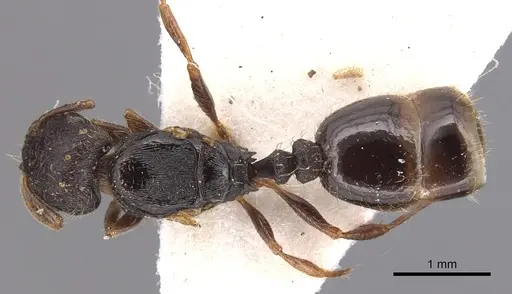
CASENT0904818
View on AntWeb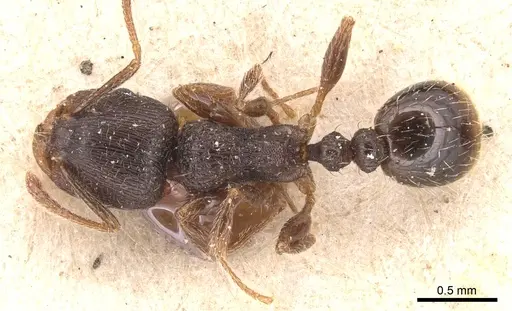
Literature
Loading distribution map...Loading products...