
Tetramorium boltoni
- Sci. Name
- Tetramorium boltoni
- Tribe
- Crematogastrini
- Subfamily
- Myrmicinae
- Author
- Hita Garcia <i>et al.</i>, 2010
- Distribution
- Found in 8 countries
Introduction
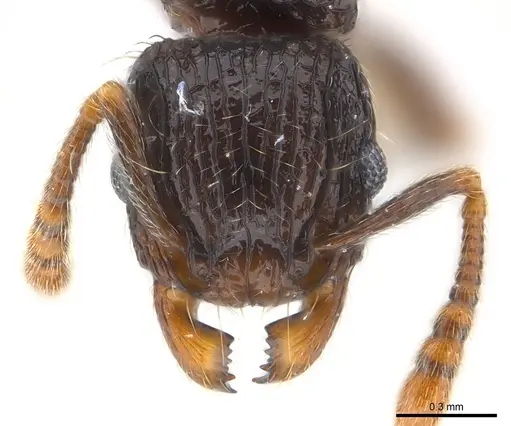
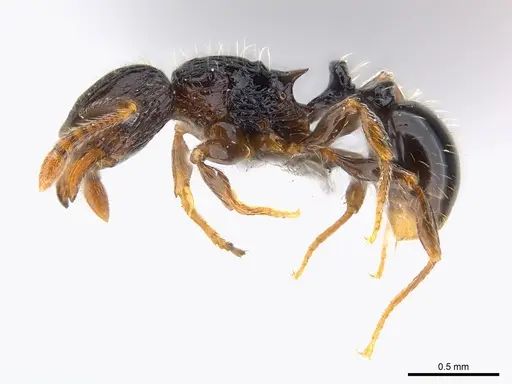
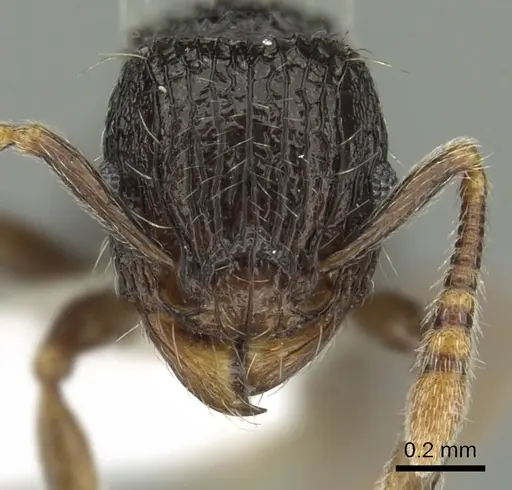
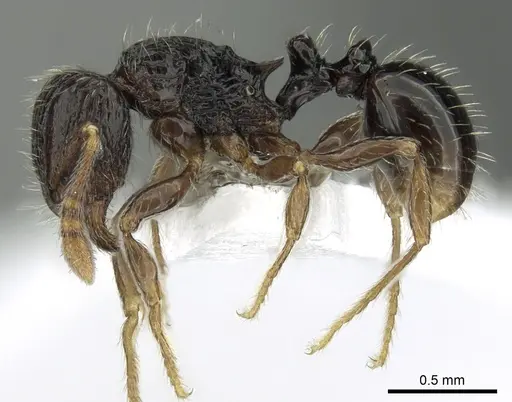
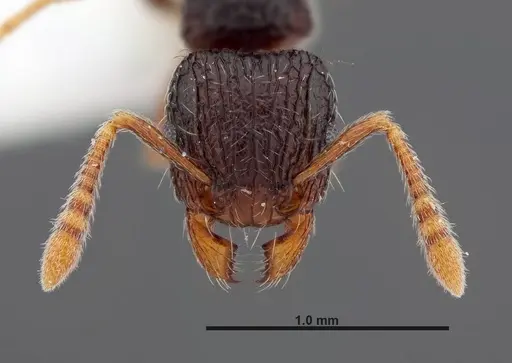
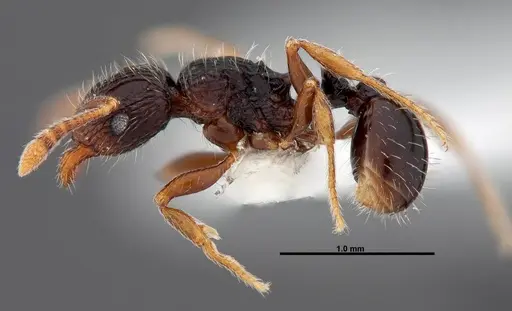
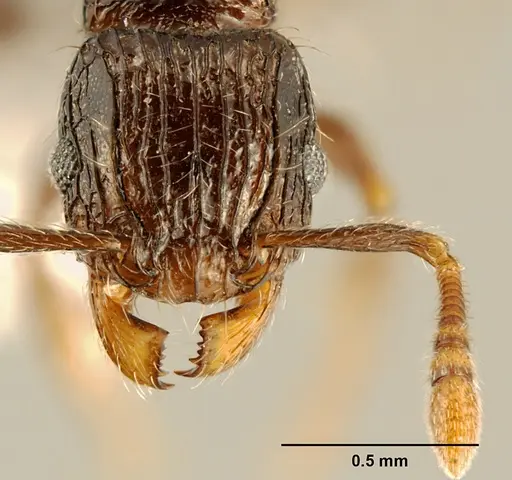
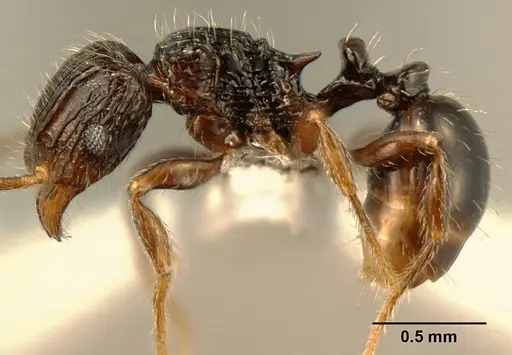
Tetramorium boltoni is a small rainforest ant uniformly very dark brown to black, with strong longitudinal ridges on the head and body, and distinct long standing hairs on the first gastral tergite . It was only described in 2010,having previously been mistaken for the closely related Tetramorium weitzeckeri . These ants are strict leaf‑litter inhabitants of equatorial rainforests, ranging from Nigeria to western Kenya and from Sudan to Angola, often found below 1000 m elevation . They are one of the most common and widespread Tetramorium species in African rainforests .
Quick Summary
- Difficulty: Medium
- Origin & Habitat: Rainforests of West and Central Africa, from Nigeria to western Kenya and from Sudan to Angola. They live in the leaf‑litter layer of equatorial rainforests, typically below 1000 m [1][2][4].
- Colony Type: Colony structure is not well documented. Based on typical Tetramorium patterns, likely single-queen (monogyne) colonies. No documented ergatoid replacement reproductives.
- Size & Growth:
- Queen: Not documented, estimated ~5-6 mm based on genus patterns
- Worker: Body length not directly recorded, head width measurements (0.64-0.74 mm) show it is a small species [1], total length is unknown.
- Colony: Likely several hundred workers, based on being a common rainforest species
- Growth: Moderate
- Development: Estimated 6-10 weeks at optimal temperature (Timing is inferred from related Tetramorium, specific data for T. boltoni are lacking.)
- Antkeeping:
- Temperature: 24-28 °C, these tropical ants need stable warmth. Avoid prolonged drops below 22 °C.
- Humidity: High (roughly 75-85 %), nest substrate should feel damp but not waterlogged. Provide good ventilation to prevent mould.
- Diapause: Unlikely, as a tropical rainforest species they do not need hibernation, though activity may slow slightly in cooler conditions.
- Nesting: Y‑tong (AAC), plaster, or soil‑based formicaria that retain moisture. They are leaf‑litter dwellers, so horizontal chambers are preferred over deep vertical ones.
- Behavior: Peaceful and rarely aggressive. They have a functional but modified stinger used for a **smear** defence, venom is wiped onto enemies rather than injected. Workers are active, diurnal foragers that follow chemical trails. Escape risk is moderate for their small size, use standard barriers.
- Common Issues: low humidity kills quickly, rainforest species need constantly damp substrate, temperatures below 22 °C cause stress and may stop brood development, mould from poor ventilation can become a problem in humid setups, wild‑caught colonies may carry parasites that cause collapse, founding queens may take weeks to produce first workers, patience is required
Housing and Nest Setup
Tetramorium boltoni does well in any setup that keeps humidity high. Y‑tong (AAC) or plaster nests are excellent, they hold moisture and provide narrow chambers the ants can easily navigate. For a naturalistic look, use a soil‑sand mix in a formicarium with a water reservoir. The nest should be damp but never waterlogged, standing water can drown the colony or cause fungal outbreaks. Cover part of the nest to create a humidity gradient, allowing the ants to choose their preferred zone. Test tubes work for founding, but once the colony grows you'll need to move them to a larger setup.
Feeding and Diet
These ants are omnivorous. Offer small insects (fruit flies, pinhead crickets, mealworms) for protein, and sugar water or honey for carbohydrates. In the wild they also collect honeydew from aphids. Feed protein twice a week for a growing colony, and keep a constant sugar source. Remove uneaten prey after 24 h to prevent mould.
Temperature and Seasonal Care
As a strict tropical rainforest species, T. boltoni needs warm conditions year‑round. Keep the nest at 24-28 °C for steady brood development and activity. Avoid temperatures below 22 °C for long periods. A slight temperature gradient allows ants to self‑regulate, place a heating cable on top (not underneath) of one side of the nest. No hibernation is needed, maintain consistent warmth throughout the year.
Humidity Management
This is the most critical factor. The nest substrate must stay damp, think rainforest leaf litter. Humidity in the nest should be around 75-85 %. Use a water reservoir or remoisten the substrate every few days. Good ventilation is essential to prevent mould, but too much airflow dries the nest. Balance with small ventilation holes or mesh. If you see mould, increase airflow immediately and remove affected material.
Colony Founding
Founding behaviour is unconfirmed for this species. If it follows the typical Tetramorium pattern, queens would be claustral, sealing themselves in a chamber and raising the first workers on stored reserves. In captivity, keep the queen in a test‑tube setup with damp cotton in a warm, dark place, and do not disturb for 4-6 weeks. After the first workers appear, begin offering tiny amounts of protein. Founding can take 2-3 months before you see visible growth, so patience is key.
Behavior and Temperament
Tetramorium boltoni workers are active and efficient foragers, moving quickly in search of food. They are not aggressive toward keepers and rarely sting. Their defence system is a smear mechanism: a flattened stinger that wipes venom onto attackers rather than piercing, typical of this subfamily. They are diurnal and communicate via chemical trails. The colony is generally docile and focuses on foraging rather than territorial defence. Their small size and gentle nature make them easy to observe.
Frequently Asked Questions
How long does it take for Tetramorium boltoni to raise first workers?
From egg to first worker, expect about 6-10 weeks at 24-28 °C. This is an estimate based on related Tetramorium, the exact timing for this species is not documented.
Can I keep Tetramorium boltoni in a test tube?
Yes, test tubes work well for founding colonies. Use a water reservoir (cotton plug) to maintain humidity, keep it warm and dark, and check that the tube doesn't dry out. Once the colony reaches 30-50 workers, consider moving to a larger nest.
Do Tetramorium boltoni ants sting?
They have a functional stinger, but it is modified for a smear defence, venom is wiped onto enemies rather than injected. They are not aggressive and rarely sting keepers, the sting is mild if it occurs.
What temperature do Tetramorium boltoni need?
Keep them at 24-28 °C. Avoid temperatures below 22 °C. Use a heating cable on top of one side of the nest to create a temperature gradient if needed.
Are Tetramorium boltoni good for beginners?
They are rated medium difficulty. The main challenge is maintaining high humidity without causing mould. If you can manage that and keep stable warmth, they are a rewarding rainforest species to keep.
How big do Tetramorium boltoni colonies get?
Likely several hundred workers, based on typical Tetramorium colonies in rainforests. Exact numbers are not documented.
What do Tetramorium boltoni eat?
Omnivorous: small insects (fruit flies, pinhead crickets) for protein, and sugar water or honey for carbohydrates. Feed protein twice a week and keep sugar available.
Do Tetramorium boltoni need hibernation?
No, as a tropical rainforest species, they do not require hibernation. Keep warm year‑round.
Why are my Tetramorium boltoni dying?
Most common causes: low humidity, temperatures below 22 °C, or mould from poor ventilation. Also, wild‑caught colonies may carry parasites. Check nest moisture and temperature first.
When should I move Tetramorium boltoni to a formicarium?
When the test tube becomes crowded (30-50+ workers) or the water reservoir empties quickly. Use the 'test tube in nest' method to encourage voluntary relocation.
Can I keep multiple Tetramorium boltoni queens together?
This is undocumented. Most Tetramorium are monogyne, so it is not recommended to combine unrelated queens, they will probably fight. House each queen separately.
Is Tetramorium boltoni invasive anywhere?
No, it is native to African rainforests and has not been reported as invasive elsewhere [1][2].
Report an Issue
The current care sheet is based fully on literature. See inconsistencies, or something that's incorrect? Please , it will be resolved after review from an admin. Contributing to the blogs tab also helps providing information, to make us be able to further improve the caresheets. Thank you for your support!
References

This caresheet is licensed under CC BY-SA 4.0 .
Community Blogs
CASENT0217068
View on AntWeb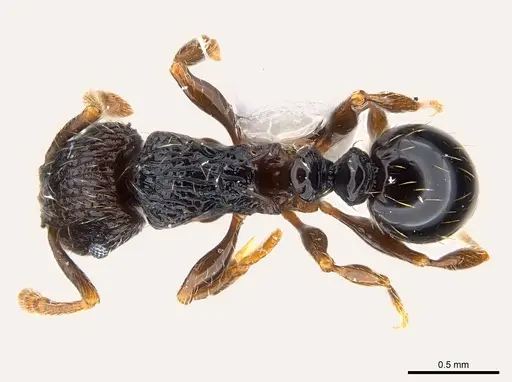
CASENT0217229
View on AntWeb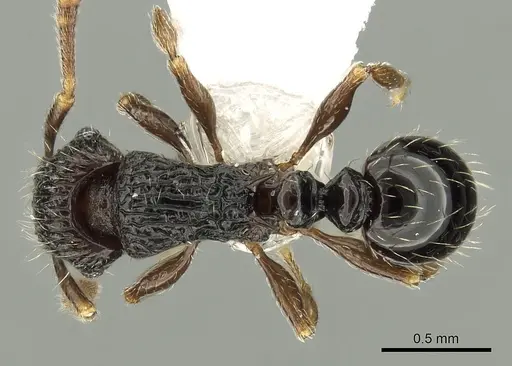
FMNHINS0000047323
View on AntWeb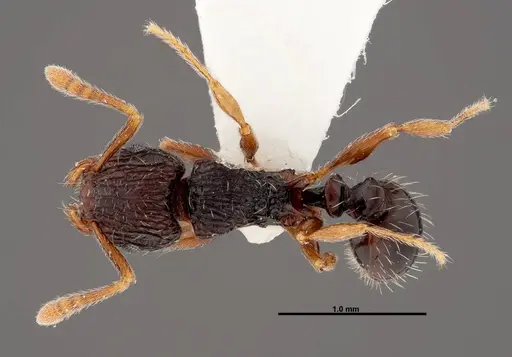
ZFMKHYM20096155
View on AntWeb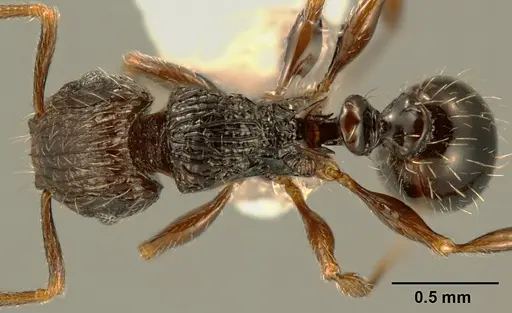
Literature
Loading distribution map...Loading products...