
Tetramorium bicolor
- Sci. Name
- Tetramorium bicolor
- Tribe
- Crematogastrini
- Subfamily
- Myrmicinae
- Author
- Viehmeyer, 1914
- Distribution
- Found in 1 countries
Introduction
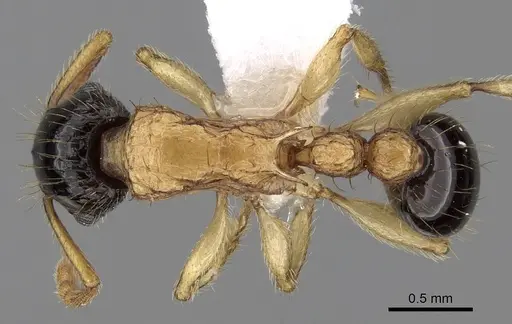
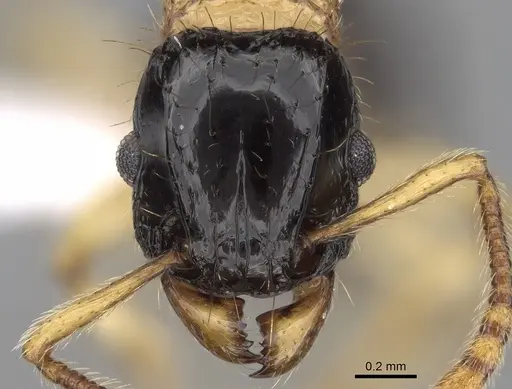
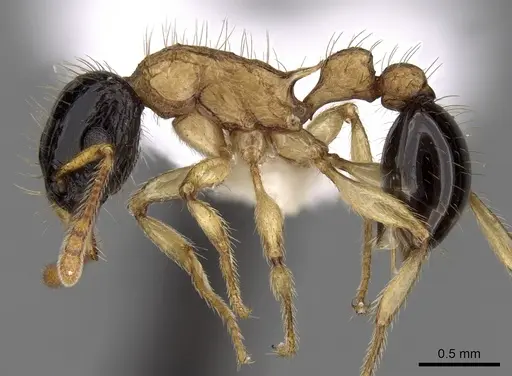
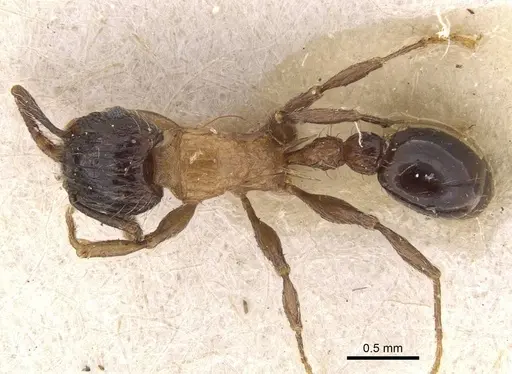
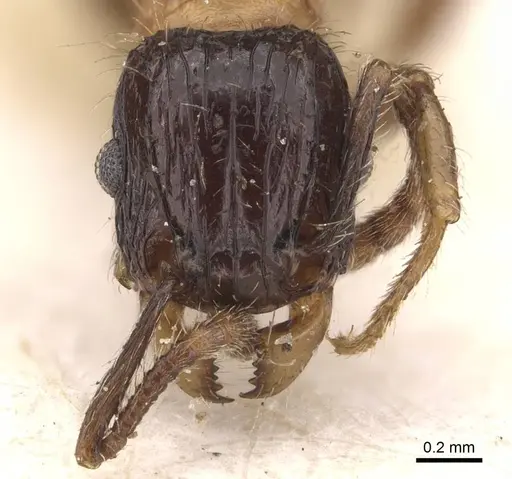
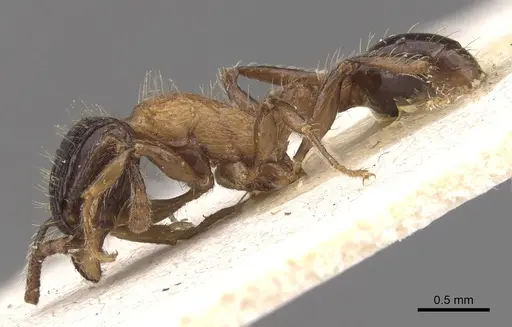
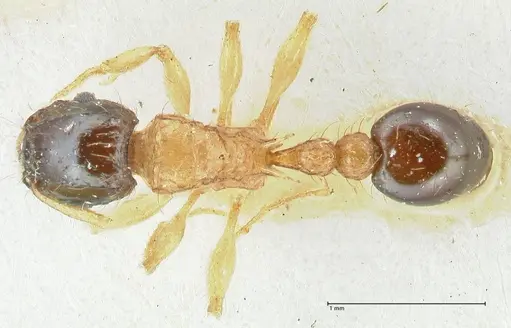
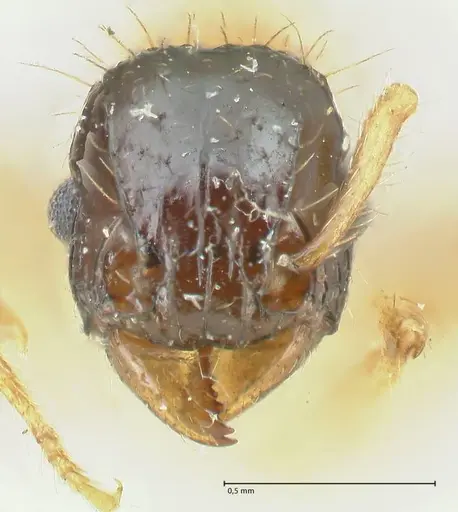
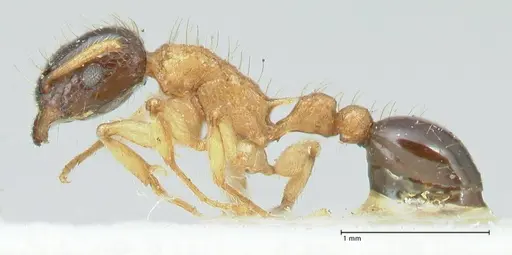
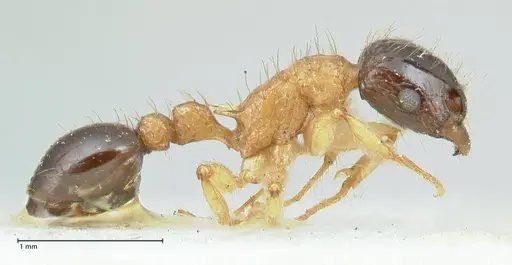
Tetramorium bicolor is a small, striking ant native to New Guinea. Workers measure 3.6-3.8 mm and have a black or blackish-brown head and gaster that contrast sharply with a bright yellow alitrunk, pedicel, and legs . This bold bicolored pattern makes it one of three yellow-and-black species found in New Guinea, but it stands out because its body is smoother and shinier than close relatives like Tetramorium pacificum and Tetramorium tricarinatum . These ants live in forests, nesting in twigs and foraging on the ground . They are fast-moving generalist foragers, typical of the Tetramorium genus. Very little specific care data has been published, so most husbandry advice is based on related species.
Quick Summary
- Difficulty: Medium
- Origin & Habitat: New Guinea (Papua New Guinea and surrounding islands), forest habitats where they nest in twigs or forage on the ground [1]
- Colony Type: Unconfirmed, likely single-queen colonies based on typical Tetramorium patterns, but no direct evidence exists for this species.
- Size & Growth:
- Queen: Unknown, queens have not been described for this species. Inferred from related Tetramorium, queens are around 4.5-4.9 mm, but this is unconfirmed.
- Worker: 3.6-3.8 mm [1]
- Colony: Unknown, no documentation available. Typical Tetramorium colonies reach several hundred workers, but this is speculative.
- Growth: Unknown, no data. Based on genus patterns, growth is likely moderate.
- Development: Unknown, no direct observations. Inferred from related Tetramorium species, probably 6-8 weeks at warm temperatures. (Development time is estimated from genus patterns, actual timing for T. bicolor is unstudied.)
- Antkeeping:
- Temperature: Inferred from tropical origin: keep at 22-26°C. They likely tolerate room temperature but prefer warmth for activity and brood development. Avoid temperatures below 18°C or above 30°C.
- Humidity: Moderate humidity around 50-70% with a slightly moist substrate. As forest-dwellers, they likely prefer humid conditions but not waterlogging.
- Diapause: Unknown, likely not required since they are from tropical New Guinea where temperatures are stable year-round. They may slow down during cooler periods but probably do not need a formal hibernation.
- Nesting: In the wild they nest in twigs [1]. In captivity, standard Myrmicinae setups work: test tubes for founding, Y-tong (AAC) or plaster nests for established colonies. Narrow passages match their natural preferences.
- Behavior: Fast-moving and alert, but not aggressive based on genus patterns. Their small size (under 4 mm) makes escape a real risk, use fine mesh barriers and fluon on smooth surfaces. Not defensive but will bolt when disturbed.
- Common Issues: escape prevention is critical due to small size, they can squeeze through tiny gaps., limited species-specific information means care is based on genus patterns, expect some trial and error., wild-caught colonies may carry parasites, quarantine new queens., test tube setups must have proper water reservoir management to avoid drowning., slow colony growth can test patience, resist overfeeding and keep temperatures stable.
Housing and Nest Setup
Start a new colony in a standard test tube setup, fill the tube with water and plug it with cotton. The queen will choose the dry end. Once you have workers (exact number unknown, but watch for the tube to degrade or the colony to outgrow it), move them to a formicarium. Y-tong (AAC) or plaster nests work well for Tetramorium because they can dig or use narrow passages that mimic their natural twig nests. Always use a well-sealed outworld with a fluon barrier, these ants are tiny and will escape through the smallest gap. Avoid tall, open spaces, they prefer tight, enclosed chambers. [1]
Feeding and Diet
As generalist foragers, Tetramorium bicolor will accept a wide range of foods. Offer protein sources like small insects (fruit flies, pinhead crickets, mealworms) and sugar sources (honey water or sugar water). Feed protein 2-3 times per week and keep sugar water available at all times. Remove uneaten prey after 24-48 hours to prevent mold. Their foraging is active, so place food in the outworld where workers can easily find it.
Temperature and Seasonal Care
Maintain temperatures between 22-26°C for optimal activity. They can handle room temperature (20-22°C) but will be more active and develop faster when warmed. A heating cable on one side of the nest creates a gradient so ants can choose their comfort zone. Since they come from tropical New Guinea, they probably don't need hibernation, but colonies may slow during cooler months if kept at lower temperatures. Avoid extremes below 18°C or above 30°C.
Behavior and Temperament
These ants are fast-moving and alert, but not aggressive toward keepers. Workers forage actively on the ground and explore their outworld thoroughly. They belong to the Myrmicinae subfamily, which typically has a reduced stinger used for smearing venom rather than piercing. They are not defensive but will flee if disturbed. The main handling concern is their small size, they can escape quickly. Always open the nest near a safe container and move deliberately.
Colony Growth and Development
Because no specific studies exist for this species, growth details are inferred from other Tetramorium. A newly mated queen probably lays eggs within a week or two and raises her first workers from internal reserves (claustral founding, though unconfirmed). First nanitics may appear in 6-8 weeks under warm conditions. Growth is likely moderate, expect the colony to reach 50 workers within a few months and several hundred within a year under good conditions. Provide consistent warmth, proper humidity, and regular feeding without overdoing it.
Frequently Asked Questions
How long does it take for Tetramorium bicolor to raise first workers?
There are no published observations for this species. Based on related Tetramorium, first workers likely appear in 6-8 weeks at 22-26°C, but this is only an estimate.
Can I keep Tetramorium bicolor in a test tube?
Yes, test tubes work well for founding. Use a standard setup with a water reservoir and cotton plug. Move to a formicarium when the colony outgrows the tube or it starts to degrade.
Do Tetramorium bicolor ants sting?
Like other Myrmicinae, they have a reduced stinger that is not designed for piercing. They can bite and may smear venom, but they are not dangerous to keepers.
What do Tetramorium bicolor ants eat?
They are generalist foragers. Offer protein (small insects like fruit flies or mealworms) 2-3 times per week and provide sugar water (honey water or diluted honey) continuously.
Are Tetramorium bicolor good for beginners?
They are relatively easy due to their tolerance of typical room conditions and non-aggressive nature. The main challenge is their small size, which requires excellent escape prevention. Because specific care data is scarce, beginners may need to rely on general Tetramorium care practices.
How big do Tetramorium bicolor colonies get?
There is no documented colony size for this species. Typical Tetramorium colonies can reach several hundred workers, but this is speculative.
Do Tetramorium bicolor need hibernation?
Probably not, they are from tropical New Guinea where temperatures are warm year-round. They may slow down during cooler periods but do not require formal diapause.
Why are my Tetramorium bicolor escaping?
Workers are under 4 mm and can squeeze through tiny gaps. Use fine mesh on all openings, apply fluon barriers to smooth surfaces, and ensure lids fit tightly. Check tubing connections for gaps.
When should I move my colony to a formicarium?
Move once the test tube shows mold, low humidity, or the water reservoir is running low, and the colony has at least a few dozen workers. Y-tong or plaster nests are suitable.
Can I keep multiple Tetramorium bicolor queens together?
This has not been documented. Most Tetramorium species are monogyne, so keeping multiple unrelated queens together is not recommended without specific evidence.
Report an Issue
The current care sheet is based fully on literature. See inconsistencies, or something that's incorrect? Please , it will be resolved after review from an admin. Contributing to the blogs tab also helps providing information, to make us be able to further improve the caresheets. Thank you for your support!
References

This caresheet is licensed under CC BY-SA 4.0 .
Community Blogs
Literature
Loading distribution map...Loading products...