
Tetramorium bevisi
- Sci. Name
- Tetramorium bevisi
- Tribe
- Crematogastrini
- Subfamily
- Myrmicinae
- Author
- Arnold, 1958
- Distribution
- Found in 3 countries
Introduction
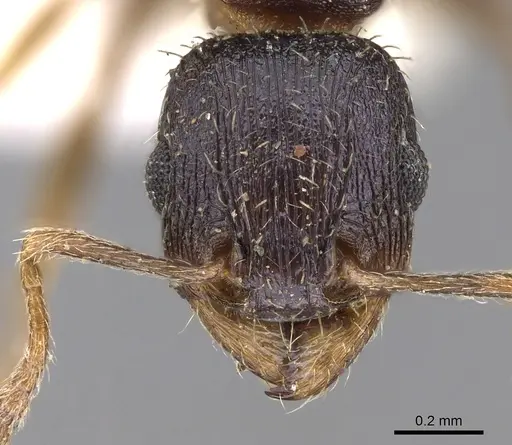
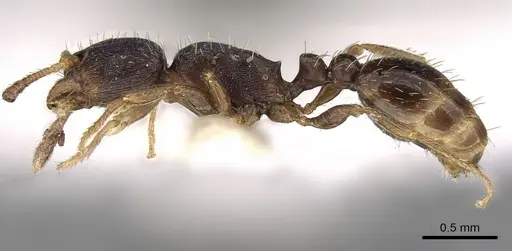
Tetramorium bevisi is a small dark brown ant from southern Africa, with workers measuring 2.8–3.0 mm in total length . It belongs to the Tetramorium simillimum species group and is distinguished by its triangular metapleural lobes, moderately sized eyes, and lack of sculpture on the first gastral tergite . The head and body are covered with numerous stout, blunt-tipped hairs, and the colour is dark brown . This species has been recorded in Bushveld habitats and agricultural areas, such as vineyards in the Western Cape, and from high‑altitude sites up to 2560 m in Lesotho . Its natural history is poorly documented, and most care recommendations must be inferred from genus‑level patterns or general myrmicine biology.
Quick Summary
- Difficulty: Hard
- Origin & Habitat: Native to Lesotho, South Africa, and Zimbabwe, found in Bushveld and agricultural areas, often at elevations up to 2560 m [1][2].
- Colony Type: Not recorded in published literature. Based on related Tetramorium species, it is assumed to be monogyne, but this has not been confirmed.
- Size & Growth:
- Queen: Unknown – no measurements have been published for queens of this species.
- Worker: 2.8–3.0 mm (total length) [1]
- Colony: Unknown – no data on colony size for this species.
- Growth: Unknown
- Development: Unknown – not documented. In related Tetramorium species kept at warm temperatures, development takes 6–8 weeks, but this is a very rough estimate. (No specific developmental data exist for Tetramorium bevisi.)
- Antkeeping:
- Temperature: Unknown – based on its high‑altitude habitat, this species likely prefers moderate temperatures around 20–24°C. Avoid overheating above 28°C. A temperature gradient (cool side of the nest) is recommended so workers can self‑regulate.
- Humidity: Unknown – the Bushveld habitat is seasonally dry. Provide a humidity gradient: allow most of the nest to dry out slightly while keeping one small area lightly moist. Avoid waterlogging.
- Diapause: Unknown – southern African species often experience a dry winter period. If colony activity slows in winter, reduce temperature to about 15–18°C for 2–3 months and reduce feeding. This is a precaution, not a proven requirement.
- Nesting: Likely ground‑nesting (collected in pitfall traps). Use a Y‑tong (AAC), plaster, or soil‑based formicarium with chambers large enough for small workers. Alternatively, a test tube setup works for founding colonies.
- Behavior: Not well documented. As a small myrmicine ant, it is probably active and will defend the nest. Escape prevention is critical because workers are tiny (under 3 mm) – use fine mesh and fluon on all barriers. No specific data on foraging trails or aggression exist.
- Common Issues: escape risk due to tiny worker size – they can squeeze through gaps of 1 mm or less, limited published information means keepers must experiment cautiously with care parameters, overheating can be fatal – avoid temperatures above 30°C until more is known, wild‑caught colonies may introduce parasites or diseases that have not been studied
Housing and Nest Setup
Because so little is known about Tetramorium bevisi, housing should mimic a general ground‑nesting ant. A test tube with a water reservoir works well for founding, and you can later move the colony to a Y‑tong (AAC) or plaster nest. For naturalistic setups, a soil chamber with a separate outworld is fine. Escape prevention is the top priority – use fine stainless‑steel mesh on all ventilation holes and apply fluon or PTFE to rims. Workers are tiny (2.8–3.0 mm) and can slip through gaps you might not notice [1]. Keep the nest chambers relatively small to help the colony feel secure and to make it easier to maintain humidity gradients.
Feeding and Diet
No specific dietary studies exist for Tetramorium bevisi. Based on its habitat (Bushveld, vineyards), it probably eats small insects, nectar, and honeydew [2][1]. Offer a standard ant diet: sugar water or honey water for carbohydrates, and small protein items like fruit flies, pinhead crickets, or pieces of mealworm. Feed protein 2–3 times per week and remove leftovers after 24 hours to prevent mould. Adjust portions based on how many workers are present. Some colonies may show preferences – offer variety to see what they accept best.
Temperature and Seasonal Care
Published data on temperature preferences are absent. Because the type locality is at 2560 m elevation in Lesotho, the species likely experiences cool summers and cold winters. In captivity, start with a range of 20–24°C and watch colony activity. If growth is slow, try warming to 26°C on one side of the nest. Do not exceed 30°C. For winter, if you notice brood production stopping and workers becoming less active, you can give a gentle cooling period of 2–3 months at 15–18°C. This is entirely speculative – monitor the colony and adjust based on its behaviour. [1]
Colony Founding and Growth
How Tetramorium bevisi queens start colonies is unknown. Most Tetramorium species are claustral – the queen seals herself in a chamber and raises the first workers without feeding. For this species, it is safest to assume the same and provide a quiet, dark tube with water. The time from egg to first worker has not been recorded, in related species at warm temperatures it takes about 6–8 weeks, but this is just a guess. After the first workers (nanitics) appear, the colony will grow slowly at first. Because we lack data, there is no reliable timeline for reaching certain sizes. Be patient and avoid disturbing the queen during founding. [1]
Behavior and Temperament
No behavioural studies have been published for Tetramorium bevisi. As a member of the myrmicine tribe Crematogastrini, it is expected to have a modified stinger used to smear venom rather than inject it – a 'smear' defence. Reports from collectors suggest they are active and will aggressively defend their nest, but this is anecdotal. Their small size makes them excellent escape artists: always use barriers. Because they are unstudied, handle any nest disturbance with care and be prepared for unexpected behaviour. [1]
Frequently Asked Questions
How long does it take for Tetramorium bevisi to get their first workers?
Not documented. In other Tetramorium species, the queen raises her first brood in about 6–8 weeks at warm temperatures (24–26°C). This is a rough estimate – it may differ for T. bevisi.
What do Tetramorium bevisi ants eat?
Based on habitat, they likely eat small insects and sweet liquids. In captivity, offer sugar water and small protein insects like fruit flies or pinhead crickets. No specific feeding studies exist.
Can I keep Tetramorium bevisi in a test tube?
Yes – a standard test tube with a water reservoir and cotton plug is a good start for a founding queen or small colony. Move to a larger formicarium once the colony outgrows the tube.
Do Tetramorium bevisi ants sting?
This species belongs to the tribe Crematogastrini, which uses a spatulate stinger to smear venom, not to pierce the skin. It is unlikely to cause any sting sensation in humans. The effect is more like a mild chemical irritation.
What temperature do Tetramorium bevisi need?
Unknown. Based on the high‑altitude type locality, keep the nest at 20–24°C. Avoid overheating above 28°C. If using a heat cable, create a gradient so workers can choose.
Are Tetramorium bevisi good for beginners?
Not recommended for beginners. Very little is known about their care requirements. If you have experience keeping tiny, ground‑nesting species, you could try, but be prepared for setbacks and uncertainty.
How big do Tetramorium bevisi colonies get?
Unknown – no published data. Related Tetramorium species can reach several hundred to a few thousand workers, but this is just a guess for T. bevisi.
Do Tetramorium bevisi need hibernation?
Unknown. The species lives at high altitude in southern Africa, which suggests a winter rest is likely. If colony activity drops in winter, reduce temperature to 15–18°C for 2–3 months and reduce feeding. This is a precaution, not a proven requirement.
Why are my Tetramorium bevisi escaping?
Because workers are only 2.8–3.0 mm long, they can squeeze through very small gaps [1]. Check all seals, use fine mesh on vents, and apply fluon to nest borders. Any opening larger than 1 mm is a potential route.
When should I move Tetramorium bevisi to a formicarium?
Move the colony when the test tube becomes crowded – typically when you see workers clustering far from the water reservoir or when the tube is filled with workers and brood. A Y‑tong or naturalistic soil setup works well.
Can I keep multiple Tetramorium bevisi queens together?
Not recommended. Colony structure is unknown, but most Tetramorium are monogyne (single queen). Without data, treat as single‑queen and avoid combining unrelated queens.
What humidity do Tetramorium bevisi need?
Unknown. The species comes from Bushveld habitat, which is generally dry with seasonal rains. Provide a gradient: keep one area of the nest slightly moist and the rest dry. Avoid wet conditions.
Report an Issue
The current care sheet is based fully on literature. See inconsistencies, or something that's incorrect? Please , it will be resolved after review from an admin. Contributing to the blogs tab also helps providing information, to make us be able to further improve the caresheets. Thank you for your support!
References

This caresheet is licensed under CC BY-SA 4.0 .
Community Blogs
CASENT0280858
View on AntWeb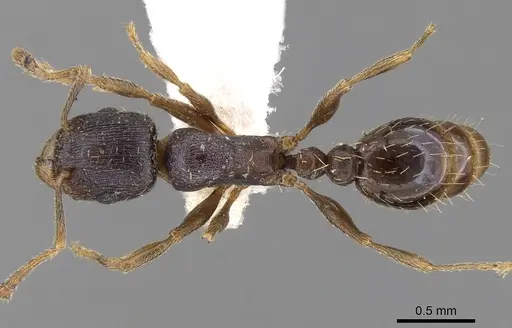
Literature
Loading distribution map...Loading products...