
Tetramorium bellerophoni
- Sci. Name
- Tetramorium bellerophoni
- Tribe
- Crematogastrini
- Subfamily
- Myrmicinae
- Author
- Salata & Borowiec, 2017
- Distribution
- Found in 0 countries
Introduction
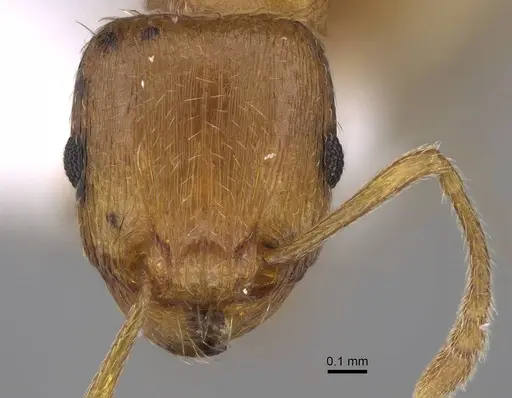
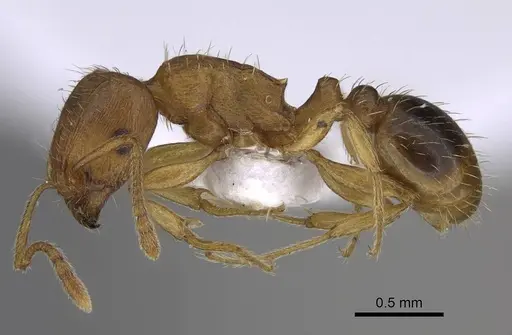
Tetramorium bellerophoni is a small yellow ant from the semilaeve group, described in 2017 from southwestern Turkey . Workers are about 2.5-3.5 mm (inferred from typical Tetramorium size) and have a yellow to yellowish-ochraceous body with a smooth, shiny surface. The head is almost completely covered in fine ridges, and the gaster is paler at the base . Queens are larger, around 4-5 mm (inferred from genus), and share the same yellow coloration. This species was found nesting under stones in a sunny, dry, grassy area at 1018 m elevation inside the ancient city of Termessos . The name honors Bellerophon, the mythological Greek hero said to have founded Termessos.
Quick Summary
- Difficulty: Medium
- Origin & Habitat: Southwestern Turkey (Anatolia), specifically the ancient site of Termessos at 1018 m. Nests under stones in sunny, dry, grassy areas [1].
- Colony Type: Unconfirmed from research. Based on typical Tetramorium patterns, likely single-queen (monogyne), but not verified.
- Size & Growth:
- Queen: ~4-5 mm (inferred from Tetramorium genus)
- Worker: ~2.5-3.5 mm (inferred from Tetramorium genus)
- Colony: Unknown, no data available.
- Growth: Unknown, no data available.
- Development: Unknown, this species has not been studied in captivity. (This species was described in 2017 and no captive colony data exists. Patience and observation are required.)
- Antkeeping:
- Temperature: No specific requirements known. Based on the sunny, dry habitat at 1018 m, start with 20-26 °C and observe. Avoid temperatures above 30 °C [1].
- Humidity: The species naturally lives in a dry environment. Keep nest substrate dry to slightly moist, with good ventilation. Avoid waterlogging [1].
- Diapause: Likely required: Turkey has cold winters. Provide a cool period around 10-15 °C for 2-3 months in winter if the colony slows down. Unconfirmed, so watch the colony for cues.
- Nesting: Ground-nesting under stones [1]. In captivity, Y-tong (AAC) or plaster nests work well. Provide a dry nest chamber with minimal moisture.
- Behavior: Workers are small but active foragers. Their temperament is unconfirmed, but they are not known to be particularly aggressive. Escape prevention is important, use fluon barriers and fine mesh. As a member of Myrmicinae (tribe Crematogastrini), they have a modified stinger used to smear venom rather than pierce (subfamily trait, no specific study).
- Common Issues: escape prevention is critical due to small size, workers can squeeze through standard gaps., limited species‑specific care information, keepers must experiment and observe., humidity management is tricky, too wet causes problems, but they need some moisture., overheating risk, sunny habitat doesn't mean they tolerate extreme heat, monitor temperatures., availability is low, this is a newly described species rarely found in the hobby.
Housing and Nest Setup
Tetramorium bellerophoni is a ground-nesting species that naturally lives under stones in dry, sunny areas [1]. In captivity, a Y-tong (AAC) or plaster formicarium works well because you can control humidity and provide small chambers. Use a thin layer of dry to slightly moist substrate. The nest should have one area with a little moisture but most of it dry, mimicking their natural habitat. An outworld with a small foraging space is recommended. Workers are about 2.5-3.5 mm, so standard escape prevention (fluon on rims, fine mesh on ventilation) is necessary.
Feeding and Diet
Like other Tetramorium, these ants are opportunistic feeders. Offer small protein sources such as fruit flies, pinhead crickets, and mealworm pieces. Sugar water or honey can be given as a supplement. Feed small amounts every 2-3 days and remove uneaten food to prevent mold. Because workers are small (2.5-3.5 mm), prey should be appropriately sized. Once the colony has more than 10 workers, a constant sugar source is beneficial. [1]
Temperature and Seasonal Care
No exact temperature requirements are known, but the natural habitat (sunny, dry area at 1018 m) suggests they prefer warm conditions. Start at 20-26 °C and avoid exceeding 30 °C. Provide a slight temperature gradient if possible. For winter, a cooling period is likely beneficial. Reduce temperature to 10-15 °C for 2-3 months (November-February) to mimic the Turkish winter. During this time, reduce feeding and keep the nest slightly cooler. Resume normal temperatures gradually in spring. [1]
Colony Development
Tetramorium bellerophoni was only described in 2017 and has not been kept in captivity by antkeepers. Founding behavior, development time, and colony growth are completely unknown. Based on the genus, claustral founding is typical, but this is speculation. Be patient with any founding colony and observe carefully. No data on timeline or colony size exists. [1]
Handling and Behavior
Workers are small and alert. Their specific temperament has not been reported, but they are not known to be aggressive. As Myrmicinae, they have a stinger, but it is used for smearing venom rather than piercing (tribe Crematogastrini trait). Sting potency is likely mild. The main concern for keepers is escape, use multiple barriers and check connections regularly. Foraging behavior is typical of Tetramorium: systematic searching and recruitment. [1]
Frequently Asked Questions
How long does it take for Tetramorium bellerophoni to get their first workers?
Unknown, this species has not been studied in captivity. No data on development time exists.
Can I keep Tetramorium bellerophoni in a test tube?
Probably yes for founding, since most Tetramorium are claustral, but this is unconfirmed. Use a small test tube with a cotton water reservoir. Ensure the cotton is packed tightly to prevent escapes. When the colony grows, transfer to a proper nest.
Do Tetramorium bellerophoni ants sting?
Yes, they have a stinger as Myrmicinae. However, their tribe (Crematogastrini) uses venom smearing rather than piercing, so the sting is likely mild. No specific data on this species.
What temperature do Tetramorium bellerophoni need?
No exact temperatures known. Based on their habitat (sunny, dry area at 1018 m), start at 20-26 °C. Avoid extremes above 30 °C or below 10 °C outside of hibernation.
Do Tetramorium bellerophoni need hibernation?
Likely yes, they come from a region with cold winters. Provide a cool period around 10-15 °C for 2-3 months during winter. This is inferred from geography and not confirmed by research.
Are Tetramorium bellerophoni good for beginners?
Not recommended for beginners. There is very little species‑specific care information, and the ants are rarely available. Better suited for intermediate keepers who can experiment.
How big do Tetramorium bellerophoni colonies get?
Unknown, colony size has not been documented. Related Tetramorium species can reach several hundred workers, but this is speculation.
Why are my Tetramorium bellerophoni dying?
Common causes for a newly‑described, unstudied species include: humidity too high or too low, overheating, stress from escape attempts, or parasites. Check barriers, ventilation, and temperature. Adjust conditions gradually.
What do Tetramorium bellerophoni eat?
Offer small insects (fruit flies, pinhead crickets, mealworm pieces) and sugar water or honey. Remove uneaten food to prevent mold. This is based on typical Tetramorium feeding habits.
When should I move my colony to a formicarium?
No specific guidelines exist. Use a test tube for founding and transfer to a Y‑tong or plaster nest when the tube becomes crowded (likely over 20-30 workers). Watch for signs of stress.
Report an Issue
The current care sheet is based fully on literature. See inconsistencies, or something that's incorrect? Please , it will be resolved after review from an admin. Contributing to the blogs tab also helps providing information, to make us be able to further improve the caresheets. Thank you for your support!
References

This caresheet is licensed under CC BY-SA 4.0 .
Community Blogs
CASENT0922694
View on AntWeb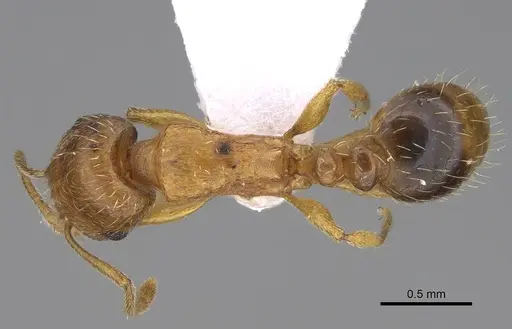
Literature
Loading distribution map...Loading products...