
Tetramorium avium
- Sci. Name
- Tetramorium avium
- Tribe
- Crematogastrini
- Subfamily
- Myrmicinae
- Author
- Bolton, 1980
- Distribution
- Found in 1 countries
Introduction
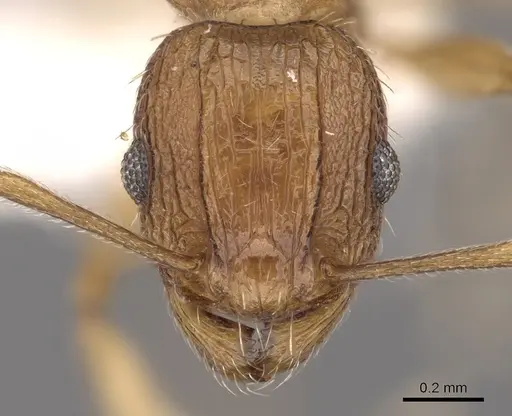
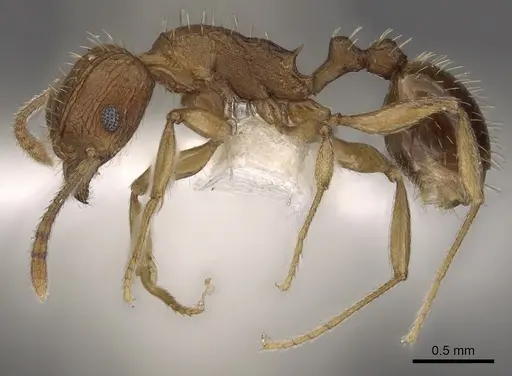
Tetramorium avium is a small ant native to South Africa, with workers measuring 3.1-3.7mm in total length and coloration ranging from mid-brown to blackish brown . It belongs to the setigerum-complex within the genus Tetramorium and forms a close species-pair with Tetramorium frenchi. The two are best separated by petiole shape: in T. avium the node narrows from base to apex in profile and has rounded angles . The species has been collected from grassland to forest habitats, including hillscrub and damp ravines where it nests in rotting wood . Notably, T. avium serves as the host for the social parasite Tetramorium parasiticum, an inquiline that lives in its nests .
Quick Summary
- Difficulty: Medium
- Origin & Habitat: South Africa (Cape Province), found in grassland to forest habitats including hillscrub and damp ravines. Collections recorded at around 1074 m elevation in Marakele National Park [2][1].
- Colony Type: Likely single-queen (monogyne) based on typical Tetramorium patterns, but colony structure not directly studied. Known to host the social parasite Tetramorium parasiticum [1].
- Size & Growth:
- Queen: Not reliably documented, no measurements available [1].
- Worker: 3.1-3.7 mm [1].
- Colony: Unknown, related Tetramorium species reach several hundred workers, but direct data is lacking.
- Growth: Moderate, inferred from genus patterns.
- Development: Estimated 6-8 weeks based on similar Tetramorium species, but not confirmed for T. avium. (No specific development data for this species.)
- Antkeeping:
- Temperature: Room temperature (20-24°C) is likely suitable. South African origin suggests tolerance for cooler periods, but no exact data [1].
- Humidity: Moderate to high humidity, natural nesting in damp rotting wood indicates preference for moist conditions. Keep substrate consistently damp but not waterlogged [1].
- Diapause: Unknown, a cool winter period (5-10°C for 2-3 months) might be beneficial based on temperate origin, but this is unstudied.
- Nesting: Use a nest that retains moisture, such as Y-tong (AAC), plaster, or a naturalistic setup with damp substrate. Avoid acrylic nests [1].
- Behavior: Workers are small (under 4 mm) and active foragers. Based on typical Tetramorium behavior, they likely hunt small insects and tend aphids for honeydew. Their small size means escape prevention is critical, use fine mesh or tight barriers. They are not aggressive to keepers but will defend the nest if disturbed. As Myrmicinae, they have a stinger modified for smearing venom (smear defense), but the sting is mild to humans.
- Common Issues: escape prevention is critical due to their tiny size, they can squeeze through standard test tube barriers., limited natural history data makes precise care requirements uncertain., humidity control is important, too dry leads to colony decline., wild-caught colonies may carry the social parasite Tetramorium parasiticum, which can kill or weaken the host colony.
Housing and Nest Setup
Because Tetramorium avium naturally nests in rotting wood in damp ravines [1], replicate these conditions in captivity. Use a moisture-retaining nest like Y-tong (AAC), plaster, or a naturalistic setup with damp substrate. Avoid acrylic nests. A test tube setup can work if the cotton is packed tightly and the opening is secured with fine mesh. Workers are only 3-4 mm, so all connections must be escape-proof. Inspect regularly for gaps.
Temperature and Seasonal Care
Keep T. avium at room temperature (20-24°C), no special heating is required. Their South African temperate origin suggests they can handle cooler periods, but precise requirements are unknown. Whether they need a winter diapause is unconfirmed, if you choose to provide one, a cool period around 5-10°C for 2-3 months may be safe, but watch the colony closely. Avoid constant high temperatures. [1]
Feeding and Diet
Like most Tetramorium, T. avium likely accepts a varied diet of small insects (fruit flies, small crickets, springtails) and sugar sources (honey water, sugar water). In nature they probably scavenge and tend aphids for honeydew. Offer protein 2-3 times per week and keep a sugar source available. Remove uneaten prey after 24 hours to prevent mold. Start with prey appropriate to their tiny worker size. [1]
Colony Development
Colony growth is expected to be moderate, similar to other Tetramorium species. First workers (nanitics) likely appear 6-8 weeks after eggs are laid, but this is an estimate based on related species, no direct data exists for T. avium. The colony will expand gradually, patience is needed. Maximum colony size is unknown but likely several hundred workers. [1]
Behavior and Temperament
Workers are small, fast-moving foragers. They are not normally aggressive to keepers but will bite if handled. AntWiki notes that T. avium is the host of the social parasite Tetramorium parasiticum, if you collect wild colonies, watch for unusual ants that might be parasites. Otherwise, behavior is typical of the genus: active, diurnal foragers. Their small size makes escape a constant concern. [1]
Frequently Asked Questions
How long does it take for Tetramorium avium to get first workers?
Based on related Tetramorium species, first workers (nanitics) probably emerge about 6-8 weeks after egg-laying, but this is not confirmed for T. avium.
What size nest do Tetramorium avium ants need?
Use a small nest scaled to their tiny 3-4 mm workers. Y-tong (AAC), plaster, or naturalistic setups with damp substrate work well. Moisture retention is key since they nest in damp wood.
Do Tetramorium avium ants need hibernation?
This is unknown. Their South African origin suggests a seasonal cool period, but no research exists. If you try hibernation, keep them at 5-10°C for 2-3 months and monitor the colony.
Are Tetramorium avium good for beginners?
This species is moderate difficulty. The main challenges are escape prevention (due to tiny size) and limited care information. If you have experience with small Myrmicinae ants, it’s manageable.
What do Tetramorium avium eat?
They likely accept small insects (fruit flies, tiny crickets, springtails) and sugar sources (honey water, sugar water). Offer protein 2-3 times weekly and keep sugar water available. Remove uneaten food promptly.
How big do Tetramorium avium colonies get?
Direct data is lacking. Related Tetramorium species reach several hundred workers, so colonies of T. avium are probably similar.
Can I keep multiple Tetramorium avium queens together?
Not recommended, most Tetramorium are monogyne (single-queen). Combining unrelated queens has not been studied for this species and could lead to fighting.
Do Tetramorium avium ants sting?
Yes, they have a stinger, but it is modified for smearing venom (smear defense) rather than piercing. Any sting is mild and not dangerous to humans.
Why are my Tetramorium avium escaping?
Their tiny 3-4 mm size means they can squeeze through standard barriers. Use fine mesh, tight-fitting lids, and check all connections. Applying Fluon or PTFE on tube rims helps.
What humidity do Tetramorium avium need?
Moderate to high humidity, they naturally nest in damp rotting wood. Keep the substrate consistently moist but not waterlogged. A humidity gradient lets them choose their preferred zone.
Report an Issue
The current care sheet is based fully on literature. See inconsistencies, or something that's incorrect? Please , it will be resolved after review from an admin. Contributing to the blogs tab also helps providing information, to make us be able to further improve the caresheets. Thank you for your support!
References

This caresheet is licensed under CC BY-SA 4.0 .
Community Blogs
CASENT0901191
View on AntWeb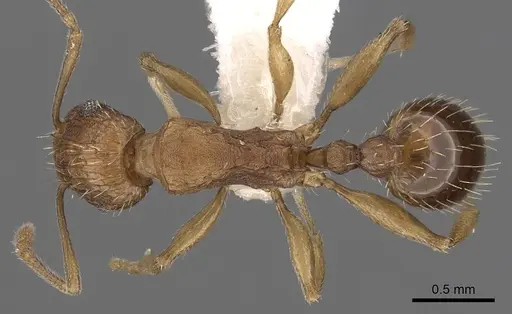
Literature
Loading distribution map...Loading products...