
Tetramorium atlante
- Sci. Name
- Tetramorium atlante
- Tribe
- Crematogastrini
- Subfamily
- Myrmicinae
- Author
- Cagniant, 1970
- Distribution
- Found in 2 countries
Introduction
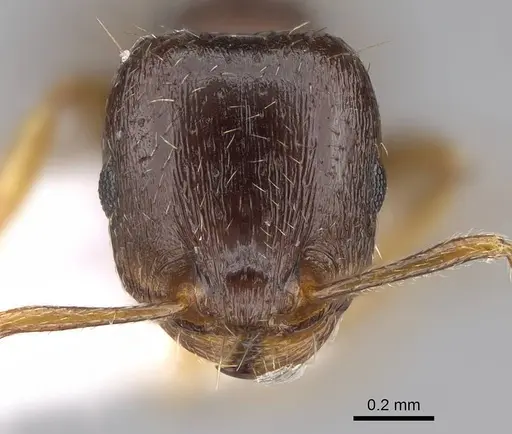
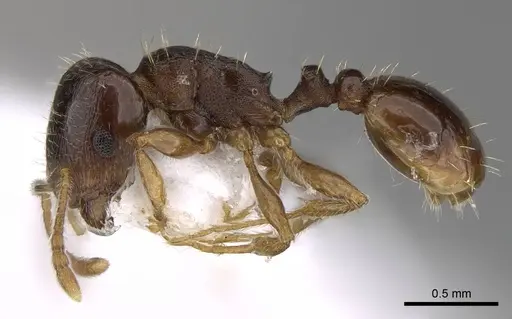
Tetramorium atlante is a small to medium-sized ant from the mountains of North Africa, found in Morocco and Tunisia . Workers are brown to dark brown with yellow legs and antennae, and have a nearly square head with small eyes . Their body is moderately wrinkled with fine sculpturing, and they have short, pointed spines on the propodeum . Queens are darker, with a brown head and thorax . This species was originally described as a subspecies of Tetramorium semilaeve but was later recognized as a separate species . Unlike its lowland relative T. semilaeve, T. atlante prefers high-elevation habitats between 1600 and 2300 meters in the High Atlas mountains . It lives in agricultural areas, open forests, and roadsides in mountainous terrain . Its mountain adaptation suggests it can handle cooler conditions than most North African ants.
Quick Summary
- Difficulty: Medium
- Origin & Habitat: Mountainous regions of North Africa (Morocco and Tunisia), especially the High Atlas mountains at 1600-2300 m elevation [1]. Found in agricultural land, scrub, luminous forests, and roadsides [1].
- Colony Type: Unknown, colony structure has not been directly studied. Most Tetramorium species have single-queen colonies, but this is unconfirmed for T. atlante.
- Size & Growth:
- Queen: Body length not reported in research, head width about 1.09-1.12 mm [1]. Estimated total length around 4-5 mm based on typical Tetramorium queens (inferred).
- Worker: Body length not reported in research, head width about 0.72-0.86 mm [1]. Estimated total length around 2.5-3.5 mm based on typical Tetramorium workers (inferred).
- Colony: Unknown, no colony size data available for this species.
- Growth: Moderate, inferred from typical Tetramorium development patterns.
- Development: 6-10 weeks estimated based on typical Tetramorium development at optimal temperature (inferred). (No specific studies on T. atlante development exist. Temperature will significantly affect speed.)
- Antkeeping:
- Temperature: Cooler conditions than most ants, aim for 18-22°C, reflecting their high-elevation mountain habitat. They likely tolerate cooler temperatures better than typical ant species.
- Humidity: Moderate, keep the nest substrate moist but not waterlogged. Their mountain habitat experiences moderate moisture levels.
- Diapause: Likely required, given cold winters in the Atlas mountains, provide a winter rest period of 2-3 months at 10-15°C.
- Nesting: Y-tong (AAC) or plaster nests work well. Use chamber sizes appropriate for their small workers. A natural setup with soil and stones mimics their habitat.
- Behavior: Workers are small and active foragers. Based on typical Tetramorium behavior, they likely form well-organized colonies with moderate activity. They are not particularly aggressive but will defend their nest. Their estimated body length of 2.5-3.5 mm means escape prevention is important, use fine mesh barriers. They likely forage for small insects and tend aphids for honeydew (typical of Tetramorium).
- Common Issues: escape prevention is critical due to their small size, they can squeeze through standard barriers, winter die-offs are possible if proper hibernation conditions are not provided, slow colony growth may frustrate beginners who overfeed or disturb the nest, humidity control is important, too wet causes fungal problems, too dry causes brood death, mountain-adapted species may struggle in warm indoor environments without temperature control
Temperature and Care
Tetramorium atlante needs cooler conditions than most commonly kept ant species because it lives in the High Atlas mountains at 1600-2300 m elevation [1]. Keep the nest area at 18-22°C, cooler than typical room temperature. Use a heating cable on one side of the nest to create a temperature gradient so the ants can choose their preferred spot. Avoid temperatures above 25°C. In winter, give them a hibernation period at 10-15°C for 2-3 months, mimicking the cold mountain winters.
Housing and Nesting
You can house this species in Y-tong (AAC) nests or plaster nests that let you control humidity easily. Make chambers sized for their small workers (estimated 2.5-3.5 mm body length), avoid oversized open spaces. A naturalistic setup with soil and flat stones mimics their mountainous environment [1]. Escape prevention is crucial: they can squeeze through standard gaps, so use fine mesh on ventilation holes and check seals regularly. A water test tube connected to the nest helps maintain humidity without flooding.
Feeding and Diet
Like other Tetramorium, T. atlante is likely omnivorous. Offer small live prey such as fruit flies, pinhead crickets, or small mealworms. Provide sugar sources like a drop of honey or sugar water occasionally. In the wild they forage in agricultural areas, eating small insects and tending aphids for honeydew [1]. Give small portions of protein 2-3 times per week and remove uneaten food after 24 hours. Sugar can be offered continuously but replace every few days to prevent mold.
Seasonal Care and Hibernation
Because their mountain habitat has cold winters, T. atlante needs a winter rest period. From around November to March, lower the temperature to 10-15°C and cut feeding to once every 2-3 weeks. Do not feed during hibernation. Keep the nest slightly moist, complete drying can kill them. In spring, gradually warm the nest back to 18-22°C to stimulate activity and brood development. [1]
Colony Development
Queens are larger than workers, with a head width of about 1.09-1.12 mm [1]. The founding process hasn't been documented, but based on typical Tetramorium, they are likely claustral, the queen seals herself in a chamber and raises the first brood without leaving (inferred). First workers (nanitics) are smaller than normal workers. Egg-to-worker development probably takes 6-10 weeks at optimal temperature (inferred). Colony growth is moderate, mature colonies may reach a few hundred workers.
Frequently Asked Questions
Is Tetramorium atlante a good beginner ant?
This species is rated medium difficulty. It needs cooler temperatures than most ants, requires hibernation, and its small size makes escape prevention tricky. It's not ideal for complete beginners but can be rewarding if you can provide the right conditions.
What temperature do Tetramorium atlante ants need?
Keep them at 18-22°C, cooler than normal room temperature. This fits their mountain habitat (1600-2300 m) [1]. A temperature gradient from a heating cable lets them choose.
Do Tetramorium atlante ants need hibernation?
Yes, they likely need a winter rest of 2-3 months at 10-15°C. Their mountain home has cold winters, so this period is important for colony health.
How big do Tetramorium atlante colonies get?
Colony size isn't known for this species, but based on typical Tetramorium, they probably reach a few hundred workers at maturity (inferred).
What do Tetramorium atlante ants eat?
They likely accept small live prey (fruit flies, pinhead crickets, small mealworms) and sugar sources (honey, sugar water). This matches their foraging habits in agricultural areas [1].
Can I keep Tetramorium atlante in a test tube?
Yes, test tubes work for founding colonies. Make sure the water reservoir is not too large to prevent flooding, and use cotton to manage humidity. When the colony outgrows the tube (roughly 20-30 workers), move them to a Y-tong or plaster nest.
How long does it take for Tetramorium atlante to raise first workers?
Typical Tetramorium development suggests 6-10 weeks from egg to first worker at optimal temperature (inferred). This species hasn't been studied directly.
Are Tetramorium atlante ants aggressive?
They aren't particularly aggressive. They defend their nest if disturbed but are generally calm. Their small size means they prefer to flee rather than attack.
Where is Tetramorium atlante found in the wild?
It's native to the mountains of Morocco and Tunisia, especially the High Atlas at 1600-2300 m elevation [1]. The type locality is Kairouan, Tunisia, but they live in mountainous areas rather than lowlands.
How do I prevent Tetramorium atlante from escaping?
Escape prevention is vital because their body length is only about 2.5-3.5 mm. Use fine mesh on all ventilation holes, check lid seals regularly, and apply fluon or similar barriers to nest edges. Even tiny gaps can allow escape.
Report an Issue
The current care sheet is based fully on literature. See inconsistencies, or something that's incorrect? Please , it will be resolved after review from an admin. Contributing to the blogs tab also helps providing information, to make us be able to further improve the caresheets. Thank you for your support!
References

This caresheet is licensed under CC BY-SA 4.0 .
Community Blogs
CASENT0915045
View on AntWeb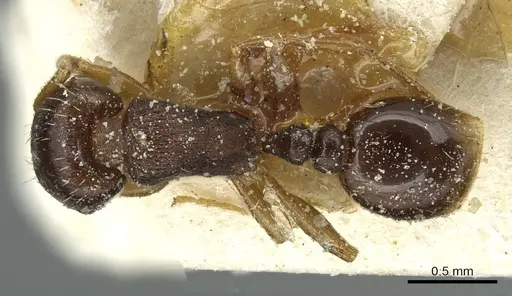
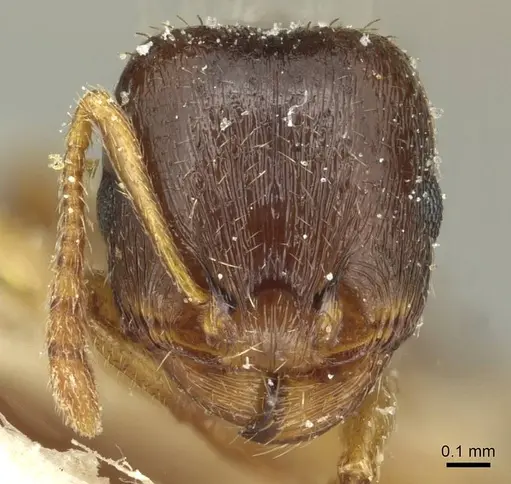
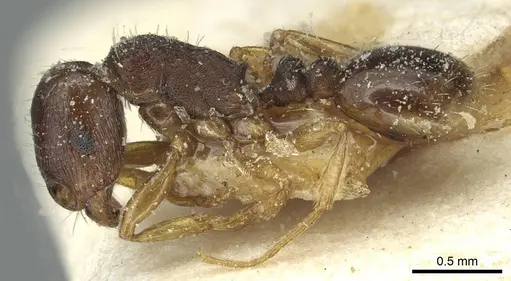
CASENT0922707
View on AntWeb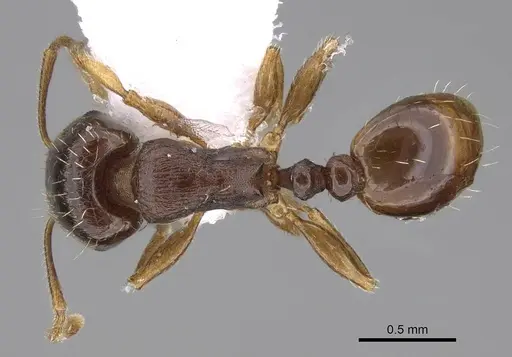
Literature
Loading distribution map...Loading products...