
Tetramorium artemis
- Sci. Name
- Tetramorium artemis
- Tribe
- Crematogastrini
- Subfamily
- Myrmicinae
- Author
- Hita Garcia & Fisher, 2012
- Distribution
- Found in 1 countries
Introduction
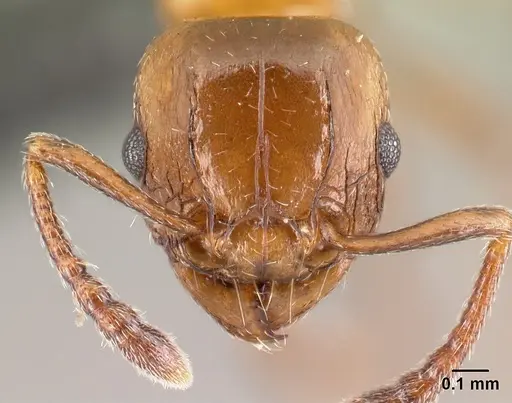
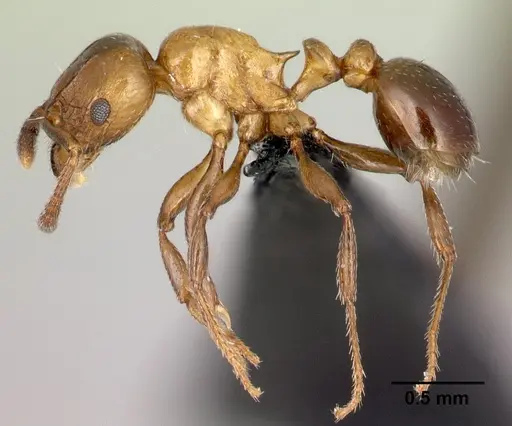
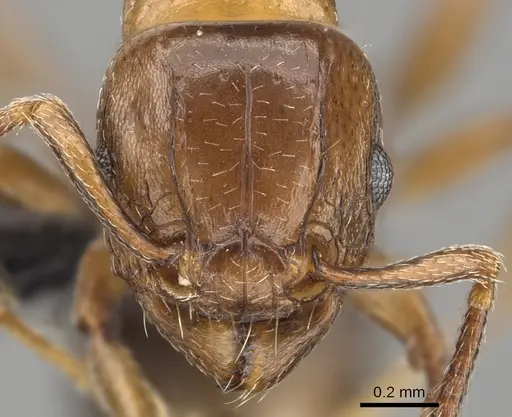
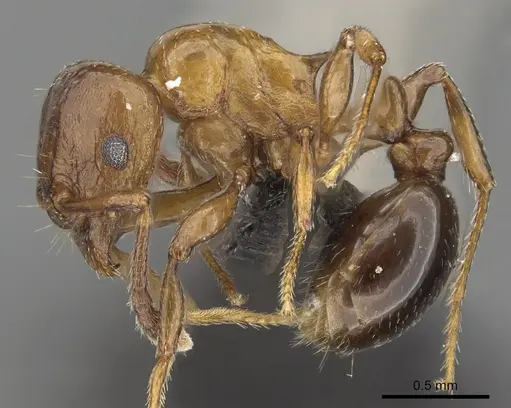
Tetramorium artemis is a tiny ant species known only from the spiny forests of Cap Sainte Marie in southern Madagascar . Workers have a head length of 0.67-0.72 mm, but their total body length is unrecorded . They belong to the Tetramorium bessonii species group and are identified by their squamiform (scale-like) petiole that is strongly compressed front-to-back, with the front edge sitting higher than the back edge . The head is about as long as wide, and the forehead between the frontal ridges is mostly smooth, with just a single central ridge . This species has only been collected once, from sifted leaf litter in a dry spiny forest and thicket at 160 m elevation . No information exists on their colony structure, founding habits, or nesting preferences. Like other members of the subfamily Myrmicinae, tribe Crematogastrini, they have a modified stinger used to smear venom onto enemies rather than piercing them. Because they are so small and virtually unstudied, keeping them in captivity is only for experienced antkeepers who can handle extreme escape prevention.
Quick Summary
- Difficulty: Expert, no species-specific care data exists, extremely tiny workers require rigorous escape prevention, invasive risk is zero but this species is extremely difficult to obtain.
- Origin & Habitat: Cap Saint Marie, Toliara Province, southern Madagascar. Only known from 160 m elevation in spiny forest/thicket habitat, collected from sifted leaf litter [1].
- Colony Type: Unconfirmed, no colony structure data available. Based on related Tetramorium species, likely monogyne (single queen), but polygyne colonies occur in some species [2].
- Size & Growth:
- Queen: Undescribed, no queen measurements exist [1]
- Worker: Size data unavailable, head length 0.67-0.72 mm recorded, but total body length not provided [1]
- Colony: Unknown, no colony size data available
- Growth: Unknown, estimated moderate based on related Tetramorium species [2]
- Development: Unknown, estimated 6-8 weeks based on typical Tetramorium genus patterns [2] (No species‑specific development data exists. Related Tetramorium species typically develop from egg to worker in 6-8 weeks at warm temperatures [2].)
- Antkeeping:
- Temperature: Unknown for this species. Based on Madagascar’s tropical climate, aim for 24-28°C. Related Tetramorium species do well in the low‑to‑mid 20s Celsius range [2].
- Humidity: Likely moderate, the spiny forest habitat is relatively dry but not arid. Keep nest substrate lightly moist, allowing some drying between waterings. Avoid waterlogging [2].
- Diapause: Unlikely, Madagascar species typically do not require hibernation. Maintain warm temperatures year‑round [2].
- Nesting: In nature, they were found in sifted leaf litter and rotten wood [1]. For captivity, a small test tube with a water reservoir is best for founding. Once the colony outgrows the tube, a small Y‑tong (AAC) nest or plaster nest with very narrow chambers works well. Always use fine‑mesh ventilation (holes
- Behavior: Generalist foragers typical of the genus. Workers are tiny and active, likely hunting small insects and collecting honeydew. Their most unusual trait is their sting: unlike typical stinging ants, they use a flat, spatulate stinger to smear venom onto threats rather than inject it, a ‘smear’ defense common to the Crematogastrini tribe. Because they are so small (head length
- Common Issues: extreme escape risk, workers are tiny and can fit through gaps that appear sealed to the naked eye, use fluon and sub‑0.5 mm mesh., no species‑specific care information exists, all advice is genus‑level inference., wild‑caught colonies from the only known locality may have unknown parasites or diseases., virtually unobtainable (only known from a single site in Madagascar), most ‘T. artemis’ sold online are misidentified., slow colony growth, if they even found, small colonies may take months to reach 20 workers.
Housing and Nest Setup
Because Tetramorium artemis workers are only about 0.7 mm head length, you need tiny housing. A small test tube with a water reservoir (a cotton plug creating a water section at the bottom) is ideal for a founding queen. The tube should be narrow enough (e.g.,1 cm diameter) that the queen can easily reach and tend her brood. Do not move the colony until you see at least 30-50 workers, the test tube can support that many. When upgrading, choose a Y‑tong (AAC) or plaster nest with chambers no deeper than 3-4 mm, they will feel lost in large cavities. Connect the nest to a small outworld (e.g., a plastic box) with a tube. All ventilation must use mesh with openings smaller than 0.5 mm. Apply a fluon barrier to the outworld’s inner rim. Regularly inspect connections for tiny gaps [2].
Feeding and Diet
Like most Tetramorium species, they are generalist omnivores. Offer tiny protein sources: whole fruit flies (Drosophila), pinhead crickets, or very small pieces of mealworm. Prey must be small enough for one worker to carry. Provide sugar water or diluted honey on a cotton ball or in a small test tube feeder. Change sugar water every 2-3 days to prevent fermentation. Feed small amounts of protein every 2-3 days, remove leftovers after 24 hours to avoid mold. Observe which foods they prefer and adjust accordingly [2].
Temperature and Humidity
No exact data exists, but the species comes from southern Madagascar’s spiny forest, which is warm and seasonally dry. Aim for 24-28°C. Use a heating cable on one side of the nest to create a gradient, the ants will choose their preferred spot. For humidity, keep the nest substrate lightly moist but not wet. A test tube water reservoir provides passive humidity in the brood area. Allow the substrate to dry out partially between waterings, do not keep it constantly soaked. Avoid direct sunlight and air conditioning drafts [2].
Escape Prevention
This is the single most critical aspect of keeping Tetramorium artemis. Their tiny size means they can squeeze through gaps that appear closed to the human eye. Use only containers with tightly fitting lids and no gaps. Apply a fluon barrier to the top 2-3 cm of the outworld walls, reapply after cleaning. For ventilation, use metal or plastic mesh with openings ≤ 0.2 mm (e.g.,200‑mesh). All connection tubes must fit snugly, use PTFE tape to seal joints. When feeding, open the outworld inside a larger bin to catch any escapers. Before each feeding, inspect the outworld for any cracks along edges or at tube entry points. Many antkeepers have lost entire colonies within hours of setting up a seemingly secure enclosure [2].
Colony Development
Since founding behavior is unconfirmed, we can only infer from other Tetramorium. If the queen founds claustrally, she will seal herself in the test tube and produce the first brood using only her fat reserves. The first workers (nanitics) will be especially small. Once they emerge, the colony enters a fragile phase, the queen will stop foraging and focus on egg‑laying. Provide small prey items consistently, but avoid overfeeding, a few fruit flies every other day is enough. Growth will be slow, expect fewer than 30 workers after the first 3-4 months. Patience is essential, and any stress (temperature swings, vibration, light) can cause the colony to fail. Do not expect rapid growth [2].
Frequently Asked Questions
How long does it take for Tetramorium artemis to produce first workers?
The exact timeline is unknown because no captive breeding has been documented. Based on typical Tetramorium patterns, expect about 6-8 weeks from egg to first worker at 26°C. Because we don’t know the founding type, this estimate may be inaccurate [2].
Can I keep Tetramorium artemis in a test tube?
Yes, a small test tube with a water reservoir is the best setup for a founding colony. The tube should be narrow enough that the queen can easily tend her brood. Once the colony reaches 30-50 workers, you can connect a small formicarium, but the move should be voluntary (connect the two via a tube and let them move on their own) [2].
What do Tetramorium artemis ants eat?
They are generalist omnivores. Offer small protein sources such as fruit flies, pinhead crickets, or tiny mealworm pieces. Also provide sugar water or diluted honey. Prey must be small enough for a single worker to transport [2].
Do Tetramorium artemis ants sting?
Yes, like all Myrmicinae they have a stinger, but it is modified for smearing venom rather than piercing. In the tribe Crematogastrini, the stinger is flat and spatulate, used to wipe venom onto enemies. The sting is unlikely to be painful to humans because the workers are so tiny, but they do have venom [2].
Are Tetramorium artemis good for beginners?
Absolutely not. There is no species‑specific care information, the workers are extremely tiny and prone to escaping, and the species is known from only one locality in Madagascar, most advertised ‘T. artemis’ are misidentifications. Beginners should start with a well‑documented species like Tetramorium caespitum or Lasius niger [2].
How big do Tetramorium artemis colonies get?
Unknown, no colony size data exists. Based on related Tetramorium species, colonies likely stay under a few hundred workers, but this is a guess [2].
Do Tetramorium artemis need hibernation?
No, hibernation is unlikely. The species comes from southern Madagascar, which has a tropical climate without cold winters. Maintain warm temperatures year‑round (24-28°C) [1][2].
Why are my Tetramorium artemis escaping?
Because of their tiny size, workers have a head length of only ~0.7 mm, and their body is even slimmer. They can fit through any gap larger than 0.2 mm. Check your fluon barrier, ensure all lid seals are tight, use sub‑0.2 mm mesh on ventilation, and inspect connection tubes for any small cracks or poor fits [2].
When should I move Tetramorium artemis to a formicarium?
Wait until the colony has at least 30-50 workers and the test tube is becoming crowded. Connect the new nest via a tube and allow the ants to move voluntarily. Do not force transfer, stress can damage or destroy small colonies [2].
Can I keep multiple Tetramorium artemis queens together?
Colony structure is unconfirmed. Most Tetramorium species are monogyne, but polygyne species exist. Without specific data, do not combine foundresses, they will likely fight. Keep each queen in her own setup [2].
Report an Issue
The current care sheet is based fully on literature. See inconsistencies, or something that's incorrect? Please , it will be resolved after review from an admin. Contributing to the blogs tab also helps providing information, to make us be able to further improve the caresheets. Thank you for your support!
References

This caresheet is licensed under CC BY-SA 4.0 .
Community Blogs
CASENT0481732
View on AntWeb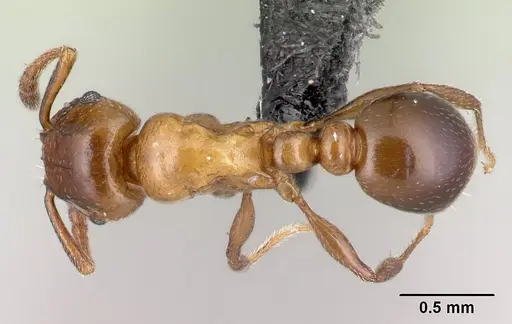
CASENT0481734
View on AntWeb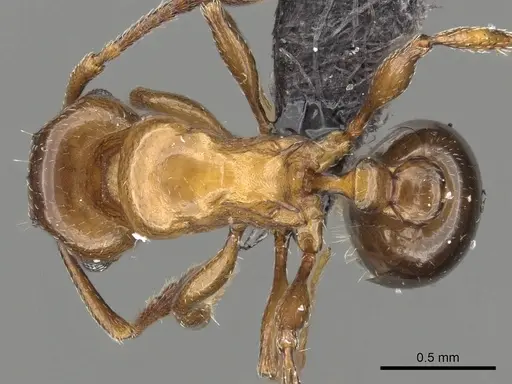
Literature
Loading distribution map...Loading products...