
Tetramorium aptum
- Sci. Name
- Tetramorium aptum
- Tribe
- Crematogastrini
- Subfamily
- Myrmicinae
- Author
- Bolton, 1977
- Distribution
- Found in 3 countries
Introduction
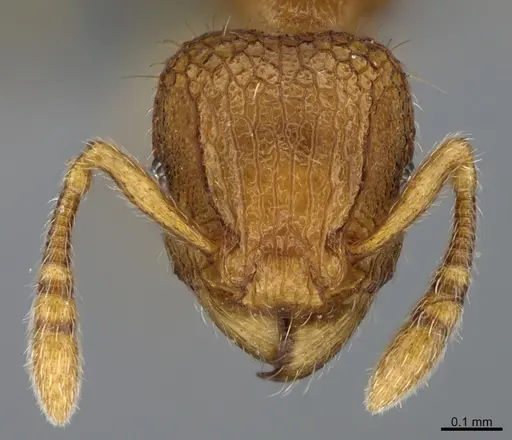
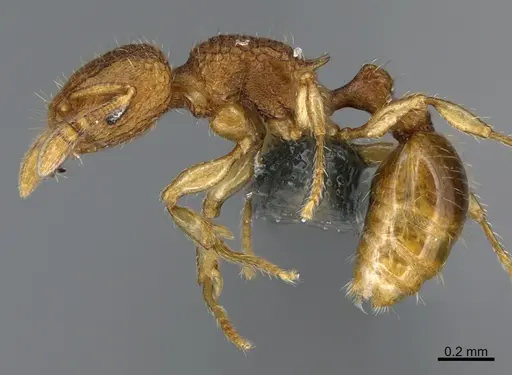
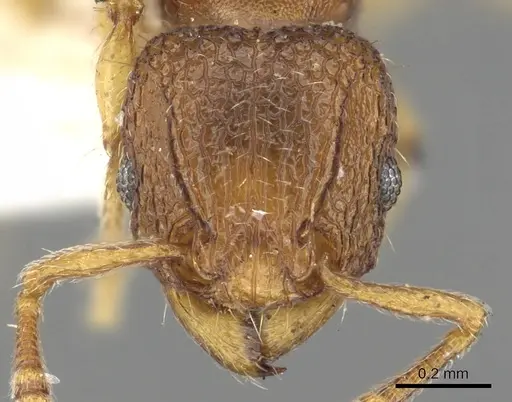
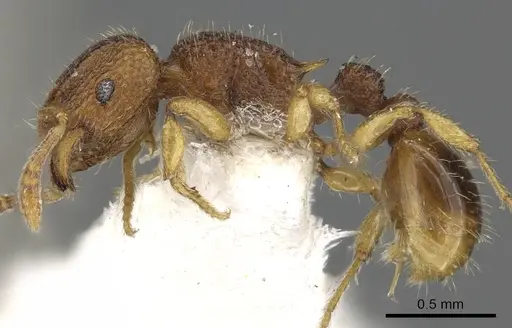
Tetramorium aptum is a tiny ant with workers measuring 2.6-2.7mm in total length . They are uniformly light brown with yellowish legs and antennae, and their bodies are heavily sculptured with fine ridges and pits. This species belongs to the Tetramorium scabrosum group and is unique in having both the petiole and postpetiole completely sculptured . These ants are habitat specialists found only in primary lowland dipterocarp forests across Southeast Asia, including Borneo, Brunei, Thailand, Malaysia, Vietnam, and southern China . A study in Xishuangbanna, China, found them in 5 primary forest areas but not in secondary forests or rubber plantations . They are true forest-floor dwellers, collected from leaf litter and pitfall traps .
Quick Summary
- Difficulty: Hard
- Origin & Habitat: Southeast Asia: primary lowland dipterocarp forests in Borneo, Brunei, Thailand, Malaysia, Vietnam, and southern China [2][3][1]. This species is a habitat specialist restricted to undisturbed forest.
- Colony Type: Unknown, no species-specific data on queen number or social structure.
- Size & Growth:
- Queen: Unknown, no data available.
- Worker: 2.6-2.7mm [1]
- Colony: Unknown, no data available.
- Growth: Unknown
- Development: Unknown, no species-specific data. Based on typical Tetramorium genus, likely 6-8 weeks at warm temperatures, but unconfirmed. (Temperature likely affects development speed, but no confirmed timeline exists.)
- Antkeeping:
- Temperature: Keep warm year-round,24-28°C. A heating cable on one side of the nest can create a gradient if room temperature is below this range.
- Humidity: High, keep the nest substrate consistently damp but not waterlogged. Add leaf litter on the outworld to help retain moisture.
- Diapause: No, as a tropical forest species, they do not require winter rest.
- Nesting: Small test tubes or Y-tong nests with tight chambers. They prefer confined spaces that mimic leaf litter gaps. Avoid tall, open formicaria.
- Behavior: Small, docile ants that forage in leaf litter. Likely nocturnal or crepuscular, a Bornean study caught them only in night ground samples [4]. They use a smear-type defense (wiping venom) rather than piercing. Their tiny size (under 3mm) makes escape prevention absolutely critical.
- Common Issues: tiny size makes escapes likely without fine mesh and tight seals on all openings., habitat specialist may be sensitive to environmental changes and poor setup conditions., high humidity needs can cause mold if ventilation is poor., wild-caught colonies often struggle to adapt to captivity and may die off.
Housing and Nest Preferences
Tetramorium aptum is a tiny leaf-litter dweller that needs appropriately scaled housing. Start colonies in small test tubes with a water reservoir separated by a tight cotton plug. As the colony grows, connect more test tubes or transfer to a Y-tong nest with narrow chambers. The workers are only 2.6-2.7mm [1], so they feel safest in tight, confined spaces. Avoid large, open formicaria without structure.
The nest substrate must stay consistently damp but not waterlogged. A layer of dead leaves or moss on the outworld helps them feel secure while foraging. Escape prevention is critical, use fine mesh (0.3mm or smaller) on all vents, and seal any gaps around tubing or lids. Fluon barriers on test tube rims can help during early growth.
Feeding and Diet
Based on typical Tetramorium feeding habits and their forest floor habitat, these ants are likely generalist scavengers. Offer small protein sources like fruit flies, pinhead crickets, or tiny mealworm pieces 2-3 times per week. Provide a constant sugar source: honey or sugar water at a 1:3 ratio with water. Remove uneaten prey after 24 hours to prevent mold.
Because they are tiny, prey items must be appropriately sized. Live springtails or freshly killed fruit flies work well. Place food near the nest entrance so they don't have to travel far. Watch what they take and adjust the menu accordingly. No species-specific dietary data exists, so observe your colony closely. [1]
Temperature and Care
Keep these tropical ants warm at 24-28°C year-round. Room temperature in this range is fine, if cooler, use a heating cable on top of the nest (not underneath) to create a gentle gradient. Avoid direct sunlight, drafts, and temperature swings.
Humidity is just as important as warmth. The nest substrate should be damp to the touch but not dripping. If using a Y-tong nest, moisten the block regularly. Check for mold in damp areas, improve ventilation if needed. Since this is a primary forest specialist, they may be sensitive to dry conditions. Mist the outworld lightly if you see the ants avoiding open areas.
As a tropical species, they do not require hibernation. Keep conditions stable all year. If your home gets cold in winter, provide supplemental heating. [2][3]
Behavior and Temperament
Tetramorium aptum workers are small and docile. They are unlikely to bother you and their sting is very mild, they belong to the Myrmicinae subfamily which uses a smear-type venom delivery (wiping instead of piercing). Avoid handling them, they are fragile due to their size.
A field study in Borneo caught them only in ground-level night samples [4], suggesting they are nocturnal or crepuscular foragers. In captivity, they may be shy at first. Provide a dark nest area and a dimly lit outworld. They will likely avoid bright light. Their tiny size means they can squeeze through gaps you might not notice, use fine mesh and tight-fitting lids.
No aggression reports exist. They are likely peaceful with each other (assuming single-queen colony, though unconfirmed). Do not attempt to combine unrelated colonies.
Colony Founding and Growth
The founding behavior of Tetramorium aptum has not been documented. Based on genus patterns, the queen may be claustral (sealing herself in a chamber and raising the first brood on stored reserves), but this is purely speculative. No queen has been described for this species in the scientific literature, even the queen caste is unknown. It is possible queens are ergatoid (wingless) or winged. Do not assume standard Tetramorium founding methods.
Colony growth rate and maximum size are also unknown. Young colonies may be very slow to develop. Patience is essential. There are no reports of successful captive colonies, so every keeper is essentially experimenting. Document your observations and share them with the antkeeping community. [1]
Frequently Asked Questions
Can I keep Tetramorium aptum in a test tube?
Yes, test tubes work well, especially for starting a new colony. Use a small tube with a water reservoir separated by tight cotton. Because the ants are only 2.6-2.7mm, make sure the cotton is packed firmly so they can't squeeze past. As the colony grows, you can connect additional test tubes or move to a small Y-tong nest.
How long until Tetramorium aptum has first workers?
This has not been studied. If the queen is claustral, it might take 6-8 weeks at warm temperatures, but that is a guess. There is no data for this species. Be prepared to wait and do not disturb the queen.
How big do Tetramorium aptum colonies get?
No data exists. Do not expect a large colony. They may remain small (under 100 workers) or could grow larger. There are no recorded successful captive colonies to draw from.
Do Tetramorium aptum ants sting?
They have a stinger but use a smear-type defense, wiping venom rather than piercing. The sting is mild and they are docile. They are unlikely to sting humans at all.
What do Tetramorium aptum ants eat?
Based on general Tetramorium feeding habits, offer small protein (fruit flies, pinhead crickets) and sugar water (1:3 honey to water). Remove uneaten food after 24 hours. No species-specific diet study exists, so adjust based on what your colony accepts.
What temperature do Tetramorium aptum ants need?
Keep them at 24-28°C, year-round. They come from tropical forests with stable warm temperatures. Use a heating cable if your room is cooler. Avoid temperature drops and drafts.
Are Tetramorium aptum good for beginners?
No, they are not recommended for beginners. So little is known about their captive care that even experienced keepers will face challenges. Their tiny size makes escape prevention difficult, and their habitat specificity may make them hard to keep alive.
Do Tetramorium aptum need hibernation?
No, they are a tropical species and do not need winter rest. Keep them warm all year.
Why are my Tetramorium aptum dying?
Likely causes include: escape (tiny size), low humidity, temperature stress, poor nutrition, or stress from captivity. Check for gaps in the setup, ensure high humidity and stable warmth, and provide varied small prey. Wild-caught colonies may simply not adapt.
When should I move Tetramorium aptum to a formicarium?
No one knows. Since growth rate is unknown, wait until you see the colony filling the current nest and clearly needing more space. Connect the new nest and let them move on their own.
Can I keep multiple Tetramorium aptum queens together?
Not recommended. Colony structure is unstudied. Keep queens separately to avoid fighting or colony collapse.
Is Tetramorium aptum invasive or dangerous?
No. It is a small, docile specialist of primary forests with no invasive tendencies. However, never release non-native ants into the wild.
Report an Issue
The current care sheet is based fully on literature. See inconsistencies, or something that's incorrect? Please , it will be resolved after review from an admin. Contributing to the blogs tab also helps providing information, to make us be able to further improve the caresheets. Thank you for your support!
References

This caresheet is licensed under CC BY-SA 4.0 .
Community Blogs
CASENT0284207
View on AntWeb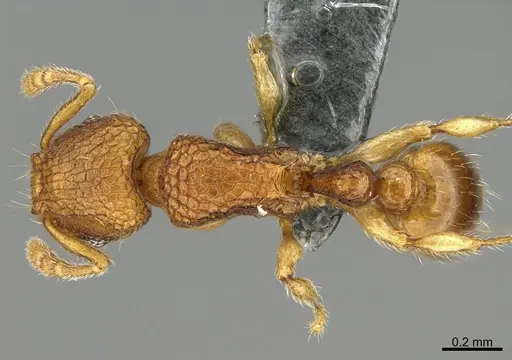
CASENT0901094
View on AntWeb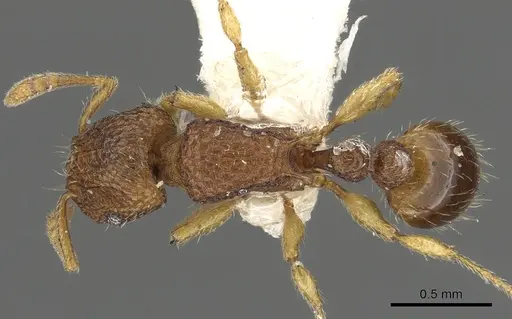
Literature
Loading distribution map...Loading products...