
Tetramorium anxium
- Sci. Name
- Tetramorium anxium
- Tribe
- Crematogastrini
- Subfamily
- Myrmicinae
- Author
- Santschi, 1914
- Distribution
- Found in 7 countries
Introduction
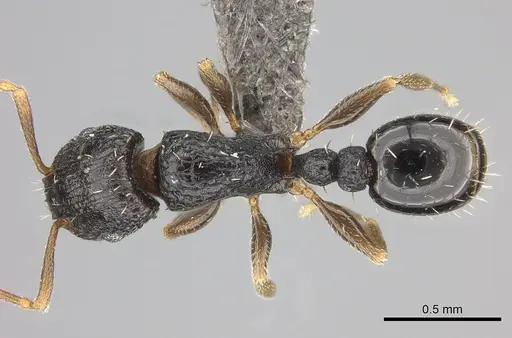
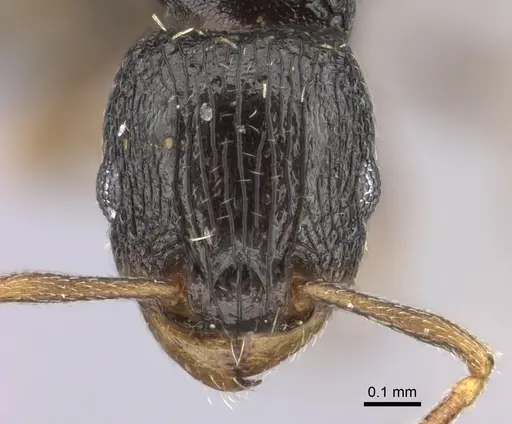
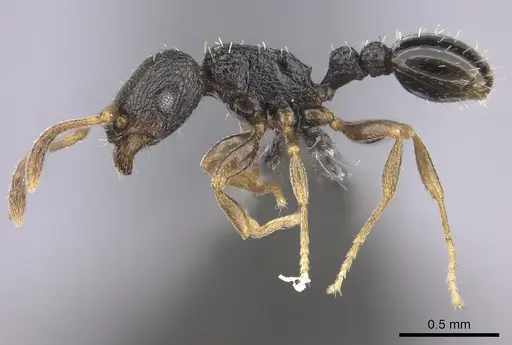
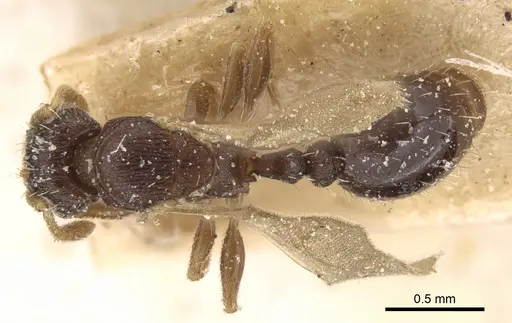
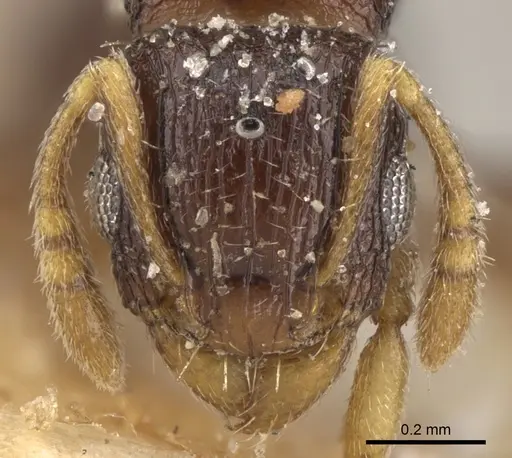
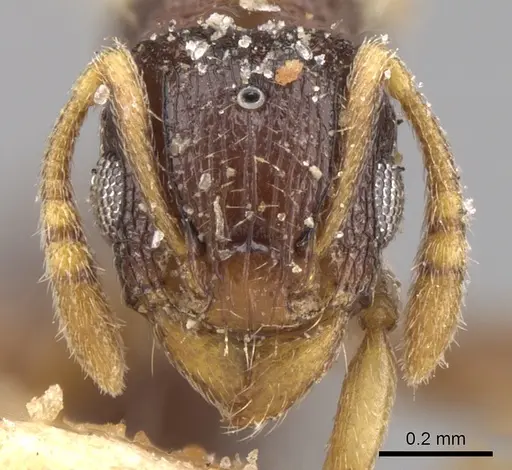
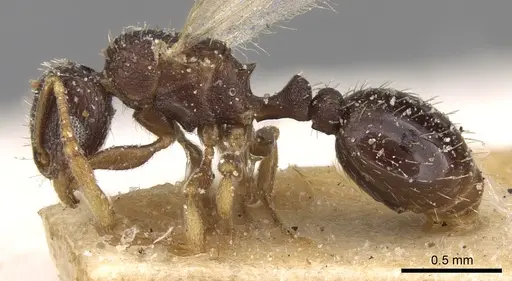
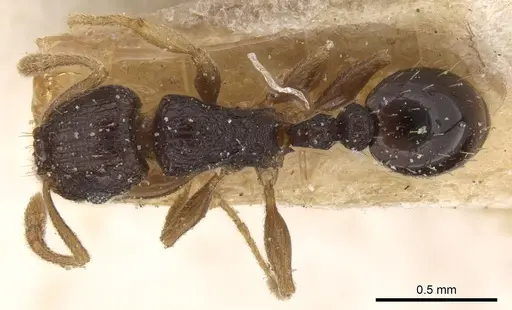
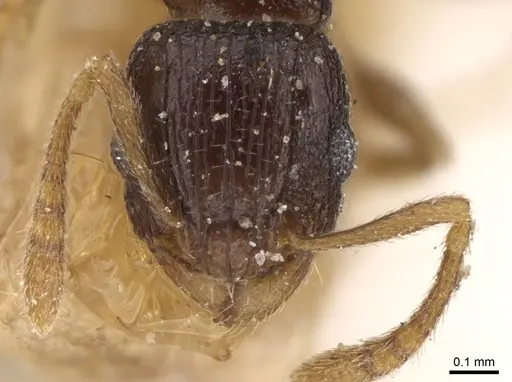
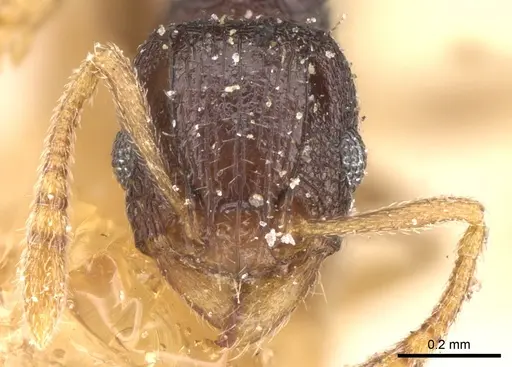
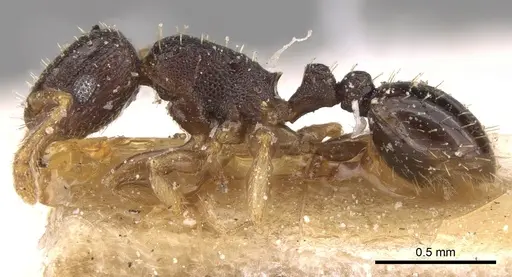
Tetramorium anxium is a tiny ant species native to West and Central Africa, belonging to the Tetramorium simillimum species group. Workers measure just 2.0-2.2mm, making them one of the smaller ant species you'll encounter in the hobby. They have a uniform blackish-brown coloration with yellowish-brown legs and antennae. Their most distinctive features include strong frontal carinae (the ridges running along the front of the head) and broad, shallow antennal scrobes (grooves where the antennae rest). The head has weak longitudinal rugulae (tiny ridges) and a very faint ground texture that gives it a slightly shiny appearance . These ants are ground-nesting generalist predators found across the Afrotropical region, including Benin, Cameroon, Gabon, Ghana, Guinea, Ivory Coast, Togo, and Tanzania. They inhabit diverse environments from forests and woodlands to shrubland, and in Benin they've been recorded nesting in mango orchards. Research from Côte d'Ivoire classifies them as generalist predators, and they're known to thrive in urban areas - particularly abundant in green spaces within Abidjan, Ivory Coast's largest city .
Quick Summary
- Difficulty: Easy
- Origin & Habitat: West and Central Africa, found in Benin, Cameroon, Gabon, Ghana, Guinea, Ivory Coast, Togo, and Tanzania. They inhabit forests, woodlands, shrubland, and agricultural areas like mango orchards. Ground-nesting species that prefers tropical and subtropical climates [1].
- Colony Type: Unconfirmed, colony structure not specifically documented.
- Size & Growth:
- Queen: Not documented, estimated at 4-5mm based on genus patterns
- Worker: 2.0-2.2mm [1]
- Colony: Not documented, estimated from closely related Tetramorium species, possibly up to a few hundred workers
- Growth: Moderate
- Development: Estimated 6-8 weeks at optimal temperature (24-28°C) based on similar small Tetramorium species (Development time is estimated, small Tetramorium species typically develop faster than larger ants due to their small size.)
- Antkeeping:
- Temperature: Keep at 24-28°C. They come from tropical Africa and need warmth. A heating cable on one side of the nest creates a suitable gradient [1].
- Humidity: Moderate humidity, around 50-70%. These ants are adaptable but keep the nest substrate slightly moist. Balance is key, too dry desiccates brood, too wet causes mold [1].
- Diapause: No true diapause required, being a tropical species, they don't need hibernation. Slight temperature reductions during winter months may slow activity naturally, but no cool period is needed [1].
- Nesting: Ground-nesting species. In captivity, they do well in Y-tong (AAC) nests, plaster nests, or naturalistic setups with soil. Provide chambers appropriately sized for their tiny 2mm workers, tight chambers work better than spacious ones [1].
- Behavior: These are small but active ants with a generally peaceful temperament. As generalist predators, they'll hunt small prey and scavenge. Their defense mechanism is smearing venom rather than stinging, they have a flattened stinger used to wipe venom onto enemies. Their tiny size means they're excellent escape artists, they can squeeze through remarkably small gaps. Use fine mesh barriers and ensure all openings are sealed. They're not aggressive toward keepers but will defend their nest if threatened. Workers are fast-moving and will readily explore their outworld for food.
- Common Issues: escape prevention is critical, their tiny 2mm size means they can slip through standard barrier setups, so use 0.5mm mesh or finer., colonies may be slow to establish initially, small founding colonies need patience., wild-caught colonies may carry parasites that can decimate captive populations., overfeeding can lead to mold issues in small nest setups., they're sensitive to drying out but also prone to mold if too wet, balance moisture carefully.
Housing and Nest Setup
For these tiny 2mm ants, you'll need to think small. Y-tong (AAC) nests work excellently because the chambers can be sized appropriately and the material holds humidity well. Plaster nests are another good option. If using a naturalistic setup, provide a soil layer deep enough for them to dig chambers, they're ground-nesting in the wild. The nest chamber should be relatively tight-fitting, these small ants do better in compact spaces than in large open areas. For the outworld, a simple plastic container works fine, but escape prevention is absolutely critical, use fine mesh (0.5mm or smaller) on any ventilation holes and ensure lids fit tightly. A moat barrier with water or fluon can provide additional security [1].
Feeding and Diet
Based on research classifying them as generalist predators, these ants need a diet focused on protein. Small live prey like fruit flies, pinhead crickets, and small mealworms are ideal. They can also accept dead insects and will scavenge protein-rich foods. Sugar sources are likely accepted, offer a drop of sugar water or honey occasionally, though protein should be the primary food. Feed small amounts that can be consumed within a day or two to prevent mold. For a founding colony, a single small insect every few days is sufficient. As the colony grows, increase feeding frequency accordingly. Remove any uneaten prey after 48 hours to maintain cleanliness [3][2].
Temperature and Heating
Being a tropical African species, Tetramorium anxium needs warmth to thrive. Maintain nest temperatures between 24-28°C. Room temperature may be sufficient if your home stays in this range, but many keepers use a heating cable or heating mat to ensure consistency. Place heating on one side of the nest to create a temperature gradient so ants can self-regulate by moving between warmer and cooler areas. Avoid direct heat that could dry out the nest. A thermostat controller helps maintain stable temperatures. These ants are adaptable but growth and activity will slow significantly below 22°C. Unlike temperate species, they don't require a winter cooling period, they remain active year-round at stable warm temperatures [1].
Humidity and Water
These ants prefer moderate humidity around 50-70%. The key is balance, too dry and brood will desiccate, too wet and mold becomes a problem. In Y-tong or plaster nests, a water reservoir connected to the nest maintains humidity through evaporation. Check the nest regularly: if you see condensation constantly pooling, it's too wet, if the substrate looks cracked or powdery, it's too dry. A small water tube or cotton ball in the outworld provides drinking water. For ground-nesting behavior, allow some substrate to dry out slightly while keeping other areas moist, this gives ants options to regulate their own microclimate. Mist the nest occasionally if humidity drops, but avoid soaking the substrate [1].
Colony Founding and Growth
Founding behavior is unconfirmed for this species. If it follows typical Tetramorium patterns, a newly mated queen may seal herself in a small chamber and lay eggs, raising the first workers (nanitics) entirely on her stored energy reserves. This claustral founding typically takes 4-6 weeks, though exact timing depends on temperature. The first workers are smaller than normal workers but will begin foraging once the colony establishes. Growth rate is moderate, expect the colony to reach 50 workers within a few months under good conditions. Small colonies are vulnerable to disturbance, so minimize nest inspections during the founding phase. Under good conditions, colonies can grow to several hundred workers. Patience is key with small species like this, they won't explode in population size like some faster-growing genera [1].
Escape Prevention
This is perhaps the most critical aspect of keeping Tetramorium anxium. At just 2mm, workers can squeeze through gaps that seem impossibly small. Standard test tube setups with cotton plugs may not be sufficient, consider using tighter barriers. All container lids should fit snugly with no gaps around edges. Ventilation holes need fine mesh (0.5mm or smaller), standard mesh may allow escapes. When connecting the nest to the outworld, use a secure connection method like tubing with tight fittings. Many keepers use a fluon (PFPE) barrier around the edges of the outworld as an additional precaution. Check regularly for any potential escape routes, especially around water tubes and food dishes. A single escaped colony can be nearly impossible to find in a home [1].
Frequently Asked Questions
How long does it take for Tetramorium anxium to raise their first workers?
Expect 6-8 weeks from egg to first worker at optimal temperature (24-28°C). This is typical for small Tetramorium species. The queen will seal herself in and raise nanitics (first workers) alone during this time. Cooler temperatures will slow development significantly.
Can I keep Tetramorium anxium in a test tube setup?
Yes, test tubes work well for founding colonies. Use a small test tube with a water reservoir (cotton ball) and ensure the cotton is packed tightly, these tiny ants can squeeze through loose cotton. Consider using a secondary barrier like fluon around the tube opening. Move to a larger nest once the colony reaches 30-50 workers.
Do Tetramorium anxium ants sting?
These ants have a functional stinger, but their primary defense is smearing venom rather than stinging. At 2mm, any sting is mild and rarely noticeable to humans. They're not aggressive and will only defend if directly threatened.
What do Tetramorium anxium eat?
They're generalist predators, feed small live or dead insects like fruit flies, small mealworms, and pinhead crickets. They likely accept sugar sources like honey or sugar water occasionally. Protein should be the primary food. Remove uneaten prey after 48 hours to prevent mold.
Are Tetramorium anxium good for beginners?
Yes, they're considered easy to keep. They're small, adaptable, and don't require special care like hibernation. The main challenge is escape prevention due to their tiny size. If you're careful with barriers, they're an excellent beginner species.
How big do Tetramorium anxium colonies get?
Colony size is not well documented, but based on similar Tetramorium species, expect several hundred workers at maturity. They won't become massive colonies but can still be quite active and impressive.
Do Tetramorium anxium need hibernation?
No, they're a tropical species from Africa and don't require hibernation or diapause. Keep them at warm temperatures year-round (24-28°C). They remain active throughout the year in captivity.
Why are my Tetramorium anxium escaping?
Their tiny 2mm size makes them excellent escape artists. Use fine mesh (0.5mm or smaller) on all ventilation, pack cotton barriers tightly in test tubes, and consider adding fluon barriers. Check for any gaps around lids and connections. Escape prevention must be excellent with this species.
When should I move my colony to a formicarium?
Move from a test tube to a proper nest (Y-tong, plaster, or naturalistic) when the colony reaches 30-50 workers or when the test tube water reservoir needs frequent refilling. Make sure the new nest has appropriately sized chambers for their small workers.
Can I keep multiple Tetramorium anxium queens together?
This hasn't been specifically studied for this species. Tetramorium is typically monogyne (single-queen), though some species can be polygynous. It's not recommended to combine unrelated foundress queens as they may fight. If you have multiple queens, keep them in separate setups.
What temperature is best for Tetramorium anxium?
Keep nest temperatures between 24-28°C. This tropical species needs warmth for optimal activity and brood development. A heating cable on one side of the nest creates a gradient. Avoid temperatures below 22°C for extended periods.
What's the best nest type for Tetramorium anxium?
Y-tong (AAC) nests work excellently because you can control chamber size and humidity. Plaster nests are also suitable. The key is providing appropriately sized chambers for their tiny 2mm workers, tight chambers are better than large open spaces. Naturalistic setups with soil work too since they're ground-nesting in the wild.
Report an Issue
The current care sheet is based fully on literature. See inconsistencies, or something that's incorrect? Please , it will be resolved after review from an admin. Contributing to the blogs tab also helps providing information, to make us be able to further improve the caresheets. Thank you for your support!
References

This caresheet is licensed under CC BY-SA 4.0 .
Community Blogs
Literature
Loading distribution map...Loading products...