
Tetramorium antipodum
- Sci. Name
- Tetramorium antipodum
- Tribe
- Crematogastrini
- Subfamily
- Myrmicinae
- Author
- Wheeler, 1927
- Distribution
- Found in 1 countries
Introduction
Tetramorium antipodum is a small ant in the Myrmicinae subfamily, described by W.M. Wheeler in 1927 from Norfolk Island and Lord Howe Island, Australia . It was later considered a synonym of Tetramorium caldarium, then revived as a valid species in 1995 . Specific biological data is almost nonexistent, so care advice relies heavily on patterns seen in other Tetramorium species. They are likely generalist omnivores nesting in soil or under stones, but nothing is confirmed for this particular species.
Quick Summary
- Difficulty: Unknown, extremely limited data
- Origin & Habitat: Norfolk Island and Lord Howe Island, Australia, subtropical island environments [1]
- Colony Type: Unconfirmed
- Size & Growth:
- Queen: Size data unavailable, estimated 5-6 mm based on genus patterns
- Worker: Size data unavailable, estimated 2.5-4 mm based on genus patterns
- Colony: Unknown, estimated up to several hundred workers based on typical island Tetramorium
- Growth: Moderate, estimated based on genus
- Development: Estimated 6-10 weeks based on related Tetramorium species (No specific data for T. antipodum, timeline based on genus averages.)
- Antkeeping:
- Temperature: Keep at 22-26°C based on subtropical island origin. Avoid extremes below 18°C or above 30°C.
- Humidity: Keep nest substrate moist but not waterlogged. Provide a water source in the outworld.
- Diapause: Unknown, subtropical origin may reduce diapause needs. If kept, reduce temperature slightly in winter (3-5°C drop) and observe activity.
- Nesting: Likely prefers soil-based nests. Start in a test tube, later use Y-tong (AAC), plaster, or soil nest with moist substrate.
- Behavior: General omnivorous forager. As a Crematogastrini, uses a 'smear' defense: workers wipe venom onto attackers instead of stinging. Temperament is likely docile but will defend the nest. High escape risk due to small size (around 3 mm), use tight lids, fluon, or oil barriers.
- Common Issues: Extremely limited species-specific data makes care highly experimental., Wild-caught colonies may be hard to establish as founding and queen biology are unknown., Small size requires careful escape-proofing., Colony growth and size are uncertain, don't expect rapid growth or large colonies.
Species Background and Distribution
Tetramorium antipodum was described by Wheeler in 1927 from Norfolk Island and Lord Howe Island, Australia [1]. It was later synonymized with Tetramorium caldarium by Bolton in 1979,then revived as a valid species by Bolton in 1995 [2]. The known distribution is limited to these two Australian islands, both subtropical in climate.
Identification and Appearance
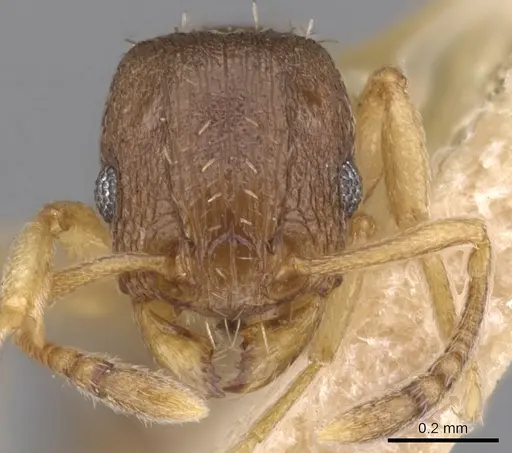
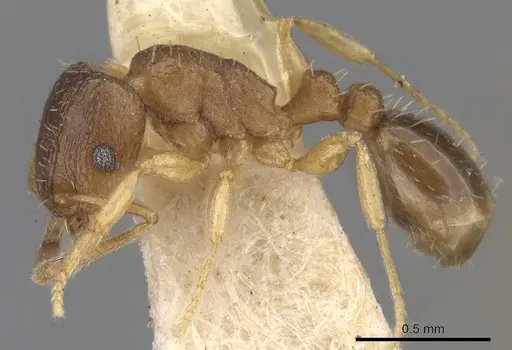
As a Tetramorium, workers have 12-segmented antennae with a distinct 3-segmented club, bidentate mandibles, and a head typically with longitudinal rugae. The propodeum usually bears spines or teeth. Coloration is generally brown to reddish-brown. Specific measurements for T. antipodum have not been published, but based on genus patterns workers are roughly 2.5-4 mm and queens larger.
Housing and Nesting
Likely nests in soil, under stones, or in decaying wood. Start with a test tube setup for the queen. Once about 20-30 workers emerge, move to a small formicarium such as a Y-tong (AAC) or plaster nest with moist substrate. The nest should have a humid area without being waterlogged. Provide an outworld for foraging.
Feeding and Diet
Generalist omnivore. Offer protein prey (small insects like fruit flies, pinhead crickets) 2-3 times per week. Keep a constant source of carbohydrates (sugar water, honey) and fresh water. Adjust prey size to colony size.
Temperature and Seasonal Care
Based on the subtropical island origin, maintain temperatures around 22-26°C. Avoid prolonged temperatures below 18°C or above 30°C. Whether the species needs diapause is unknown, you may try a slight temperature drop in winter (to ~18-20°C) and see if foraging slows, but deep hibernation is likely unnecessary.
Colony Development
Development is not documented for this species. Based on related Tetramorium, first workers might emerge after 6-10 weeks at 24-26°C. Colony growth is probably moderate, with maximum size reaching a few hundred workers. Initial growth is slow while the queen raises the first brood alone.
Defense Mechanism
Tetramorium antipodum belongs to the Crematogastrini tribe, which uses a 'smear' defense. Workers have a modified, spatulate stinger that wipes venom onto attackers instead of piercing. This is a contact deterrent. For humans, the sting is mild and not dangerous.
Frequently Asked Questions
How long does it take for Tetramorium antipodum to produce first workers?
The exact time is unknown, but based on other Tetramorium species, expect about 6-10 weeks after the queen lays eggs if kept at 24-26°C.
What do Tetramorium antipodum ants eat?
Likely generalist omnivores. Offer small insects as protein 2-3 times per week, and always provide sugar water or honey and fresh water.
Can I keep multiple Tetramorium antipodum queens together?
This is unconfirmed. Most Tetramorium are single-queen (monogyne), so it's not recommended to combine unknown queens.
Do Tetramorium antipodum ants sting?
They have a stinger, but as a Crematogastrini they use it to smear venom rather than pierce. The effect on humans is mild.
What temperature should I keep Tetramorium antipodum at?
Keep at 22-26°C, reflecting their subtropical island origin. Avoid extremes below 18°C or above 30°C.
How big do Tetramorium antipodum colonies get?
Not documented. Based on typical Tetramorium, likely up to a few hundred workers.
Do Tetramorium antipodum need hibernation or diapause?
Unknown. A slight temperature drop in winter may be beneficial but deep hibernation is probably unnecessary.
Is Tetramorium antipodum suitable for beginners?
Difficulty is hard to judge due to lack of data. If you have experience and are comfortable with uncertainty, it may be manageable. Not recommended for absolute beginners.
What type of nest should I use for Tetramorium antipodum?
Start with a test tube. Later use a small Y-tong (AAC), plaster, or soil nest with moist substrate.
Where is Tetramorium antipodum found in the wild?
Only recorded from Norfolk Island and Lord Howe Island, Australia [1].
Report an Issue
The current care sheet is based fully on literature. See inconsistencies, or something that's incorrect? Please , it will be resolved after review from an admin. Contributing to the blogs tab also helps providing information, to make us be able to further improve the caresheets. Thank you for your support!
References

This caresheet is licensed under CC BY-SA 4.0 .
Community Blogs
CASENT0901221
View on AntWeb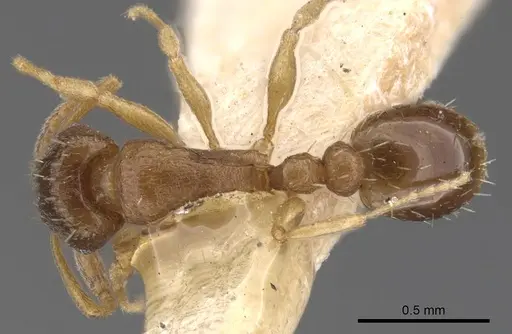
Literature
Loading distribution map...Loading products...