
Tetramorium ambatovy
- Sci. Name
- Tetramorium ambatovy
- Tribe
- Crematogastrini
- Subfamily
- Myrmicinae
- Author
- Hita Garcia & Fisher, 2012
- Distribution
- Found in 1 countries
Introduction
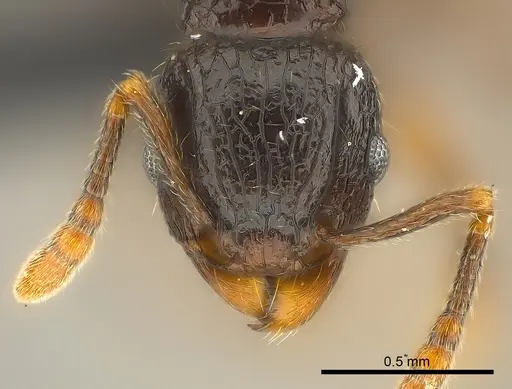
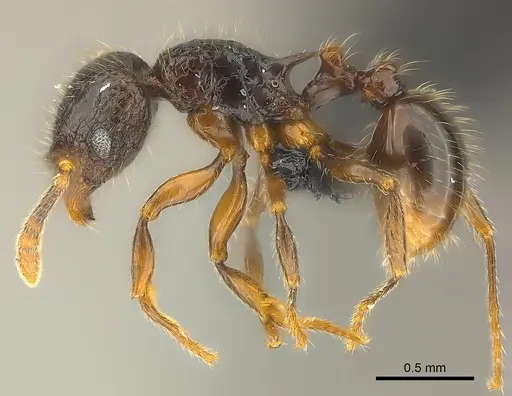
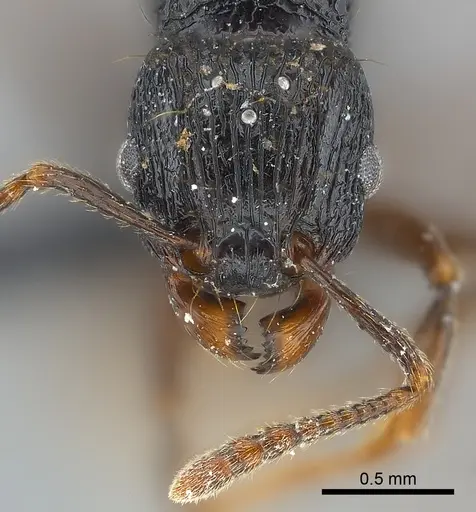
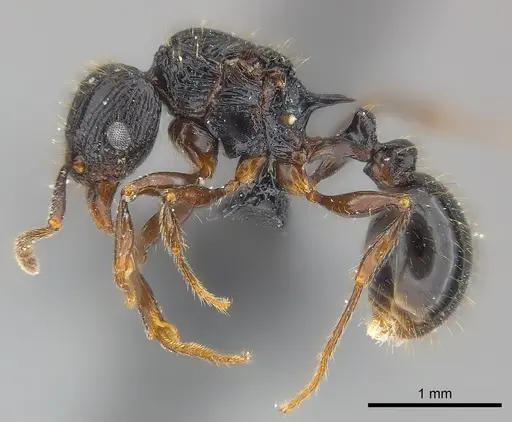
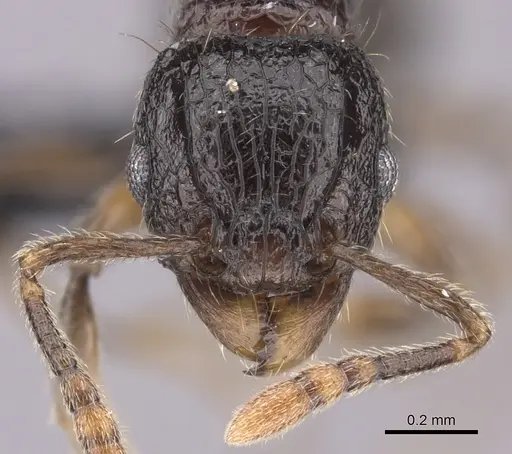
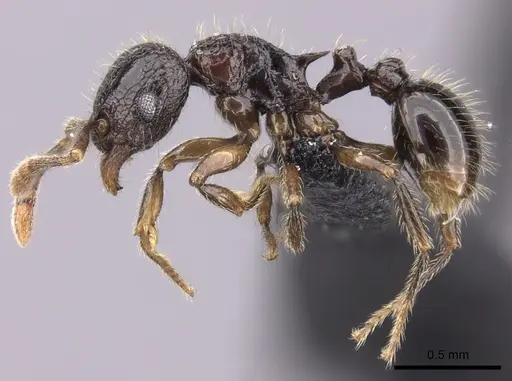
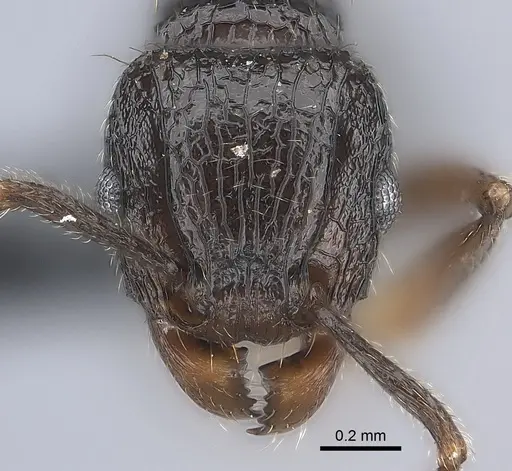
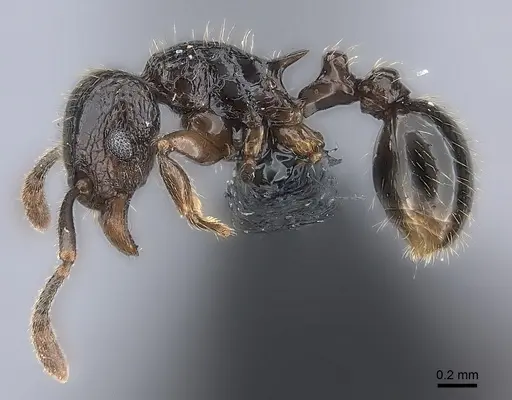
Tetramorium ambatovy is a tiny ant native to Madagascar, first described in 2012 . Workers have a head length of about 0.7 mm, but their total body length is not reported. They belong to the Tetramorium dysalum species group and are identified by fine, irregular wrinkles on the upper body and relatively large eyes . These ants are uniformly brownish with lighter legs and have long, pointed spines on the propodeum. They live in montane and lowland rainforests at elevations between 140 and 1088 meters, always in the leaf litter . Their distribution in Madagascar is patchy: most records come from a strip from Ambatovy north to Ambatovaky, with one isolated record from Andohahela in the southwest . As leaf-litter dwellers, they prefer humid, dark conditions and are likely generalist foragers typical of the genus.
Quick Summary
- Difficulty: Medium
- Origin & Habitat: Montane and lowland rainforests of Madagascar, elevation 140-1088 m, collected from leaf litter [1][2]
- Colony Type: Unknown, not documented. Most Tetramorium species are monogyne but this is unconfirmed for T. ambatovy.
- Size & Growth:
- Queen: Undescribed in literature, size unknown
- Worker: Size data unavailable. Only head measurements recorded (head length ~0.7 mm), but total body length not reported [1]
- Colony: Unknown, not documented
- Growth: Unknown
- Development: Unknown, not studied. Typically over a month in related Tetramorium but here unconfirmed. (No direct data on development. Avoid making assumptions.)
- Antkeeping:
- Temperature: Based on their montane rainforest habitat (elevation up to 1088 m), they likely prefer cool conditions. Keep around 20-24°C and avoid overheating above 26°C [1]. This is an estimated range, monitor colony response.
- Humidity: High humidity required. They come from humid leaf litter [3]. Keep substrate consistently damp but not waterlogged. Provide a moisture gradient with one damp corner and the rest slightly drier [3].
- Diapause: Unknown, no information. Madagascar has seasonal variation, but true diapause is undocumented.
- Nesting: Use a Y‑tong or plaster nest with very small chambers, or a naturalistic setup with damp leaf litter on soil. They need tight spaces scaled to their tiny size and high humidity. Avoid dry setups [3][2].
- Behavior: These are tiny, ground‑dwelling ants that forage in leaf litter. They are likely non‑aggressive and not known to sting, but they can smear venom using a modified stinger (typical of the tribe Crematogastrini). Their very small size (head ~0.7 mm) means escape prevention is critical, use fine mesh (0.5 mm or smaller) and seal all gaps. They prefer dark, stable environments.
- Common Issues: escape prevention is the top concern, workers can squeeze through gaps that would stop larger ants, use fine mesh and tight lids, low humidity quickly kills the colony, monitor substrate moisture and rehydrate promptly, overheating causes stress, do not exceed 26°C, even mid‑20s may be warm for this montane species, mold in the nest from constant high humidity, provide ventilation and remove uneaten food fast, visual confirmation of colony health is hard due to tiny size, you may not see activity for weeks, causing unnecessary worry
Housing and Nest Setup
Because workers are extremely small (head length ~0.7 mm), housing must be escape‑proof. Use a Y‑tong nest with very small cells, or a naturalistic setup: a tub filled with damp leaf litter on top of a plaster or soil base. They are terricolous (ground‑dwelling) and prefer dark, humid conditions [3]. Avoid nests with large open chambers, these ants like tight spaces. A test tube setup with a water reservoir can work for a founding queen, but monitor humidity. Cover all ventilation holes with fine mesh (0.5 mm or smaller) and check for any gaps.
Temperature and Humidity
These ants live in montane rainforests up to 1088 m, so they likely prefer cooler conditions than lowland tropical species. Keep temperatures around 20-24°C and never above 26°C [1]. High humidity is vital: they are from humid leaf litter [3]. The nest substrate should feel consistently damp, but not soggy. Provide a humidity gradient, one area with a small reservoir, the rest slightly drier. A small water chamber connected to the nest works well. Room temperature (20-22°C) is usually ideal for this species.
Feeding and Diet
Tetramorium species are generalist foragers. Offer small protein sources such as fruit flies, pinhead crickets, or springtails. They may also accept honeydew (from aphids or mealybugs) or sugar water, but do not overdo sweets. Feed small amounts twice a week and remove any uneaten prey after 24 hours to prevent mold, especially important in humid setups. Because the ants are tiny, prey must be very small (e.g., fruit flies, springtails, small pieces of mealworm).
Colony Development
Founding method is unknown, no data on whether queens found alone or claustrally. Do not assume anything. Development from egg to worker is undetermined, expect a slow process typical of small Myrmicinae. The first workers are likely very small (smaller than normal). Maximum colony size is not documented. Be patient: in related leaf‑litter Tetramorium, founding can take several months before visible activity.
Behavior and Temperament
These are small, ground‑dwelling ants that forage in leaf litter. They are probably non‑aggressive and not known to sting, but like other Crematogastrini they can smear venom using a flattened stinger. Their tiny size (head ~0.7 mm) means escape prevention is mandatory, use fine mesh and seal all openings. They have relatively large eyes (OI 25-26) [1], which may help them visually orient in dim leaf litter. Keep vibration and noise low, they prefer stable environments.
Seasonal Care
True diapause is not documented for this species. Madagascar has a cooler, drier season (May-October). You may observe reduced activity during that time, this is normal. Do not force hibernation, but you can keep them at the lower end of the temperature range (around 18-20°C). Avoid temperatures below 15°C. Maintain humidity year‑round, drying out is more dangerous than cold. Watch for mold during low‑activity periods when the colony eats less.
Frequently Asked Questions
How long does it take for Tetramorium ambatovy to have first workers?
This is not known. Development time has not been studied for this species. Based on tiny Myrmicinae from leaf litter, it may take several weeks to months, but do not rely on that. Be patient and check that the queen is alive (she will need food if she does not have stored reserves, since founding type is unknown, you may need to offer food early).
What size colony does Tetramorium ambatovy reach?
Maximum colony size is unknown, no data available. Related Tetramorium species can have hundreds to thousands of workers, but this is unconfirmed.
Do Tetramorium ambatovy ants sting?
They are Myrmicinae and have a stinger, but it is modified for smearing venom rather than piercing. They are not known to sting humans aggressively. The venom is smeared onto enemies, likely harmless to keepers.
What temperature do Tetramorium ambatovy need?
Based on their montane rainforest habitat (elevation up to 1088 m), they likely prefer cool conditions. Keep 20-24°C and never above 26°C [1].
Are Tetramorium ambatovy good for beginners?
This is a medium‑difficulty species. The challenges are their tiny size (escape risk) and unknown founding method. If you have experience with small ants and can maintain high humidity, it may be manageable. But their biology is poorly known, so expect surprises.
How do I house Tetramorium ambatovy?
Use a Y‑tong nest with very small chambers or a naturalistic setup with damp leaf litter. High humidity is essential. Because of their tiny size, escape prevention is critical, use fine mesh (0.5 mm or smaller) on all openings [3][2].
What do Tetramorium ambatovy eat?
Offer small insects such as fruit flies, pinhead crickets, or springtails. They may also accept sugar water or honeydew. Feed small amounts twice a week and remove leftovers to prevent mold.
Do Tetramorium ambatovy need hibernation?
True diapause is not documented. They may become less active during the cooler season (May-October in Madagascar), but you do not need to force hibernation. Keep temperatures around 18-20°C during that period, and maintain humidity.
Why are my Tetramorium ambatovy escaping?
Their tiny size (head ~0.7 mm) lets them slip through gaps that would stop larger ants. Check that all mesh is 0.5 mm or finer, seal junctions with silicone or tape, and ensure the lid fits tightly.
Can I keep multiple Tetramorium ambatovy queens together?
Colony structure (monogyne vs. polygyne) is unknown for this species. It is safest to keep queens separately unless you have evidence they accept each other. Do not assume polygyny.
Report an Issue
The current care sheet is based fully on literature. See inconsistencies, or something that's incorrect? Please , it will be resolved after review from an admin. Contributing to the blogs tab also helps providing information, to make us be able to further improve the caresheets. Thank you for your support!
References

This caresheet is licensed under CC BY-SA 4.0 .
Community Blogs
CASENT0048186
View on AntWeb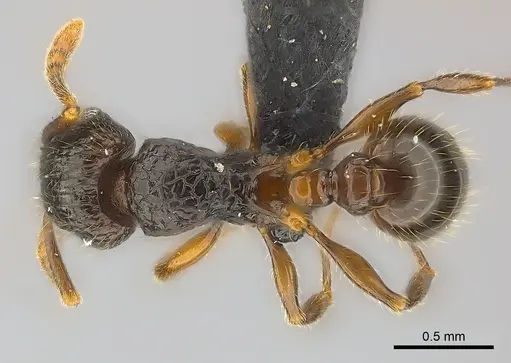
CASENT0117452
View on AntWeb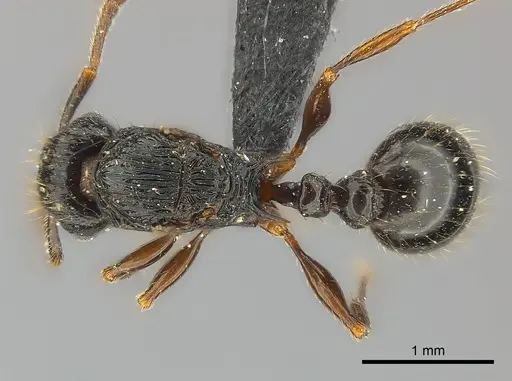
CASENT0124721
View on AntWeb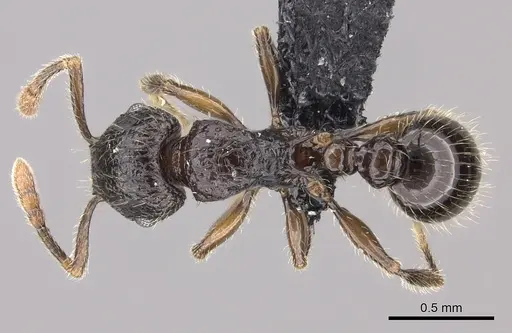
CASENT0163233
View on AntWeb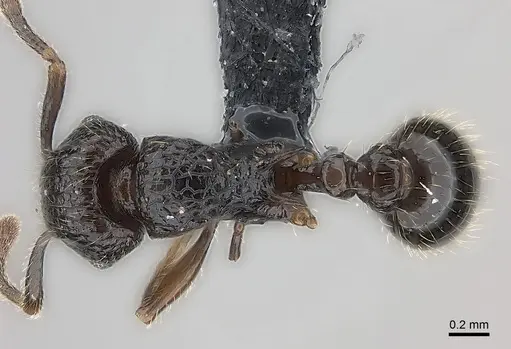
Literature
Loading distribution map...Loading products...