
Tetramorium ambanizana
- Sci. Name
- Tetramorium ambanizana
- Tribe
- Crematogastrini
- Subfamily
- Myrmicinae
- Author
- Hita Garcia & Fisher, 2012
- Distribution
- Found in 1 countries
Introduction
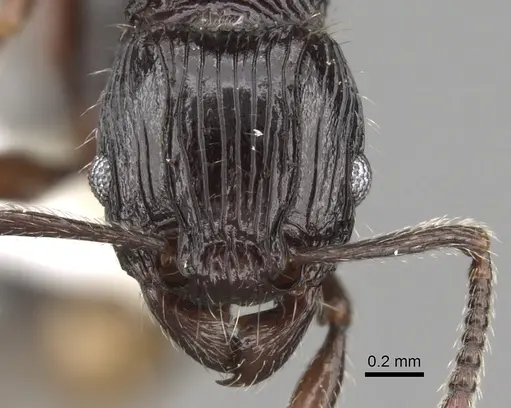
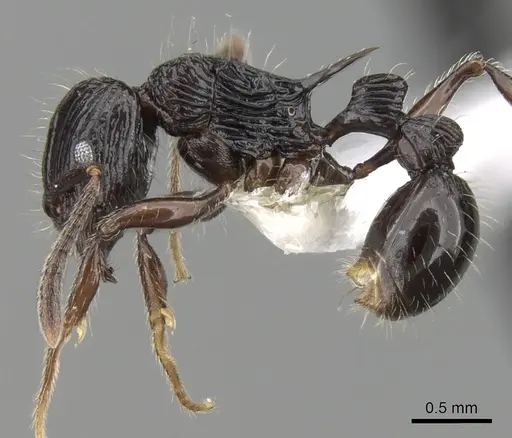
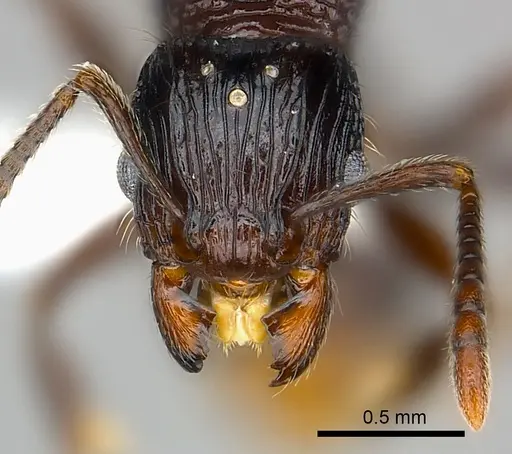
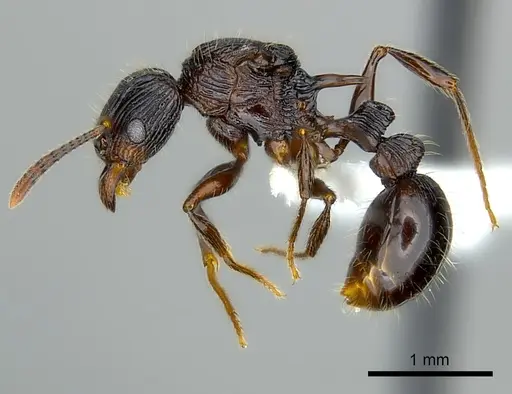
Tetramorium ambanizana is a tiny, dark ant known only from a single rainforest location in Madagascar, at 425 meters elevation . This species is defined by its extremely long propodeal spines, which are its most noticeable feature, though the workers are otherwise uniform dark brown to black . It belongs to the *Tetramorium tortuosum* species group and the *T. noeli* species complex, making it closely related to a few other rare Madagascar endemics . This ant is extremely poorly studied - just five workers have ever been collected. All specimens came from sifted leaf litter and rotten wood in the Ambanizana rainforest, suggesting they live hidden in the forest floor. Because no biological studies exist, most care advice is inferred from what's known about related *Tetramorium* species and the rainforest habitat.
Quick Summary
- Difficulty: Expert
- Origin & Habitat: Madagascar, only known from Ambanizana in the Toamasina region, at 425m elevation in rainforest leaf litter [1]
- Colony Type: Unconfirmed, no colony structure data exists. Based on typical *Tetramorium* patterns, likely single-queen colonies.
- Size & Growth:
- Queen: Unknown, no queen has been described [1]
- Worker: Body length data unavailable, only morphometric measurements from type series exist [1]
- Colony: Unknown, only five workers ever documented [1]
- Growth: Unknown
- Development: Unknown, estimate 6-10 weeks based on related *Tetramorium* species (No species-specific development data exists. Related *Tetramorium* species typically develop from egg to worker in 6-10 weeks at warm temperatures.)
- Antkeeping:
- Temperature: Warm rainforest conditions. Keep around 24-28°C with a gentle heat gradient. The precise optimum is unknown, but this range mimics the low-elevation Madagascar habitat [1].
- Humidity: High humidity preferred, keep the nest substrate consistently moist but not waterlogged, like damp forest floor. Aim for a gradient with one slightly drier area [1].
- Diapause: Likely no true diapause, Madagascar is tropical and temperatures remain warm year-round. A slight slow-down during cooler months may occur, but full hibernation is not necessary.
- Nesting: Small chambers work well. In nature they live in leaf litter and rotting wood, so a Y-tong nest or test tube setup with moist substrate suits them. Provide a covered, dark area [1].
- Behavior: Peaceful and non-aggressive. Workers are tiny and forage individually in leaf litter. They possess a modified stinger used to smear venom onto enemies rather than piercing flesh, this is a general trait of the Crematogastrini tribe. Escape prevention is critical due to their small size.
- Common Issues: extremely rare, this species is nearly impossible to obtain and has no captive care protocols, so keepers are pioneering husbandry, tiny size makes excellent escape prevention essential, no colony founding data, so success rates are unknown, limited genetic diversity if only a few colonies ever exist in captivity
Housing and Nest Setup
Since this species is known only from rainforest leaf litter at 425m elevation, they likely prefer humid, shaded conditions with access to small passages and chambers [1]. A Y-tong (AAC) nest or a moist test tube setup works well for small Myrmicinae. Keep the nest substrate damp but not waterlogged, provide both moist areas and slightly drier spots so workers can choose. Because the workers are extremely small, escape prevention must be airtight, use tight-fitting lids and fine mesh on any openings.
Feeding and Diet
Like most Tetramorium species, these ants are omnivorous and will accept both protein and sugar sources. Offer small live prey like fruit flies, pinhead crickets, or springtails. They likely also accept sugar water or honey water, though acceptance should be tested with small amounts. Feed small portions that can be consumed within a day or two to avoid mold issues in their humid setup.
Temperature and Humidity
As a Madagascar rainforest species, Tetramorium ambanizana prefers warm and humid conditions. Keep temperatures in the 24-28°C range, this is warmer than typical room temperature, so a small heating cable or mat may be needed [1]. Humidity should be high, around 70-85%. The nest substrate should feel consistently moist but never soggy. Good ventilation is important to prevent mold in humid setups.
Colony Founding
No documented colony founding exists for this species. The queen and founding behavior are completely unknown. If you obtain a founding queen, provide a small, humid test tube setup and do not disturb her until workers emerge. As no care data exists, you are pioneering husbandry.
Availability and Conservation
Tetramorium ambanizana is one of the rarest ants in the hobby, it has only been described once from five worker specimens and is endemic to a single location in Madagascar [1]. You are very unlikely to find this species available commercially. If you do obtain them, you are pioneering captive husbandry for a species with no established protocols. Always ensure any ants in your collection were legally acquired and never release non-native ants outdoors.
Frequently Asked Questions
How do I keep Tetramorium ambanizana ants?
This species requires warm, humid conditions similar to Madagascar rainforest. Keep them at 24-28°C with high humidity. A Y-tong nest or moist test tube setup works well. Feed small live prey and sugar water. Excellent escape prevention is essential due to their tiny size. Note that no captive care protocols exist, so you'll be pioneering [1].
What do Tetramorium ambanizana eat?
Like most Tetramorium, they are omnivorous. Offer small live prey like fruit flies, springtails, or tiny crickets. They will likely accept sugar water or honey water. Feed small amounts that can be consumed within a day or two.
How big do Tetramorium ambanizana colonies get?
Unknown, this species has only been documented from five workers ever. Related Tetramorium species typically form colonies of several hundred to a few thousand workers, but colony size for this species cannot be estimated [1].
Can I keep multiple Tetramorium ambanizana queens together?
Colony structure is unconfirmed for this species. Most Tetramorium are single-queen (monogyne), but some form multi-queen colonies. Do not combine unrelated queens unless you observe them accepting each other, queens may fight.
Do Tetramorium ambanizana ants sting?
They belong to the tribe Crematogastrini, which have a modified stinger used to smear venom onto enemies rather than piercing flesh. They are generally peaceful and not aggressive, but they can defend themselves by smearing venom. Individual reactions vary.
How long does it take for Tetramorium ambanizana to develop from egg to worker?
No species-specific development data exists. Based on related Tetramorium species, expect approximately 6-10 weeks from egg to first worker at optimal warm temperatures (around 26°C). This is an estimate.
Is Tetramorium ambanizana good for beginners?
No, this species is not recommended for beginners. It is extremely rare in the hobby with no established care protocols. Additionally, their small size and high humidity requirements make them challenging. Start with more common species like Tetramorium caespitum or other well-documented ants [1].
Do Tetramorium ambanizana need hibernation?
Likely no. As a Madagascar rainforest species from low elevation, they experience warm temperatures year-round. A slight reduction in activity during cooler months may occur, but a true diapause is not necessary [1].
Where is Tetramorium ambanizana found in the wild?
Only known from Ambanizana in eastern Madagascar, at 425 meters elevation in rainforest leaf litter. This makes them a true endemic, found nowhere else on Earth [1].
Why is Tetramorium ambanizana so rare?
This species is only known from five worker specimens collected in 2003. Many Madagascar ant species have extremely limited ranges due to the island's unique geography. More specimens may exist undiscovered, or they may genuinely be rare. This is why they are not available in the antkeeping hobby [1].
Report an Issue
The current care sheet is based fully on literature. See inconsistencies, or something that's incorrect? Please , it will be resolved after review from an admin. Contributing to the blogs tab also helps providing information, to make us be able to further improve the caresheets. Thank you for your support!
References

This caresheet is licensed under CC BY-SA 4.0 .
Community Blogs
CASENT0189238
View on AntWeb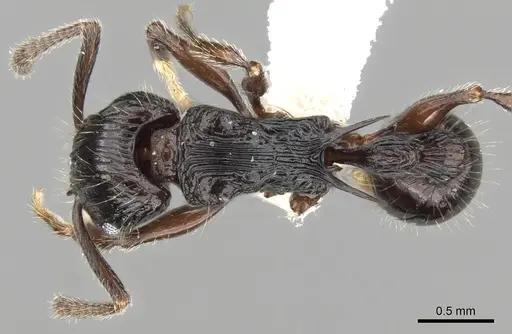
CASENT0217922
View on AntWeb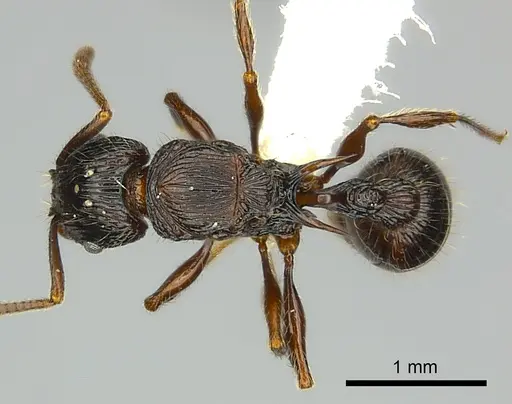
Literature
Loading distribution map...Loading products...