
Tetramorium amalae
- Sci. Name
- Tetramorium amalae
- Tribe
- Crematogastrini
- Subfamily
- Myrmicinae
- Author
- Sharaf & Aldawood, 2012
- Distribution
- Found in 1 countries
Introduction
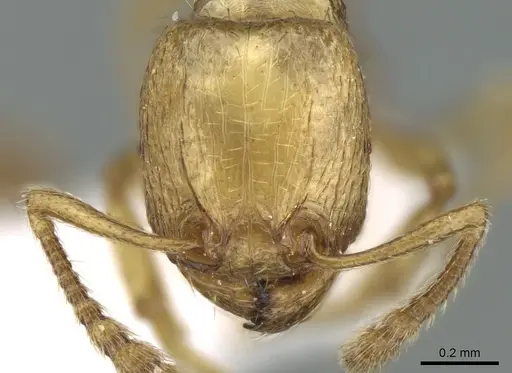
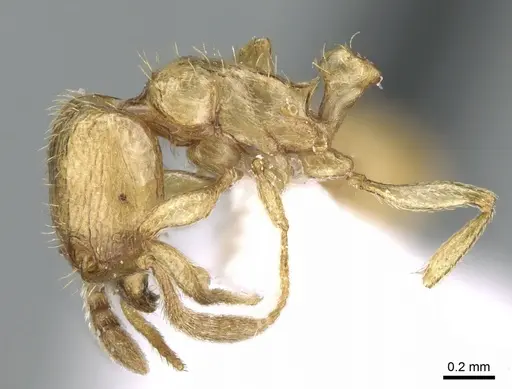
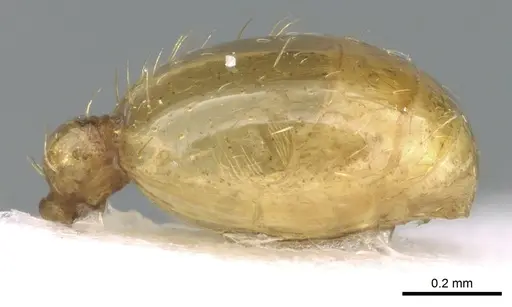
Tetramorium amalae is a tiny yellow ant from the highlands of Saudi Arabia. Workers measure just 2.55mm in total length . They are part of the T. shilohense group and have very reduced eyes with only two tiny light-sensitive units (ommatidia) on each side . The body is uniformly yellow, with fine sculpturing on the head and upper body, and covered in fine hairs . This species was discovered in the Al Bahah region at about 1800m elevation, collected from leaf litter in a relatively pristine forest area . Little is known about the biology of T. amalae - it was only described in 2012,and no captive colonies or behavioral studies exist . As a leaf-litter ant from a high-elevation Arabian forest, it likely has unique needs. For antkeepers, this means you are pioneering its husbandry, which requires patience and careful observation.
Quick Summary
- Difficulty: Expert
- Origin & Habitat: Highland Saudi Arabia (Al Bahah region, ~1800m elevation) in relatively pristine forest areas with sparse vegetation. Collected from leaf litter samples [2].
- Colony Type: Colony structure is unconfirmed, no data exists on whether this species is single-queen (monogyne) or multi-queen (polygyne).
- Size & Growth:
- Queen: Undescribed, no queen caste has been documented [1].
- Worker: 2.55mm total length [1].
- Colony: Unknown, no colony size data exists.
- Growth: Unknown, no development data exists for this species.
- Development: Unknown, no direct observations of colony development exist. (Based on typical Tetramorium patterns, egg to first worker may take 6-10 weeks at warm temperatures, but this is an estimate only.)
- Antkeeping:
- Temperature: No specific data exists. The Al Bahah region has moderate temperatures, and the high elevation suggests tolerance for cooler conditions than typical lowland Arabian ants. Start around 22-25°C and observe colony activity, provide a gentle temperature gradient if possible.
- Humidity: As a leaf-litter species, they likely prefer humid conditions with moist substrate. Keep the nest substrate consistently damp but not waterlogged, with some drier areas available for choice. Think forest floor conditions.
- Diapause: Unknown, no data on overwintering requirements exists. The Al Bahah region has mild winters, so they may not require a true diapause. Consider a cool period (15-18°C) for several weeks during winter if the colony shows reduced activity.
- Nesting: No captive nesting data exists. In the wild they inhabit leaf litter, suggesting they prefer enclosed spaces with high humidity. A small Y-tong, plaster, or soil nest would be appropriate starting points. Given their tiny size, chambers should be small and tight-fitting. Avoid acrylic nests.
- Behavior: Behavior is completely unstudied in captivity. Based on genus patterns and their tiny eyes, they are likely ground-nesting and rely more on chemical cues than vision. They are probably non-aggressive and may form moderate-sized colonies. Escape prevention is critical due to their very small size, standard test tube setups may need additional barriers. They likely forage in leaf litter and soil layers.
- Common Issues: no captive husbandry data exists, this is an entirely new species to antkeeping with no established protocols., tiny 2.55mm size means escapes are likely without fine mesh barriers and careful sealing., completely unknown diet, you will need to experiment with what they accept., no colony structure data, queen number and colony growth are unknown., risk of colony failure due to unknown environmental requirements, start with conservative conditions and adjust based on colony response.
Discovery and Taxonomy
Tetramorium amalae was described in 2012 by Sharaf, Aldawood, and Taylor [1]. The species name honors both Amal El Saadany (wife of the lead author) and Amal Aldawood (daughter of the second author) [2]. It belongs to the T. shilohense group, which is distributed across parts of Africa and the Arabian Peninsula. The type specimens were collected from leaf litter in the Amadan Forest, Al Bahah province, Saudi Arabia, at 1881m elevation [1]. This high-elevation collection is unusual because most Arabian Tetramorium species are found at lower elevations. The collection happened after a season of relatively low rainfall with sparse vegetation cover [2].
Identification and Morphology
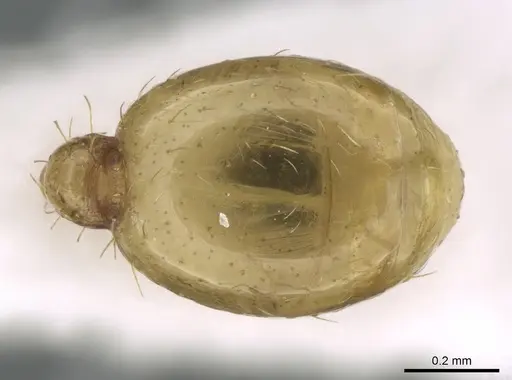
Workers are tiny, 2.55mm total length [1]. The most distinctive feature is the extremely reduced eyes: each side has only two minute ommatidia (light-sensitive units), one smaller than the other. This is among the smallest eye structures in the genus [2]. The body is uniformly yellow, without darker bands on the gaster. The head is longer than broad with convex sides, and the antennae have 12 segments. The propodeal spines are short and triangular, and the petiole node is rectangular in profile, longer than broad when viewed from above [1]. Numerous fine hairs cover all body surfaces, with shorter hairs on the head than on the mesosoma and gaster [2].
Natural Habitat and Collection
T. amalae is known only from the Al Bahah region of Saudi Arabia, specifically from Amadan Forest at 1881m and Wadi Turabah at 1739m [2]. These are relatively high elevations for the Arabian Peninsula. The ants were collected from leaf litter samples [1]. The collection occurred in May during the dry season after low rainfall [3]. This habitat suggests they prefer humid, shaded microenvironments with access to decaying organic matter. The pristine collection sites imply this species may be sensitive to disturbance.
Care Guidelines for This Species
Since this species has never been kept, you are pioneering its husbandry. Start with conservative conditions and adjust based on colony response. For housing, use a small nest, their tiny 2.55mm size means standard test tube setups may need additional escape prevention. A small Y-tong or plaster nest with tight-fitting connections works well. Avoid acrylic nests. Temperature should be in the 22-25°C range initially, with a gradient so ants can choose their preferred zone. Humidity is critical, keep the nest substrate consistently moist like a forest floor. For feeding, start with small protein sources like fruit flies, small mealworms, or pinhead crickets, plus sugar water or diluted honey. Monitor what they accept and remove uneaten food promptly. Be patient, growth may be slow.
Comparison to Related Species
T. amalae is most similar to Tetramorium dysderke from Nigeria but can be distinguished by its larger head and much smaller eyes [2]. It also resembles Tetramorium subcoecum from Kenya but differs in having visible antennal scrobes (versus none in T. subcoecum) and slightly different eye structure. Unlike West African species like T. jugatum which has multi-faceted eyes, T. amalae has only two ommatidia per side, one of the most reduced eye systems in the genus. This reduction likely goes along with a more cryptic, leaf-litter dwelling lifestyle where visual cues are less important than chemical communication. For antkeepers, this means your colony will likely respond more to pheromone trails than visual cues when foraging.
Frequently Asked Questions
How long does it take for Tetramorium amalae to develop from egg to worker?
This is unknown, no captive colonies or development studies exist for this species. Based on typical Tetramorium patterns, expect about 6-10 weeks from egg to first worker at warm temperatures (around 24-26°C), but this is an estimate only. Patience is essential.
What do Tetramorium amalae ants eat?
Diet is completely unconfirmed for this species. As a leaf-litter ant, they likely forage for small invertebrates and may tend aphids for honeydew. Start by offering small live prey like fruit flies, small mealworms, or pinhead crickets, along with sugar water or diluted honey. Monitor what they accept and adjust.
Are Tetramorium amalae good for beginners?
No, this species is not recommended for beginners. It was only described in 2012 and has never been kept in captivity. No established care protocols exist, so you would be pioneering its husbandry. This makes it interesting for experienced antkeepers but unsuitable for those who need reliable guidance.
Do Tetramorium amalae ants sting?
Tetramorium belongs to the Myrmicinae subfamily, which includes species with functional stingers. However, no specific data exists on whether this species can sting or its pain level. Most small Tetramorium species are not aggressive and their stings are mild if present.
How big do Tetramorium amalae colonies get?
Colony size is unknown, no wild colony data exists for this species. Based on related Tetramorium species, colonies likely reach several hundred workers at maximum, but this is speculative. The tiny worker size (2.55mm) suggests they may form moderate-sized colonies rather than huge ones.
Can I keep multiple Tetramorium amalae queens together?
This is unknown, no data exists on colony structure for this species. The colony type (single-queen vs multi-queen) has not been documented. Do not attempt combining unrelated queens until more is known about their social structure.
What temperature do Tetramorium amalae need?
No specific temperature requirements exist. The Al Bahah region has moderate temperatures, and the high elevation (1800m+) suggests tolerance for cooler conditions than typical lowland ants. Start around 22-25°C and observe colony behavior. Provide a gentle gradient if possible.
Do Tetramorium amalae need hibernation?
Diapause requirements are unknown. The Al Bahah region has mild winters, so a true hibernation may not be necessary. However, a cool period (15-18°C) for several weeks during winter may be beneficial if the colony shows reduced activity. Monitor your colony's seasonal behavior.
What is the best nest type for Tetramorium amalae?
No captive nesting data exists. As a leaf-litter species, they likely prefer humid, enclosed spaces. A small Y-tong or plaster nest would be appropriate. Given their tiny 2.55mm size, chambers should be small and tight-fitting. Escape prevention is critical.
Why are my Tetramorium amalae dying?
Without established protocols, colony failure is likely common. Potential issues include: temperature too high or too low, humidity too dry or too wet, unsuitable food, or stress from handling. Start with conservative conditions and document what works. Wild-caught colonies may also carry parasites that affect survival in captivity.
Where is Tetramorium amalae found in the wild?
This species is known only from the Al Bahah region of Saudi Arabia, specifically from Amadan Forest and Wadi Turabah at elevations around 1700-1800 meters. It is the only known Tetramorium species endemic to Saudi Arabia [2].
Report an Issue
The current care sheet is based fully on literature. See inconsistencies, or something that's incorrect? Please , it will be resolved after review from an admin. Contributing to the blogs tab also helps providing information, to make us be able to further improve the caresheets. Thank you for your support!
References

This caresheet is licensed under CC BY-SA 4.0 .
Community Blogs
CASENT0906353
View on AntWeb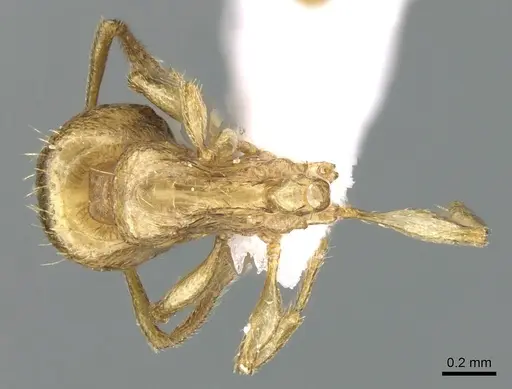
Literature
Loading distribution map...Loading products...