
Tetramorium alternans
- Sci. Name
- Tetramorium alternans
- Tribe
- Crematogastrini
- Subfamily
- Myrmicinae
- Author
- Santschi, 1929
- Distribution
- Found in 1 countries
Introduction
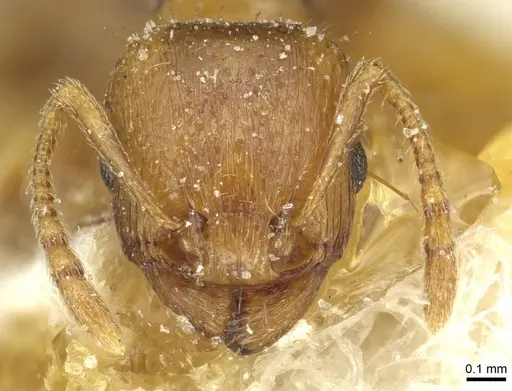
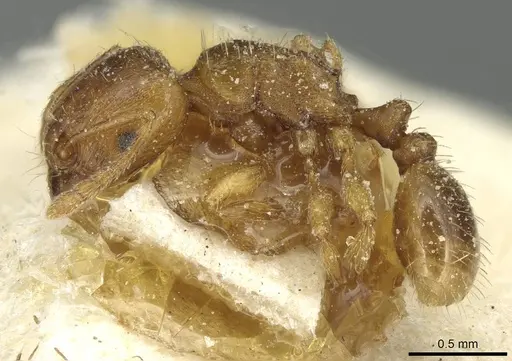
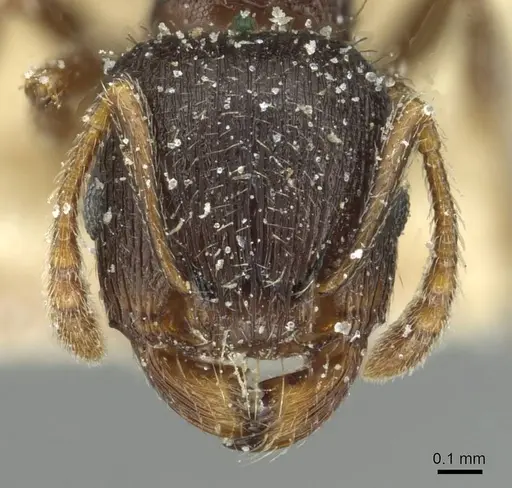
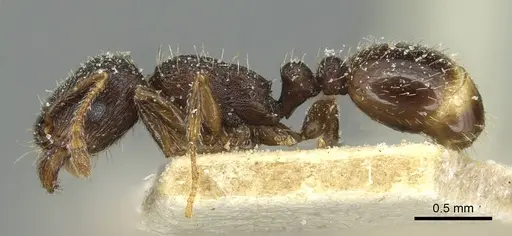
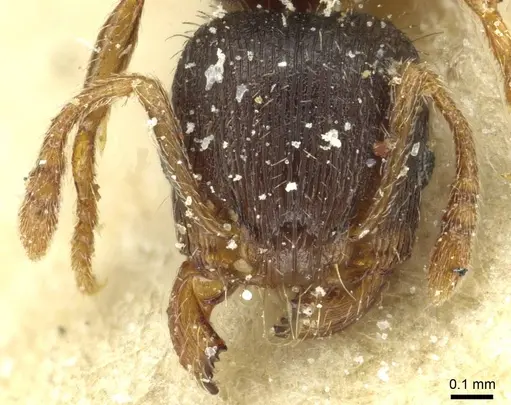
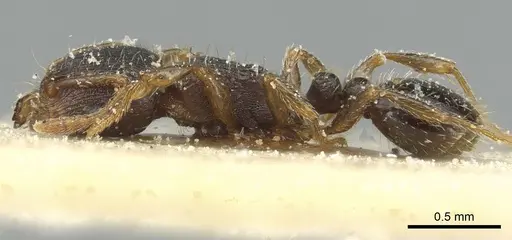
Tetramorium alternans is a small ant species native to the Mediterranean coast of North Africa, found in Morocco, Algeria, and Tunisia . Workers have a nearly square head, very short antennae scapes, small eyes, and a uniform dark greyish-black to black body . They lack the psammophore (a sand-carrying structure) seen in some related species, and their body surface is finely sculptured . Total body length hasn't been directly measured in the literature, but based on the Tetramorium caespitum group the workers are roughly 2–3 mm and queens around 4–5 mm. This species belongs to the Tetramorium caespitum species group, specifically the T. chefketi complex . What makes T. alternans interesting is its restricted range: it is endemic to the dry, warm coastal and inland habitats of Northwest Africa and has not spread through human commerce. Unlike common Tetramorium species like pavement ants, T. alternans is rarely available in the hobby. The queens share the same dark coloration and are only slightly larger than workers .
Quick Summary
- Difficulty: Medium
- Origin & Habitat: Mediterranean coast of Northwest Africa (Morocco, Algeria, Tunisia) – dry, warm coastal and inland areas with rocky or stony soils [1][2][3]
- Colony Type: Unconfirmed – likely monogyne (single queen) based on typical Tetramorium patterns, but not specifically documented
- Size & Growth:
- Queen: ~4–5 mm (inferred from Tetramorium genus, total length not directly measured)
- Worker: ~2–3 mm (inferred from Tetramorium genus, total length not directly measured)
- Colony: Unknown – related Tetramorium species reach several hundred workers
- Growth: Moderate (based on genus patterns)
- Development: 6–10 weeks at optimal temperature (estimated from related Tetramorium species) (Development time and exact timing for T. alternans have not been confirmed)
- Antkeeping:
- Temperature: Keep at 22–26 °C – they come from warm Mediterranean climates and need consistent heat [2]
- Humidity: Low to moderate – dry to semi-dry conditions typical of their North African habitat. Allow substrate to dry partially between waterings
- Diapause: Likely a cool-period slowdown rather than deep hibernation. If the colony slows down in winter, keep in a cooler room (15–18 °C) for 2–3 months, but specific data are lacking
- Nesting: In nature they nest in soil and under stones in dry habitats [1]. A Y‑tong (AAC) nest or plaster nest works well – keep the nest material relatively dry, with a small water channel for humidity control
- Behavior: These are small, generally peaceful ants that forage on the ground. Workers are active and will search for small prey and sugar sources. Their tiny size means they can escape through very tiny gaps – use fine mesh (≤0.5 mm openings) on all ventilation and seal all cracks. Workers have a modified stinger that smears venom rather than injecting it, but they are not dangerous to humans. Disturbing the nest may cause them to take defensive posture but they rarely bite.
- Common Issues: tiny size makes escape prevention critical – use fine mesh and seal all gaps, dry habitat needs can lead to overwatering if you assume they need high humidity, slow founding phase – queens may stay hidden for weeks without visible activity, limited availability in the antkeeping hobby – few suppliers carry this species, similar morphology to related Tetramorium species makes identification tricky
Housing and Nest Setup
For T. alternans, match their natural Mediterranean dry habitat. A Y‑tong (aerated concrete) nest works well – it provides tight chambers that tiny ants need and lets you control humidity accurately. Plaster nests are also fine. Keep the nest material relatively dry, use only a small water channel or reservoir to provide slight moisture. Avoid overwatering, as these ants come from arid areas. For the outworld, a simple plastic container with a thin layer of sand or soil mix will work. Use fine mesh (≤0.5 mm holes) on all vents because workers are so small they can slip through standard mesh. Place the setup away from direct sunlight and drafts [2].
Feeding and Diet
Like most Tetramorium, T. alternans is omnivorous. Offer sugar water (1:1 ratio) or diluted honey as a constant energy source. For protein, small live prey works best: fruit flies, pinhead crickets, and small mealworms are appropriately sized. Because these ants are tiny, even small insects may be too large – cut prey into pieces or culture your own tiny insects like springtails. Feed protein 2–3 times per week and remove any uneaten prey after 24 hours to prevent mold. Commercial ant foods can supplement but should not replace fresh prey. Always provide a drinking water source – a small cotton ball in a test tube works well [4].
Temperature and Seasonal Care
T. alternans originates from the warm Mediterranean coast of North Africa, so they need temperatures around 22–26 °C to thrive. Use a small heating cable or mat on one side of the nest to create a temperature gradient – this lets the ants choose their preferred spot. Place the heating on top of the nest, not underneath, to prevent the nest from drying out too fast. During winter, if your room temperature drops significantly, you can reduce to 15–18 °C for 2–3 months to mimic their natural seasonal pattern. This is not true hibernation but a period of reduced activity. Watch the colony: if workers become sluggish and cluster, temperatures may be too low. If they avoid the heated area, it’s too warm. Stable temperatures in the optimal range yield the best growth [2].
Colony Founding and Growth
Starting a T. alternans colony requires patience. The queen likely seals herself in a claustral chamber and raises her first workers (nanitics) using stored fat reserves – she will not leave to forage during founding. Expect 4–8 weeks before you see any workers, sometimes longer depending on temperature. Keep the founding setup dark and undisturbed. Once the first tiny nanitics appear, begin offering very small amounts of sugar water and tiny prey like fruit flies. Colony growth is moderate: it may take several months to reach 20–30 workers and a year or more to reach 100+. The queen can live many years, and colonies may eventually number several hundred workers in optimal conditions. Resist the urge to check on the founding colony too often – disturbance can cause the queen to eat the brood or abandon the nest [1].
Handling and Observation
These tiny ants are fascinating to watch but require careful handling. Because of their small size, they are excellent escape artists – even standard ant mesh may not contain them. Use fine mesh (≤0.5 mm holes) on all ventilation and regularly check lid seals. When observing, avoid shaking or disturbing the nest, they are sensitive to vibrations. For photography, use red light or brief flash exposures to minimize stress. Workers have a modified, spatulate stinger used to smear venom onto enemies (a trait of the tribe Crematogastrini). They are not dangerous to humans and will rarely attempt to sting. If you need to move a colony, wait until it is well established (at least 50 workers) and transfer the entire nest material rather than forcing ants into a new setup. [4]
Frequently Asked Questions
How long does it take for Tetramorium alternans to have first workers?
Expect 6–10 weeks from founding to first workers (nanitics) emerging, depending on temperature. Keep the founding setup at around 24–26 °C for the fastest development. Some colonies may take longer – patience is key during the claustral foundling phase [1].
Can I keep Tetramorium alternans in a test tube?
Yes, test tubes work well for founding colonies. Use a small test tube with a water reservoir sealed with cotton – keep it relatively dry because these ants prefer arid conditions. Once the colony reaches 30–50 workers, consider moving them to a proper formicarium with more space [4].
Do Tetramorium alternans ants sting?
They have a modified, spatulate stinger used to smear venom onto enemies rather than piercing skin. Due to their tiny size, the sting is barely noticeable to humans. They are not considered dangerous or aggressive.
What temperature do Tetramorium alternans need?
Keep them at 22–26 °C. A small heating cable on part of the nest creates a gradient. They come from warm Mediterranean climates and need consistent heat – avoid temperatures below 20 °C for extended periods [2].
Are Tetramorium alternans good for beginners?
They are moderate difficulty – not the easiest but not challenging once you understand their dry habitat needs. The main challenges are their tiny size (escape prevention) and the relatively slow founding phase. If you’re patient and attentive to humidity levels, they can be rewarding [1].
How big do Tetramorium alternans colonies get?
Based on related species, expect colonies to reach several hundred workers over several years. The exact maximum is not documented for this species, but Tetramorium colonies are typically not as large as some other Myrmicinae – think 200–500 workers as a typical mature colony size.
Do Tetramorium alternans need hibernation?
They likely need a cooler period during winter but not true hibernation. If your room temperature drops significantly, you can reduce to 15–18 °C for 2–3 months during winter. This helps maintain natural seasonal rhythms [2].
What do Tetramorium alternans eat?
They accept sugar water, honey, and small protein sources like fruit flies, pinhead crickets, and small mealworms. Cut prey into appropriate sizes because they are tiny. Offer protein 2–3 times per week and keep sugar water available constantly [4].
Why are my Tetramorium alternans dying?
The most common causes are: overhumidity (keep nest dry), poor escape prevention (they’re tiny), temperature too low, or disturbance during founding. Check that your setup matches their dry Mediterranean habitat needs. Also ensure you are not offering prey that is too large [1].
Can I keep multiple Tetramorium alternans queens together?
Not recommended – combining unrelated queens of this species hasn’t been documented and likely results in fighting. Start with a single queen colony (monogyne) as is typical for this genus [1].
Report an Issue
The current care sheet is based fully on literature. See inconsistencies, or something that's incorrect? Please , it will be resolved after review from an admin. Contributing to the blogs tab also helps providing information, to make us be able to further improve the caresheets. Thank you for your support!
References

This caresheet is licensed under CC BY-SA 4.0 .
Community Blogs
CASENT0904815
View on AntWeb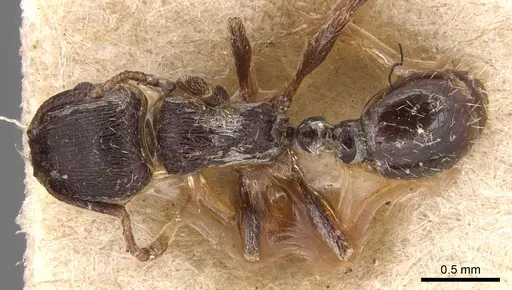
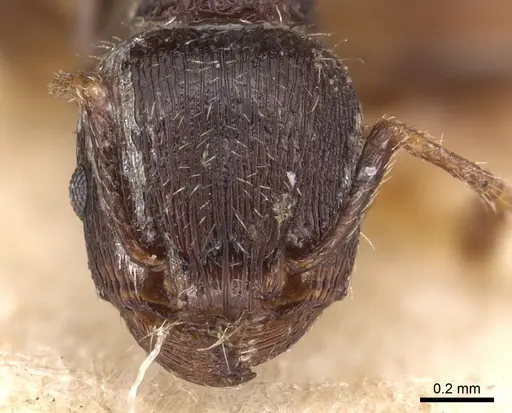
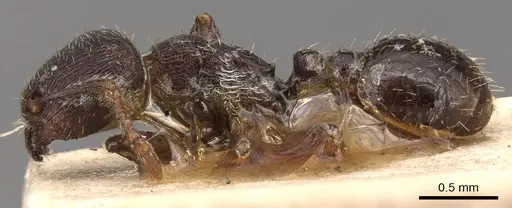
CASENT0913993
View on AntWeb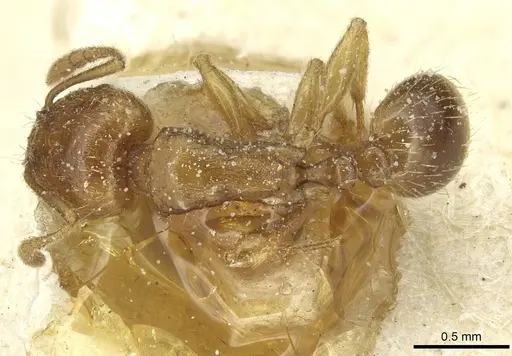
CASENT0913995
View on AntWeb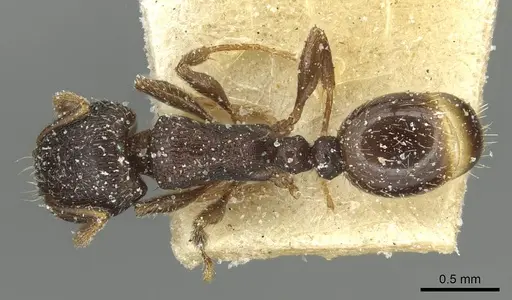
CASENT0913999
View on AntWeb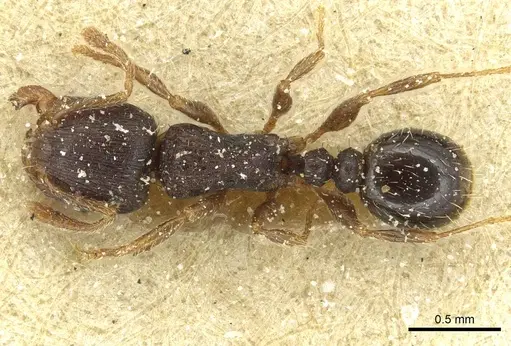
Literature
Loading distribution map...Loading products...