
Tetramorium alpestre
- Sci. Name
- Tetramorium alpestre
- Tribe
- Crematogastrini
- Subfamily
- Myrmicinae
- Author
- Steiner <i>et al.</i>, 2010
- Distribution
- Found in 7 countries
Introduction
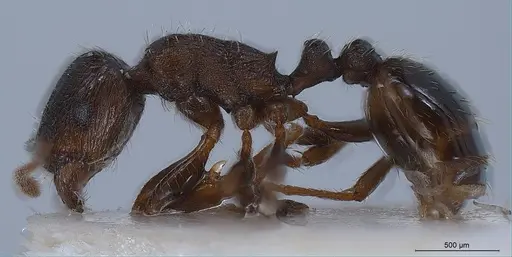
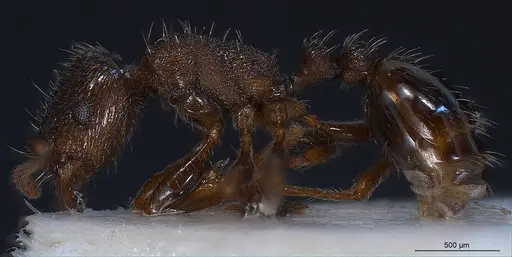
Tetramorium alpestre is a small, dark brown ant that lives in the high mountains of Europe. Workers are about 3-4 mm long (inferred from the Tetramorium genus) with a stocky build and the two small spines on the propodeum that are typical for the genus . This species belongs to the Tetramorium caespitum complex, a group of look-alike ants that were only properly sorted out in 2010 . What makes T. alpestre unique is its social setup: it's the only species in the complex that forms supercolonies with multiple egg-laying queens and no aggression between workers from different nests . It lives only above 900 m in the Alps, Pyrenees, and other mountain ranges, making it a true alpine specialist . It defends itself by smearing venom rather than stinging, using a modified spatulate stinger (subfamily Myrmicinae, tribe Crematogastrini).
Quick Summary
- Difficulty: Medium
- Origin & Habitat: Alpine regions of Central and Southern Europe: Alps (Austria, France, Italy, Switzerland), Pyrenees, Apennines, Dinaric Alps, Corsica, and Monti Nebrodi [2][3]. Typical habitats are south-facing non-forested alpine meadows, subalpine dwarf-shrub heathland, dry pastures, stony embankments, and block fields [2]. Nests are often under stones, but also in moss, rootage, and dead wood [2].
- Colony Type: Facultatively polygynous – colonies can have multiple egg-laying queens. In some populations (e.g., Carinthia, Austria) they form supercolonies where workers show no aggression towards individuals from other nests and can move freely between nests that are many kilometers apart [1][2][3].
- Size & Growth:
- Queen: Approximately 6-7 mm (inferred from the Tetramorium genus, no total length data available)
- Worker: Approximately 3-4 mm (inferred from the Tetramorium genus, no total length data available)
- Colony: Unknown for captive colonies, wild supercolonies can reach very high local abundance with nest densities up to 8 nests per 100 m² [4]
- Growth: Moderate – inferred from genus patterns
- Development: Estimated 6-10 weeks based on related Tetramorium species (no confirmed data) (Development is temperature-dependent – as a cool-climate species, growth may be slower than for tropical ants)
- Antkeeping:
- Temperature: Keep cool – aim for 15-22°C. This is the least heat-loving species in the T. caespitum complex, with an average nest-site temperature of only 8.6°C [2][3]. Standard room temperature may be too warm, consider a cool room or a thermoelectric cooler. Never exceed 25°C.
- Humidity: Moderate – these ants come from dry alpine meadows and like a nest that is slightly moist but not wet. Allow the substrate to dry out between waterings and ensure good ventilation to prevent mold.
- Diapause: Yes – required. As a true alpine species, colonies need a winter dormancy period of 3–4 months at 5–10°C (inferred from high-altitude origin)
- Nesting: Y-tong (AAC) or plaster nests work well. The species naturally nests under stones in rocky alpine soil, so provide a nest with some dry areas and avoid overly humid conditions. A naturalistic setup with stones on top of substrate mimics their natural environment.
- Behavior: Generally peaceful and not aggressive towards colony members. In supercolonial populations, workers show no aggression towards workers from other nests – they can move freely between nests kilometers apart [1]. They forage actively for small insects and honeydew. Escape risk is moderate – they are small ants but not particularly known for escaping, use standard barrier methods. They defend by smearing venom with a modified stinger (smear defense, typical of their tribe Crematogastrini). They are host to the social parasites Strongylognathus testaceus, Strongylognathus alpinus, and Tetramorium schneideri [2][3][5].
- Common Issues: temperature stress is the biggest risk – these ants are adapted to cool alpine conditions and can die if kept above 25°C, overwintering failure – colonies need a proper cold period (3-4 months at 5-10°C) to survive and reproduce, mold from excessive humidity – they prefer drier conditions than many ants, good ventilation is key, slow colony growth compared to tropical species may frustrate beginners, difficulty obtaining this species – it is not commonly available in the ant trade
Temperature and Cooling
Temperature is the most critical factor for this alpine species. Tetramorium alpestre is the least heat-loving species in the T. caespitum complex, with an average nest-site temperature (TAS) of only 8.6°C [2][3]. In nature they live above 900 m and often above the treeline, where summer temperatures rarely exceed 20°C. In captivity, keep the nest area between 15-22°C. Standard room temperature (20-25°C) may be too warm – watch for workers clustering away from the warmest parts of the nest. If needed, use cooling methods like placing the colony in a cool room, using a thermoelectric cooler, or keeping it in a basement or garage. Never expose them to temperatures above 25°C, as this can cause stress or death. They also require a winter dormancy period – plan for 3-4 months of cold at 5-10°C each year [2][3].
Housing and Nest Setup
Y-tong (AAC) nests or plaster nests work well. The key is to provide conditions that mimic their alpine meadow habitat – relatively dry with good ventilation. Unlike tropical ants that need high humidity, Tetramorium alpestre prefers the drier conditions found in high-altitude grasslands. Use a nest with multiple chambers but avoid overly humid conditions that can lead to mold. A naturalistic setup can also work – a container with soil substrate and flat stones on top mimics their natural nesting sites under stones [2][3]. For the outworld, a simple plastic container is fine, these ants are not particularly known for escaping. Use standard barrier methods like fluon on the rim. Since they forage, provide a foraging area where you can offer food.
Feeding
Like other Tetramorium, Tetramorium alpestre is an omnivore that accepts both protein and sugar sources. Offer sugar water, honey, or diluted maple syrup as a constant energy source. For protein, provide small insects like fruit flies, small mealworms, or other appropriately-sized prey. In the wild, they forage for small invertebrates and also tend aphids for honeydew. Feed protein 2-3 times per week, removing any uneaten prey after 24 hours. Sugar water should be available at all times, changed every few days. Since this is a high-altitude species with a likely lower metabolic rate, avoid overfeeding – they may not consume as much as tropical ants.
Winter Dormancy (Diapause)
Proper hibernation is essential for this alpine species. In the wild, colonies experience snow cover and freezing temperatures for several months each year at their high-altitude nesting sites [2][3]. In captivity, you must provide a winter dormancy period of 3-4 months. Around October-November, gradually reduce the temperature over 1-2 weeks to around 5-10°C, then maintain this range through winter. You can use a refrigerator, cold garage, or basement that stays consistently cool. Do not feed during dormancy. In spring, gradually warm the colony back to room temperature over 1-2 weeks and resume feeding. Colonies that do not receive proper dormancy may have reduced longevity or fail to produce alates in subsequent seasons.
Colony Structure and Supercolonies
Tetramorium alpestre has an unusual social structure. It is the only species in the T. caespitum/impurum complex known to form functionally polygynous nests (multiple egg-laying queens) and supercolonies [1]. In supercolonial populations, workers show no aggression toward individuals from other nests, even when those nests are many kilometers apart. Workers can freely move between nests, creating a massive interconnected colony network. This is achieved through a lack of nestmate recognition aggression – the chemical cues that normally allow ants to distinguish nestmates from intruders are absent or ignored. In captivity, your colony may be either single-queen or multi-queen depending on the source. Either type can thrive, but multi-queen colonies may grow faster initially. The supercolonial structure means these ants are highly tolerant of conspecifics from the same population – unlike most ants, introducing workers from different T. alpestre colonies may not cause aggression. This species is also the host of several social parasites: Strongylognathus testaceus, Strongylognathus alpinus, and Tetramorium schneideri [2][3][5].
Frequently Asked Questions
Is Tetramorium alpestre a good beginner ant?
Not ideal for beginners. This is a specialized alpine species with specific temperature requirements – they need cool conditions (15-22°C) that can be harder to maintain than standard room temperature. They also require a proper winter dormancy period. If you are new to antkeeping, start with easier species like Lasius niger or Tetramorium caespitum. Experienced keepers who can provide the cool conditions will find it rewarding.
What temperature do Tetramorium alpestre ants need?
Keep them cool – aim for 15-22°C in the nest area. This alpine species is the least heat-loving in the Tetramorium caespitum complex, with an average nest-site temperature of 8.6°C [2][3]. Standard room temperature may be too warm. Never exceed 25°C.
Do Tetramorium alpestre ants need hibernation?
Yes, absolutely. As a true alpine species from elevations above 900 m, they require a winter dormancy period of 3-4 months each year. Gradually reduce temperatures to around 5-10°C in late autumn and maintain this through winter. This is essential for their health and for producing alates in the breeding season.
How long does it take for Tetramorium alpestre to develop from egg to worker?
Exact development time has not been documented, but based on related Tetramorium species, expect approximately 6-10 weeks from egg to first worker at optimal (cool) temperatures. Development will be slower than tropical ants due to the species' cool-climate adaptation. Be patient – alpine species naturally develop more slowly.
Can I keep multiple Tetramorium alpestre queens together?
Yes, this species is facultatively polygynous, meaning colonies can have multiple egg-laying queens [1]. Some populations form supercolonies with many queens and no aggression between workers from different nests. If you obtain multiple founding queens, they can potentially be kept together, though monitor for aggression initially.
What do Tetramorium alpestre ants eat?
They are omnivores. Offer sugar water, honey, or maple syrup as a constant energy source. For protein, provide small insects like fruit flies, small mealworms, or other appropriately-sized prey. Feed protein 2-3 times per week. Remove uneaten food after 24 hours to prevent mold.
How big do Tetramorium alpestre colonies get?
Colony size in captivity is not well documented. In the wild, supercolonial populations can reach very high abundance with nest densities up to 8 nests per 100 m² at certain altitudes [4]. A mature colony likely numbers in the hundreds to low thousands of workers. Growth is moderate – this is not a fast-growing species.
Do Tetramorium alpestre ants sting?
No, they do not sting in the typical sense. They belong to the subfamily Myrmicinae and tribe Crematogastrini, which use a modified spatulate stinger to smear venom onto enemies (smear defense). They may bite if threatened.
Why is my Tetramorium alpestre colony dying?
The most likely cause is temperature stress – these ants are adapted to cool alpine conditions and can die if kept too warm (above 25°C). Other common issues include improper hibernation (they need 3-4 months of cold each winter), excessive humidity causing mold, or overfeeding. Check your temperatures first and make sure they are getting a proper winter dormancy period.
Where can I get Tetramorium alpestre?
This is not a common species in the antkeeping hobby. It is a specialized alpine ant with a limited distribution in the mountains of Central and Southern Europe. You may need to find a specialized European antkeeper or breeder. Wild collection is not recommended as this is a high-altitude species with specific habitat requirements that are difficult to replicate.
Report an Issue
The current care sheet is based fully on literature. See inconsistencies, or something that's incorrect? Please , it will be resolved after review from an admin. Contributing to the blogs tab also helps providing information, to make us be able to further improve the caresheets. Thank you for your support!
References

This caresheet is licensed under CC BY-SA 4.0 .
Community Blogs
ANTWEB1008485
View on AntWeb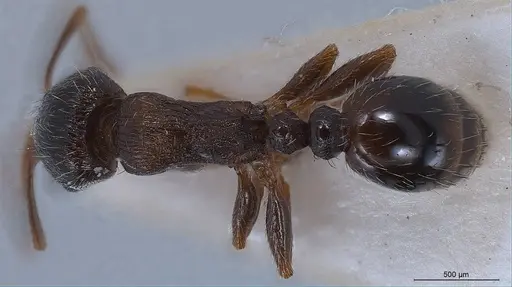
Literature
Loading distribution map...Loading products...