
Tetramorium akermani
- Sci. Name
- Tetramorium akermani
- Tribe
- Crematogastrini
- Subfamily
- Myrmicinae
- Author
- Arnold, 1926
- Distribution
- Found in 3 countries
Introduction
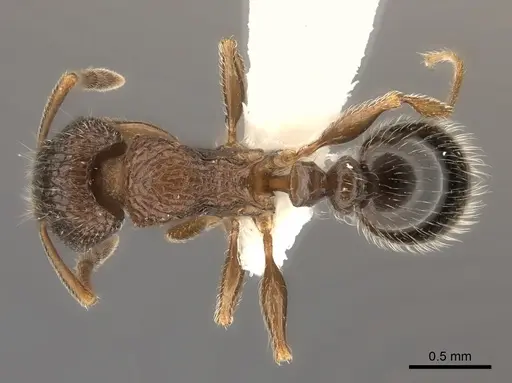
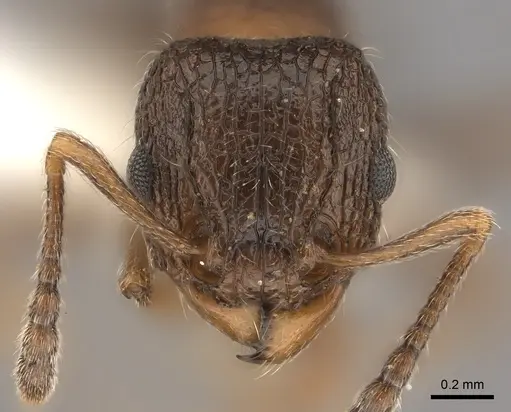
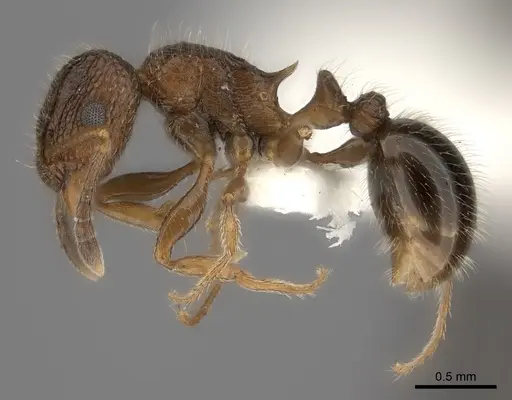
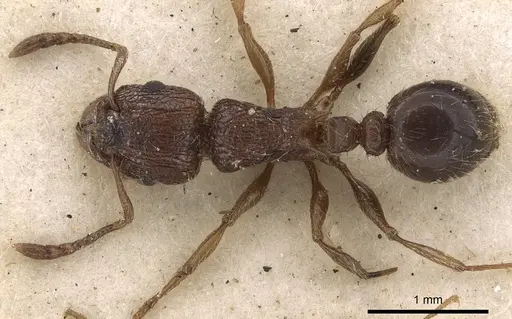
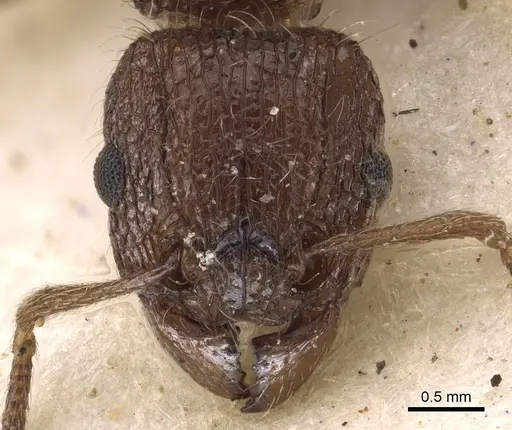
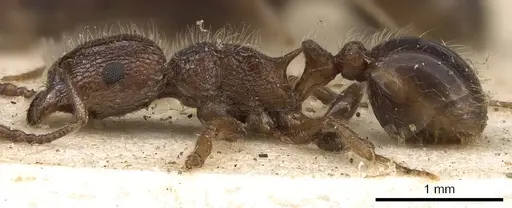
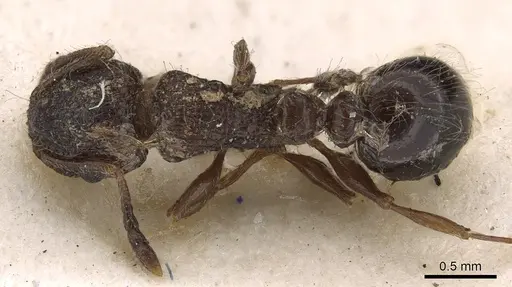
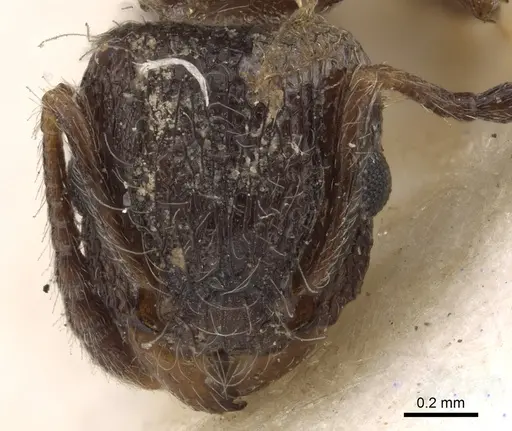
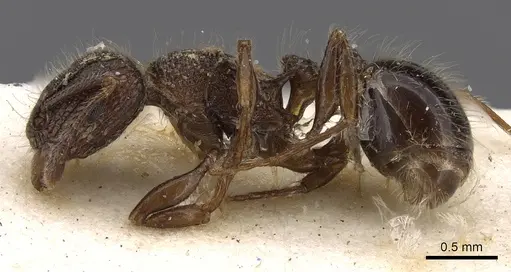
Tetramorium akermani is a small, dark brown to blackish brown ant native to southern Africa, found in South Africa and Eswatini . Workers measure 3.7-4.0 mm in total length, making them a compact species built for ground-level living . They are ground-foragers and nest at the base of grass tufts in habitats like grassland, fynbos, and Afromontane forest . What sets this ant apart from its relatives is the dense covering of long, soft, pointed hairs on its back - a trait that distinguishes it from all other species in its group .
Quick Summary
- Difficulty: Medium
- Origin & Habitat: Native to South Africa and Eswatini in the Afrotropical region. Found in diverse habitats including grassland, fynbos, and Afromontane forest. Workers forage on the ground and nests are typically established at the base of grass tufts [2].
- Colony Type: Colony structure is unconfirmed. Based on typical Tetramorium patterns, likely single-queen (monogyne) colonies, though this has not been directly documented for this species.
- Size & Growth:
- Queen: Unknown, no data available.
- Worker: 3.7-4.0 mm total length [1]
- Colony: Unknown, no colony size data available.
- Growth: Moderate, estimated
- Development: 6-10 weeks, estimated based on related Tetramorium species (Development time is estimated as this specific species has not been studied in captivity. Related Tetramorium species typically develop from egg to worker in 6-10 weeks at optimal temperatures.)
- Antkeeping:
- Temperature: Keep at 20-26°C. Based on the warm climate of its native South African habitat, this species likely prefers warmer conditions. Room temperature (22-24°C) should work well [2].
- Humidity: Moderate humidity preferred, think fynbos and grassland conditions. Keep the nest substrate lightly moist but allow some drying between waterings. Avoid waterlogging.
- Diapause: Unlikely required, this species comes from a subtropical climate where temperatures remain warm year-round. No documented diapause requirement [2].
- Nesting: Natural nesting occurs at the base of grass tufts and in soil. In captivity, a test tube setup works well for founding colonies. For established colonies, a Y-tong (AAC) nest or plaster nest with soil-filled chambers mimics their natural ground-nesting behavior [2].
- Behavior: This is a ground-foraging species that actively searches for food on the substrate surface. Workers are small but agile, and while not particularly aggressive, they will defend their nest if threatened. Escape prevention should be moderate, their small size means they can squeeze through small gaps, so ensure barrier methods are in place. Foraging is likely diurnal. As a member of Myrmicinae, their primary defense is smearing venom rather than piercing flesh, they have a modified stinger for this.
- Common Issues: limited captive data means care requirements are estimated from related species, small size requires good escape prevention, they can slip through tiny gaps, humidity management is important, too wet causes mold, too dry stresses the colony, wild-caught colonies may carry parasites that can be difficult to detect, founding behavior is unconfirmed, so patience is needed, queens may take time to start laying
Housing and Nest Setup
For founding colonies, a standard test tube setup works well. Fill a test tube about one-third with water, plug with a cotton ball, and place the queen in the tube. Keep the tube in a dark, quiet place. For established colonies, a Y-tong (AAC) nest or plaster nest provides good visibility and humidity control. Add a shallow foraging area where you can place food. Since this is a ground-nesting species, filling some chambers with loose soil can help them feel at home. Escape prevention is important, use fluon or talcum powder barriers on the foraging area [2].
Feeding and Diet
Tetramorium akermani is a generalist forager that likely collects both protein and carbohydrates in the wild. In captivity, offer protein-rich foods like small insects (fruit flies, small crickets, mealworms) and sugar sources such as honey water or sugar water. Since they are ground foragers, place food directly on the substrate in the foraging area. Feed small amounts every 2-3 days and remove uneaten food to prevent mold. A constant sugar source is recommended, a small dish of honey water or sugar water should always be available [2].
Temperature and Seasonal Care
This species comes from the warm climate of South Africa, so keep temperatures in the 20-26°C range. Room temperature (roughly 22-24°C) is typically ideal. They do not require hibernation or diapause since their native habitat does not experience cold winters. Avoid temperatures below 18°C for extended periods, as this can stress the colony. No special winter care is needed, maintain normal feeding and temperatures year-round. If your room is cooler than 20°C, a small heating mat on one side of the nest can help, but always provide a temperature gradient so ants can move to their preferred area [2].
Colony Development and Growth
The queen likely relies on stored reserves if she is claustral, but founding behavior is unconfirmed for this species. She may take weeks to start laying eggs. The first workers (nanitics) appear after approximately 6-10 weeks based on related Tetramorium species [2]. Once workers emerge, growth enters a moderate phase, they take over foraging and brood care while the queen focuses on egg-laying. Colony size data is not available, but expect gradual growth over months. Patience is key during founding.
Behavior and Observation
Workers are active ground-foragers that search the substrate for food. They are not particularly aggressive toward humans or other colonies, but will defend their nest if disturbed. You may observe them establishing foraging trails and carrying food back to the nest. Their small size makes them less conspicuous, but their dark coloration and active foraging make them observable. Their primary defense is smearing venom, a trait common to their tribe. Foraging appears to be diurnal. Watching workers recruit to food sources via chemical trails is a rewarding part of keeping this species [2].
Frequently Asked Questions
How long does it take for Tetramorium akermani to produce first workers?
Expect 6-10 weeks from egg to first worker under optimal conditions (around 24°C). This is an estimate based on related Tetramorium species, as this specific species has not been studied in captivity. Founding behavior is unconfirmed, so the queen may take time to start laying.
What do Tetramorium akermani ants eat?
They are generalist foragers. Offer small insects like fruit flies, pinhead crickets, or small mealworms for protein. Provide a constant sugar source like honey water or sugar water. Place food directly on the foraging area substrate [2].
Do Tetramorium akermani ants need hibernation?
No, hibernation is not required. This species comes from the subtropical climate of South Africa where temperatures remain warm year-round. Simply maintain normal room temperatures (20-26°C) throughout the year [2].
Can I keep Tetramorium akermani in a test tube?
Yes, test tubes work well for founding colonies. Use a standard test tube setup with a water reservoir (cotton ball) and place the queen in a dark, quiet location. Once workers emerge, you can transition to a formicarium if desired, but many keepers successfully maintain them in test tube setups long-term [2].
How big do Tetramorium akermani colonies get?
Colony size data is not available for this species. Based on related Tetramorium species, colonies likely reach several hundred workers at maturity. Growth is moderate, expect several months to a year before you see sustained growth [2].
Do Tetramorium akermani ants sting?
Tetramorium akermani belongs to Myrmicinae, which have functional stingers. However, their primary defense is smearing venom rather than stinging, they use a modified spatulate stinger to wipe venom onto enemies. Their sting is mild due to their tiny size and they are not particularly aggressive [2].
Are Tetramorium akermani good for beginners?
This species is moderate in difficulty. They are smaller than many beginner-friendly species, requiring better escape prevention. Limited captive data means you'll be adapting care from related species. If you're experienced with other Tetramorium or small Myrmicinae, this is a good choice. For complete beginners, larger species like Camponotus or Formica may be easier [2].
What temperature is best for Tetramorium akermani?
Keep them at 20-26°C, with 22-24°C being ideal. This matches their native South African climate. Room temperature is usually suitable. Avoid temperatures below 18°C for extended periods [2].
Why is my Tetramorium akermani queen not laying eggs?
Several factors could be involved. Check that temperatures are in the optimal range (20-26°C). Ensure humidity is adequate, the test tube should have water but not be flooded. Avoid disturbing the queen too often. Some queens take weeks or months to begin laying after being caught. If the queen died, this sometimes happens with wild-caught queens due to stress or injury [2].
Report an Issue
The current care sheet is based fully on literature. See inconsistencies, or something that's incorrect? Please , it will be resolved after review from an admin. Contributing to the blogs tab also helps providing information, to make us be able to further improve the caresheets. Thank you for your support!
References

This caresheet is licensed under CC BY-SA 4.0 .
Community Blogs
Literature
Loading distribution map...Loading products...