
Tetramorium adamsi
- Sci. Name
- Tetramorium adamsi
- Tribe
- Crematogastrini
- Subfamily
- Myrmicinae
- Author
- Hita Garcia & Fisher, 2012
- Distribution
- Found in 1 countries
Introduction
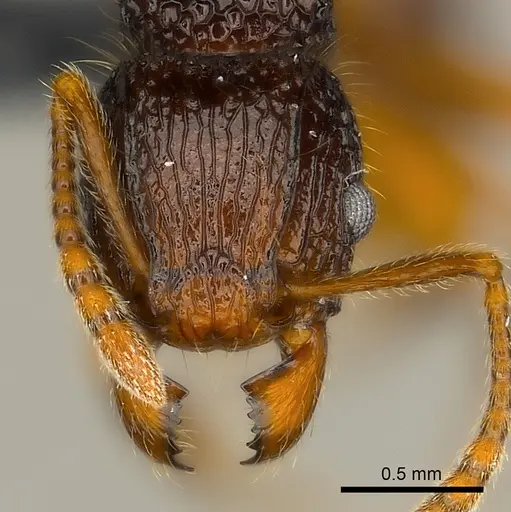
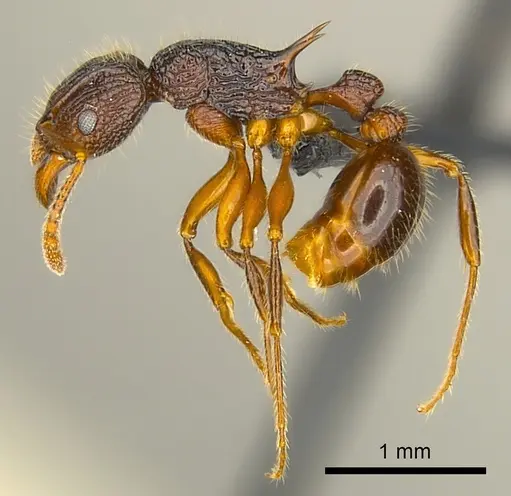
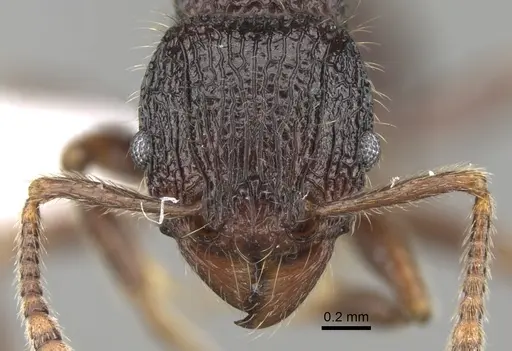
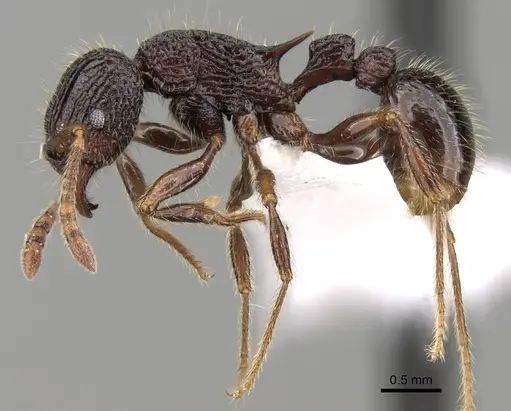
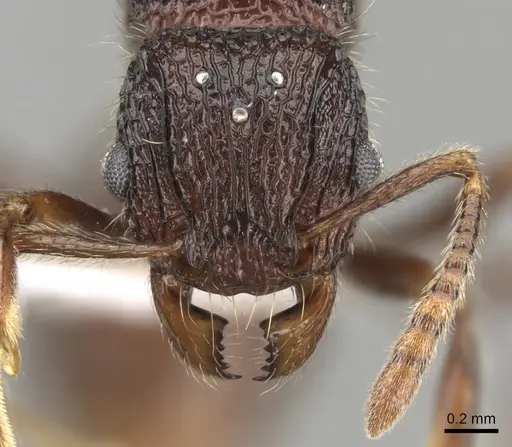
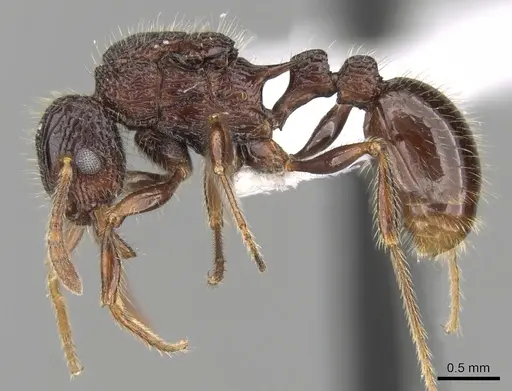
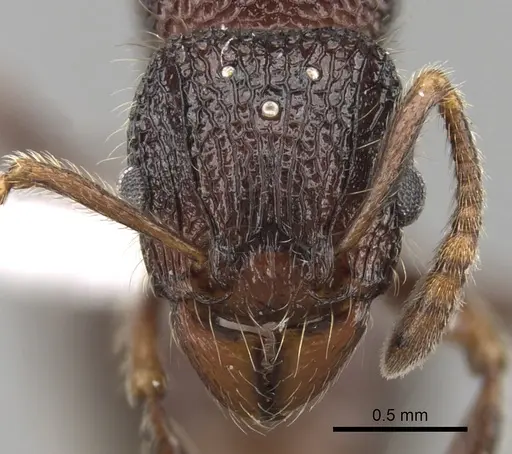
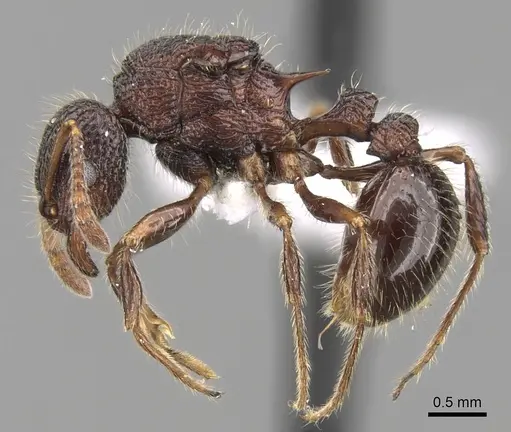
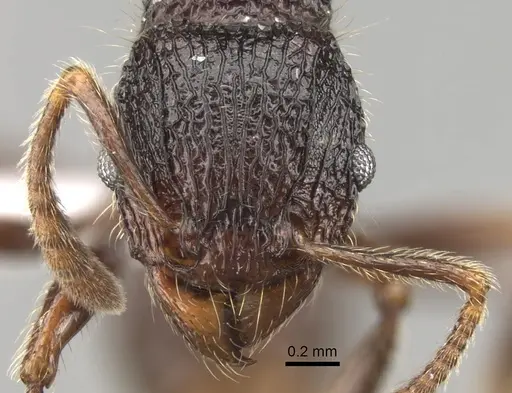
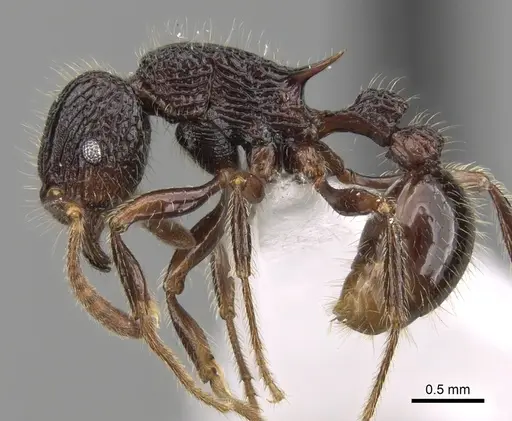
Tetramorium adamsi is a small, dark ant species from Madagascar, named after British writer Douglas Adams. Workers have very long propodeal spines and a distinctive petiolar node where the posterodorsal margin sits higher than the anterodorsal margin - a key feature that sets it apart from close relatives in the T. smaug complex . The body is uniformly dark brown to black, with heavily wrinkled waist segments and a mostly smooth, shiny gaster. These ants live in montane forest leaf litter at elevations between 1175 and 1860 meters, found only in the Manongarivo and Bemanevika regions of northern Madagascar . This species shows interesting variation with altitude. Specimens from lower down (1175m) have longer antennae and longer propodeal spines with a narrower postpetiole, while those from higher up (1860m) sometimes have fine grooves on the first gastral tergite. Despite these differences, researchers kept them as one variable species because of overall similarity .
Quick Summary
- Difficulty: Medium
- Origin & Habitat: Northern Madagascar (Manongarivo and Bemanevika), montane forest leaf litter at 1175-1860m [1]
- Colony Type: Unknown, colony structure and queen number have not been documented.
- Size & Growth:
- Queen: Undescribed, no queen specimens have been measured. Total length unknown.
- Worker: Size data unavailable, no total length recorded in literature. Based on head length measurements (0.94-1.06mm), workers are small, comparable to other Tetramorium species (typically 2-4mm total length, inferred from genus).
- Colony: Unknown, no colony size data from wild or captive colonies.
- Growth: Unknown, no development timing data available.
- Development: Unknown, no direct data. Similar small Myrmicinae typically take 6-8 weeks at around 24°C, but this is a rough estimate. (No captive rearing data exists for this species.)
- Antkeeping:
- Temperature: Based on their montane forest habitat (1175-1860m [1]), they likely prefer cool, stable conditions. Aim for 20-24°C and avoid overheating above 28°C. A slight night-time drop may be beneficial. Create a temperature gradient if possible.
- Humidity: High humidity is crucial, leaf litter dwellers need moist substrate. Keep the nest substrate consistently damp but not waterlogged, and provide a humidity gradient so ants can choose. Dry conditions are likely fatal.
- Diapause: Unknown, Madagascar's montane climate has minimal seasonal swings, so true diapause may not be required. Monitor colony activity, if they slow down in winter, keep slightly cooler and reduce feeding.
- Nesting: Natural nesting is in leaf litter. A naturalistic setup with a mix of soil and leaf litter works well, or use a Y‑tong or plaster nest with excellent moisture retention. Ensure chambers are small, scaled to worker size.
- Behavior: No specific behavioral data exists. As a ground‑dwelling myrmicine, they likely forage in leaf litter for small prey. Defensive mechanism (based on subfamily/tribe Crematogastrini): they smear venom using a modified, flattened stinger. Escape risk is moderate, workers are small but not among the tiniest ants, still, secure all gaps.
- Common Issues: no captive data available, care is experimental and requires careful observation., humidity is critical, montane species may dehydrate quickly if substrate dries out., unknown founding behavior, queen may need specific conditions, start with single queen in a test tube setup., small workers can slip through standard barriers, use tight sealing (e.g., fluon or oil barriers)., extremely limited availability, only known from two localities in Madagascar, likely hard to obtain.
Origin and Natural Habitat
Tetramorium adamsi is endemic to northern Madagascar, recorded only from Manongarivo Reserve and Bemanevika. All specimens come from montane rainforest leaf litter at elevations between 1175 and 1860 meters [1]. This high‑altitude habitat means cool, stable temperatures and high humidity year‑round, unlike lowland Malagasy forests. The type locality is 17.3 km southwest of Antanambao, Manongarivo, at 1580 meters [1].
Identification and Distinguishing Features
Within the Tetramorium tortuosum group and the T. smaug complex, T. adamsi is uniquely identified by its petiolar node: when viewed from the side, the posterodorsal margin sits higher than the anterodorsal margin [1]. Workers are small, with body uniformly dark brown to black. They have very long, sharp propodeal spines (PSLI 36-50). The waist segments (petiole and postpetiole) are strongly rugose, while the gaster is mostly smooth and shiny. Some specimens from higher elevations (1860m) show fine costulae (grooves) on the basal half of the first gastral tergite [1].
Temperature and Humidity Requirements
Because they inhabit cool montane forests at 1175-1860m [1], T. adamsi likely needs cooler conditions than typical tropical ants. Aim for 20-24°C and avoid prolonged temperatures above 28°C. Create a slight temperature gradient so ants can move to cooler or warmer spots if needed. Humidity must be high, the leaf litter habitat stays moist year‑round. Keep the nest substrate consistently damp but not waterlogged, provide a drier area in the outworld for foraging. Poor humidity control is probably the biggest risk when keeping this species.
Feeding and Diet
No specific dietary data exists. Based on typical Tetramorium foraging habits, they likely eat small invertebrates and possibly aphid honeydew. In captivity, offer tiny live prey like fruit flies, springtails, or pinhead crickets. You can also try sugar water or honey in small amounts, but protein sources seem most important for brood development. Start with the smallest prey you can get and observe what they accept. Remove uneaten food to prevent mold. Because their exact nutritional needs are unknown, be ready to experiment with different protein sources.
Colony Structure and Development
Everything about colony structure is unknown, there are no published observations of wild colonies, no queen descriptions, and no data on founding behavior. Even the genus‑level assumption of claustral founding is unconfirmed. The colony size cannot even be estimated. Development times are also unstudied, any numbers given would be pure guesswork. This species is a true blank slate for the ant hobby, and keepers will need to be patient and observant. The altitudinal variation noted in wild workers suggests some flexibility, but captive care is completely experimental. [1]
Nesting in Captivity
In the wild they live in leaf litter, not soil or rotting wood. A naturalistic setup with a deep layer of moist substrate (e.g., a mix of soil, sand, and dead leaves) mimics this habitat and allows natural foraging. Alternatively, a Y‑tong or plaster nest with a water reservoir can provide stable moisture, but you must add a thick layer of leaf litter on top. Whichever setup you choose, ensure the nest chambers are small, these are tiny ants that prefer tight spaces. Escape prevention is essential, use a secure lid and a fluon or oil barrier on the outworld walls.
Frequently Asked Questions
How long does it take for Tetramorium adamsi to produce first workers?
This is unknown, no development data exists. Based on similar small myrmicines (e.g., Tetramorium caespitum), it might take around 6-8 weeks at 24°C, but this is purely speculative. Monitor your queen and record your observations to help the hobby community.
What do Tetramorium adamsi ants eat?
Specific dietary data is unavailable. Likely they accept small live prey (fruit flies, springtails, tiny crickets) and possibly sugar sources. Start with protein and adjust based on what your colony accepts. Remove uneaten food promptly.
Are Tetramorium adamsi good for beginners?
No. With no captive breeding data, unconfirmed care requirements, and extremely limited availability, this species is best left to experienced antkeepers who are prepared for experimentation and potential failure.
Do Tetramorium adamsi ants sting?
As a myrmicine ant, it has a functional stinger. Its subfamily/tribe (Crematogastrini) uses a modified stinger to smear venom, not to inject. The sting is likely very mild to humans due to the ant's small size, but no direct observations have been reported.
What temperature should I keep Tetramorium adamsi at?
Aim for 20-24°C based on their montane origin (1175-1860m [1]). Avoid temperatures above 28°C. A nighttime drop of a few degrees is probably fine. Create a gradient in the nest for the ants to self‑regulate.
How big do Tetramorium adamsi colonies get?
Completely unknown, no colony size estimates exist from wild or captive populations. Related Tetramorium often reach a few hundred to a few thousand workers, but this is guesswork.
Can I keep multiple Tetramorium adamsi queens together?
Colony structure is unconfirmed, we don't know if they are single‑queen (monogyne) or multi‑queen (polygyne). Do not try to combine queens unless you have solid evidence of polygyny from a reliable source. Assume single‑queen setup until proven otherwise.
Do Tetramorium adamsi need hibernation?
Diapause requirements are unknown. Madagascar's montane climate has little seasonal temperature fluctuation, so true hibernation may not be needed. If the colony slows down during your winter, you can reduce feeding and keep them slightly cooler, but this is not proven. Watch the colony and adjust.
What makes Tetramorium adamsi special?
It is named after Douglas Adams (Hitchhiker's Guide to the Galaxy). It shows remarkable altitude‑related variation within its tiny range, lower elevation specimens have longer antennae and spines than high‑elevation ones. The diagnostic petiolar node shape is unique in its species complex [1].
Where is Tetramorium adamsi found in the wild?
Only at two sites in northern Madagascar: Manongarivo Reserve and Bemanevika, in montane forest leaf litter at 1175-1860m elevation [1]. This extremely restricted distribution makes it a rare species in the ant trade.
How do I set up a nest for Tetramorium adamsi?
Mimic their leaf litter habitat: use a deep layer of moist substrate (soil mixed with dead leaves). A Y‑tong or plaster nest with a water reservoir can work, but cover it with leaf litter. Make sure chambers are small. Use tight escape prevention.
Is Tetramorium adamsi invasive anywhere?
No. It is endemic to Madagascar and has not been reported as invasive. However, never release any non‑native ant species into the environment.
Report an Issue
The current care sheet is based fully on literature. See inconsistencies, or something that's incorrect? Please , it will be resolved after review from an admin. Contributing to the blogs tab also helps providing information, to make us be able to further improve the caresheets. Thank you for your support!
References

This caresheet is licensed under CC BY-SA 4.0 .
Community Blogs
CASENT0218052
View on AntWeb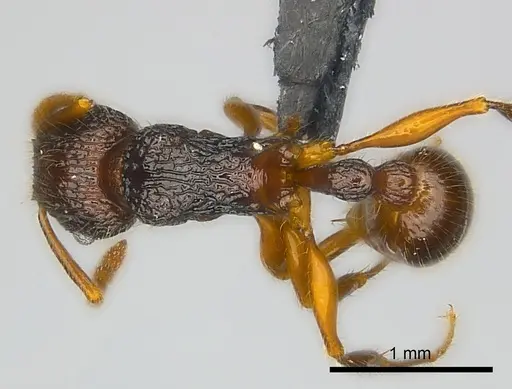
CASENT0247296
View on AntWeb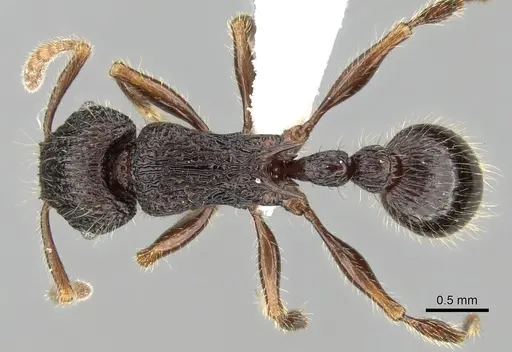
CASENT0247302
View on AntWeb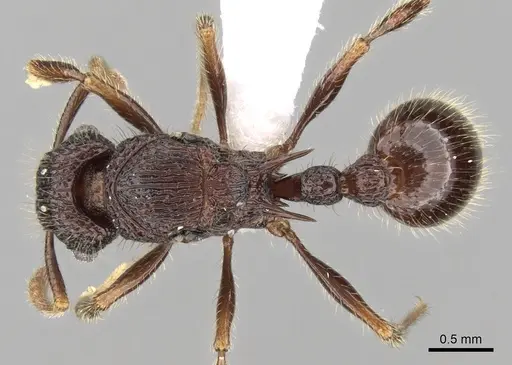
CASENT0247340
View on AntWeb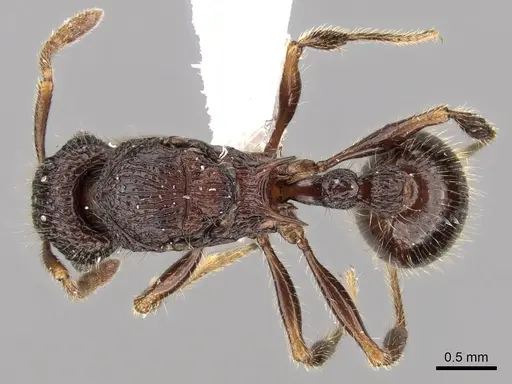
CASENT0247345
View on AntWeb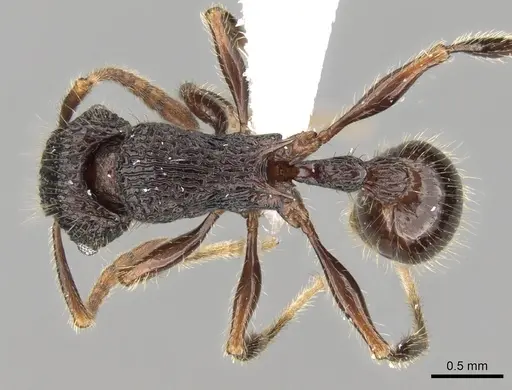
Literature
Loading distribution map...Loading products...