
Tetheamyrma bidentata
- Sci. Name
- Tetheamyrma bidentata
- Tribe
- Crematogastrini
- Subfamily
- Myrmicinae
- Author
- General & Buenavente, 2018
- Distribution
- Found in 1 countries
Introduction
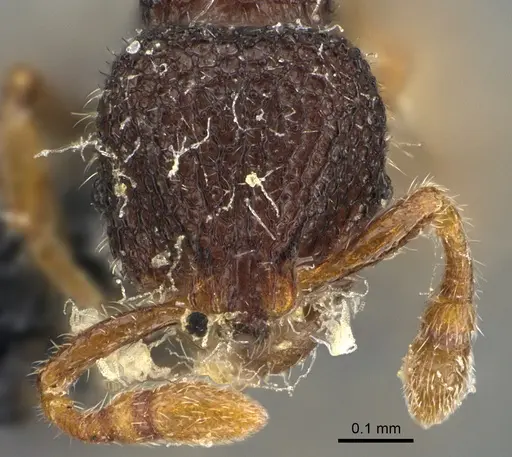
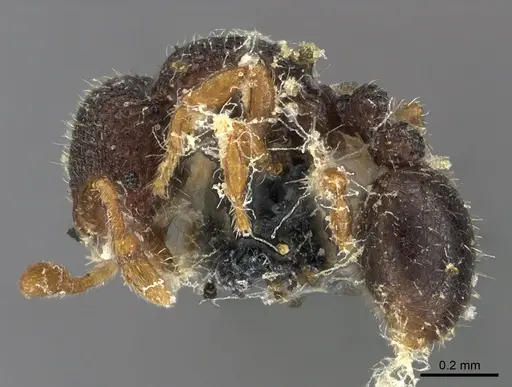
Tetheamyrma bidentata is a tiny Myrmicinae ant species described in 2018 from the Philippines. Body size data is unavailable, but the head width of workers is around 0.40-0.50 mm, making them among the smaller ants you'll encounter . They have a distinctive dark reddish-brown coloration with brown appendages, and their most notable feature is a bidentate (two-toothed) process on the front of the head, this is what the species name 'bidentata' refers to . The antennae have 10 segments with a large 2-segmented club, and they possess a simple, functional sting . This species was discovered in leaf litter samples from good secondary and primary forest across multiple Philippine islands (Luzon, Mindanao, and Samar) at elevations ranging from 170 to 1300 meters . As a recently described species (2018), there is very limited information available about their captive care, so much of the advice below is inferred from its natural habitat.
Quick Summary
- Difficulty: Hard
- Origin & Habitat: Philippines (Luzon, Mindanao, Samar). Found in leaf litter in good secondary and primary forest at elevations 170-1300 m [1].
- Colony Type: Unconfirmed colony structure. Only two species are known in this genus, both recently described. Colony size in the wild is unknown.
- Size & Growth:
- Queen: size data unavailable
- Worker: size data unavailable
- Colony: Unknown, no colony size data available
- Growth: Unknown, no development data available
- Development: Estimated 6-10 weeks based on typical Myrmicinae development at tropical temperatures. This is an educated guess since no specific data exists for this species. (No direct measurements exist. Estimate based on patterns for small tropical Myrmicinae.)
- Antkeeping:
- Temperature: Keep at room temperature (22-26°C). The species comes from tropical Philippine elevations where temperatures are warm year-round. Avoid temperatures below 20°C. No specific temperature data is available.
- Humidity: High humidity required, these are forest floor ants from humid tropical environments. Keep the nest substrate consistently moist but not waterlogged. Provide a water tube at all times.
- Diapause: No, this is a tropical species from the Philippines with no cold tolerance requirement. They do not need hibernation.
- Nesting: Y‑tong (AAC) nests or plaster nests work well for these tiny ants. The chambers should be small and tight-fitting. They prefer dark, humid conditions similar to their leaf litter habitat.
- Behavior: These are tiny, secretive ants that likely live in small colonies in forest floor habitats. They have a functional sting [1] and belong to a tribe (Crematogastrini) known for smearing venom rather than piercing, but the sting is still simple and functional. Given their minute size, the sting effect on humans would be minimal. They are not aggressive and will likely flee from disturbance. Escape prevention is critical due to their very small size, they can squeeze through standard barrier gels and need fine mesh or liquid barriers. They are likely nocturnal or crepuscular foragers.
- Common Issues: escape prevention is critical, they are tiny and can squeeze through the smallest gaps., no captive care information exists, this is a newly described species from 2018., colony size unknown, expect small colonies based on their tiny size and leaf litter habitat., humidity management is key, too dry and they will die, too wet causes mold., wild-caught colonies may have parasites or diseases since no captive breeding lines exist.
Housing and Nest Setup
For these tiny ants, a Y‑tong (AAC) nest or plaster nest works best. The chambers should be small and tight-fitting, larger chambers will stress them. They prefer dark, humid conditions, so cover the nest with an opaque cover. Use a test tube attached to the nest for water access. Because they are so small, escape prevention is critical: use fluon (liquid PTFE) on all rim edges and fine mesh (at least 0.5 mm) on any ventilation holes. Standard barrier gels will not contain them. The outworld should be simple, a small container works given their tiny size and likely small colony size. Keep the entire setup in a warm, humid location away from direct sunlight. These recommendations are general and not based on specific literature for this species.
Feeding and Diet
The diet of Tetheamyrma bidentata has not been studied. As a Myrmicinae species, it likely accepts small protein sources like fruit flies, pinhead crickets, and other tiny arthropods. Offer small live prey items that are appropriately sized. Sugar sources like honey water or sugar water may be accepted, offer these occasionally and observe. Given its small size and recent description, be prepared to experiment with what they accept. Remove uneaten prey after 24-48 hours to prevent mold. No direct dietary data is available.
Temperature and Seasonal Care
Keep these ants at 22-26°C year‑round. They come from tropical Philippine elevations (170-1300 m) where temperatures are warm throughout the year [1]. They do not require hibernation or any cooling period. Avoid any temperature drops below 20°C, this could be fatal. A small heating cable on one side of the nest can help maintain warmth if your room temperature runs cool, but ensure the nest doesn't dry out. Room temperature in most homes (22-24°C) should be suitable. Monitor humidity closely when using heat, as it dries out the nest.
Humidity Management
These forest floor ants need high humidity. Keep the nest substrate consistently moist, it should feel damp but not have standing water. A water tube connected to the nest provides a constant moisture source. Check the nest regularly and rehydrate when the surface starts drying. Too much dryness will kill them quickly. However, avoid excessive moisture that causes condensation pooling or mold growth. The key is balance: damp but not soggy, with some drier areas available if they choose to move. Good ventilation helps prevent mold while maintaining humidity. These recommendations are based on their leaf litter habitat [1].
Behavior and Handling
Tetheamyrma bidentata has a functional sting [1] and belongs to the tribe Crematogastrini, which typically uses a smearing defense. Given their minute size (head width ~0.4-0.5 mm), any sting would be very mild, comparable to a mosquito bite at most. They are not aggressive and will likely retreat when disturbed. Their small size and secretive nature suggest they are nocturnal or crepuscular foragers, hunting small prey in the leaf litter layer. In captivity, they will likely remain hidden in their nest chambers most of the time, emerging briefly to collect food. The most important behavioral consideration is escape prevention, these ants are so small they can slip through gaps invisible to the naked eye.
Colony Establishment
Since this species was only described in 2018,there are no established captive breeding lines. Wild‑caught colonies are your only option, and they may be difficult to find. If you obtain a wild colony, watch for parasites or diseases that can affect newly collected ants. The founding process is unconfirmed, we don't know if the queen seals herself in (claustral) or must forage during founding (semi‑claustral). Based on typical Myrmicinae patterns, claustral founding is likely, but this is an educated guess. Expect slow growth given the tiny size of the workers and queen.
Frequently Asked Questions
How long does it take for Tetheamyrma bidentata to produce first workers?
The exact timeline is unknown since this species has never been bred in captivity. Based on typical Myrmicinae development at tropical temperatures (24-26°C), expect 6-10 weeks from egg to first worker. This is an estimate only, actual timing may vary.
Can I keep Tetheamyrma bidentata in a test tube setup?
Yes, a test tube setup can work for founding colonies. Use a small test tube with a cotton ball providing water access. However, because they are so tiny, ensure the tube opening is properly sealed with fluon or a tight‑fitting cotton. Transfer to a proper nest (Y‑tong or plaster) once the colony outgrows the tube. These are general recommendations.
Do Tetheamyrma bidentata ants sting?
Yes, they have a simple, functional sting [1]. However, given their tiny size, any sting would be very mild. Most keepers report no noticeable sting at all. They are not aggressive and will flee rather than attack.
What do Tetheamyrma bidentata eat?
Their exact diet is unknown. Based on their size and genus, they likely eat small insects and arthropods. Offer small live prey like fruit flies, springtails, or tiny crickets. They may also accept sugar sources like honey water. Experiment to see what they accept.
Are Tetheamyrma bidentata good for beginners?
No, this is not a recommended species for beginners. It was only described in 2018,so no captive care information exists. They are extremely tiny, requiring excellent escape prevention. They likely need specific humidity and temperature conditions. There are no established captive breeding lines. Consider starting with more common species like Lasius niger or Tetramorium caespitum.
How big do Tetheamyrma bidentata colonies get?
The maximum colony size is unknown. Based on their tiny size and leaf litter habitat, colonies are likely small, probably under 100 workers. This is an estimate based on typical patterns for small forest floor ants.
Do Tetheamyrma bidentata need hibernation?
No, they are tropical ants from the Philippines with no cold tolerance. Keep them at 22-26°C year‑round with no hibernation period. Temperatures below 20°C could be fatal.
Why are my Tetheamyrma bidentata escaping?
Their tiny size means they can squeeze through gaps invisible to the naked eye. Use fluon (liquid PTFE) on all rim edges, fine mesh (0.5 mm or smaller) on ventilation, and check for any cracks or gaps in your setup. Standard barrier gels will not contain them.
When should I move Tetheamyrma bidentata to a formicarium?
Move them when the test tube becomes crowded or shows signs of stress. For this tiny species, a small Y‑tong or plaster nest with small chambers works well. They prefer dark, humid nests.
Can I keep multiple queens together?
We don't know. Colony structure (monogyne vs polygyne) has not been documented for this species. Do not attempt combining unrelated queens, there is no information on whether they tolerate this.
Report an Issue
The current care sheet is based fully on literature. See inconsistencies, or something that's incorrect? Please , it will be resolved after review from an admin. Contributing to the blogs tab also helps providing information, to make us be able to further improve the caresheets. Thank you for your support!
References

This caresheet is licensed under CC BY-SA 4.0 .
Community Blogs
CASENT0923701
View on AntWeb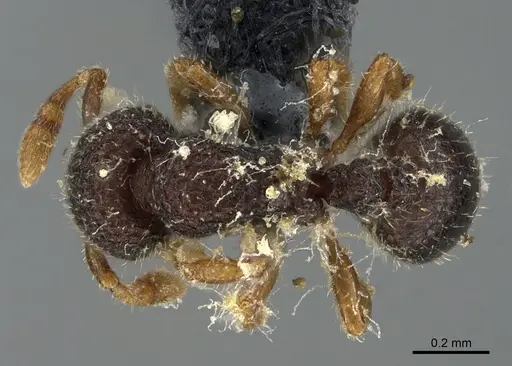
Literature
Loading distribution map...Loading products...