
Terataner xaltus
- Sci. Name
- Terataner xaltus
- Tribe
- Crematogastrini
- Subfamily
- Myrmicinae
- Author
- Bolton, 1981
- Distribution
- Found in 1 countries
Introduction
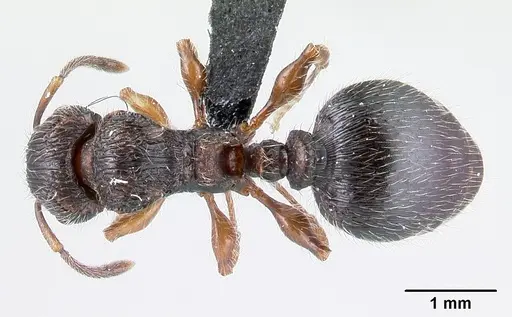
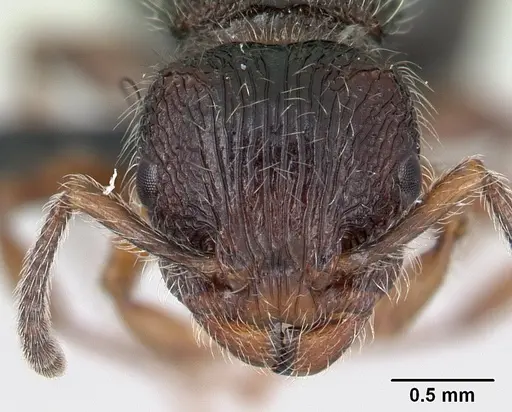
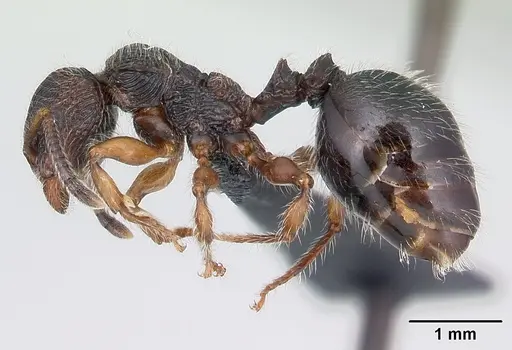
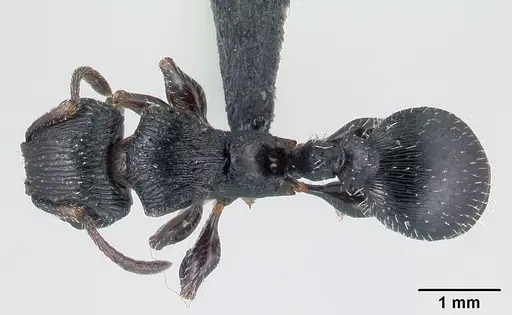
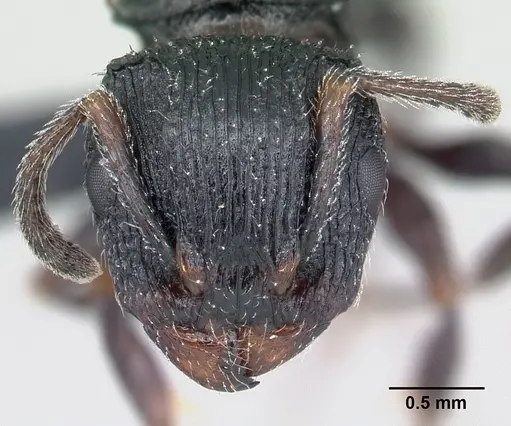
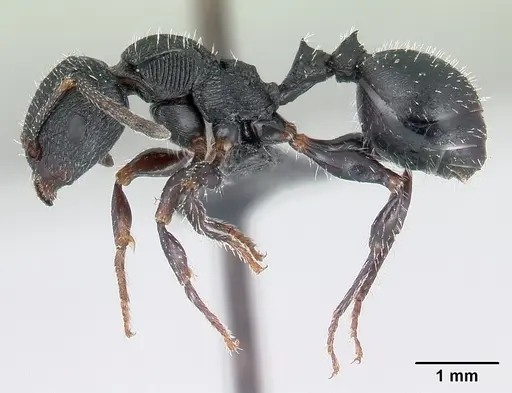
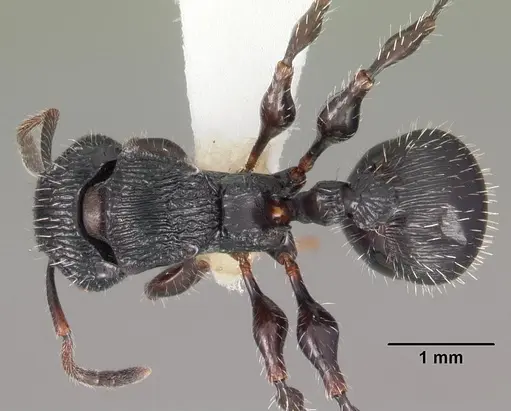
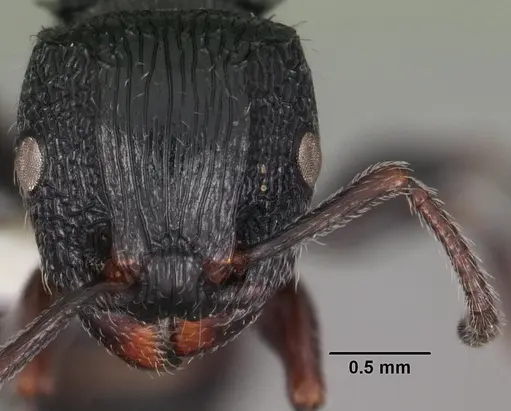
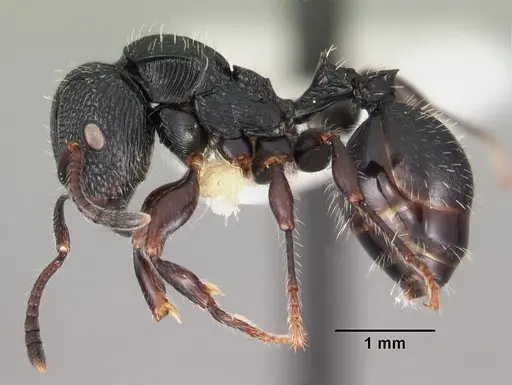
Terataner xaltus is a small to medium-sized ant species from Madagascar, found in the southern and western regions of the island . They have dark brown to black legs and a distinct body sculpture: the side of the pronotum is covered in transverse ridges, and the front legs have obvious lengthwise grooves . The postpetiole (the second segment between the waist and abdomen) is wedge-shaped in side view and looks like a shield with a ridge across the top when viewed from above . This species belongs to the subfamily Myrmicinae and the tribe Crematogastrini. Like other ants in that tribe, they have a modified stinger used to smear venom onto enemies rather than injecting it. Almost nothing is known about their behavior in captivity, no antkeeper has documented keeping them. Because they are endemic to Madagascar, their care requirements must be inferred from their environment and related species.
Quick Summary
- Difficulty: Expert
- Origin & Habitat: Southern and western Madagascar [1], likely dry forest, spiny thicket, or scrubland. The region is warm and relatively dry, not a humid rainforest.
- Colony Type: Unconfirmed colony structure, based on typical Terataner patterns, likely single-queen (monogyne) colonies.
- Size & Growth:
- Queen: No documented measurements available.
- Worker: No documented measurements available.
- Colony: Unknown, no colony size data available.
- Growth: Unknown
- Development: Estimated 6-8 weeks based on typical small Myrmicinae development at warm temperatures. (Development timeline is a rough estimate based on related Myrmicinae, no direct data for this species.)
- Antkeeping:
- Temperature: Inferred from Madagascar's dry regions: keep at 22-28°C. Provide a slight temperature gradient in the outworld so the ants can choose their preferred spot. Avoid sustained temperatures below 18°C or above 30°C.
- Humidity: 80%) which may promote mold in a dry-adapted species.
- Diapause: Unknown, Madagascar species often remain active year-round, but winter cooling in their native range is poorly documented. If kept at constant room temperature, diapause is probably not required. If you want to try a short (2-3 month) cool period at 15-18°C, it is unlikely to harm the colony.
- Nesting: Based on related Terataner species, they may nest in soil or under stones in dry areas. A plaster or Y-tong (aerated concrete) nest with a water reservoir is suitable. Offer a substrate with both moist and dry zones.
- Behavior: Behavior is unstudied in captivity. As a member of tribe Crematogastrini, they can smear venom onto attackers rather than using a piercing sting. Their small size means they can squeeze through tiny gaps, excellent escape prevention is essential. Based on related genera, they are likely active foragers that will explore outworlds readily.
- Common Issues: no published care information, all advice is inferred, so expect a learning curve., small size makes escape a high risk, use fine mesh (at least 0.5mm openings) on all ventilation and gaps., diet preferences are unknown, offer a variety of sugars and proteins and remove uneaten food quickly to avoid mold., origin from dry Madagascar habitat means high humidity could cause stress or mold, provide a gradient rather than uniform wetness., starting a colony from a wild-caught queen may fail if she cannot adapt to captive conditions, source from a breeder if possible.
Housing and Nest Setup
Because we have no captive records for Terataner xaltus, the nest design must be based on their likely natural habitat. The dry forests and spiny scrub of southern and western Madagascar [1] suggest they may be adapted to soil or rock crevices with moderate moisture. A good starting setup is a plaster or Y-tong (aerated concrete) nest with a built-in water reservoir that provides a humidity gradient. You can also offer a soil nest with a moisture gradient. The outworld should be securely sealed: these ants are small and can slip through gaps of 1mm or less. Use a thin layer of fluon or talc on the outworld walls, plus fine mesh over all ventilation openings. Provide a test tube or small chamber as a temporary holder if you are catching a queen, once she has workers, move her into the proper nest.
Feeding and Diet
There is no documented diet for Terataner xaltus. As a small Myrmicinae, they are likely omnivorous, accepting sugar sources (honey water, sugar water, or diluted maple syrup) and protein sources (small insects like fruit flies, pinhead crickets, or pieces of mealworm). Offer a few different foods at once and see what gets carried back to the nest. Remove uneaten protein within 24 hours to prevent mold. A small water dish in the outworld is also recommended, but many ants get enough moisture from the nest substrate. If you notice the colony ignoring sugar water, try offering a different sweetener or a fresh insect to see whether they are in a protein-seeking phase.
Temperature and Humidity
Based on the dry, warm climate of southern and western Madagascar [1], aim for a temperature range of 22-28°C. Avoid letting the nest drop below 18°C or exceed 30°C. A heating cable under part of the nest or outworld creates a thermal gradient. For humidity, avoid constant high levels. Instead, make the nest substrate slightly moist in one area and dry in others. A water reservoir in the nest will keep the moist section from drying out, but leave some chambers without direct water. The ants will choose the zone they prefer. If you see condensation inside a glass or acrylic nest, it's too wet, open ventilation to reduce humidity. This species likely evolved in a habitat with seasonal drought, too much moisture may stress them or encourage mold.
Colony Establishment
Founding behavior is unconfirmed for Terataner xaltus. Myrmicinae often practice claustral founding, where the queen seals herself in a chamber and raises the first brood on body reserves, but this is not guaranteed. Since the species is rarely kept, the best way to start a colony is to catch a queen after a nuptial flight (timing unknown) or purchase a young colony from a breeder. If you do catch a queen, place her in a dark, quiet test tube setup with a water plug and cotton. Check on her every few days without disturbing her too much. If she lays eggs and the first workers emerge, you can provide insect pieces. Growth rate is unknown, expect slow initial growth typical of many tropical species. Patience is essential.
Behavior and Temperament
No behavioral observations have been published for Terataner xaltus. As a member of the Crematogastrini tribe, it uses a defensive strategy called 'smearing', it has a flattened, spatula-shaped stinger that wipes venom onto attackers rather than piercing them. This venom can cause irritation if it gets on your skin, but the ants are small and probably not aggressive unless their nest is disturbed. In captivity, they are likely to explore their outworld actively and forage for food. Because they are small, they may be timid and retreat into the nest when disturbed. Always use gentle movements when opening the nest or outworld to avoid triggering unnecessary defensive behavior.
Frequently Asked Questions
How do I care for Terataner xaltus ants?
Care is based on inference from their Madagascar origin. Keep them at 22-28°C with a humidity gradient (slightly moist but not wet). Use a plaster or Y-tong nest with a water reservoir. Feed sugar water and small insects. Expect a learning curve since almost nothing is known about this species in captivity.
What do Terataner xaltus ants eat?
Diet is unconfirmed. Offer sugar water or honey for energy, and small insects like fruit flies or pinhead crickets for protein. Try different foods and see what the colony accepts. Remove uneaten food after a day to prevent mold.
What temperature do Terataner xaltus ants need?
Aim for 22-28°C, based on the warm, dry climate of southern and western Madagascar [1]. Avoid drops below 18°C or spikes above 30°C. Provide a thermal gradient so the ants can self-regulate.
Do Terataner xaltus ants need hibernation?
Probably not, but data are lacking. Madagascar species typically remain active year-round. If you keep them at stable room temperature, no cold period is needed. A short (2-3 month) cool-down to 15-18°C is unlikely to cause harm if you want to try it, but it is not required.
Are Terataner xaltus ants good for beginners?
No. This species is not recommended for beginners because there is no established care knowledge. Only experienced antkeepers who are comfortable with uncertainty should attempt it.
How big do Terataner xaltus colonies get?
Unknown. No colony size data exists for this species. Based on related genera, moderate sizes up to a few hundred workers are possible, but that is only a guess.
Can I keep multiple Terataner xaltus queens together?
Colony structure is unconfirmed. Without evidence of polygyny or pleometrosis, keeping multiple unrelated queens together is not recommended, they may fight and kill each other.
Do Terataner xaltus ants sting?
They have a modified stinger used to smear venom (subfamily Myrmicinae, tribe Crematogastrini). The sting is not used to pierce skin, instead, venom is wiped onto the attacker. The reaction is likely mild, but avoid handling the ants roughly.
How long does it take for Terataner xaltus to raise first workers?
Estimated 6-8 weeks from egg to worker, based on typical small Myrmicinae development at 22-28°C. This is a rough estimate, actual time may vary.
What humidity do Terataner xaltus ants need?
Provide a humidity gradient, keep the nest substrate slightly moist in one area and dry in others. Constant high humidity is not recommended because the species is from a relatively dry region [1]. A water reservoir in the nest can create the moist zone without soaking the whole setup.
Where is Terataner xaltus found?
It is endemic to Madagascar, specifically the southern and western parts of the island [1].
Is Terataner xaltus invasive anywhere?
No. There is no evidence that Terataner xaltus has established populations outside its native range. It is not considered invasive.
Report an Issue
The current care sheet is based fully on literature. See inconsistencies, or something that's incorrect? Please , it will be resolved after review from an admin. Contributing to the blogs tab also helps providing information, to make us be able to further improve the caresheets. Thank you for your support!
References

This caresheet is licensed under CC BY-SA 4.0 .
Community Blogs
Literature
Loading distribution map...Loading products...