
Terataner luteus
- Sci. Name
- Terataner luteus
- Tribe
- Crematogastrini
- Subfamily
- Myrmicinae
- Author
- Emery, 1899
- Distribution
- Found in 5 countries
Introduction
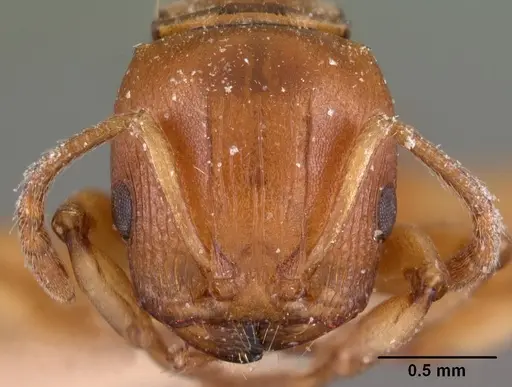
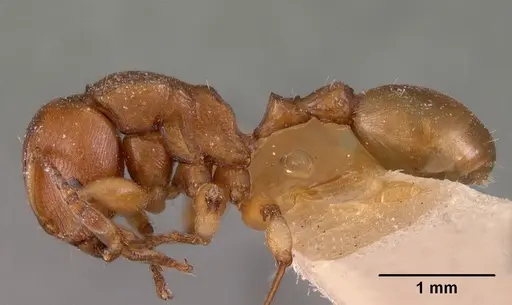
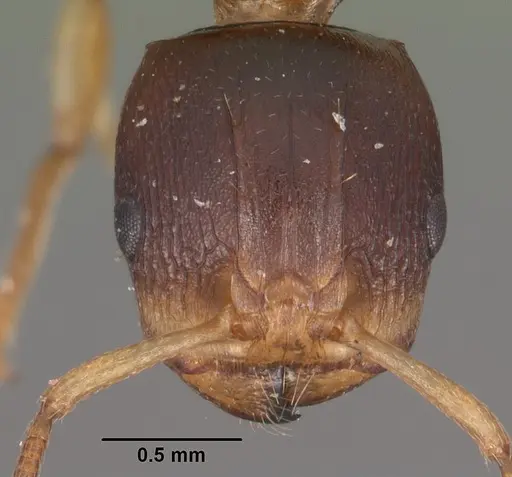
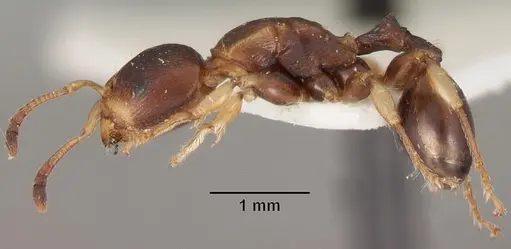
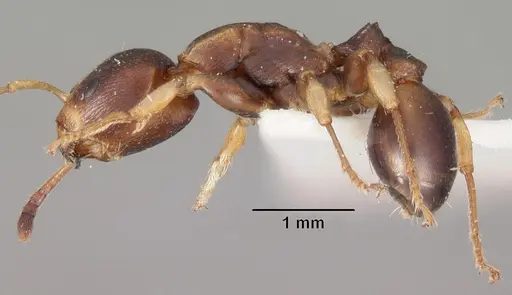
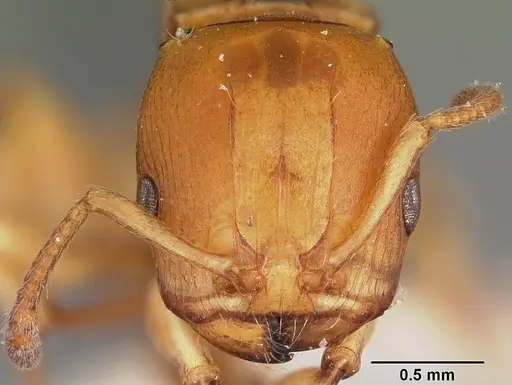
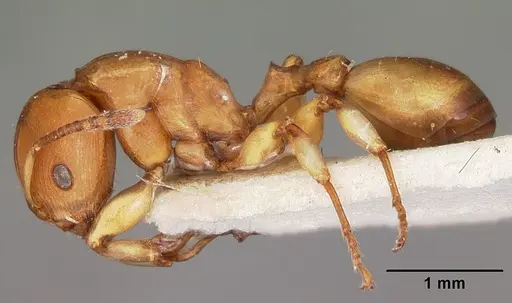
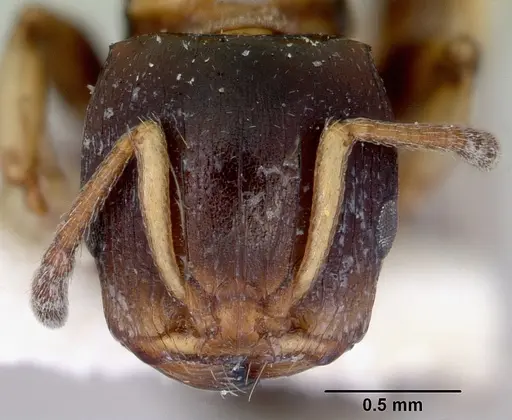
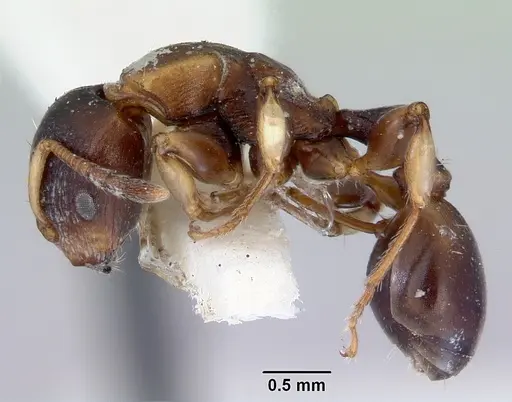
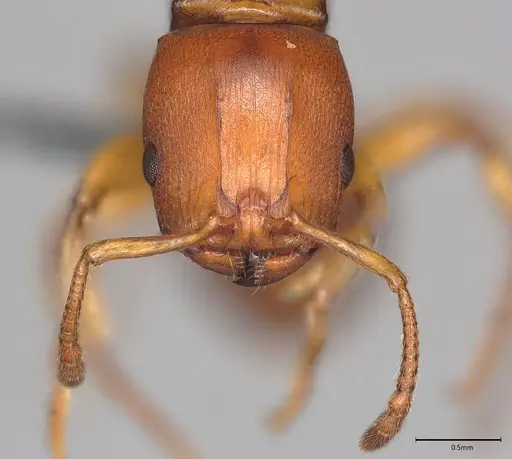
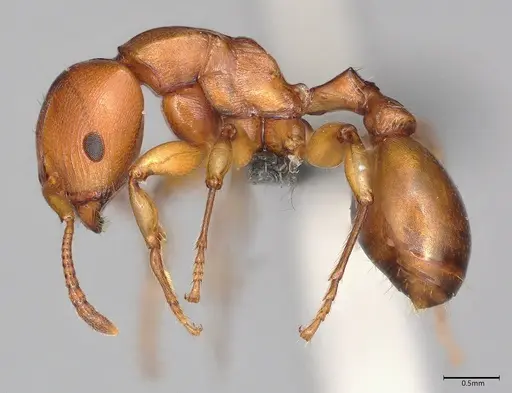
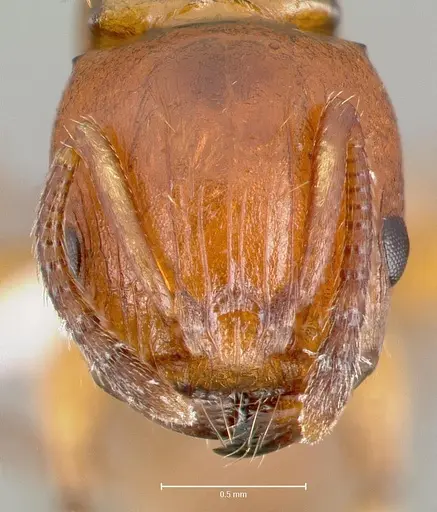
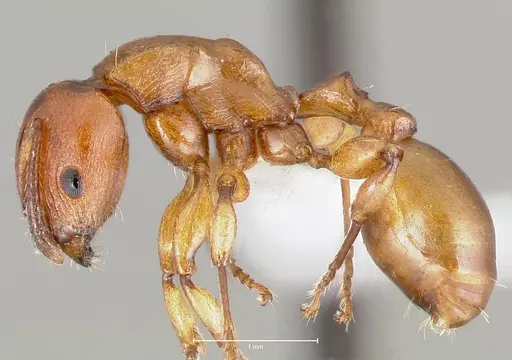
Terataner luteus is a small myrmicine ant from the rainforests of West and Central Africa. Workers are yellowish to amber with dark brown markings on the forehead and a dark spot on the upper posterior part of the abdomen. The last abdominal segments are also darkly bordered. Queens are winged and morphologically typical. This species is strictly arboreal, nesting in rotten wood of standing trees high above the ground . The two known specimens were collected at Mundame (likely Cameroon) .
Quick Summary
- Difficulty: Hard
- Origin & Habitat: Rainforests of West and Central Africa. Restricted to rainforest environments, nesting exclusively in rotten wood of standing trees at considerable heights above ground [1].
- Colony Type: Unconfirmed, likely single-queen colonies based on typical genus patterns, but no direct observations exist.
- Size & Growth:
- Queen: Size data unavailable, no published measurements exist.
- Worker: Size data unavailable, no published measurements exist.
- Colony: Unknown, no colony size data available.
- Growth: Unknown
- Development: Unknown, estimated 6-10 weeks based on typical tropical myrmicine development, but not confirmed for this species. (No direct studies exist. The estimate assumes stable tropical temperatures.)
- Antkeeping:
- Temperature: Keep warm at 24-28°C. These are tropical rainforest ants requiring stable, warm conditions. A heating cable on one side of the nest can help maintain temperature if room temperature is below this range.
- Humidity: High humidity is essential, aim for 70-85% relative humidity. Keep nest substrate consistently moist but not waterlogged. Use a hydration system with a water reservoir connected to the nest chambers to maintain stable humidity. Ensure good ventilation to prevent mold.
- Diapause: Unlikely required, as a tropical rainforest species from Central Africa, they probably do not enter diapause. A slight temperature reduction during winter months may be beneficial but is not proven.
- Nesting: Strictly arboreal setup required. In the wild they nest in rotten parts of standing timber high above the ground. Provide vertical chambers, a Y-tong (AAC) nest, plaster nest, or naturalistic setup with pieces of rotting wood positioned vertically. Horizontal test tube setups are unsuitable.
- Behavior: These ants are arboreal and relatively shy. They likely forage in the canopy and may be nocturnal or crepuscular. Their defense mechanism uses a modified spatulate stinger to smear venom onto threats rather than piercing. They are not aggressive and prefer to flee. Escape prevention is critical due to their tiny size. Foraging style is probably generalist, collecting small arthropods and honeydew.
- Common Issues: vertical nesting requirement makes standard horizontal setups unsuitable, must provide arboreal housing., escape prevention is critical due to very small size, use fine mesh and tight-fitting barriers., high humidity needs can lead to mold problems if ventilation is inadequate., unknown growth rate and colony size mean patience is essential., extremely rare in the hobby, established colonies are almost never available.
Natural History and Distribution
Terataner luteus is restricted to the rainforests of West and Central Africa. It belongs to a small group of only four Terataner species confined to African rainforests [1]. The species was originally described from specimens collected at Mundame (likely Cameroon) [2]. As strictly arboreal ants, they nest in rotten parts of standing timber well above the ground, they are never found in soil or at ground level [1]. This arboreal lifestyle makes them rarely encountered and means very little biological data is available.
Housing and Nest Setup
Housing Terataner luteus requires rethinking standard antkeeping setups. Because they are strictly arboreal, horizontal test tube setups suitable for ground-nesting species will not work. Instead, provide an arboreal formicarium with vertical chambers or a naturalistic setup featuring pieces of rotting wood positioned vertically. A Y-tong (AAC) nest with narrow, vertically oriented chambers is a good option. Plaster nests with multiple small chambers can also work, as these ants prefer tight, enclosed spaces. The outworld should allow vertical foraging, add branches, cork bark, or other vertical structures. [1]
Temperature and Humidity Requirements
As tropical rainforest ants, Terataner luteus requires warm and humid conditions. Maintain temperatures around 24-28°C, stable warmth is more important than exact numbers. A slight temperature gradient that lets workers choose their preferred zone is ideal. Use a heating cable placed on top of the nest (not underneath, to avoid drying out the substrate) if room temperature falls below this range. Humidity should be kept high, around 70-85%. Keep the nest substrate consistently moist but never waterlogged. A hydration system with a water reservoir connected to the nest chambers works well. Ensure adequate ventilation to prevent mold while maintaining humidity. [1]
Feeding and Diet
Based on typical arboreal myrmicine foraging patterns, Terataner luteus likely feeds on small arthropods, honeydew, and nectar. Offer small live prey such as fruit flies, springtails, and other tiny arthropods appropriate to their size. Provide sugar sources like a small drop of honey water or sugar water on a cotton swab. Feed small amounts several times per week rather than large quantities less often. Remove uneaten prey after 24-48 hours to prevent mold in the humid environment. Fresh water should always be available.
Colony Development and Growth
Colony development for Terataner luteus has not been directly studied, and no data exists on egg-to-worker times. Based on typical tropical myrmicine development, expect roughly 6-10 weeks from egg to first worker (nanitic). Colonies likely grow slowly, as is common with arboreal species that prioritize stability over rapid expansion. The first workers will be smaller than normal workers. Given the limited information, patience is essential, established colonies in the hobby are extremely rare and very little practical experience is available.
Frequently Asked Questions
Can I keep Terataner luteus in a test tube setup?
No, standard horizontal test tube setups are not suitable. Terataner luteus is strictly arboreal and nests in vertical rotten wood. Use a vertical arboreal setup such as a Y-tong (AAC) nest with vertical chambers, a plaster nest, or a naturalistic setup with vertical wood pieces [1].
How long does it take for Terataner luteus to raise first workers?
The exact development timeline is unknown. Based on typical tropical myrmicine development, expect roughly 6-10 weeks from egg to first worker, but this is an estimate with no direct studies.
What do Terataner luteus ants eat?
Based on typical arboreal myrmicine diet, they likely accept small live prey (fruit flies, springtails), sugar sources (honey water, sugar water), and possibly nectar. Feed small prey items several times per week.
Are Terataner luteus good for beginners?
No, this species is not suitable for beginners. Their arboreal nesting requirements make housing difficult, they need high humidity, and they are extremely rare in the hobby with very little care information available. They are considered a hard species.
Do Terataner luteus ants need hibernation?
Unlikely. As a tropical rainforest species from Central Africa, they probably do not require true diapause. A slight seasonal temperature drop during winter months may be beneficial, but this is not documented.
How big do Terataner luteus colonies get?
Colony size is unknown, no published data exists. Based on the genus being a small group, colonies are likely modest, probably under a few hundred workers, but this is speculation.
Do Terataner luteus ants sting?
Terataner luteus belongs to the subfamily Myrmicinae and tribe Crematogastrini. Its defense mechanism uses a modified spatulate stinger to smear venom onto threats rather than piercing. They are not aggressive and prefer to flee.
Why are my Terataner luteus dying?
Common causes include: incorrect housing (horizontal instead of vertical setup), low humidity (below 70%), temperatures outside 24-28°C, inappropriate prey size, or stress from disturbance. These are sensitive arboreal ants requiring specific conditions.
Where can I get Terataner luteus?
This species is extremely rare in the antkeeping hobby. It is not commonly available from commercial sellers. If at all, it would only be from specialized collectors or researchers working in Central African rainforests.
What temperature is best for Terataner luteus?
Keep them at 24-28°C. These are tropical rainforest ants requiring stable, warm conditions. A slight gradient that lets workers choose their preferred temperature zone is ideal.
Report an Issue
The current care sheet is based fully on literature. See inconsistencies, or something that's incorrect? Please , it will be resolved after review from an admin. Contributing to the blogs tab also helps providing information, to make us be able to further improve the caresheets. Thank you for your support!
References

This caresheet is licensed under CC BY-SA 4.0 .
Community Blogs
CASENT0102050
View on AntWeb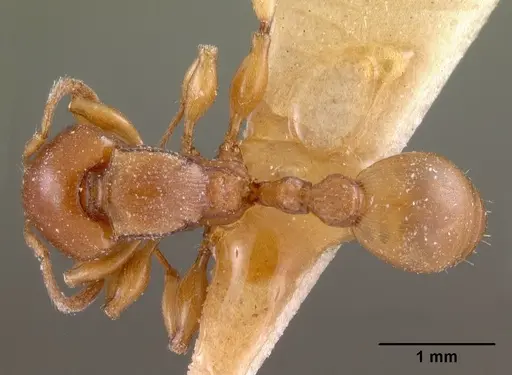
CASENT0102230
View on AntWeb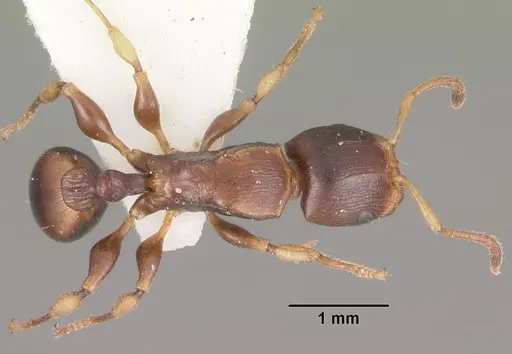
CASENT0104610
View on AntWeb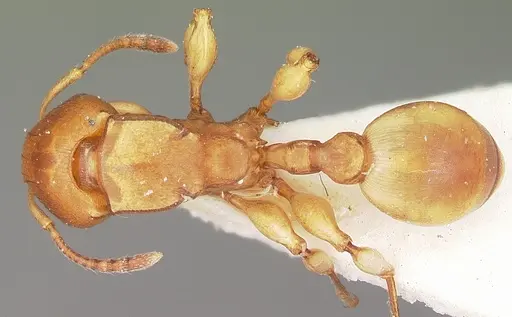
CASENT0172275
View on AntWeb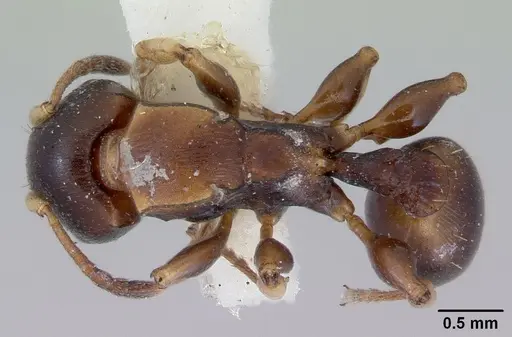
CASENT0363561
View on AntWeb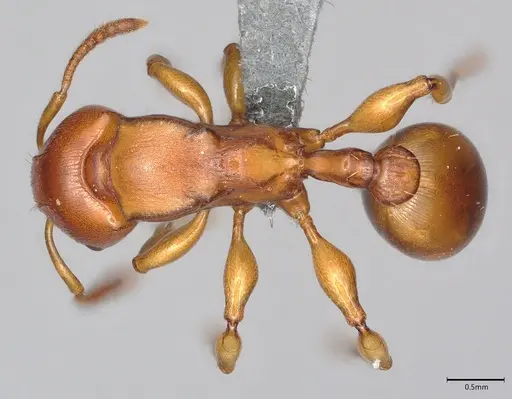
CASENT0415628
View on AntWeb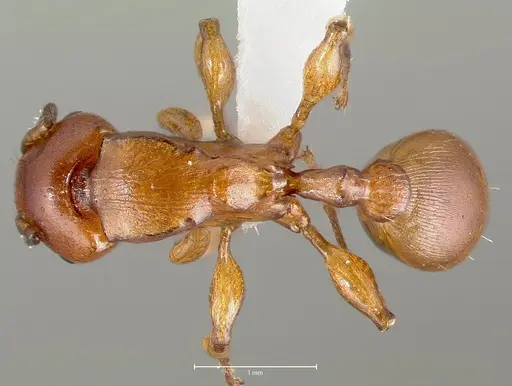
Literature
Loading distribution map...Loading products...