
Terataner bottegoi
- Sci. Name
- Terataner bottegoi
- Tribe
- Crematogastrini
- Subfamily
- Myrmicinae
- Author
- Emery, 1896
- Distribution
- Found in 3 countries
Introduction
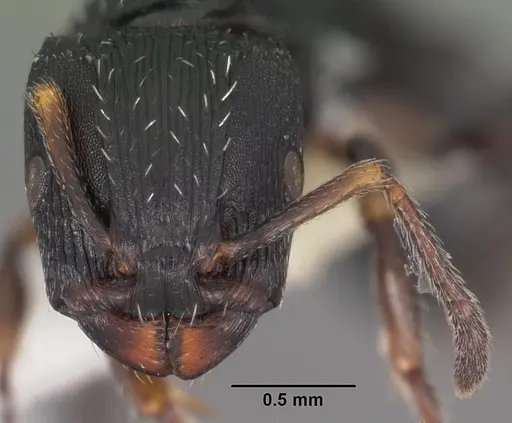
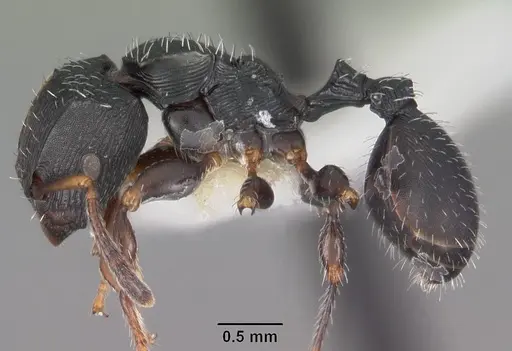
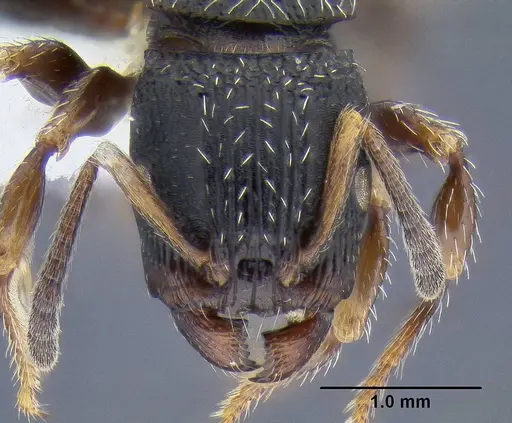
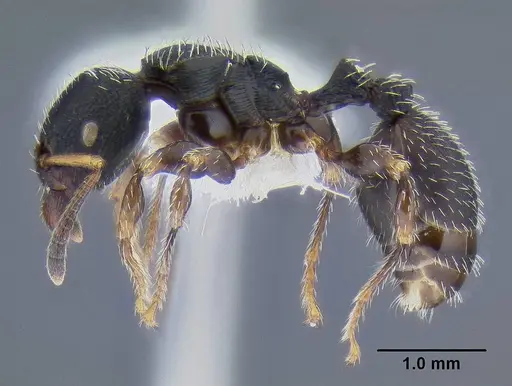
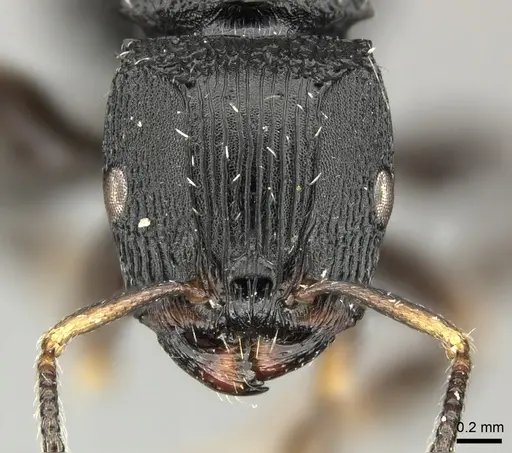
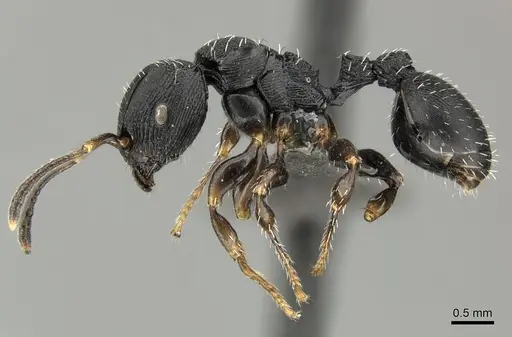
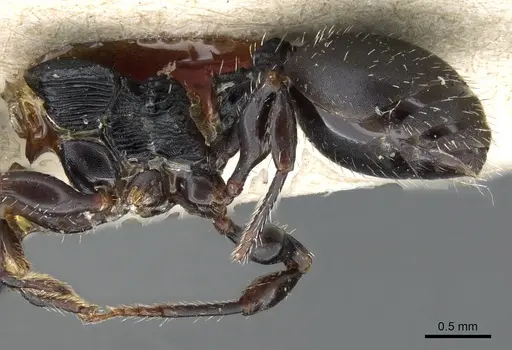
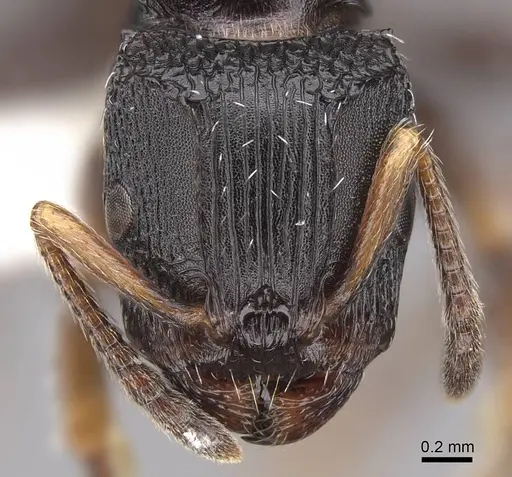
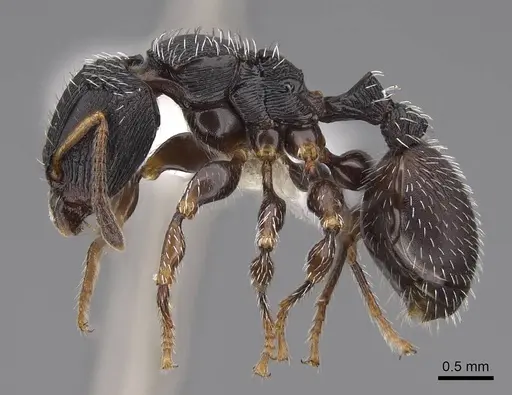
Terataner bottegoi is a small- to medium-sized ant from East Africa, found in Kenya, Somalia, and Tanzania. Workers are 4.8-6.0 mm long, completely black with brownish legs, and have a robust body covered in dense, silvery-white standing hairs that give them a fuzzy look. They also have raised frontal carinae (ridge-like structures) on the head and a strongly marginated pronotum with sharp, angular corners . What makes this species special is the ergatoid queen - a wingless reproductive that develops from the worker caste instead of the typical winged queen. Colonies are monogynous (single queen) and nest in dead aerial twigs and small plant cavities, usually in dry forests along the Kenyan coast. They are active predators that hunt other arthropods, including ants and termites .
Quick Summary
- Difficulty: Medium
- Origin & Habitat: East Africa (Kenya, Somalia, Tanzania) in dry forest habitats. Nests in dead aerial twigs and preformed plant cavities like branches or twigs on the ground or in bushes [2][1].
- Colony Type: Monogynous colonies with a single ergatoid (wingless) queen. The ergatoid queen acts as the sole reproductive, and if the primary queen dies, a replacement ergatoid can take over [1][3].
- Size & Growth:
- Queen: Ergatoid queens are similar in size to workers (~4.8-6.0 mm), no separate measurements are available [3].
- Worker: 4.8-6.0 mm [1]
- Colony: Unknown, no documented colony sizes in available literature
- Growth: Moderate, typical for Myrmicinae
- Development: Estimated 6-10 weeks based on related Myrmicinae species at optimal temperature (22-26 °C) (Development time is inferred from genus-level data, no species-specific studies exist.)
- Antkeeping:
- Temperature: Keep at 22-26 °C. They are an East African species adapted to warm conditions. A gentle temperature gradient allows workers to self-regulate [2].
- Humidity: Keep the nest on the drier side, dry forest ants dislike constant dampness. Provide a small water tube or a moist corner in the outworld, but avoid overall wet substrate.
- Diapause: Probably not required, the species comes from a tropical region with mild seasonal variation. If colony activity drops during cooler months, you can lower the temperature a few degrees for a short rest (2-4 weeks at 18-20 °C) but this is optional.
- Nesting: Simulate their natural twig nests with tight, narrow chambers. Y‑tong (AAC) nests, small cork bark sections, or plaster nests with small chambers work well. Avoid large open spaces, they prefer snug quarters. Connect the nest to an outworld with substrate for foraging [2][1].
- Behavior: Terataner bottegoi workers are active, moderately aggressive predators. They hunt live arthropods and defend their colony readily. They are not especially skittish, but their small size (under 6 mm) means they can escape through tiny gaps, use tight seals and apply fluon or other barriers to the outworld walls. Workers are mostly nocturnal or crepuscular, so you’ll see the most hunting activity in the evening.
- Common Issues: need regular live prey, they are obligate predators and won’t thrive on sugar alone., sensitive to excessive moisture, dry forest ants mold easily if the nest is too wet., ergatoid queens may be fragile, handle colony introductions with care., slow colony growth, expect a modest pace compared to more common ants., limited availability, this species is rare in the hobby and hard to acquire.
Housing and Nest Preferences
Terataner bottegoi naturally nests in dead aerial twigs and small plant cavities [2][1]. In captivity, you can mimic this by providing nests with tight, narrow chambers. Y‑tong (AAC) nests work well, as do small cork bark sections or plaster nests designed for small Myrmicinae. The key is giving them appropriately sized spaces, chambers should be snug for the workers, not spacious. Avoid large open areas in the nest. An outworld with a thin layer of substrate for foraging completes the setup. Use a test tube connected to the formicarium for water access [2][1].
Feeding and Diet
These ants are predators by nature, feeding primarily on other arthropods, their larvae, and often other ants or termites [2]. In captivity, offer a varied protein diet including small live insects like fruit flies, pinhead crickets, and mealworms. They will also accept dead insects and may take protein jelly or frozen insects. Sugar sources like honey water or sugar water are typically accepted for energy, though protein should make up the majority of their diet. Feed every 2-3 days, removing uneaten prey after 24 hours to prevent mold. A constant sugar water supply is recommended. Unlike some ants, they do not tend aphids or collect honeydew as a primary food source.
Temperature and Seasonal Care
As an East African species from Kenya, Somalia, and Tanzania, Terataner bottegoi prefers warm conditions. Maintain temperatures between 22-26 °C for optimal colony health and brood development. A slight temperature gradient in the outworld allows workers to regulate their body temperature by moving between warmer and cooler areas. They likely do not need a winter diapause, but if your colony slows down during cooler months, you can lower the temperature to 18-20 °C for a few weeks, this is optional and not strictly necessary. Avoid temperatures below 15 °C. Use a small heating cable on one side of the nest if room temperature falls below their preferred range [2].
Colony Structure and Ergatoid Queens
This species is unusual in that colonies are monogynous with a single ergatoid queen rather than the typical winged queen [1][3]. Ergatoid queens are wingless females that develop from worker larvae and can serve as replacement reproductives if the primary queen dies or becomes ineffective. This means the colony has built‑in succession planning, if something happens to the queen, an ergatoid can take over egg‑laying duties. When establishing a colony from a wild‑caught queen, you may receive an ergatoid rather than a winged queen. The colony will typically contain one ergatoid queen and workers of various sizes [1][3].
Behavior and Temperament
Terataner bottegoi workers are active predators with moderate aggression when defending their colony. They forage actively, searching for prey rather than waiting for food to come to them. Workers communicate through chemical trails and will recruit nestmates to large prey items. They are not typically skittish but will bite if threatened. Their small size (under 6 mm) means they can squeeze through small gaps, so ensure your formicarium has tight‑fitting connections and use fluon or other barriers on the outworld. They are primarily nocturnal or crepuscular, so you may see more activity during evening hours.
Frequently Asked Questions
Is Terataner bottegoi good for beginners?
Not really. They need regular live prey, specific nesting conditions (tight twig‑like cavities), and they're uncommon in the hobby. If you have experience with other Myrmicinae like Tetramorium or Solenopsis, you may succeed. Beginners should start with more established species like Lasius or Camponotus.
How long does it take for Terataner bottegoi to produce first workers?
Exact development time is unconfirmed for this species. Based on related Myrmicinae, expect 6-10 weeks from egg to worker at optimal temperature (22-26 °C). Growth is typically moderate, faster than large Camponotus but slower than tropical species like Pheidole. Patience is required as colonies develop.
Can I keep multiple Terataner bottegoi queens together?
No. This species is monogynous, meaning colonies naturally have only one queen. Multiple unrelated queens will fight, and even ergatoid replacement queens should not be introduced to an established colony. If you acquire a colony, it should already have a single queen [1].
Do Terataner bottegoi ants sting?
As a Myrmicinae species, they have a functional stinger and can sting if threatened. The sting is not medically significant for healthy humans but can be painful. They are not aggressive toward humans but will defend the nest if disturbed. Their main defense is smearing venom rather than piercing, a trait shared with many Crematogastrini.
What do Terataner bottegoi eat?
They are predators that need live or dead insects as their primary food. Offer small crickets, fruit flies, mealworms, and other small arthropods. They will also accept sugar water or honey for energy. Unlike many ants, they do not typically collect honeydew from aphids [2].
How big do Terataner bottegoi colonies get?
Colony size is not well documented. Based on their nesting in small twigs, colonies are likely to remain moderate, probably under 500 workers. They are not known for producing supercolonies [2].
Do Terataner bottegoi need hibernation?
Probably not. They come from a tropical East African region with mild seasonal variation. A winter rest period is not necessary. If your colony slows down during cooler months, you can reduce the temperature slightly (18-20 °C) for a few weeks, but this is optional.
What type of nest is best for Terataner bottegoi?
They naturally nest in dead aerial twigs and small plant cavities, so provide nests with narrow, tight chambers. Y‑tong (AAC) nests, small cork bark sections, or plaster nests with small chambers work well. Avoid large open spaces, they prefer snug quarters similar to their natural twig homes [2][1].
Why is my Terataner bottegoi colony dying?
Common causes include: lack of regular protein prey (they are obligate predators), excessive humidity (they are dry‑forest ants), temperatures outside their 22-26 °C range, or stress from disturbance. Ensure they have constant access to prey insects and maintain appropriate dry conditions. Wild‑caught colonies may also carry parasites [2].
Report an Issue
The current care sheet is based fully on literature. See inconsistencies, or something that's incorrect? Please , it will be resolved after review from an admin. Contributing to the blogs tab also helps providing information, to make us be able to further improve the caresheets. Thank you for your support!
References

This caresheet is licensed under CC BY-SA 4.0 .
Community Blogs
CASENT0102227
View on AntWeb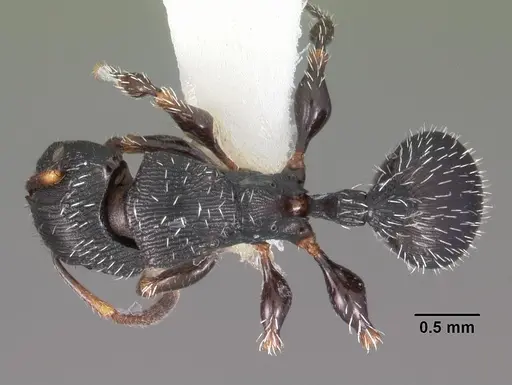
CASENT0106298
View on AntWeb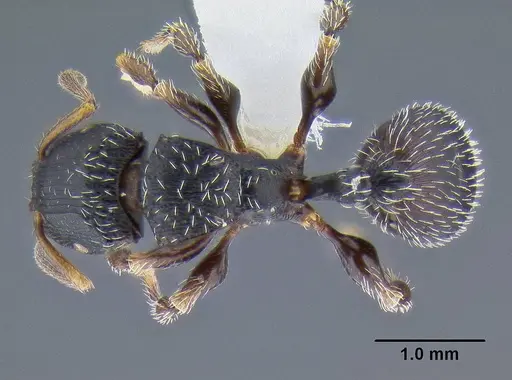
CASENT0235739
View on AntWeb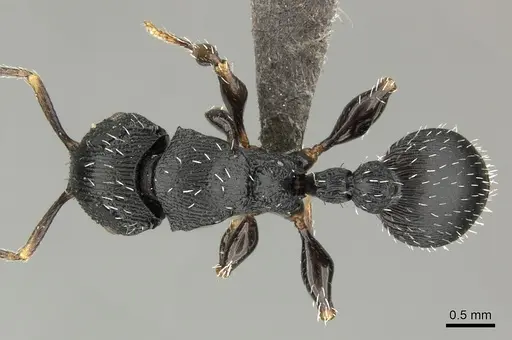
CASENT0905752
View on AntWeb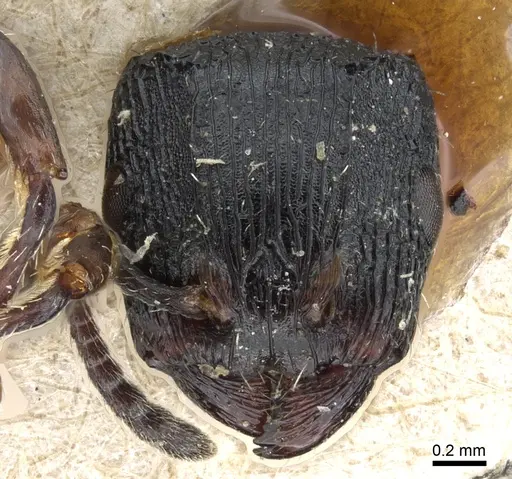
CASENT0922903
View on AntWeb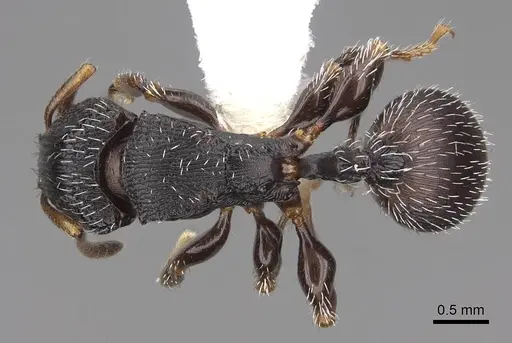
Literature
Loading distribution map...Loading products...