
Temnothorax versicolor
- Sci. Name
- Temnothorax versicolor
- Tribe
- Crematogastrini
- Subfamily
- Myrmicinae
- Author
- Roger, 1863
- Distribution
- Found in 1 countries
Introduction
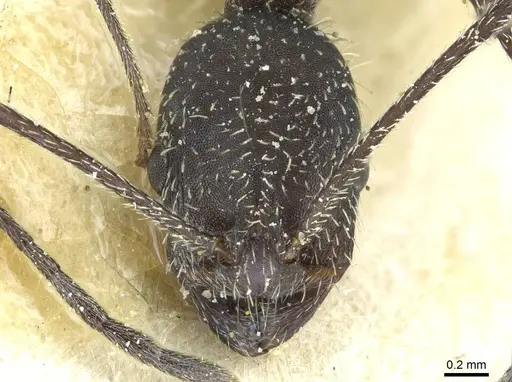
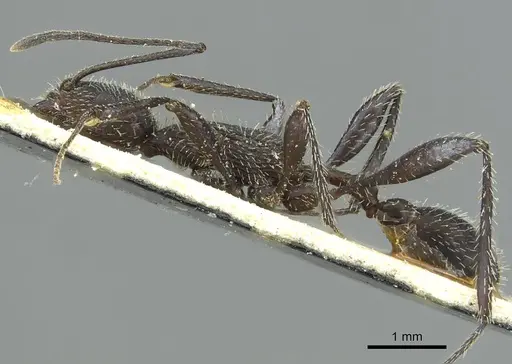
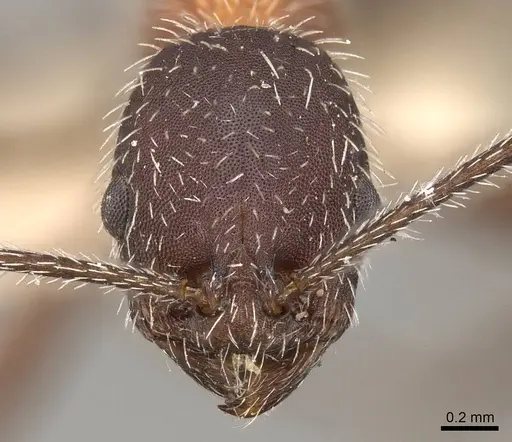
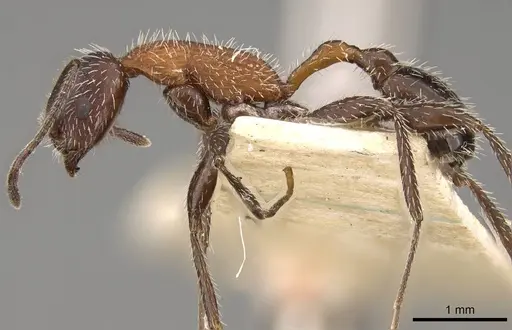
Temnothorax versicolor is a small ant endemic to Cuba . It belongs to the versicolor group, which is characterized as petricolous (rock-dwelling) . They are found in rocky forest habitats across multiple regions of Cuba (HAM, IJ, PG) . Their small size and cryptic habits make them difficult to spot in the wild. Specific details on appearance and behavior in captivity are not well documented.
Quick Summary
- Difficulty: Medium
- Origin & Habitat: Cuba, endemic to the island, found in rocky forest habitats [1][3][2]. They nest under stones and in rock crevices (petricolous) [3].
- Colony Type: Unknown. No data available on queen number or social structure for this species.
- Size & Growth:
- Queen: size data unavailable
- Worker: size data unavailable
- Colony: Unknown, no data available
- Growth: Unknown
- Development: Unknown, no data available (No studies have documented development timeline for this species.)
- Antkeeping:
- Temperature: Unknown. Based on Cuban climate, likely warm (22-28°C) but unconfirmed. Monitor and adjust based on colony activity.
- Humidity: Unknown. As petricolous ants, they may tolerate drier conditions than soil-nesting species, but no specific data. Provide a moisture gradient.
- Diapause: Unknown. Cuba is tropical, so diapause may not be required, but no data exists. Observe seasonal changes in activity.
- Nesting: Based on natural habitat, they prefer rock crevices. In captivity, Y-tong (AAC) nests with tight chambers or test tubes are likely suitable. Avoid overly damp substrates.
- Behavior: Unknown. The subfamily Myrmicinae (tribe Crematogastrini) typically uses a smear defense mechanism with a flattened stinger. No specific behavior data for this species. Escape prevention is important due to their small size.
- Common Issues: escape prevention is critical due to their tiny size, use fine mesh and check all seals, lack of published data means keepers must rely on careful observation and adjust care as needed, overfeeding may cause mold, keep the nest relatively dry, temperature stress from unknown optimal range, avoid extremes until patterns emerge
Natural History and Distribution
Temnothorax versicolor is a Cuban endemic species [1][2]. It belongs to the versicolor group within the petricolous lineage, meaning they are adapted to living in rocky habitats [3]. Records show distribution in areas coded HAM, IJ, and PG [3]. The species was originally described in the genus Macromischa [1] and later moved to Leptothorax before its current placement [3][2]. No detailed ecological studies are available.
Housing and Nest Preferences
Given their petricolous nature [3], Temnothorax versicolor likely prefers tight, dry nest chambers such as those in Y-tong (AAC) blocks or test tube setups. A standard setup would be a Y-tong nest connected to a dry outworld. Provide a small water tube for hydration but avoid keeping the nest itself moist. Because their size is not documented, choose a setup with small chambers (e.g.,5mm height). Use fine mesh or fluon barriers to prevent escapes.
Feeding and Diet
No specific diet data exists for this species. Based on general Temnothorax behavior, they likely accept sugar water or honey for energy and small insects (fruit flies, tiny mealworms) for protein. Feed in small amounts and remove leftovers after 24 hours to prevent mold. Observe acceptance and adjust accordingly.
Temperature and Seasonal Care
No studies have determined optimal temperatures for Temnothorax versicolor. As a Cuban endemic, they may tolerate warm conditions (22-28°C) but keep stable to avoid stress. Diapause requirements are unknown, Cuba has minimal seasonal variation, so a rest period may not be necessary. Monitor colony activity and adjust gradually if needed.
Colony Founding
Founding behavior is unconfirmed. If queens are found after nuptial flights (which are undocumented), they may attempt to start a colony in a small chamber. The typical Temnothorax founding strategy (claustral, sealing themselves in) may apply, but this is speculation. Provide a dark, undisturbed test tube and wait. No data on success rates.
Behavior and Temperament
No specific behavioral observations are recorded. As members of the tribe Crematogastrini (subfamily Myrmicinae), they likely use a smear defense mechanism with a modified stinger, rather than piercing venom. They are probably non-aggressive toward keepers. Their small size requires careful escape-proofing.
Frequently Asked Questions
How long does it take for Temnothorax versicolor to get their first workers?
This has not been documented. For other Temnothorax species, it may take 6-10 weeks at warm temperatures, but this is unconfirmed for T. versicolor.
Can I keep Temnothorax versicolor in a test tube?
Likely yes, as they are small ants that nest in crevices. Use a small test tube with a tight cotton plug. No specific data confirms this, but it is a common method for similar species.
Do Temnothorax versicolor ants sting?
They belong to a tribe that uses a smear mechanism rather than stinging. However, no specific reports exist for this species. They are considered harmless to humans.
What do Temnothorax versicolor eat?
No specific studies. Based on related species, they likely eat sugar water and small insects. Offer these and observe acceptance.
Are Temnothorax versicolor good for beginners?
Due to the lack of published information, they are not recommended for beginners. Their care requirements are unknown, and keepers must rely on careful experimentation.
Do Temnothorax versicolor need hibernation?
Their natural Cuban habitat has little seasonal temperature change, so hibernation is likely not required. However, no data confirms this. Keep conditions stable year-round initially.
How big do Temnothorax versicolor colonies get?
Colony size is unknown. Other Temnothorax species form small colonies (under a few hundred workers), but this has not been confirmed for T. versicolor.
Why are my Temnothorax versicolor dying?
Possible causes include escape (tiny ants), temperature stress, mold, or unknown pathogens. Check for escape holes, keep nest dry, and maintain stable conditions. Without published data, troubleshooting is trial-and-error.
When should I move my colony to a formicarium?
No specific advice is available. A test tube can likely support a small colony indefinitely. If the colony grows, connect a small Y-tong nest. Watch for signs of congestion.
Can I keep multiple queens together?
No data exists. For most Temnothorax, queens are monogyne and will fight. It is best to assume single-queen colonies unless proven otherwise.
Report an Issue
The current care sheet is based fully on literature. See inconsistencies, or something that's incorrect? Please , it will be resolved after review from an admin. Contributing to the blogs tab also helps providing information, to make us be able to further improve the caresheets. Thank you for your support!
References

This caresheet is licensed under CC BY-SA 4.0 .
Community Blogs
CASENT0913012
View on AntWeb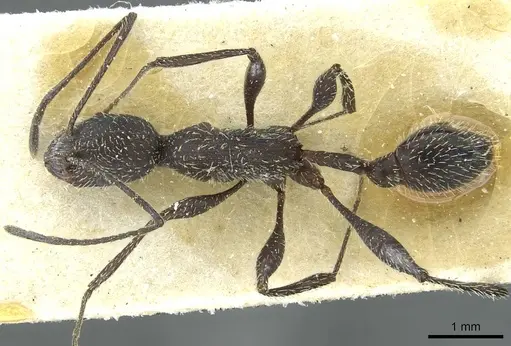
CASENT0914180
View on AntWeb
Literature
Loading distribution map...Loading products...