
Alabama Acorn Ant
Temnothorax tuscaloosae
- Sci. Name
- Temnothorax tuscaloosae
- Tribe
- Crematogastrini
- Subfamily
- Myrmicinae
- Author
- Wilson, 1951
- Common Name
- Alabama Acorn Ant
- Distribution
- Found in 1 countries
Introduction
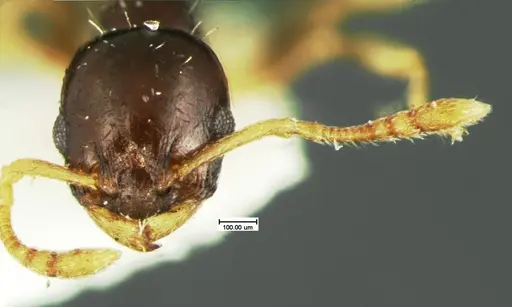
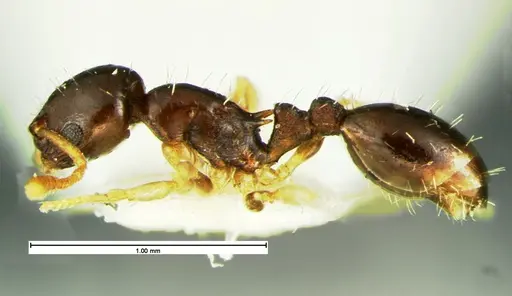
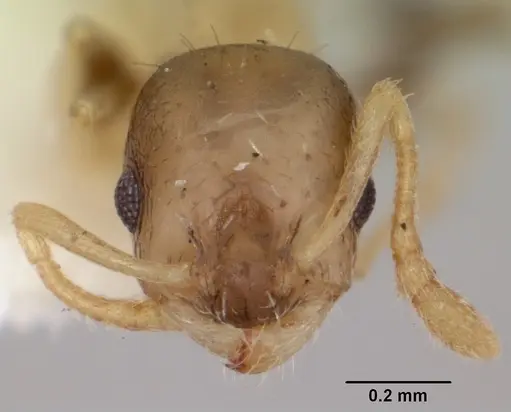
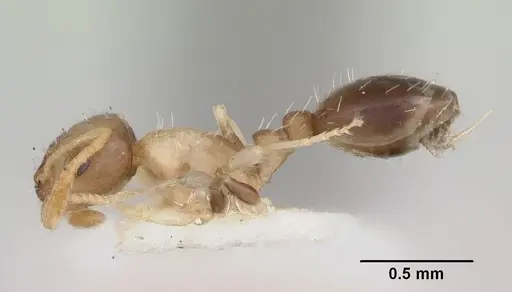
Temnothorax tuscaloosae is a tiny, dark brown ant native to the southeastern United States. Workers are about 1.9 mm long, with a shiny appearance, pale yellow legs and antennae, and look similar to small dark Monomorium workers in the field . Queens are slightly larger, roughly 2.7 mm . This species is best known for having the highest queen numbers recorded in the genus Temnothorax - colonies average over 10 queens, with up to 38 in a single nest, and nearly all queens are mated and actively laying eggs . Colonies are small (averaging 55 workers) but pack in many queens, giving a queen‑to‑worker ratio of about 1:6.5 . They nest in tiny cavities such as acorns, hickory nuts, sticks in leaf litter, and soil cavities in deciduous forests . The species is also tolerant of unrelated colonies, often fusing when placed together .
Quick Summary
- Difficulty: Medium
- Origin & Habitat: Southeastern United States, recorded from Alabama, Mississippi, North Carolina, Tennessee, South Carolina, Georgia, and Virginia. Inhabits mesic hardwood forests, especially at the bases of large trees in leaf litter. Nests in acorns, hickory nuts, small sticks, and soil cavities [2][5][4][1].
- Colony Type: Extremely polygynous, colonies average 10.4 ± 7.7 queens (range 1-38), with 77.3% polygynous (5+ queens),21.3% oligogynous (2-4 queens), and only 1.3% monogynous. All queens are mated and actively laying eggs, workers can also lay unfertilized eggs [2][3]. Colonies show unicolonial tendencies, fusing readily with unrelated conspecifics [2].
- Size & Growth:
- Queen: ~2.7 mm [1].
- Worker: ~1.9 mm [1].
- Colony: Average 54.5 workers per colony, up to around 100 [2].
- Growth: Moderate, typical for Temnothorax.
- Development: Estimated 6-10 weeks, based on related Temnothorax species. (No direct developmental data exists, the estimate comes from other members of the genus. Multiple egg‑laying queens may speed up production once the colony is established.)
- Antkeeping:
- Temperature: Room temperature (20-24°C) during the active season. As a subtropical species, they tolerate warmth but should avoid extreme heat (above 30°C). Northern populations (Virginia) experience winter freezing, so a cool rest period is needed [2].
- Humidity: Moderate to moist. The natural habitat is leaf litter on the forest floor, so keep the nest substrate lightly moist but not waterlogged, and provide a drier area. Misting the outworld occasionally helps.
- Diapause: Yes, Virginia populations face episodic winter freezing [2]. Provide a winter rest period of 2-3 months at 5-10°C (e.g., in a refrigerator). Skipping diapause may stress the colony.
- Nesting: Use small, tight chambers scaled to their tiny 1.9 mm workers. Y‑tong (AAC) nests with narrow passages, small test tubes, or naturalistic setups with actual acorns or hickory nuts work well. They also nest in soil cavities and under rocks [2][4][1].
- Behavior: Workers are small, dark, and forage on the ground. Colonies are non‑aggressive and show high social tolerance, nest fusion experiments revealed no aggression between individuals from different colonies, even from distances up to 200 m [2]. Workers can lay unfertilized eggs [2]. Their defense mechanism is smearing venom (common to the tribe Crematogastrini) rather than stinging, though to humans it is imperceptible. Excellent escape prevention is critical because of their minute size, they can squeeze through gaps of less than 1 mm.
- Common Issues: escape prevention is critical, workers are only 1.9 mm and can slip through standard barriers., multiple egg‑laying queens are normal, don't try to reduce queen numbers., small colony size (under 100 workers) is typical and not a sign of poor health., winter hibernation is required, colonies kept warm year‑round may decline., wild‑caught colonies may suffer from competition with invasive fire ants (Solenopsis invicta) in parts of the native range [2].
Understanding the Extreme Polygyny
Temnothorax tuscaloosae holds the record for the highest queen numbers known in the genus Temnothorax. Studies found colonies averaging 10.4 queens, with some nests containing up to 38 egg‑laying queens [2]. This is remarkable because most Temnothorax species have only 1-2 queens per colony. The species is functionally polygynous, meaning all queens in a colony are mated and actively laying eggs. Dissections of 240 queens from 19 colonies showed that 235 had developed eggs and corpora lutea, even in nests with over 20 queens [2]. Workers can also produce unfertilized eggs, 4 of 12 dissected workers had ovarioles, and one contained a mature egg [2]. For antkeepers, this means your colony will naturally have multiple queens, that is normal and not a problem to fix.
Colony Fusion Behavior
This species shows unicolonial tendencies, colonies are extremely tolerant of each other. In experiments, researchers placed workers from different colonies together, and 92.9% fused within 5 days regardless of distance (tested up to 200 meters) [2]. No aggressive behavior was observed between individuals from different colonies. This suggests the species may not maintain strict colony boundaries like most ants do. For keepers, this means introducing workers from different Temnothorax tuscaloosae colonies will likely result in peaceful integration rather than fighting. However, if you want to maintain separate colonies, keep them well separated, they may fuse on their own.
Nesting and Housing
In the wild, Temnothorax tuscaloosae nests in tiny cavities, primarily acorns and hickory nuts in leaf litter, but also small sticks, soil cavities, and under rocks [2][4][1]. They prefer mesic (moderately moist) hardwood forests, often at the base of large trees [5]. Nest density can reach up to 12 nests per square meter in favorable spots [2]. For captive care, use small, tight chambers scaled to their tiny 1.9 mm workers. Y‑tong (AAC) nests with narrow passages, small test tubes, or a naturalistic setup with actual acorns or hickory nuts work well. Keep the nesting area humid but not wet, forest‑floor ants need moisture but not saturation. The outworld can be simple since workers are small foragers that travel modest distances.
Temperature and Seasonal Care
As a subtropical species from the southeastern United States, Temnothorax tuscaloosae prefers warm conditions but has adapted to temperate climates in its northern range (Virginia). The Virginia population experiences winter conditions with yearly episodic freezing temperatures, so this species does require a winter dormancy period [2]. During the active season, keep colonies at room temperature (roughly 20-24°C). In fall, reduce temperatures to around 5-10°C for 2-3 months to simulate winter. This hibernation period is important for colony health and may trigger reproductive behavior in spring. Do not keep them warm year‑round, as that can stress the colony.
Feeding and Diet
Specific dietary studies for Temnothorax tuscaloosae are lacking, but based on related Temnothorax species, they likely feed on small insects, honeydew, and nectar from the forest floor. In captivity, offer small protein sources such as fruit flies, pinhead crickets, or small mealworms. Provide sugar water or honey as a carbohydrate source. Feed small amounts 2-3 times per week and remove uneaten prey to prevent mold. Because of their tiny size, all food items should be very small.
Growth and Development
Colonies are relatively small compared to many common ant species, averaging about 55 workers [2]. This is normal for the species, they are not slow‑growing, they simply stay small. Larger colonies tend to have more queens (statistically correlated), suggesting queen number drives colony growth potential [2]. Development from egg to worker likely takes 6-10 weeks based on typical Temnothorax patterns, though this has not been specifically studied for this species. The presence of multiple egg‑laying queens means colonies can produce workers steadily once established.
Frequently Asked Questions
How many queens will my Temnothorax tuscaloosae colony have?
This species naturally has multiple queens, colonies average around 10 queens, with some having up to 38. Unlike most ant species where multiple queens fight to the death, all these queens peacefully coexist and actively lay eggs. Expect your colony to have multiple queens from the start, which is completely normal [2].
Are Temnothorax tuscaloosae good for beginners?
This is a medium‑difficulty species. They are small and require excellent escape prevention, but their colony requirements are straightforward. The main challenge is understanding their unusual polygynous colony structure, having multiple egg‑laying queens is normal, not a problem to fix. They also need winter hibernation. If you can provide small housing and proper seasonal care, they are manageable for intermediate keepers.
Do Temnothorax tuscaloosae ants sting?
Temnothorax ants belong to the tribe Crematogastrini, which have a modified stinger used to smear venom rather than pierce skin. For humans, this is imperceptible, they are not known to cause any pain. They may bite if handled roughly, but the bite is negligible due to their minute size.
How long does it take for eggs to become workers?
No direct developmental data exists for this species. Based on typical Temnothorax genus patterns, expect roughly 6-10 weeks from egg to first worker at room temperature. The multiple queens may help speed up production once the colony is established.
Can I keep multiple Temnothorax tuscaloosae colonies together?
Yes, and they may actually fuse on their own. Research shows 92.9% of colonies will merge within 5 days when placed together, with no aggressive behavior observed [2]. This species shows unicolonial tendencies, they are extremely tolerant of unrelated conspecifics. However, if you want to maintain separate colonies, keep them well separated.
What do Temnothorax tuscaloosae eat?
No specific dietary studies exist, but based on related Temnothorax species, they likely accept small protein sources (fruit flies, tiny crickets, mealworms) and sugar sources (honey water, sugar water). Feed small prey items 2-3 times per week and provide constant access to sugar water. Remove uneaten prey to prevent mold.
Do Temnothorax tuscaloosae need hibernation?
Yes. As a species found as far north as Virginia where winters include freezing temperatures, they require a winter rest period [2]. In fall, reduce temperatures to 5-10°C for 2-3 months. This mimics their natural seasonal cycle and is important for colony health.
How big do Temnothorax tuscaloosae colonies get?
Colonies average about 55 workers, with some reaching around 100 [2]. This is relatively small compared to many common ant species, but normal for this tiny acorn‑nesting ant. The many queens (average 10+) make up for the modest worker count.
What size nest do I need for Temnothorax tuscaloosae?
Use small, tight chambers scaled to their tiny 1.9 mm workers. A Y‑tong (AAC) nest with narrow passages works well, or small test tube setups. They naturally nest in acorns and hickory nuts, so a naturalistic setup with small hollow structures also works. Avoid large, open spaces.
Why are my Temnothorax tuscaloosae dying?
Common causes include: escape due to small size (use fine mesh and tight barriers), improper humidity (too dry causes desiccation, too wet causes mold), lack of hibernation in winter, and stress from overheating. They are subtropical but need cooler winter rest. Also ensure you are not accidentally keeping them with aggressive invasive ants like fire ants (Solenopsis invicta), which have invaded their native habitat [2].
Will workers fight if I combine two colonies?
Likely not. This species shows unusual social tolerance, experiments showed no aggressive behavior when combining workers from different colonies [2]. They may actually fuse peacefully. This is different from most ant species where introducing foreign workers triggers fighting.
Report an Issue
The current care sheet is based fully on literature. See inconsistencies, or something that's incorrect? Please , it will be resolved after review from an admin. Contributing to the blogs tab also helps providing information, to make us be able to further improve the caresheets. Thank you for your support!
References

This caresheet is licensed under CC BY-SA 4.0 .
Community Blogs
CASENT0105628
View on AntWeb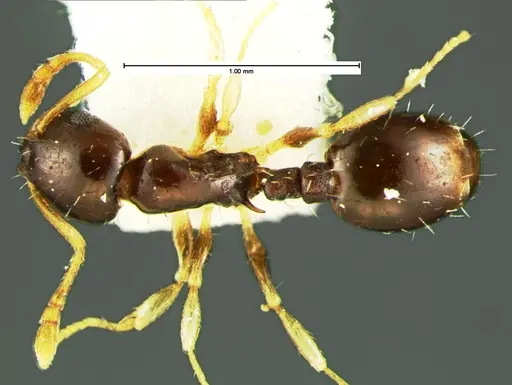
CASENT0172600
View on AntWeb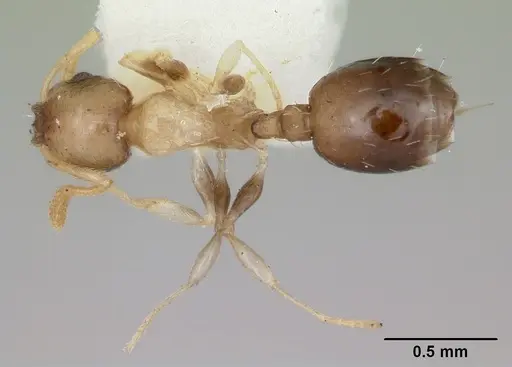
Literature
Loading distribution map...Loading products...