
Temnothorax trabutii
- Sci. Name
- Temnothorax trabutii
- Tribe
- Crematogastrini
- Subfamily
- Myrmicinae
- Author
- Forel, 1894
- Distribution
- Found in 2 countries
Introduction
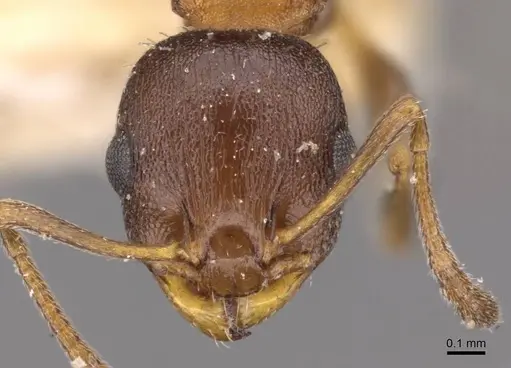
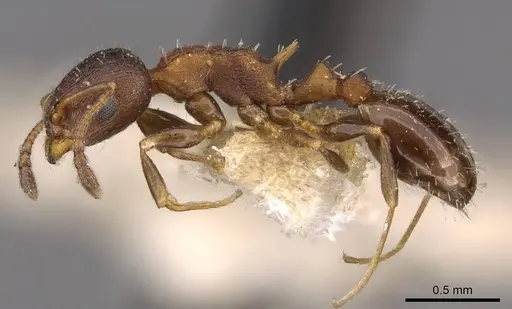
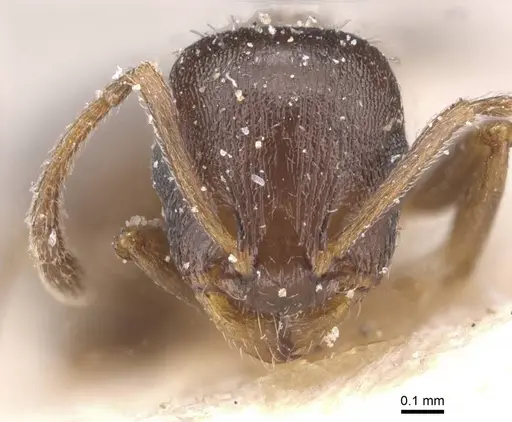
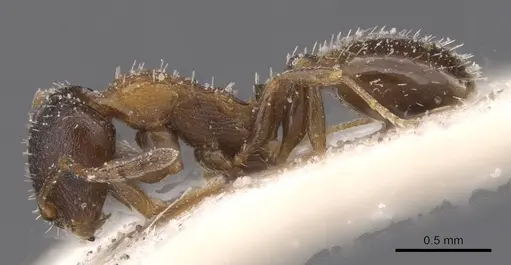
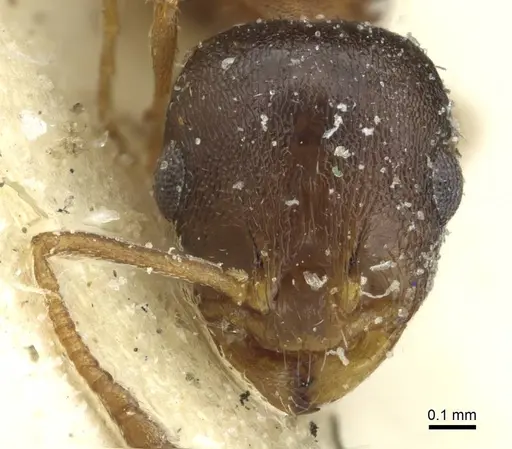
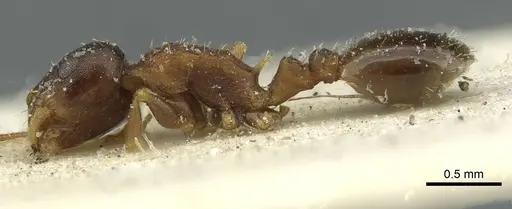
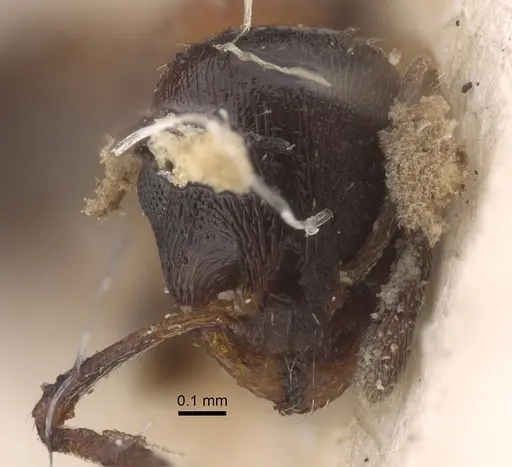
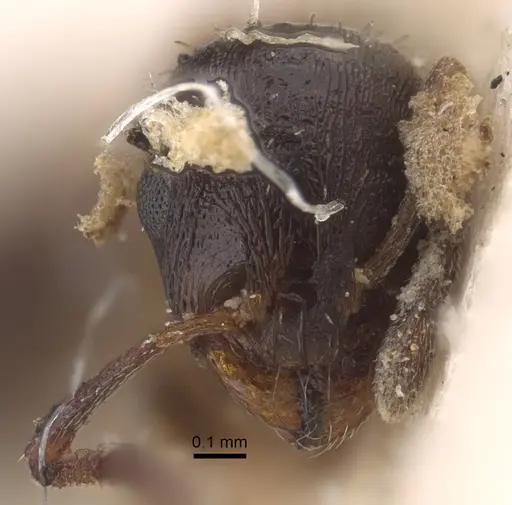
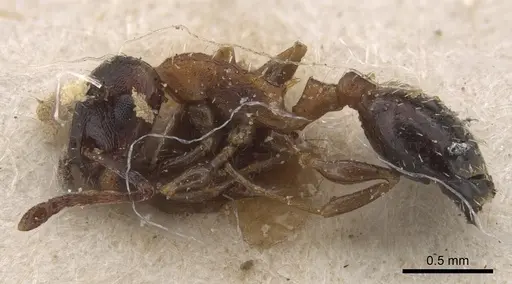
Temnothorax trabutii is a small, bicolored ant from the mountains of Algeria and Morocco. Workers have a dark brown-black head, a brown-yellow to reddish mesosoma (the middle body section), and a dark brown gaster . They are most easily identified by their very long, robust propodeal spines that are often curved inward when viewed from above, and by the steep, straight slope of the propodeal dorsum – a unique feature among related species . The species lives in cool, humid oak and cedar forests of the Tellian Atlas and Moroccan Atlas at 1100–2000 meters elevation . In the antkeeping hobby, they are rarely kept and offer a challenge for those interested in cold-adapted mountain ants.
Quick Summary
- Difficulty: Medium
- Origin & Habitat: Native to Algeria and Morocco in North Africa, found in the Tellian Atlas (especially the western part), southern Aurès, and Moroccan Atlas mountains. Their habitat is the fresh, cold subhumid level of forests dominated by Quercus ilex (holm oak) and Cedrus (cedar) between 1100 and 2000 meters elevation [1][2].
- Colony Type: Likely monogyne (single-queen colonies), based on typical Temnothorax patterns, but no specific studies confirm colony structure for this species.
- Size & Growth:
- Queen: Exact body length not reported, based on related Temnothorax species, queens are likely around 4–6 mm (inferred).
- Worker: Exact body length not reported, based on related Temnothorax species, workers are likely 2.5–4 mm (inferred) [1][2].
- Colony: Up to a few hundred workers at maturity (estimated from genus patterns).
- Growth: Moderate
- Development: Estimated 6–10 weeks at optimal temperature (around 20°C), inferred from typical Temnothorax development [1]. (Development time is not confirmed for this species, cooler conditions may slow growth.)
- Antkeeping:
- Temperature: Keep at 18–22°C. These are cold-adapted mountain ants adapted to cool, humid forests. Avoid overheating – room temperature is often sufficient [1].
- Humidity: Moderate to high humidity. The species comes from cool, humid forests, so keep the nest substrate consistently moist but not waterlogged. Provide a drier area for the ants to self-regulate [1].
- Diapause: Yes. Based on their mountain habitat, they likely require a winter rest period of 2–3 months at around 10–15°C (inferred).
- Nesting: Y-tong (AAC) nests with small, snug chambers work well for these tiny ants. Test tubes are suitable for founding colonies. Naturalistic setups with flat stones or moss can mimic their forest floor environment.
- Behavior: Peaceful and non-aggressive. Like other Myrmicinae, they possess a modified stinger used to smear venom onto attackers rather than piercing – this is generally harmless to humans. They rely on escape rather than confrontation. Their tiny size (around 3 mm) means excellent escape prevention is mandatory – use fine mesh and seal all gaps. Colonies are calm but can be sensitive to excessive vibration.
- Common Issues: tiny size means escapes are likely without fine mesh barriers, cold-adapted species may overheat in warm rooms – monitor temperatures closely, limited availability in the hobby makes founding colonies challenging, slow growth can test patience – resist overfeeding, humidity control is important – too dry causes brood loss, too wet risks mold
Housing and Nest Preferences
Temnothorax trabutii does well in Y-tong (AAC) nests with small, tight chambers that match their tiny size. Test tube setups work perfectly for founding colonies – the queen will seal herself in a small chamber until the first workers emerge. Naturalistic setups with flat stones or moss can mimic their mountain forest habitat, but ensure all connections are escape-proof. Because of their tiny size (workers ~3 mm), any gap larger than 0.5 mm can be an escape route. Use fine mesh or cotton plugs on ventilation holes [1][2].
Feeding and Diet
Temnothorax trabutii is omnivorous with a preference for protein. Offer small live prey such as fruit flies, pinhead crickets, and tiny mealworms. They also accept sugar sources like honey water or sugar water, which provide energy for the colony. In the wild, they likely forage for small insects and tend aphids for honeydew in their forest habitat. Feed protein 2–3 times per week for established colonies and keep a constant sugar source available. Remove uneaten prey after 24–48 hours to prevent mold. Because the ants are so small, prey items should be appropriately sized – nothing larger than the ants themselves [3].
Temperature and Seasonal Care
These are cold-adapted mountain ants. Keep the nest area at 18–22°C year-round, with a winter diapause period. They naturally inhabit cool Atlas mountain forests at elevations of 1100–2000 m where temperatures are moderate to cool [1]. Avoid placing the colony near heat sources or in warm rooms. For diapause, cool the colony to 10–15°C for 2–3 months during winter. This mimics their natural seasonal cycle and is important for long-term colony health. In summer, ensure the colony does not overheat – room temperature is often ideal [1].
Colony Founding and Growth
Founding behavior is unconfirmed for this species, but typical for the genus Temnothorax is claustral founding – the queen seals herself in a small chamber and raises her first workers alone using stored fat reserves. Based on this, expect the first workers to emerge after 6–10 weeks at optimal temperatures (around 20°C) [1]. Keep founding colonies undisturbed in test tubes with minimal light exposure. Once the first workers (nanitics) emerge, offer tiny prey items. Colony growth is moderate, with the colony slowly expanding over the first year. Patience is essential – do not overfeed or disturb the colony during early development [1].
Behavior and Temperament
Temnothorax trabutii is a peaceful species that prefers escape over confrontation. Like other Myrmicinae, they possess a modified stinger used to smear venom onto attackers rather than piercing, but this is generally not painful to humans. Workers are active foragers and will search out small prey. They are not aggressive, but their tiny size (workers ~3 mm) makes them excellent escape artists – always use fine mesh and seal all connections. Colonies are calm but may be sensitive to vibrations and frequent disturbance. Handle with care and avoid loud noises or heavy movement near the nest [1].
Frequently Asked Questions
How long does it take for Temnothorax trabutii to get first workers?
Based on typical Temnothorax development, expect 6–10 weeks from egg to first worker at around 20°C. Cooler temperatures will slow this down. The queen raises the first brood alone using stored reserves [1].
What temperature do Temnothorax trabutii ants need?
Keep them at 18–22°C. They come from cool, humid Atlas mountain forests and prefer moderate temperatures – avoid overheating [1].
Do Temnothorax trabutii ants sting?
They possess a modified stinger, but it is used to smear venom onto attackers rather than piercing. This is a defense mechanism common to many Myrmicinae and is generally harmless to humans – it may cause a mild irritation if smeared on skin, but no sting pain [3].
How big do Temnothorax trabutii colonies get?
Colonies likely reach up to a few hundred workers at maturity, typical for small Temnothorax species [1].
Can I keep multiple Temnothorax trabutii queens together?
No specific studies exist, but based on typical Temnothorax patterns, this species is likely monogyne (single‑queen). Combining queens is not recommended as they may fight [1].
Do Temnothorax trabutii need hibernation?
Yes, they require a winter rest period (diapause) of 2–3 months at 10–15°C. This matches the cold season in their mountain habitat [1].
What do Temnothorax trabutii eat?
They are omnivorous with a preference for protein. Offer small live prey like fruit flies and pinhead crickets, plus sugar sources such as honey water. Feed protein 2–3 times per week [3].
Are Temnothorax trabutii good for beginners?
They are rated medium difficulty. Their specific temperature and humidity needs, combined with their tiny size (escape risk), make them more challenging than beginner species. If you have experience with other small Myrmicines, this can be a manageable species [1].
When should I move my Temnothorax trabutii colony to a formicarium?
Wait until the colony has at least 20–30 workers before moving to a larger setup. Keep founding colonies in test tubes until then. They do well in Y-tong nests with small chambers [3].
Why are my Temnothorax trabutii dying?
Common causes include overheating (keep below 22°C), excessively dry conditions (maintain humidity), poor escape prevention (check for gaps), or stress from disturbance. These are sensitive mountain ants – review temperature, humidity, and disturbance levels [1].
Report an Issue
The current care sheet is based fully on literature. See inconsistencies, or something that's incorrect? Please , it will be resolved after review from an admin. Contributing to the blogs tab also helps providing information, to make us be able to further improve the caresheets. Thank you for your support!
References

This caresheet is licensed under CC BY-SA 4.0 .
Community Blogs
CASENT0909013
View on AntWeb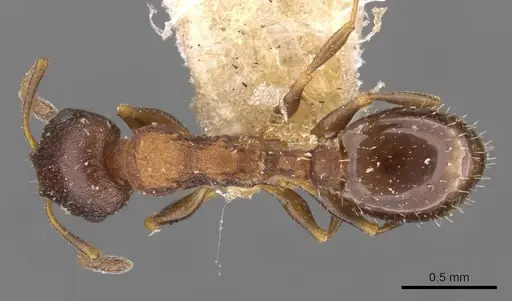
CASENT0912897
View on AntWeb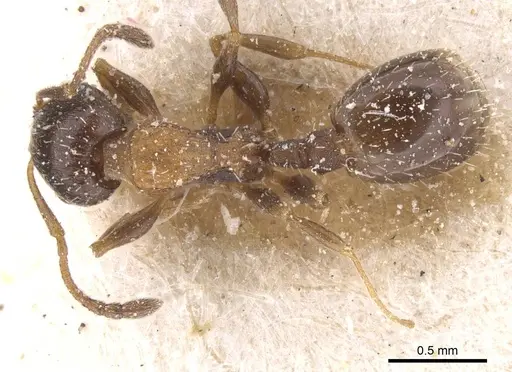
CASENT0912958
View on AntWeb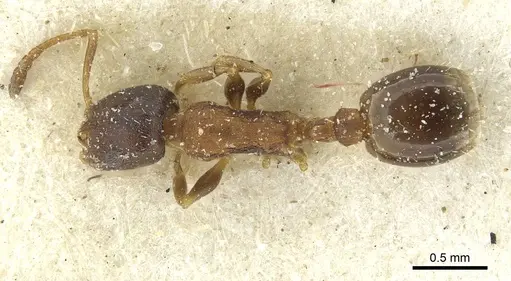
CASENT0917823
View on AntWeb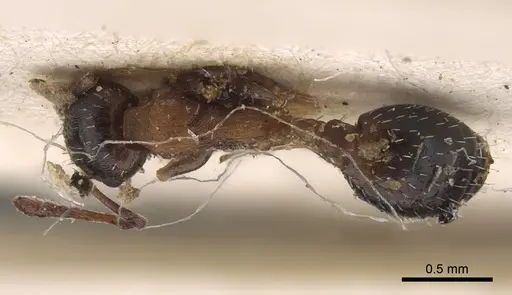
Literature
Loading distribution map...Loading products...