
Temnothorax terricola
- Sci. Name
- Temnothorax terricola
- Tribe
- Crematogastrini
- Subfamily
- Myrmicinae
- Author
- Mann, 1920
- Distribution
- Found in 1 countries
Introduction
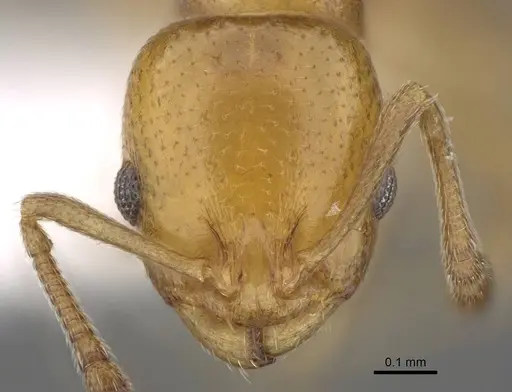
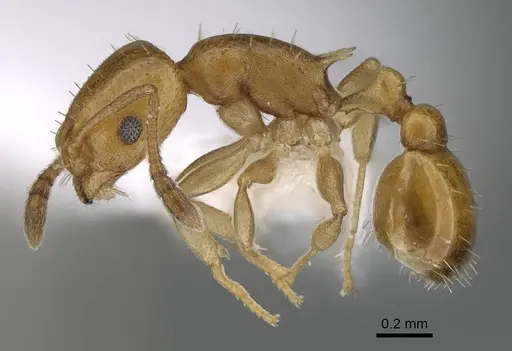
Temnothorax terricola is a tiny ant native to eastern Cuba, mostly known from the Guantanamo region near Baracoa . Workers are very small (size data unavailable, but typical Temnothorax workers are 2-4 mm). They have a uniformly light brown (testaceous) body with lighter-colored mandibles and leg tips. This species belongs to the pulchellus group within the Temnothorax salvini clade . What makes T. terricola special is its limited range – it is found only in low-elevation forests of Cuba. It nests under stones or in leaf litter, and forages on the ground. Like other members of the pulchellus group, it is a ground-dweller that does not nest in acorns or twigs. The name terricola means 'earth-dwelling' in Latin, referring to its nesting habits .
Quick Summary
- Difficulty: Medium
- Origin & Habitat: Eastern Cuba (Guantanamo region near Baracoa and the Nipe-Sagua-Baracoa mountain range). Found in low elevation pine forest and disturbed rainforest edges, as well as mid-elevation mixed Pinus cubensis/broadleaf evergreen forest [1].
- Colony Type: Single-queen colonies are likely, typical of most Temnothorax, but not confirmed for this species [2][3].
- Size & Growth:
- Queen: Size data unavailable – inferred from genus patterns (queens of similar Temnothorax are ~4-5 mm, but no specific data).
- Worker: Size data unavailable – typical Temnothorax workers are 2-4 mm, but no specific total length for this species.
- Colony: Unknown – no published data for mature colony size.
- Growth: Moderate – based on typical tropical Temnothorax species.
- Development: Estimated 6-8 weeks at 24-28°C based on genus patterns [2][3]. (Development likely faster than temperate Temnothorax due to tropical origin, direct data unavailable.)
- Antkeeping:
- Temperature: Warm tropical conditions: 24-28°C. Avoid dropping below 18°C. A gentle heat gradient helps ants thermoregulate [1].
- Humidity: Moderate to high. Keep nest substrate lightly moist but not waterlogged. Provide a moisture gradient so ants can choose drier or wetter areas. Their natural habitat includes rainforest edges with consistent moisture [1].
- Diapause: No true diapause required. As a tropical Cuban species, they can be kept active year-round. A slight seasonal temperature drop (to 20-22°C) is acceptable but not necessary [1].
- Nesting: Ground-nesting species. Prefers naturalistic setups with soil or fine substrate, flat stones, or Y-tong nests with narrow chambers. Keep the nesting area dark and quiet. Test tubes work for founding, but upgrade to a formicarium as the colony grows [1].
- Behavior: Peaceful and non-aggressive. Workers are small but active foragers on the ground. They use a 'smear' defense (modified spatulate stinger to wipe venom onto enemies) typical of the Crematogastrini tribe. Their tiny size makes escape critical – they can slip through very small gaps. Colonies are calm and not territorial toward other colonies [2][1].
- Common Issues: tiny size makes escape prevention critical – gaps under 1 mm can be exploited., humidity swings cause brood loss – maintain stable moisture., mold from overwatering or leftover food can kill small colonies., slow founding phase may tempt keepers to overdisturb the queen., wild-caught colonies may carry parasites – quarantine new acquisitions.
Housing and Nest Setup
Temnothorax terricola is a ground-nester, so naturalistic setups work best. Use a Y-tong (AAC) nest with narrow chambers or a plaster/soil formicarium. A test tube setup works for founding: fill one-third with water, plug with cotton, and place in a dark container. Keep the nesting area dark and humid. Once the colony reaches 30-50 workers, move them to a formicarium with a soil chamber. The outworld should have a fine substrate for foraging. Escape prevention is critical – these 2-3 mm ants can squeeze through tiny gaps [1].
Feeding and Diet
In the wild, they hunt small ground insects and collect honeydew. In captivity, offer tiny live prey like fruit flies, springtails, or pinhead crickets. They will accept protein gels and sugar water. Feed small amounts 2-3 times per week, remove uneaten food after 24 hours to prevent mold. A constant sugar source (honey water or sugar water) should be available. Adjust portion sizes to their small workers [1].
Temperature and Seasonal Care
As a tropical species from lowland Cuba, T. terricola stays active year-round at 24-28°C. No hibernation is needed. Avoid prolonged temperatures below 18°C. A slight temperature reduction to 20-22°C in winter mimics natural variation but is not required. Use a heating cable on one side of the nest to create a gradient. Humidity should be 60-80% – use a moisture reservoir or mist the outworld sparingly [1].
Colony Growth and Development
Temnothorax terricola grows moderately fast once the first workers emerge. The claustral founding phase lasts 4-8 weeks (estimated). After eggs are laid, workers appear in about 6-8 weeks at optimal temperatures. Initial nanitics are very small, the colony may take 6-12 months to reach 30-50 workers. Mature colony size is unknown – typical pulchellus group colonies stay under a few hundred workers. Be patient and avoid disturbing the nest during founding [2][3][1].
Behavior and Temperament
Temnothorax terricola is a calm, non-aggressive species. Workers are active foragers but not bold. When threatened, they flee or smear venom (a defensive behavior typical of the Crematogastrini tribe). Their stingers are too small to harm humans. Colonies are peaceful and should be kept alone – they are not aggressive toward other colonies, but competition could stress them. They do not perform complex cooperative behaviors [2][1].
Frequently Asked Questions
How long before first workers emerge in Temnothorax terricola?
Estimated 6-8 weeks after egg-laying at 24-28°C, based on related Temnothorax. Direct data is unavailable [2][3].
Can I keep Temnothorax terricola in a test tube?
Yes, test tubes are fine for founding. Use a standard setup with a water plug. Upgrade to a formicarium when the colony reaches 30-50 workers to give them more space for foraging and nesting [1].
Do Temnothorax terricola sting?
Like all Myrmicinae, they have a stinger, but it is tiny and cannot penetrate human skin. Their primary defense is smearing venom, not piercing [1].
What do Temnothorax terricola eat?
Small live prey (fruit flies, springtails, tiny crickets) and sugar water/honey. Feed small prey 2-3 times a week, keep a constant sugar source [1].
Are Temnothorax terricola good for beginners?
They suit intermediate keepers. They are peaceful and don't need hibernation, but their tiny size makes escape prevention tricky, and the slow founding phase requires patience.
How big do Temnothorax terricola colonies get?
Not documented. Based on related pulchellus group species, they probably stay under a few hundred workers, but no exact data [2][3].
Do Temnothorax terricola need hibernation?
No. They are tropical and active year-round. A slight temperature drop in winter (to 20-22°C) is okay but not required [1].
Why are my Temnothorax terricola dying?
Common causes: humidity too low (keep substrate lightly moist), temperature below 18°C or above 32°C, mold from overfeeding, or undetected parasites from wild-caught colonies.
When should I move the colony to a formicarium?
Move when the colony reaches 30-50 workers. Signs: workers exploring beyond the test tube frequently, or the queen moving into the outworld. Use a naturalistic formicarium with soil [1].
Can I keep multiple queens together?
Unlikely – T. terricola is probably monogyne (single queen), typical for the pulchellus group. Multiple queens would fight. Do not attempt [2][3].
Report an Issue
The current care sheet is based fully on literature. See inconsistencies, or something that's incorrect? Please , it will be resolved after review from an admin. Contributing to the blogs tab also helps providing information, to make us be able to further improve the caresheets. Thank you for your support!
References

This caresheet is licensed under CC BY-SA 4.0 .
Community Blogs
CASENT0915980
View on AntWeb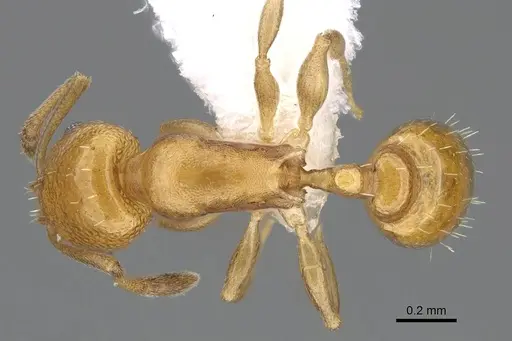
Literature
Loading distribution map...Loading products...