
Temnothorax smyrnensis
- Sci. Name
- Temnothorax smyrnensis
- Tribe
- Crematogastrini
- Subfamily
- Myrmicinae
- Author
- Forel, 1911
- Distribution
- Found in 1 countries
Introduction
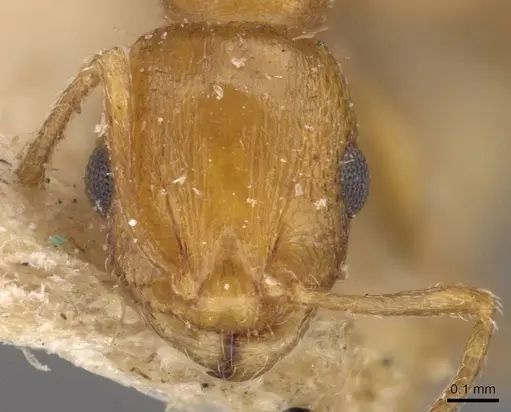
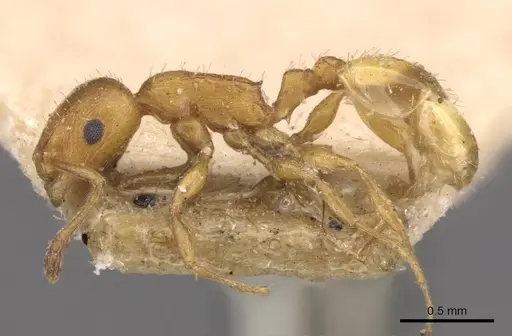
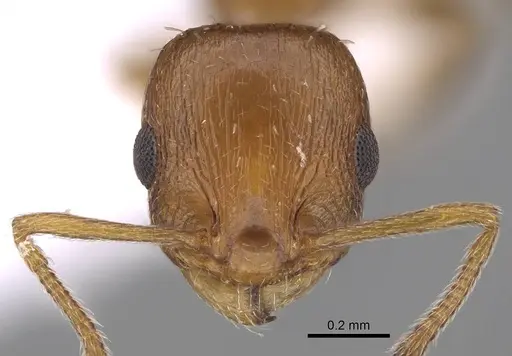
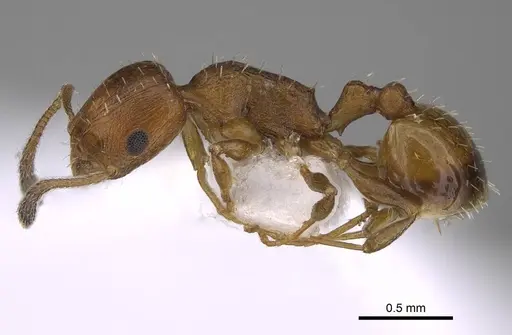
Temnothorax smyrnensis is a tiny ant species from the graecus group, native to the eastern Aegean region. Workers are dark yellow to orange with bright brown antennal clubs and a narrow dark band on the rear of the first gaster segment . They have a low, rounded petiolar node and short triangular propodeal spines . The species is endemic to the Aegean Region, recorded from the Greek islands of Kos, Samos, Samothrace, coastal Greek Thrace, and the İzmir Province in Türkiye . It lives in lowland areas (20-265 m) in moderately humid to arid deciduous forests and Mediterranean maquis, and has been collected on rocks and stones, as well as shaken from herbs and shrubs . Like all members of tribe Crematogastrini, it uses a modified stinger to smear venom onto enemies rather than sting, but is harmless to humans.
Quick Summary
- Difficulty: Easy
- Origin & Habitat: Eastern Aegean region, Greece (Kos, Samos, Samothrace, coastal Thrace) and Türkiye (İzmir Province). Found in moderately humid to arid deciduous forests and Mediterranean maquis, typically on rocks and stones at altitudes of 20-265 m [2][1].
- Colony Type: Unknown, no published data. Based on typical Temnothorax patterns, probably single‑queen (monogyne) colonies.
- Size & Growth:
- Queen: Size data unavailable, total length not reported. Inferred from Temnothorax genus: approx. 3-4 mm.
- Worker: Size data unavailable, total length not reported. Inferred from Temnothorax genus: approx. 2-3 mm.
- Colony: Unknown, not documented. Typical small Temnothorax colonies contain up to a few hundred workers at most [2].
- Growth: Unknown, likely slow to moderate based on related species.
- Development: Unknown, no published data. Estimated 6-10 weeks at 22-26 °C based on similar Temnothorax species. (Inferred from related species. Exact timing will depend on temperature and food availability.)
- Antkeeping:
- Temperature: Keep at 20-26 °C, these Mediterranean ants prefer warmth. Avoid prolonged exposure below 15 °C or above 30 °C. These ranges are inferred from their natural habitat [2].
- Humidity: Moderate. Keep the nest substrate slightly moist but allow some dry zones, reflecting their rocky, well‑drained Mediterranean habitat. Do not waterlog [2].
- Diapause: Unknown, but likely needed. If the colony stops brood production during winter, provide a cooler rest period of 2-3 months at 10-15 °C. This inference is based on their Mediterranean origin [2].
- Nesting: Y‑tong (AAC) or plaster nests with narrow chambers work well. Also naturalistic setups with stones, since they nest under rocks in the wild [2][1].
- Behavior: Docile and harmless. They belong to tribe Crematogastrini and use a spatulate stinger to smear venom, but cannot sting humans. Workers are active foragers that search individually or in small groups. Escape risk is high due to their tiny size, use fine mesh and seal all gaps.
- Common Issues: escape prevention is critical, use fine mesh (0.5 mm or smaller) and seal all connections., colony growth is slow during founding, patience is required., avoid overheating, keep the nest out of direct sunlight and away from heat sources., wild‑caught colonies may carry mites or parasites, quarantine and observe before introducing to a permanent setup.
Housing and Nest Setup
Temnothorax smyrnensis is tiny and needs appropriately scaled housing. A Y‑tong (AAC) formicarium with narrow chambers works well, these ants naturally nest in small spaces under stones and in rock crevices [2][1]. Test tube setups are also suitable for founding colonies. Because of their very small size, escape prevention must be excellent: use fine mesh on ventilation, seal all connections, and consider a thin layer of fluon around the outworld. A small outworld provides enough foraging space, they do not need large setups.
Feeding and Diet
Like most Temnothorax species, T. smyrnensis is an omnivore that accepts both protein and sugar sources. Offer small live prey such as fruit flies, pinhead crickets, or small mealworms. They will also take sugar water, honey, or diluted maple syrup. In the wild, workers have been beaten from herbs and shrubs, suggesting they forage for small insects and honeydew from aphids [1]. Feed protein sources 2-3 times per week and keep a sugar source available. Remove uneaten prey after 24 hours to prevent mold.
Temperature and Seasonal Care
These Mediterranean ants prefer warm conditions. Keep the nest at 20-26 °C, room temperature is often suitable. They can tolerate brief periods outside this range but avoid prolonged exposure below 15 °C or above 30 °C [2]. During winter, if the colony stops brood production, provide a diapause (hibernation) period of 2-3 months at 10-15 °C. This mimics their natural seasonal cycle in the Aegean region. Reduce feeding during diapause and keep the nest slightly cooler.
Behavior and Colony Dynamics
Temnothorax smyrnensis forms small, docile colonies. Workers are active foragers that search individually or in small groups for food. They are not aggressive and cannot sting, they belong to tribe Crematogastrini, which uses a modified stinger to smear venom rather than inject it. Founding‑type is presumed claustral based on genus patterns (no published confirmation). Colony growth is likely slow to moderate, expect several months before the first workers appear and a gradual increase thereafter. [1]
Frequently Asked Questions
How long does it take for Temnothorax smyrnensis to raise their first workers?
No published data, based on related Temnothorax species, expect 6-10 weeks from egg to first worker at 22-26 °C.
Can I keep Temnothorax smyrnensis in a test tube?
Yes, test tubes work well for founding colonies. Use a water reservoir and keep the cotton moist. Once the colony grows beyond 20-30 workers, consider moving to a small Y‑tong or plaster nest.
Do Temnothorax smyrnensis ants sting?
No, they have a modified stinger adapted for smearing venom, not piercing skin. They are completely harmless to humans.
What temperature do Temnothorax smyrnensis need?
Keep them at 20-26 °C. Room temperature is often ideal. These are Mediterranean ants that prefer warmth but can tolerate normal indoor conditions. Avoid temperatures below 15 °C or above 30 °C [2].
Do Temnothorax smyrnensis need hibernation?
Unknown, but likely yes due to their Mediterranean origin. If the colony stops brood production in winter, provide a cooler rest at 10-15 °C for 2-3 months. Reduce feeding during this period [2].
How big do Temnothorax smyrnensis colonies get?
Unknown, not documented. Based on typical small Temnothorax, colonies likely stay under a few hundred workers.
Are Temnothorax smyrnensis good for beginners?
Yes, they are small, docile, and undemanding. The main challenge is their slow growth during founding and the need for excellent escape prevention.
What do Temnothorax smyrnensis eat?
They likely accept small live prey (fruit flies, pinhead crickets, small mealworms) and sugar sources (honey, sugar water), based on foraging observations on herbs and shrubs [1]. Feed protein 2-3 times a week and keep sugar water available.
When should I move my colony to a formicarium?
Move from a test tube to a small formicarium (Y‑tong or plaster) once the colony reaches 20-30 workers. These ants do not need lots of space, narrow chambers are better than large open areas.
Why are my Temnothorax smyrnensis escaping?
Their tiny size means they can squeeze through very small gaps. Use fine mesh (0.5 mm or smaller), seal all connections, and apply fluon or petroleum jelly around the rim. Regularly check for gaps.
Report an Issue
The current care sheet is based fully on literature. See inconsistencies, or something that's incorrect? Please , it will be resolved after review from an admin. Contributing to the blogs tab also helps providing information, to make us be able to further improve the caresheets. Thank you for your support!
References

This caresheet is licensed under CC BY-SA 4.0 .
Community Blogs
CASENT0909019
View on AntWeb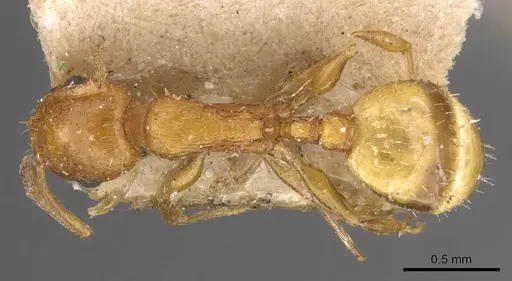
CASENT0922698
View on AntWeb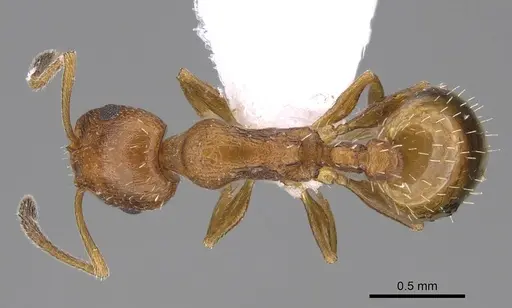
Literature
Loading distribution map...Loading products...